The Ripple Effect
-News and Commentary-
When Machines Took the Last Job That Felt Real
By TP Newsroom Editorial | Ripple Effect Division
Today in The Ripple Effect, we are discussing something deeper than layoffs or automation. We’re talking about the disappearance of work that felt like purpose. The kind of job where you could point to something at the end of the day and say, “I built that.” Where sweat wasn’t a liabilityit was a measure of pride. That kind of work is vanishing. Not all at once, but piece by piece, brick by brick. And the machines that are replacing it don’t ask for breaks, don’t feel pressure, and don’t need a reason to keep going. They just do the job and do it faster.
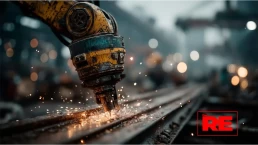
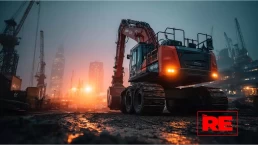
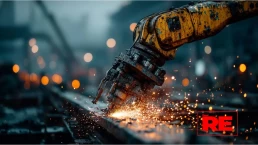
Walk past a modern construction site today, and you’ll still see workers in vests and hard hats, but fewer of them than before. And more machines that move with eerie precision, guided not by human hands but by lines of code. Robotic arms that weld steel frames. Autonomous excavators that move dirt without a driver. 3D printers pouring full-scale homes, layer by layer, without ever lifting a hammer. On the surface, it looks like progress. But underneath, something foundational is being stripped away and the people who once made the world rise out of the ground are watching themselves become obsolete.
The irony is that this shift didn’t happen because the work stopped mattering. It happened because the work mattered too much, because it was slow, expensive, and dependent on human unpredictability. Labor costs. Sick days. Strikes. Injuries. Regulations. All the variables that came with hiring real people. So the answer, at least from the industry’s perspective, was to remove the variables. Automate the risk. And now, that future has arrived, not in theory, but in steel, silicon, and silence. Construction was never glamorous. But it was real. It put food on the table. It taught skills that couldn’t be Googled. It built calluses and confidence at the same time. For generations, it was the fallback plan that wasn’t failure. Didn’t finish school? You could still build something. Had a record? You could still hang drywall. Needed a job that paid on Friday and didn’t require a résumé? That job was always somewhere under a scaffold, in the dust, waiting. That promise is now fading. And the replacement doesn’t come with second chances. It comes with automation dashboards and biometric access cards.
If this work helped you understand something more clearly, support it by:
Buying the books | Visiting the Newsstand | Making a donation
One voice. One message. One Goal. Truth.
No spam. No schedules.
The Truth is Underfunded. That's Why This Exists.
No ads. No sponsors. No filter. Just the truth, unpacked, explained, and raw.
Defining Policy. Power. Consequence.
See how to add us to your home screen
The push toward robotic construction isn’t coming from nowhere. It’s backed by necessity and money. A global housing shortage. A labor shortage. Rising material costs. Aging infrastructure. Combine that with investors chasing efficiency and tech companies eager to disrupt another sector, and you get a building industry that now sees human labor as the bottleneck, not the backbone. In places like Japan, autonomous rebar-tying machines are reducing framing time by half. In the Netherlands, entire bridges are being 3D printed in factories and dropped into place by cranes. In California and Texas, companies like ICON are printing affordable homes in under 24 hours. No crews. No contractors. Just machines doing what used to take weeks. Even drywall installation is being prototyped through robotic arms that measure, cut, lift, and place panels with no human guidance at all.
The tech is here. The funding is behind it. And the message is clear: anything that can be automated, will be.
For the working man, the one who learned on the job, who didn’t come from tech, who doesn’t want a coding bootcamp, there’s not much left to hold on to. And that’s not just economic displacement. That’s identity loss. Because when you take away the job, you don’t just take away the paycheck. You take away the story. The routine. The reason to get up at 5 a.m. The moment on payday when you see the result of your work in the form of a deposit that means your kids eat, your rent’s covered, your dignity’s intact.
We don’t talk about that enough. How closely work and manhood have been tied in this country. Especially for blue-collar men. Especially for men of color. Especially for immigrants who learned English on job sites and earned respect not with degrees but with sweat. When those jobs disappear, it’s not just unemployment, it’s erasure. And the system doesn’t have an answer for that. Retrain, they say. Learn to code. Move into renewables. Take a digital course. But what if none of that fits? What if what you were good at was fixing, lifting, measuring, solving real problems with your hands? What if what you needed wasn’t a new career, but a continuation of the one that gave you a sense of worth?
That’s the loss automation doesn’t calculate.

Most of the public conversation still frames automation as inevitable. As if we’re supposed to applaud progress no matter what it replaces. But the truth is more complicated. This isn’t just a question of machines doing the job. It’s about who decides which jobs matter, and who matters when those jobs are gone. Because once construction becomes something done by machines, the people it used to sustain don’t just become unnecessary, they become invisible.
And the people pushing this shift don’t work on job sites. They work in labs. They pitch investors. They run code. They model prototypes. They talk about “scaling workforce disruption” as if it’s a technical achievement, not a moral problem. Their goal isn’t to make jobs easier, it’s to remove the need for jobs entirely. That’s where the profit lives. In the absence of friction. And people are friction.
What’s being lost isn’t just labor. It’s culture. There’s a culture to building things. A rhythm to it. A pride. You see it in the way men stand after framing a house. In the way crews crack jokes through twelve-hour shifts. In the way apprentices carry tools just right because someone showed them how. These aren’t soft things. They’re survival things. Emotional infrastructure, passed down. And it’s not being preserved. It’s being deleted.
The new system doesn’t care about any of that. It wants efficiency, predictability, optimization. The language of robotics. The language of profit. Not the language of people. And once you replace the builder with the bot, the language that held a whole class of workers together starts to fade too. It becomes a dialect spoken only in memory.

And this isn’t happening decades from now. It’s happening right now. There are already fewer carpenters. Fewer masons. Fewer steelworkers. Young men don’t enter trades the way they used to, not just because of stigma, but because the path is being paved over. And when a young man sees a machine doing a job he thought he might train for, what’s the point in learning it? Why bother becoming good at something that might not exist by the time you master it?
The result is a generation with no entry point. No fallback. No first job. No last job. Just a sense that the world is running without them and maybe better without them. And when people feel that way, they don’t just sit quietly. They lose faith. In institutions. In government. In each other. Because it’s hard to believe in a system that no longer sees a place for you.
That’s the quiet truth behind this automation boom. It’s not just a threat to jobs. It’s a threat to belonging. And that hits hardest in the communities that already felt discarded. The rural towns emptied out after the mills closed. The inner cities where every job offer comes with an insult. The refugee families trying to build new lives through labor. These are the people automation forgets. Because they don’t fit the future being written in code. Progress doesn’t feel like progress when it erases your value. When it replaces your skill with silence. When it celebrates your disappearance as efficiency.
This is the moment we’re in. And if we don’t name it, it’ll pass us by. A new world built by bots. And no one left to remember the men who used to build it. The rise of machines in construction wasn’t inevitable, it was engineered. It didn’t happen because people failed. It happened because the system succeeded at one thing: cutting costs. In this country, we don’t solve structural problems. We outsource them. We don’t ask how to make labor stronger, we ask how to eliminate it entirely. And now we’re watching that logic play out in real time, across worksites, trade schools, and job boards that used to offer some of the last hands-on careers left in the economy.
Construction was once seen as future-proof. It couldn’t be shipped overseas. It couldn’t be digitized. It required bodies, tools, training, and presence. You had to show up. You had to do the work. You had to be there to make something real. And because of that, it was one of the last holdouts of the middle class. It was the space where you didn’t need a college degree to earn a living wage. Where your reputation was built by what you did, not what you posted. But now that advantage has become a liability, for employers, for investors, and for the automation industry that has been waiting for its moment to take over.
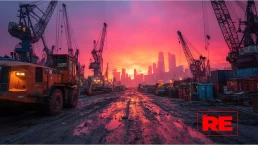
The core truth is simple: labor is expensive. Human beings need things. Health insurance. Safety regulations. Fair wages. Sick time. Training. Overtime. And sometimes, they organize. They strike. They fight back. They ask for more. But machines don’t. They show up. They run until they break. And then you replace the part. No pension. No protest. No story. So the system starts bending around that. Investors pour funding into robotic startups that promise to reduce timelines and eliminate payroll. Construction firms start experimenting with AI-guided equipment that reduces the need for skilled operators. Venture capital throws millions at 3D-printed housing because it’s faster, cleaner, and less dependent on people who might not show up after a weekend injury or a family emergency.
All of it is framed as innovation. But underneath that framing is a very old motive: control. Because if you control the labor, you control the output. And if you eliminate the labor, you eliminate the variables. That’s what modern automation really sells: the death of unpredictability. In a world obsessed with efficiency, the human worker becomes the bottleneck. Not because he’s bad at his job, but because he’s human. He slows things down. He comes with complexity. Emotion. History. Needs. And when you view all that through a cost-benefit lens, the logic becomes ruthless.
You see it in policy too. For years, the government has quietly supported this shift. Through tax incentives. Through deregulation. Through research funding that rewards automation while leaving community colleges and trade programs underfunded and outdated. For all the talk about reskilling America, the reality is that reskilling is a slogan, not a solution. You can’t retrain a man who spent 20 years framing houses to become a machine learning technician overnight. You can’t tell a bricklayer that his hands no longer matter, but he’s welcome to sit through a webinar on Python. And even if he could make that leap, the jobs on the other side don’t pay the same. They aren’t available in the same towns. They don’t come with the same sense of respect or identity. A man who used to build entire structures can’t just become a junior data analyst and feel like that’s a win. It’s not a path. It’s a dead end with a buzzword stapled to it.
But the narrative is persistent: adapt or be replaced. Pivot or get left behind. That pressure doesn’t fall on executives. It falls on workers. On fathers who don’t know how to explain to their sons that the family trade no longer exists. On single moms trying to teach their daughters that stability is still possible when the job market treats their experience like it’s outdated. On immigrants who took the hardest jobs because they were the only ones offered and who now find even those being handed to machines that don’t speak, sweat, or get sore.
And all of this is happening without real debate. Without national conversation. Because the people affected by this shift aren’t the ones who write the policies or own the platforms. They’re the ones who live quietly, work honestly, and try to stay ahead of the next change they didn’t ask for. Automation is framed as the future. But whose future are we talking about?
For corporations, it’s a future of streamlined budgets and vertical integration. For private equity firms, it’s a new frontier of investment. For policymakers, it’s a box to check under innovation. But for working people, the ones with dirt under their nails and scars that don’t show on paper, it’s a cliff. A closing door. A world moving on without them. And make no mistake, it is moving fast. Every time a new pilot program launches, it signals to an entire region that human labor is optional. A machine installs drywall in Texas? That echoes in Ohio. A 3D printer finishes a house in 24 hours in Arizona? That sets a new bar in Georgia. These aren’t isolated wins. They’re systemic signals. Messages that say: we’ve figured out how to do this without you. We just haven’t scaled it yet.
And the scaling is coming.
Journalism You Can Hold. Insight You Can Own.
Books Magazines Companion Guides White Papers More
Your support funds the research, reporting, and long-form analysis behind TP Newsroom
Companies aren’t investing in these systems for novelty. They’re investing because they believe this is where the future is going and that belief shapes hiring, training, and retention today. Young workers sense it. Even those still trying to enter the trades know something’s off. Why spend years becoming a journeyman if the company might replace you with a bot before you finish your apprenticeship? This isn’t paranoia. It’s pattern recognition. And it’s rooted in lived experience. These are the same communities that watched factories close, watched jobs get shipped overseas, watched automation reshape manufacturing, shipping, and warehousing. So when they hear that construction is next, they don’t dismiss it. And still, there’s a kind of silence around all of this. A resignation. Because the people most affected have already learned that shouting doesn’t change much. That the world doesn’t stop to ask what happens to the men and women whose value was wrapped in the ability to do something physical, something necessary, something hard. Now that work is being replicated. Simulated. Automated. And the result is not just job loss, it’s soul loss.
We’ve built an economic system that treats human presence as overhead. That celebrates its removal. That labels those who fall behind as inefficient, outdated, stubborn, or unwilling to change. But that’s a lie. Most workers aren’t afraid of hard work. They just want the work to matter. They want to be part of something that’s real. That’s connected to survival. That has stakes. You take that away, and what’s left?
A job market full of roles that no longer resemble anything you were trained to do. A future being written in someone else’s language, from someone else’s skyline. And all the while, the machines keep building.
What people don’t talk about is how deeply tied construction was to self-worth. It wasn’t just a job. It was proof. You could stand outside a house you helped build and say, “I did that.” That wall? You hung it. That foundation? You poured it. That roof? You sweated under it. The structure was real, and you were part of it. It wasn’t a deliverable. It was shelter. And for a lot of men that made the work sacred. You take that away, and what happens? Not just financially, but mentally. Emotionally. Socially. You don’t just lose income. You lose a place in the world.
People say, “Just get another job.” As if a man who framed houses for 15 years can suddenly pivot into UX design. As if the skills he built through his hands can be reprogrammed into a keyboard in three weeks. As if pride is portable. But that’s not how people work. Especially not people who were raised to build something, to fix what’s broken, to carry weight that mattered.
And it’s not just men. It’s communities. It’s whole towns where trades weren’t just jobs, they were lineage. Skills passed down. Apprenticeships that doubled as mentorship. Multi-generational work that kept families rooted even when the economy shifted around them. In rural areas, in the South, in the Midwest, and across immigrant neighborhoods, these jobs offered stability without shame. You could provide. You could contribute. You could leave a mark.
Now those same communities are being told the machines are more efficient.
More scalable. Less liability.
And the real impact isn’t playing out in headlines, it’s playing out in silences. A mother watching her husband spiral after a layoff he can’t explain. A teenager who never learned the trade because no one taught it anymore. Trade schools closing, union halls shrinking, employers asking for “digital-first” construction staff who can operate from a tablet instead of a toolbox.

And behind every “pilot program” and robot demo is a real family trying to hold onto a vanishing future. What we’re seeing now is the emotional collapse of a working class that was told for decades, “Work hard and you’ll be fine.” That was the social contract. You didn’t have to be rich, but you could be steady. You could raise a family, own a house, take a vacation every once in a while. You could feel like you earned your rest.
Now? That contract’s broken.
You work just as hard or harder but you don’t get ahead. Your rent goes up, your wages stay flat, your benefits shrink, and the job that was supposed to carry you to retirement is being tested for automation behind your back. You’re not just being replaced, you’re being erased. Slowly. Strategically. Until one day, you realize you’re the last one left doing something real while everyone else around you is managing dashboards and performance metrics.
People aren’t just losing work, they’re losing meaning. And the people saying “We need to adapt” are never the ones being asked to change what made them whole.
This is cultural too. Because when physical labor gets devalued, it sends a message about who matters. About what kind of intelligence is respected. About what kind of contribution counts. You see it in how we talk about “dirty jobs”, as if the people doing them are less educated, less evolved, less essential. But let a flood come. Let a wall crack. Let the grid go down. Then suddenly those skills become sacred again. But by then, it’s too late. The pipeline is gone. The people who knew how to hold the system up are gone.
And the machines don’t teach. They don’t pass anything down. They just replace.

The human toll is staggering. Depression. Alcoholism. Divorce. The invisible wounds of dislocation. When a man loses his job, he loses a piece of his name. And when a whole generation of builders gets told they’re obsolete, it echoes far beyond payroll. It touches churches. Barbershops. Neighborhoods. Graduation rates. Crime stats. Health outcomes. There’s a reason communities with disappearing trades have rising deaths of despair. You can’t separate economics from mental health, or dignity from violence. When you strip people of their role, they will find one, somewhere, somehow. Sometimes that turns inward. Sometimes outward. Either way, it’s a failure of policy and imagination.
And yet, this story isn’t framed that way.
It’s told as progress. As disruption. As an exciting future where machines take on the “boring” work so humans can be “more creative.” But no one asked the people whose hands did that work if it was boring. No one asked the welder if he wanted to be more creative. No one asked the foreman if he’d rather be in tech. They didn’t ask because they didn’t care. And that lack of care is the story.
Because this isn’t just about construction. It’s about what we value.
We’ve built an economy that talks about inclusion but moves in exclusion. One that says people matter, but rewards their removal. One that idolizes entrepreneurship, but ignores labor. One that praises innovation, but punishes experience.
And the pain of that double standard shows up in identity.
If you were raised to believe your worth came from what you could build, and that work no longer exists, who are you now? What do you tell your kids? What do you do with the shame? That’s the part the headlines don’t cover. That’s the part no reskilling webinar fixes. Because this isn’t about coding bootcamps. It’s about loss. Deep, structural, generational loss.

And here’s the thing that stings: these same communities were once told that their work was “too dangerous,” “too inconsistent,” “too low-tech” to scale nationally. But now that the machines can do it? Now it’s suddenly “essential.” Now it’s “the future.” Funny how the narrative changes once you take the human out of the equation.
And even when people try to pivot, they’re met with roadblocks. Licensing. Relocation. Age bias. Digital gatekeeping. Most of these workers don’t have LinkedIn profiles or tech portfolios. They have scars. They have reputation. They have memory. But none of that counts in a world obsessed with metrics and models. So even their effort to adapt becomes a story of rejection.
And what fills that vacuum? Shame. Mistrust. Resentment. A sense that no matter how hard you try, the future was never meant for you. And for a lot of men, especially in rural and post-industrial towns, that feeling doesn’t just disappear. It calcifies. It becomes a worldview. That’s how you lose not just jobs, but generations. That’s how you fracture a country.
This isn’t about nostalgia. No one’s asking to go back to 1950. What people want is simple: to matter. To contribute. To be seen as more than a problem to automate around. And until we build a future where work isn’t just profitable, but human, we’re going to keep producing broken systems and broken people.
The machines are here. That part’s done. But the question we haven’t answered is: what’s left for the people?
If this work helped you understand something more clearly, support it by:
Buying the books | Visiting the Newsstand | Making a donation
One voice. One message. One Goal. Truth.
No spam. No schedules.
The Truth is Underfunded. That's Why This Exists.
No ads. No sponsors. No filter. Just the truth, unpacked, explained, and raw.
Defining Policy. Power. Consequence.
See how to add us to your home screen
The machine takeover in construction isn’t just a business story. It’s a blueprint. A warning. A case study in what happens when a society decides speed and profit matter more than people. What’s happening on job sites across the country right now isn’t just innovation, it’s erasure. And the scariest part is, most people won’t notice it until it’s already done.
This isn’t speculation. It’s measurable. The robots have arrived. They lay brick. They pour concrete. They print homes. They scan environments, adjust to slope, run off algorithms, and don’t miss lunch. They don’t smoke breaks, they don’t unionize, they don’t get tired. They execute. And the more they execute, the more justification there is to scale them. Not because they do better work, but because they’re easier to manage.
If this was just about helping workers, we’d see a different rollout. We’d see hybrid teams, expanded apprenticeships, mentorship built into machine design. But that’s not what’s happening. The rollout is quiet and surgical. It’s happening in startup labs and test zones, funded by venture capital and backed by data firms. The real end goal isn’t co-working with machines—it’s eliminating humans from the chain entirely.
And once construction is fully disrupted, the impact won’t be contained to job sites. This will ripple out into the housing market, local economies, education systems, cultural identity, and political narratives. Because construction jobs don’t just hold up a building, they hold up families. They fill the financial gaps in places where opportunity is already scarce. They create stability in communities that have watched every other form of employment vanish.
So what happens when this, too, disappears?
We end up with a workforce that’s lost its anchor. With a generation of young men and women who no longer see a path that includes them. With rural towns that can’t keep their populations. With parents who tell their kids, “Go into tech,” knowing not every kid is built for code. And with a society that keeps preaching hard work, while quietly pulling the rug out from under anyone who actually believed in it.
The final failure here isn’t just economic. It’s moral. Because we’re not just building a future we’re choosing one. Every automation we greenlight is a statement of value. It says, “We’d rather have efficiency than presence.” It says, “Your time, your hands, your body, those were temporary.” And in that statement, we don’t just lose workers. We lose wisdom. We lose memory. We lose the quiet power of people who held things together even when they were falling apart.
So what now?
Who does this affect? Primarily working-class Americans in trades, especially those without college degrees. Immigrants, veterans, union workers, and people of color, especially in regions already struggling with job loss and economic transition. It affects teens who were ready to go into the trades. It affects retirees trying to mentor the next class. It affects men whose last paycheck came from a skill that no longer exists.
What can be done? We need to stop lying about reskilling as a one-size-fits-all fix. Not everyone wants to or can shift into tech. Instead, we should be redesigning pathways that honor trade labor and build around people. That could mean tax credits for human hiring over machine labor. Could mean incentives for hybrid crews. Could mean education funding tied to trades, not just STEM. But mostly, it means we need to stop pretending this wave of automation is neutral. It’s not. It’s political. It’s intentional. And it’s happening fast.
When is this taking place? Right now. Quietly. While people are distracted. While the focus is on AI headlines, robot dogs in war zones, and chatbots at the DMV. Meanwhile, housing developers are building prototype neighborhoods using fully automated workflows. And every test that succeeds becomes justification for more. There’s no countdown clock. This isn’t ten years away. It’s next quarter. It’s already inside the bid. It’s already budgeted in.
Where will the damage land hardest? Small towns. Border communities. Areas that didn’t benefit from globalization and can’t afford the second wave of tech disruption. But it will also hit cities where construction is still one of the few non-degree jobs that pays. New York, L.A., Houston, Miami, Atlanta, all these cities rely on blue-collar construction. Remove that, and you don’t just break a job market, you increase homelessness, deepen inequality, and widen the class divide.
Why is this happening? Because control is the currency of modern capitalism. Machines offer perfect control. Humans don’t. We have moods. We get sick. We ask for raises. We organize. So to the system, we’re messy. The move to automation isn’t about progress, it’s about predictability. Machines don’t sue. Machines don’t miss deadlines. And the more this logic spreads, the less room there is for humanity to breathe.
We’ve already seen this in warehousing, fast food, call centers, and transportation. Construction is just the next domino. The problem is, this makes it real, because it was supposed to be the last safe zone. The last place where someone could still make a living off their hands. Once that disappears, we enter new territory. A labor landscape where even the realest jobs feel simulated. And once that line blurs, it doesn’t just change work. It changes identity.
This future we’re building? It’s not written in code. It’s written in values. And if we don’t ask harder questions now, about who benefits, who’s harmed, and what we’re leaving behind, we’re going to look up one day and realize we automated not just the job, but the meaning. And meaning is what keeps people alive.
Metropolis Magazine. (2021). 3D-printing is speeding up the automation of construction. Metropolis.
Liang, C.-J., Le, T.-H., Ham, Y., Mantha, B. R. K., Cheng, M. H., & Lin, J. J. (2023). Ethics of Artificial Intelligence and Robotics in the Architecture, Engineering, and Construction Industry. arXiv.
Stebbins, S. (2024, September 26). World’s first 3D-printed hotel takes shape in Texas. Reuters.