The Ripple Effect
-News and Commentary-
Shame, Struggle, and Survival: What Welfare Really Says About Us
By TP Newsroom Editorial | Ripple Effect Division
Let me start here: I’m a single dad. And if you’ve ever been in that role meaning feeding two kids, working nonstop, figuring out how to stretch every dollar than you know this truth better than anyone: food is not cheap. Not good food. Not the kind that keeps your kids healthy, focused, and growing strong. Between rising grocery prices and the basic costs of living, feeding a family today feels less like parenting and more like surviving an economic obstacle course.
So I’ve been on both sides of the conversation, working full time, married, dual income, and not thinking about qualifying for help. Then working harder, solo, and knowing I definitely could. The truth? I don’t use it, not because I’m above it, but because I’ve got an extended family that helps when things get tight. That said, I’d still qualify. It is what it is. And for millions of families, that’s the reality, not laziness. Not scamming. Just survival.
So why all the judgment?
If this work helped you understand something more clearly, support it by:
Buying the books | Visiting the Newsstand | Making a donation
One voice. One message. One Goal. Truth.
No spam. No schedules.
The Truth is Underfunded. That's Why This Exists.
No ads. No sponsors. No filter. Just the truth, unpacked, explained, and raw.
Defining Policy. Power. Consequence.
See how to add us to your home screen
A few days ago, a video went viral. A white woman at Costco and Walmart using EBT to buy food for her six kids. Her husband was with her. Both looked healthy, able-bodied. Cue the outrage. “Why don’t they work?” “Why do my taxes pay for their lifestyle?” The comment section lit up like fireworks it was full of bitterness, blame, and snap judgments. And what bothered me the most wasn’t the ignorance, it was the comfort people have in assuming they’d “never be like that.” As if losing a job, getting sick, raising kids alone, or hitting a rough patch couldn’t ever happen to them. That’s where we are.
We don’t talk about welfare as a public safety net anymore, we talk about it like it’s a criminal record. Like the moment you accept help, you’re weak. Or worse, unworthy. But let me ask you this: if you’re reading this and you’ve never needed help, are you better, or just luckier?
We’ve made a national sport out of criticizing people for needing assistance. Politicians use it as bait. Media feeds into it with images of long lines, worn-down faces, and distorted facts. And somehow, the conversation always circles back to the same blame game centered on who deserves help and who doesn’t.

Let’s correct the record with facts, not feelings: According to the U.S. Department of Agriculture, about 36.5% of SNAP recipients are white, 26.3% are Black, 16.8% are Hispanic, and 3.2% are Asian. Over 41 million Americans were enrolled in SNAP in 2023. Nearly half of all SNAP households include children. And more than 60% of able-bodied adults receiving food assistance are working, just not earning enough to cover the basics. If you didn’t know, the average monthly benefit per person? Roughly $180. That’s less than $6 a day. And more than 85% of households receiving SNAP earn at or below 130% of the federal poverty line, which, for a family of four, is $39,000 a year. Still think this is about people gaming the system?
So here’s my question: when did we start believing that needing help made someone less American?
When did we forget that every major religion, every moral code, every community ethic, teaches the same thing: care for the poor, the tired, the struggling. And if you call yourself a Christian and I’m not here to preach but let’s be real, Jesus didn’t shame people for needing bread. He multiplied it.
The Big Beautiful Bill just passed, and there’s plenty of noise about what’s being “cut,” “restructured,” or “reinvented.” But behind all the language, beneath all the politics are families. Kids. Grocery bags. Empty fridges. And the truth is: you can’t preach personal responsibility in a system built on structural disadvantage.
They always say the same thing: “Get a job.” As if that’s the fix-all. Like one W2 is gonna magically erase a lifetime of broken systems. But here’s what doesn’t get said enough: most people on welfare already have a job. Some have two. What they don’t have is a job that pays enough to live. And that’s not a laziness problem. That’s a wage problem.

Let’s be honest, there’s no freedom in working 40+ hours a week and still not being able to feed your family. There’s no dignity in choosing between rent and groceries every single month. And that’s the trap too many working families are in.
We talk about personal responsibility like it’s the answer. But if we’re not going to talk about income, or the cost of getting to income, then it’s not a real conversation.
Because here’s the truth: we’ve built a country where the price of escaping poverty is getting higher, while the tools to escape it keep getting cut.
The Department of Education is under constant attack. Financial aid programs are being gutted. And college, once sold as the ladder out, is now labeled “woke” by the same politicians demanding people pull themselves up by their bootstraps. How exactly does that math work?
You want people off government assistance? Then they need better jobs. And to get better jobs, they need training, degrees, licenses, credentials, something that gives them access to more than minimum wage. But we’re shutting the doors to all of it.
Journalism You Can Hold. Insight You Can Own.
Books Magazines Companion Guides White Papers More
Your support funds the research, reporting, and long-form analysis behind TP Newsroom
We’re slashing Pell Grant availability. Cutting funding to community colleges. Mocking higher education as liberal indoctrination. And then turning around and asking why people are still on food stamps? It’s not just a trap, it’s a setup.
Look at the numbers: the average cost of a four-year degree in the U.S. is now over $104,000 at a public university. Private? North of $220,000. And that doesn’t include living expenses, books, or lost income from taking time off to study.
Some people try to pivot the argument. “Well, they don’t need college. What about trade school?” And that sounds like a solution until you look at the numbers. Trade schools aren’t free. Most programs still cost $5,000 to $25,000 depending on the field. Welders, HVAC techs, medical assistants, they all still take on debt. Then add tools, exam fees, and unpaid training hours, and that path doesn’t look so simple anymore.
So now imagine you’re a single parent. Working 30 to 50 hours a week. You’re raising kids, maybe taking care of your own parents too. Rent is $1,400 a month, gas just crossed $3.90, and childcare costs more than your paycheck. What class are you supposed to enroll in? What time? What money? What babysitter?
The system acts like people are choosing poverty. But the reality is, they’re being priced into it. And the longer we pretend otherwise, the worse it’s going to get.
It used to be that education was the way out. It was never a guarantee, but it was a path. Now? That path has a toll booth every ten steps. And the people with the least are being charged the most. You strip away education, and all you’ve got left are low-wage jobs. Which means more people needing assistance. And then we turn around and blame them for it. It’s circular cruelty dressed up as policy.

So the next time someone says, “They should just get a job,” ask this: What job? And at what wage? And with what training? Because until those questions have real answers, everything else is just noise.
Let’s go ahead and say it, because someone always does:
“Well, maybe they shouldn’t have had all those kids if they couldn’t afford them.”
That line gets tossed out like it’s the ultimate mic drop. But let’s actually unpack it.
First, it assumes people planned poverty. That they plotted out a life of waiting in government lines and hoping the card swipes. Nobody does that. Nobody wants that. But more importantly, it reveals a deep contradiction in American politics. Because the same people who say “you shouldn’t have had kids” are often the loudest ones fighting against access to birth control, sex education, and abortion.
You can’t have it both ways. You can’t say, “Don’t have kids you can’t afford,” while gutting Planned Parenthood. You can’t ban comprehensive sex ed, restrict contraceptives, and then scream about single mothers. You can’t criminalize abortion and then look down on poor families who did exactly what you forced them to do, have the baby. This is the trap.
Let’s talk about money.

Because whenever the topic of welfare comes up, somebody always wants to wave a receipt. “Why are we paying for them?” “I work hard, why should I foot the bill?” “This is why taxes are too high.” It’s emotional. It’s loud. But it’s rarely based in facts.
First, let’s get clear: federal spending on welfare programs like SNAP and TANF makes up a small portion of the overall U.S. budget. In 2023, Supplemental Nutrition Assistance Program (SNAP) spending totaled about $119 billion. Temporary Assistance for Needy Families sat at just under $17 billion. Now compare that to the military budget: $886 billion for 2024.
We spend more on defense in one month than we spend on food stamps in a year.
So when people say welfare is “breaking the country,” they’re not talking about numbers. They’re talking about feelings. Resentment. Judgment. Stories they’ve heard. Viral videos they’ve seen. Morality tales about who “deserves” help and who doesn’t.
But here’s the thing: the data doesn’t lie. What’s expensive isn’t welfare, it’s war, tax cuts, subsidies to giant corporations, and endless political posturing. And yet, none of that triggers the same outrage.
People see a mother using EBT to buy groceries and want to audit her entire life. But they don’t blink when billion-dollar corporations get tax breaks for outsourcing jobs. They don’t rage when defense contractors blow billions on failed weapons systems. They don’t riot when banks get bailouts while homeowners get foreclosed on. Because it’s not really about the cost, it’s about the story.
Welfare has been framed as a character issue. A failure. A handout to people who aren’t “trying hard enough.” But the irony is, most people receiving government assistance are already working, and a majority of benefits go to children, elderly people, and people with disabilities. According to the Center on Budget and Policy Priorities, roughly 90% of SNAP benefits go to households with income below the poverty line, and over 70% of recipients are children or seniors. So who exactly are we mad at?
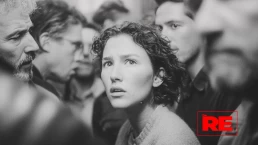
It’s not that the government can’t afford to help people. It’s that we’ve chosen not to. We’ve chosen to paint assistance as weakness. To criminalize need. To elevate self-sufficiency while ignoring the fact that nobody builds a life alone. Not corporations. Not politicians. Not the people writing these bills. Everyone’s standing on someone else’s infrastructure, someone else’s labor, someone else’s sacrifice.
And that brings us to the present moment.
The Big Beautiful Bill, as it’s being called, just passed, adding an estimated $1.2 trillion to the national deficit over the next ten years. It includes provisions for energy reform, tax restructuring, and massive shifts in how states handle education and public health. But buried inside all the celebration is a quieter signal: social programs are about to get squeezed.
Welfare wasn’t protected in this bill. It was absorbed into a broader conversation about “personal responsibility.” Funding for job training, child tax credits, and housing support didn’t get a boost. They got backgrounded. And that’s by design. Because if we admit people need help, and deserve help, then we also have to admit the system failed. And that’s a harder pill to swallow. So instead, we shift the blame. “Too many takers.” “They should try harder.” “They’re draining the economy.” And we repeat it, until the average taxpayer believes it.
Even when the numbers say otherwise. Let’s be real, this country has turned judgment into a sport. We don’t just critique. We condemn. It’s like we expect people to walk down the street in a public shaming parade, cowbell in hand, eyes cast down, while the rest of us point and chant “shame, shame, shame,” like it’s Game of Thrones. Like we’re watching penance in real time. Hell, at this point, you’d think we wanted folks to wear a scarlet “W” on their chest—W for welfare. Or worse, for weakness.
But who decided that needing help made you weak? Who decided that falling made you unworthy?
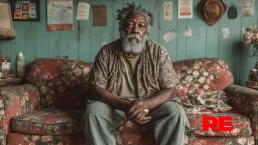
The irony is, the people shouting the loudest often act like they’ve never made a bad choice. Like they’ve never trusted the wrong person. Missed a payment. Lost a job. Hit a wall. But everybody’s got something, bad timing, bad luck, bad calls, bad days. That’s not a character flaw. That’s just life. So why do we treat other people’s struggles like moral failure?
Maybe it’s because judging them gives us cover. Makes us feel like we’re safe from the same fate, as long as we “make the right choices.” But life doesn’t always care how well you plan. You can do everything “right” and still end up on the edge. One injury. One layoff. One betrayal. That’s all it takes.
What’s shameful is pretending that we don’t all lean on someone.
Your parents. Your partner. A credit card. A second job. A late-night loan from your best friend. A GoFundMe when things went left.
So let’s drop the sanctimony. Let’s stop pretending independence means isolation. Nobody does this alone, not even the ones pretending they did.
The truth is, we’ve built an entire political culture around the idea that people in need should be punished. Not helped. Not understood. Just punished. We slash food benefits, raise rent, cut public programs, and call it “discipline.” Then when people fall, we act shocked they didn’t climb out on their own.
But when did that become normal? When did we decide that hate was a more acceptable response to suffering than compassion? If anything, that’s the real failure. Not poverty. Not need. But how quickly we’ve forgotten what it means to be human.
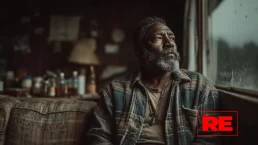
Here’s the part that gets lost in every debate. We don’t hate welfare because it doesn’t work. We hate it because it reminds us that we still haven’t fixed what’s broken. We don’t rage at billion-dollar subsidies. We don’t flinch at military overspending. We don’t blink at tax loopholes for hedge funds. But let one struggling parent get $500 a month to feed their kid, and suddenly it’s a national emergency. This isn’t about money. It never was. It’s about whose struggle we validate, and whose we shame.
And if we’re being honest, that shame has become policy.
The Big Beautiful Bill could’ve expanded child tax credits. It could’ve increased food security. It could’ve doubled down on job training or affordable housing. But it didn’t. It put the burden back on the people already carrying it. And we let it happen. Because deep down, we’ve been trained to believe that poverty is personal. That if someone’s down, they must’ve done something wrong.
But here’s what the data says: Who is on welfare? Mostly children, seniors, and working-class families. Not lazy freeloaders. Just people trying to survive. What do they receive? Modest support. Temporary aid. The average SNAP benefit is about $6 per person per day. That’s not luxury. That’s lunch. When does welfare become necessary? When jobs don’t pay enough. When childcare costs more than rent. When illness, loss, or bad luck strikes. Where are we failing? In every state that’s gutted education, healthcare, public transit, and still expects people to thrive without them. Why does this matter? Because a country that punishes need will never be strong. It’ll just be scared. Defensive. Divided. We’ve spent decades cutting the ladder, then blaming people for not climbing it.
But here’s the truth: the real test of a nation isn’t how rich its richest are, it’s how well it treats those with the least. That’s not just moral. It’s structural. Because when people can’t eat, can’t work, can’t rest, can’t grow, eventually, the whole damn thing cracks. And if we think welfare is the problem? Then maybe we’re not asking the right question.
United States Department of Agriculture (USDA). (2024). SNAP Data Tables. U.S. Department of Agriculture. https://www.fns.usda.gov/pd/supplemental-nutrition-assistance-program-snap
Center on Budget and Policy Priorities (CBPP). (2024). Policy Basics: The Supplemental Nutrition Assistance Program (SNAP). https://www.cbpp.org/research/food-assistance/the-supplemental-nutrition-assistance-program-snap
Congressional Budget Office (CBO). (2024, March). Budgetary Effects of the “Big Beautiful Bill” Legislation.
U.S. Department of Health and Human Services (HHS). (2023). TANF Financial Data. https://www.acf.hhs.gov/ofa/data/tanf-financial-data-fy-2023
U.S. Department of Defense (DoD). (2024). FY 2024 Defense Budget Overview. https://comptroller.defense.gov/Budget-Materials/
If this work helped you understand something more clearly, support it by:
Buying the books | Visiting the Newsstand | Making a donation
One voice. One message. One Goal. Truth.
No spam. No schedules.
The Truth is Underfunded. That's Why This Exists.
No ads. No sponsors. No filter. Just the truth, unpacked, explained, and raw.
Defining Policy. Power. Consequence.
See how to add us to your home screen