The Ripple Effect
-News and Commentary-
Weaponized Distrust: How America Lost Faith in Expertise
By TP Newsroom Editorial | Ripple Effect Division
There was a time when “I’ll check with the expert” meant you were doing the right thing. You trusted the doctor, the engineer, the university professor, the inspector who waved you in. You believed that if someone made a claim about what you ought to do, they earned it. Now you watch the same person on your screen and ask yourself: Are they telling me truth or selling me a story?
According to the Pew Research Center, only 56 % of U.S. adults say they have a lot of or some trust in information from national news organizations and that number has dropped 11 points since March 2025, and 20 points since 2016. Let that sink in. Almost half the country looks at national outlets and thinks: maybe not. The result is something harder to track: distrust that has been weaponized. One side claims the scientist is lying. The other side claims the engineer is part of the conspiracy. The food inspector is accused of bias. The university is accused of agenda. You’re no longer negotiating what’s true. You’re negotiating who’s lying. And the truth doesn’t matter nearly as much as the accusation. When less than three in ten Americans say the media reports fully, fairly, and accurately, another set of consequences kicks in. Gallup.com If expertise loses its credibility, the society that depends on it begins to wobble. The engineer’s seal means less. The doctor’s advice rings hollow. The inspector checks fewer boxes. And your gut starts to feel more reliable than their credentials.
This isn’t about left or right. It isn’t about liberal or conservative. It is about everyone surviving in a world where you cannot tell if the voice you trust is credible or compromised. Because when distrust becomes normal, the entire system rewires. The person who used to say, “I’ll ask someone who knows” now says, “I’ll ask someone who agrees.” And that’s the tactic. That’s the setup. That’s how expertise becomes collateral damage. The question now isn’t whether you can trust the expert. It’s whether you can trust anybody. And when you get to that place, the contest stops being ideas. It becomes survival. Because if the system doesn’t guarantee trust, then your instinct becomes your only anchor.
If this work helped you understand something more clearly, support it by:
Buying the books | Visiting the Newsstand | Making a donation
One voice. One message. One Goal. Truth.
No spam. No schedules.
The Truth is Underfunded. That's Why This Exists.
No ads. No sponsors. No filter. Just the truth, unpacked, explained, and raw.
Defining Policy. Power. Consequence.
See how to add us to your home screen
The collapse didn’t start with politics. It started with numbers that kept slipping and nobody fixing them. Pew Research found that only 22 percent of Americans trust the federal government to do the right thing most of the time. That is the second lowest trust reading in more than seventy years of tracking. When nearly eight out of ten people assume the government is lying or hiding something, every expert attached to that system walks into the room already discredited. It doesn’t matter what they say. People hear the title and think spin.
The media took a hit for the same reason. Gallup reported that trust in national newspapers and television news has dropped to 28 percent when it comes to reporting the news fully, fairly, and accurately. That is not a decline. That is a collapse. Once trust falls below thirty percent, it stops being a communication issue and becomes a structural issue. People look at the news and assume manipulation before the story even begins. That is the environment experts are expected to operate in.
Then you add the information firehose. People scroll through so much content each day that expertise becomes just another voice in an endless stream. A doctor gives guidance and the next video says the doctor is compromised. A scientist releases data and a clip claims the data is bought. A federal agency issues a report and someone on the next post calls it propaganda. The mind gets overwhelmed and defaults to suspicion. Suspicion becomes the norm and certainty becomes rare. And once distrust hits that level, it becomes fuel. Politicians use it to question judges. Influencers use it to question scientists. Activists use it to question educators. Everyone waves a statistic or a chart or a headline, and instead of proving anything, all it does is give the other side one more reason to believe someone is lying. That is the core of weaponized distrust. You don’t have to prove your case. You only have to make people doubt the person speaking.
What makes it powerful is how easy it spreads. All you need is one clip that sounds confident. One post that feels relatable. One graph taken out of context. And suddenly the expert with twenty years of work is competing with a stranger with a ring light and a microphone. When confidence replaces credentials, truth gets crowded out. That is where we are now. A world where trust is a battlefield and expertise is walking into a fight it cannot win cleanly.
Weaponized distrust works for one simple reason. It gives people identity. Once trust in institutions collapses, people stop asking who is right and start asking who is on their side. That shift is dangerous because it turns every issue into a loyalty test. You are not listening to the expert to learn something. You are listening to see if they confirm what your group already believes. If they don’t, the conclusion is automatic. They are lying. They are compromised. They are part of the machine.
And the machine is easy to demonize when confidence in every major institution sits below thirty percent. That is the threshold we keep hitting across government, media, and public life. It means experts do not get the benefit of the doubt anymore. They get the burden of proof. And even when they bring proof, half the country no longer believes proof matters. This is where the engineering comes in. Politicians figured out that distrust is stronger than persuasion. If you can make people distrust the expert, you never have to win the argument. All you have to do is convince them the other side is lying. It is efficient. It is emotional. It spreads faster than facts ever could. And it works because the audience is already primed for it. Look at the ecosystem. Algorithms reward outrage. Engagement rewards conflict. Creators who question everything rise faster than creators who explain anything. And the numbers track the shift. Studies show misinformation spreads up to six times faster than verified information on major platforms. Not because people are gullible, but because the brain reacts faster to threat than to nuance. Distrust feels like protection. It feels like control. It feels like insight, even when it isn’t. Then there is the profit side. Outrage sells. Suspicion sells. Anything that makes people feel like they discovered a secret sells. Entire media models are built on framing experts as villains. Entire influencer ecosystems earn their income by telling their followers that traditional sources cannot be trusted. And once money gets attached to distrust, the incentives lock in. Nobody steps back. Nobody calms down. Nobody corrects anything. The chaos becomes the business model. And here is the final twist. Once distrust becomes part of someone’s identity, the truth becomes irrelevant. You could bring ten studies. You could bring twenty years of data. You could bring someone who dedicated their life to the field. None of it lands if the listener believes the system is corrupt. That is why the country feels like a place where people are not disagreeing on facts anymore. They are disagreeing on reality itself. You feel the impact of weaponized distrust long before you see the politics. It hits you in the everyday stuff. Two people look at the same headline and walk away with two different realities. A doctor gives medical advice and the patient wonders if they’re being upsold. A journalist publishes a yearlong investigation and someone dismisses it because a stranger online said the opposite. These moments used to be rare. Now they happen so often that they barely register.
It shows up in schools. Teachers explain a lesson and someone immediately questions what agenda they’re pushing. Not because the lesson changed, but because trust collapsed. It shows up in courts. A ruling comes down and half the country assumes corruption before they even read the opinion. It shows up in elections. Officials follow procedures that have been consistent for decades, and people still believe the results are rigged. Trust used to be the glue that held these systems together. Without it, everything feels unstable. The breakdown also changes how people respond to crises. When a storm approaches, some people trust the meteorologists and prepare. Others call the forecast a scare tactic. When a public health warning goes out, some people listen and adjust. Others decide the agency is lying. The danger is not disagreement. The danger is paralysis. A society cannot move as one when half the population assumes every instruction is manipulation. Coordination breaks. Response slows. Consequences get worse. You see the ripple effects in communities too. Neighbors stop believing each other. People stop sharing information because they assume someone will accuse them of spreading propaganda. Local leaders hesitate to step up because they know any decision will be framed as part of a conspiracy. Even simple things like safety alerts or school notices get dragged into the distrust spiral. The smallest message can trigger the biggest reaction if people already believe everything is a setup. And then there is the emotional toll. Living in a world where you cannot trust anything is exhausting. People carry a constant readiness to doubt. A constant suspicion that someone is fooling them. A constant fear that they are the only one who doesn’t know the truth. That mindset doesn’t stay online. It follows people into their relationships, their workplaces, their parenting, their friendships. It becomes a filter over every conversation. The most telling impact is this. Once distrust becomes the default, the cost of being wrong feels higher than the cost of being paranoid. It feels safer to reject everything than risk believing the wrong thing. That shift turns people inward. It isolates them. It makes them build walls around their worldview and defend those walls even when the evidence contradicts them. When enough people do that at the same time, consensus disappears. Shared truth disappears. The center disappears.
The collapse of trust in expertise didn’t happen because people suddenly became irrational. It happened because the structure that used to hold trust in place eroded piece by piece until there was nothing left to lean on. The numbers tell that story. When only 22 percent of Americans trust the federal government to do the right thing most of the time, you are not dealing with skepticism. You are dealing with a population that expects deception as a baseline. That expectation rewires how every message lands.
Once trust drops below that threshold, every institution connected to the government carries the same weight. Federal agencies. Public health bodies. Courts. Even local institutions get pulled into the same vortex because people no longer separate the parts from the whole. They stop distinguishing between a flawed system and an untrustworthy expert. Everything blends together into one long shadow where authority looks compromised no matter who is speaking.
Media sits in the same problem. When Gallup reports that only 28 percent of Americans believe the news reports “fully, fairly, and accurately,” the damage isn’t limited to networks. It spreads to every journalist, every outlet, every fact check, every correction. People hear information and filter it through suspicion. It does not matter if the story is solid. It does not matter if the evidence is public. It does not matter if the reporter risked their safety to get it. The question is no longer “is this true.” The question is “who does this benefit.”
Weaponized distrust takes advantage of that mindset. You don’t have to prove someone is wrong to destroy their credibility. You just have to convince people they cannot be trusted. It is a one move attack. It works because the audience is already conditioned to expect betrayal. Once people assume every expert has an angle, it opens the door for anyone with confidence to step in and claim the role of truth teller.
That is how influencers with no background in medicine outperform medical researchers. That is how political commentators outrank economists in explaining the economy. That is how random posts beat actual science. The public is not choosing the least knowledgeable voice. They are choosing the voice that feels least compromised. When the official sources feel tainted, the unofficial ones look pure by comparison.
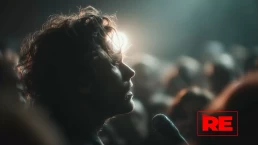
The problem is not that people crave misinformation. The problem is that people crave certainty. And certainty is easier to fake than expertise. It is easier to say “they are lying to you” than to walk someone through the complexity of data. It is easier to sound sure than to be correct. When trust collapses, simplicity wins. Confidence wins. Anger wins. Distrust becomes a shortcut that feels safer than the long road of evidence and nuance.
There is another layer to all of this. Once distrust becomes the baseline, people stop believing that expertise is even possible. They start treating knowledge like style. They judge experts the same way they judge personalities online. Tone becomes proof. Emotion becomes evidence. Familiarity becomes credibility. The person who sounds like them becomes the person they trust. The person who sounds educated becomes the person they suspect. That inversion would have been unthinkable twenty years ago. Now it is normal.
The data backs it up. The Edelman Trust Barometer found that only 36 percent of respondents believe the next generation will be better off. That kind of pessimism creates a climate where any voice that promises clarity gets elevated, even if the clarity is fake. When people expect decline, they cling to anything that looks like control. That is why conspiracy theories feel comforting. They offer a simple explanation for a complicated world. They tell you someone is pulling the strings. It sounds scary, but it also sounds organized. Organized feels safer than chaos.
Weaponized distrust feeds on that instinct. It does not need facts because its power comes from emotion. It taps into fear, resentment, alienation, and the feeling that the ground is shifting under you without warning. And once people feel those things deeply enough, even the smallest contradiction becomes proof that the system is lying. A single correction becomes a cover up. A single mistake becomes the tip of something darker. Nothing gets forgiven. Nothing gets explained. Everything becomes evidence.
And the people pushing that narrative know exactly what they are doing. Distrust is the perfect political tool because it is permanent. Once you convince someone that the other side is lying, you never have to present a better idea. You never have to solve anything. You just have to keep the suspicion alive. Every institution becomes a target. Every expert becomes a prop. Every fact becomes a weapon. The chaos becomes the point.

The danger is not that distrust exists. The danger is that distrust has become identity. People are building their entire worldview around the belief that they are being deceived. They bond over it. They form communities around it. They treat skepticism as proof of intelligence and trust as proof of weakness. And once you define yourself by who you refuse to believe, you can no longer be persuaded by anyone who falls outside your circle. Dialogue collapses. Compromise collapses. Shared truth collapses.
What we are watching is not a political argument. It is a structural shift in the way people relate to authority. A shift where experts are no longer guides. They are obstacles. They are suspects. They are symbols of a system people believe abandoned them. And until that belief changes, expertise will never regain the power it once had. Because the fight is no longer over information. It is over who gets to define reality.
At this point the collapse of trust is not a crack in the system. It is the system. People walk through their day assuming someone is misleading them. They assume information has an angle. They assume the expert is leaving something out. It is not cynicism. It is self defense. When the institutions that were supposed to protect you feel distant, suspicion starts to feel like the only safe position to take.
And that is the quiet truth underneath everything. People are not rejecting expertise because they want to be rebellious. They are rejecting it because they no longer believe anyone is neutral. They have watched the press get it wrong. They have watched leaders pivot on command. They have watched agencies revise without apology. They have watched politics bend facts into talking points. After enough years of that, trust stops being something you offer. It becomes something people have to earn in ways the system no longer knows how to deliver.
So people fall back on instinct. They fall back on identity. They fall back on the voices that make them feel like they are not alone in the confusion. It is not logic. It is survival. When the world feels unstable, the simplest explanation wins. The loudest voice wins. The one that tells you who to blame wins. And the quieter, more complicated explanations get drowned out even if they are the ones rooted in reality.
That is why the country feels so divided. People are not arguing over facts. They are arguing over trust. They are arguing over who gets to say what is true. They are arguing over whether anyone deserves that authority in the first place. And when that becomes the argument, everything else becomes noise.
The collapse of trust in expertise is not just about skepticism. It is about the cost of living in a world where people feel like they have to choose between being fooled or being alone. It is about the exhaustion of sorting through every claim because nothing is anchored. It is about the frustration of wanting answers in a landscape where every answer seems compromised.
In the end the story is simple. A society cannot function if it cannot believe anything. And the longer distrust stays unchallenged, the harder it becomes to rebuild the foundation. Because distrust spreads faster than truth, lasts longer than evidence, and leaves people standing in the ruins of a world where everyone is sure someone else is lying.
One story. One truth. One ripple at a time.
Pew Research Center. (2025). Public trust in news organizations continues to decline. Pew Research Center.
Gallup. (2025). Confidence in institutions and expert credibility: Long-term trends. Gallup Organization.
U.S. Federal Government. (2025). Trust in federal government: Historical trend data (1958–2025). U.S. Government Publishing Office.
Edelman. (2025). Edelman Trust Barometer: Global report on institutional trust. Edelman.
Vosoughi, S., Roy, D., & Aral, S. (2018). The spread of true and false news online. Science, 359(6380), 1146–1151. https://doi.org/10.1126/science.aap9559
If this work helped you understand something more clearly, support it by:
Buying the books | Visiting the Newsstand | Making a donation
One voice. One message. One Goal. Truth.
No spam. No schedules.
The Truth is Underfunded. That's Why This Exists.
No ads. No sponsors. No filter. Just the truth, unpacked, explained, and raw.
Defining Policy. Power. Consequence.
See how to add us to your home screen