The Ripple Effect
-News and Commentary-
What’s Responsibility Really Mean? Immigration, Labor, and the Rhetoric of Ownership in America
By TP Newsroom Editorial | Ripple Effect Division
Yesterday was my birthday. My parents came down to the house, and it was the first time I’d seen them in a while. I talk about my dad a lot, his views, his influence, how much of my thinking was shaped by the way he raised me, but seeing him in person is different. He’s sharp, opinionated, and still every bit the lifelong Democrat he’s always been. But where he holds that line hard on the left, I tend to lean more center. Not because I agree with the right, but because I don’t agree with blind loyalty on either side. He’ll come down hard on conservative talking points, and my instinct is to challenge him, not out of rebellion, but because nuance matters to me. I like seeing both sides. It’s just how I’m wired. And that dynamic between us always turns a simple conversation into a full-blown debate.
So we’re sitting at the dining room table, catching up, talking politics like we always do, and next thing you know, a Trump video pops up on my feed. It was the clip from Fox News, where Trump starts talking about “farmer responsibility” and how farmers could essentially be given ownership, or at least legal responsibility, over undocumented workers. I played the clip out loud, and it was like throwing gasoline on a fire. Within minutes, we had people on speakerphone, debates flying, everyone trying to unpack what we just heard. And honestly, it wasn’t just noise. It was real emotion, real disagreement about what’s right, what’s dangerous, and where the line is between strong policy and structural abuse. The whole conversation lit something in me that I couldn’t let go of all night. Because the truth is, that moment at the table didn’t just reflect my family, it mirrored the state of the country. Polarized. Defensive. Loud. And somewhere beneath all of that, still trying to find the line between protecting a nation and repeating its darkest mistakes.
If this work helped you understand something more clearly, support it by:
Buying the books | Visiting the Newsstand | Making a donation
One voice. One message. One Goal. Truth.
No spam. No schedules.
The Truth is Underfunded. That's Why This Exists.
No ads. No sponsors. No filter. Just the truth, unpacked, explained, and raw.
Defining Policy. Power. Consequence.
See how to add us to your home screen
What struck me the most that night wasn’t just the argument, or even the video itself, it was how easily the conversation slid into familiar patterns. My dad, like many others who’ve been through real struggle, sees Trump as a threat to democracy, plain and simple. For him, anything that comes out of Trump’s mouth is wrapped in danger. And while I agree that Trump’s history shows a man obsessed with power and almost allergic to truth, I still can’t throw every single policy idea into the fire just because it came from him. That’s the tension. That’s where I live. Somewhere between understanding that structure matters, and also recognizing that the structure is only as stable as the hands controlling it. And what he said in that clip, about farmers taking responsibility, about workers not receiving citizenship but still working and paying taxes, felt too damn close to something we’ve seen before.
Let’s be real. There’s a long, bloody history in this country of people being “allowed” to exist solely for the labor they provide, tied to landowners, overseers, bosses. You can call it responsibility. You can call it management. But when someone’s presence in the country is dependent on their usefulness to a person in power, that’s not freedom. That’s indenture. And when it comes to undocumented labor, especially in agriculture, we’re already dancing on a dangerous line. Trump’s language didn’t create this risk, but it absolutely amplified it. The phrasing wasn’t accidental. “Owner responsibility” isn’t something you say offhand. It’s something that frames a person’s existence as a transaction: You work, I vouch. You slip up, I revoke. That’s not a partnership. That’s control.
And here’s the thing, there are people who hear this and think it’s a solution. They think, “Well, if they’re already here, at least give farmers a way to keep the ones who work hard.” It sounds practical. But that logic only works if you erase the historical context, and the power imbalance that comes with it. Because what happens when the “responsible party” turns toxic? What happens when the undocumented worker has no real recourse, no safety net, and no protections? If their visa or legal standing is tied to one employer, what stops that employer from exploiting them? Nothing. And that’s the point. That’s why this conversation isn’t just about policy. It’s about power. Who holds it. Who loses it. And what we allow under the illusion of legality.
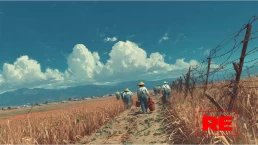
This is where I circle back to the Big Beautiful Bill. Because when you start connecting the dots between Trump’s quote and the bill’s deeper agenda, a pattern forms, and it’s bigger than any one proposal. The bill pushes for dramatic cuts to federal oversight. The Department of Education? Slashed. Environmental protections? Reduced. Public healthcare funding? On the chopping block. All of that might sound like standard small-government talk, but look closer and ask: What’s actually being decentralized? What’s really being handed back to “the states”? Or worse, what’s being handed to private power under the guise of freedom?
Because if you’re stripping away oversight at the same time you’re offering employers the right to sponsor or “own” undocumented workers, you’re not creating opportunity, you’re creating a system of quiet dependence. You’re laying the legal groundwork for something that mirrors economic feudalism. One where people aren’t tied to land anymore, but to employment. To corporate owners. To political benefactors. And if the only thing keeping you safe in this country is your relationship to the person who profits from your labor, that’s not immigration reform. That’s 21st-century indenture.
And here’s the kicker: none of this happens overnight. It’s subtle. It starts with language. With policy drafts. With the reshuffling of departments most Americans never pay attention to. It’s not a conspiracy, it’s just math. If you remove oversight and increase dependence, control flows to the top. And this bill, paired with the rhetoric we’re hearing, isn’t about solving problems. It’s about restructuring power.
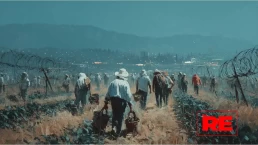
Journalism You Can Hold. Insight You Can Own.
Books Magazines Companion Guides White Papers More
Your support funds the research, reporting, and long-form analysis behind TP Newsroom
You want to talk about “farmer responsibility”? Cool. But let’s also talk about the responsibility of the system to protect the most vulnerable. Let’s talk about the history of labor abuse in this country, from enslaved Africans, to Chinese railroad workers, to undocumented Latinos picking strawberries for below minimum wage. We’ve always had a labor class that’s been invisible until it breaks. Until it bleeds. And this time, the language might be softer, but the architecture? It’s just as hard.
Trump’s farmer responsibility comment might sound like just another soundbite, but it’s not operating in a vacuum. Behind that one clip lies a whole structure of policies, loopholes, and labor programs that have been quietly running for years—programs that already blur the line between employment and control. And if we’re going to have a real conversation about what that quote means in practice, we have to talk about the most glaring gateway drug to legalized dependency in American agriculture: the H2A guest worker program.
The H2A visa system is supposed to be temporary. It’s a federal pipeline that lets U.S. employers, mostly in agriculture, hire foreign workers for seasonal jobs they claim can’t be filled by Americans. On paper, it’s a “win-win”: farmers get reliable labor, and workers get legal entry into the U.S. to earn a living. But that’s the surface-level version. Dig deeper, and you find a system that, while legal, is stacked with structural imbalance.
As of 2023, over 370,000 H2A visas were issued, up from just 79,000 in 2010. That’s a 368% increase in just over a decade. These workers are the invisible spine of America’s produce aisle, doing work most of us will never see. But here’s the catch: an H2A worker can’t just change jobs if they’re mistreated. Their legal right to stay in the country is tied exclusively to the employer that sponsors them. You don’t get to walk out, speak up, or organize without risking your visa, and, by extension, your livelihood.
The program doesn’t technically allow employers to “own” workers, but when your legal status and income are completely bound to a single person or company, that’s not freedom. That’s economic captivity.

And there’s evidence, mountains of it, that abuse under this system is widespread. According to a 2021 report from the Economic Policy Institute, H2A workers have faced: Wage theft, Unsafe working conditions, Threats of deportation for speaking out, Substandard housing, including in some cases, workers being forced to sleep in trailers, shipping containers, or pest-infested barns.
Let that sink in. These aren’t isolated stories. They’re baked into the system because there’s no meaningful oversight. The U.S. Department of Labor is understaffed and underfunded. Enforcement is slow. Investigations are rare. And for the workers stuck inside that machine, there is no real path to protection.
So when Trump says farmers should be given legal “responsibility” or “ownership” over undocumented workers, he’s not proposing something new. He’s proposing a formal expansion of an already flawed system, one where the only difference is that the workers aren’t just undocumented, they’re now unofficially tethered to a single employer with zero path to citizenship. And that’s the pivot. He’s not talking about citizenship. He’s not even talking about immigration reform. He’s talking about labor control. Understand what that means, a class of people who live here, work here, pay taxes, but have no political voice, no legal protection, and no long-term security. It’s not a policy designed to uplift. It’s a policy designed to contain.
Now pair that with the Big Beautiful Bill, which guts the Department of Education, scales back the Department of Labor, and transfers power to the states with little to no accountability, and you start to see the foundation for something bigger. Something more dangerous. A national model that allows private employers or state-controlled agencies to regulate, contain, and benefit from a class of permanent laborers with no way out.
And here’s where it really gets slippery: under current law, undocumented workers already contribute billions in taxes, yes, billions. According to the Institute on Taxation and Economic Policy, undocumented immigrants contribute an estimated $11.7 billion annually in state and local taxes. They’re paying into a system that many of them will never be allowed to fully access. No voting rights. No safety net. No guarantee of protection.
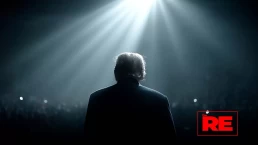
Now imagine giving a single employer the keys to that worker’s legal existence. You don’t have to imagine long, because we already have case studies where that dynamic plays out, and it’s never in the worker’s favor.
We’re not talking about hypothetical futures. We’re talking about systems already in motion. Trump’s quote didn’t create the structure, but it did make it bolder. Louder. And far more dangerous in the wrong hands.
And this is where the scaffolding really starts to show because labor exploitation doesn’t live in isolation. It thrives when systems around it look the other way. And under the Big Beautiful Bill, that’s exactly what’s being engineered: a future where oversight is intentionally gutted, responsibility is outsourced, and enforcement is shifted away from centralized protections into fragmented, state-by-state chaos.
Start with immigration enforcement. Under current law, ICE already works with private detention contractors, companies like GEO Group and CoreCivic, to detain undocumented immigrants. These private facilities operate under the guise of efficiency and cost-saving, but they’ve been repeatedly cited for human rights violations, lack of medical care, and abuse. These companies make billions annually in taxpayer-funded contracts. Now imagine this same playbook applied not just to detention, but to employment oversight. If the federal government steps back, as the Big Beautiful Bill proposes, who ensures that workers tied to employer sponsorship aren’t being abused? Who steps in when a “farmer responsible” for undocumented labor decides to withhold wages or provide substandard housing? In many red states, labor departments are already underfunded, politicized, or both.

If this becomes state-administered, there is no consistency. There is no federal standard. It becomes a patchwork of rights, defined by governors and state legislators who may have zero incentive to protect immigrant workers, especially when those workers can’t vote, can’t unionize, and can’t organize publicly without fear of deportation.
Even the Department of Labor’s own 2020 audit warned that fewer than 1 in 50 H-2A employers were ever investigated, and enforcement actions were rarely followed up. That’s under current federal policy. Reduce that federal reach further? That number doesn’t shrink, it disappears. Now add another layer: the Big Beautiful Bill includes provisions to slash funding for “duplicative” federal programs, which includes not only education and healthcare, but also labor protections, OSHA enforcement, and Department of Labor inspections. It’s all positioned as fiscal responsibility, but let’s be clear: cutting these programs doesn’t just trim fat. It removes the referees.
And without referees, power tilts. Every. Single. Time. Think about the domino effect: Undocumented workers already underpaid, Guest worker programs that tether legal status to employment, ICE partnerships with private companies for detention, Reduced federal labor protections under a new bill and States encouraged to “do it their own way.”

What we’re building isn’t just policy shift, it’s structural submission. It’s the deliberate creation of a workforce that can be taxed, used, and discarded, all while being held just outside the reach of rights.
Even if you believe in border control, even if you believe in streamlined immigration, this isn’t that. This is control without citizenship. This is compliance without freedom. This is labor without rights, with legal cover for the employer and little recourse for the worker.
And what’s unimaginable to me is that Trump’s statement didn’t come with fine print. It wasn’t buried in legalese. He said it out loud. On camera. At a press conference. And the story barely made a ripple in the national news cycle. Maybe because it sounded like a “policy idea.” Maybe because it didn’t come with visuals of children in cages. But if you understand the history, if you’ve studied labor control, if you’ve seen what happens when power gets lopsided, then you know the slope we’re already sliding down.
We’ve done this before. This isn’t new. It’s just rebranded. In the 1800s, the same justification was used for convict leasing after slavery ended. “They’re not slaves, they’re prisoners who owe a debt to society.” In the early 1900s, it was “company towns” that paid workers in scrip instead of real wages. And now? It’s visa programs that restrict your right to leave, and proposed “responsibility clauses” that would make undocumented labor legally dependent on individual landowners. It’s the same story, new book cover.
The Big Beautiful Bill doesn’t create this system, but it guts the barriers that could stop it. It sets the stage for exploitation to go unchecked. It empowers states and private actors to handle things “their way”, and if we’re honest, we already know how “their way” looks when no one’s watching.

There’s a moment, somewhere in every conversation about policy, where people start talking about intentions. “Well, I don’t think they meant it like that.” Or “Maybe it’s not ideal, but it’s not slavery.” That moment is where most debates stall. People stop looking at impact and start defending hypotheticals. But policy isn’t judged by intent. It’s judged by structure, by how it functions in real life, on real bodies. So let’s talk about what’s actually being built here.
The quote Trump gave, “farmer responsibility,” “owner responsibility”, isn’t theoretical. It’s a direct pitch for a labor control model where undocumented workers remain in the U.S., continue working, pay taxes, but are tethered to a private employer for their right to exist. That’s not oversight. That’s not order. That’s ownership with legal padding.
When you pair that rhetoric with the structure of the Big Beautiful Bill, the threat isn’t just rhetorical, it’s systemic. Because the bill: slashes federal labor protections, defunds oversight agencies, decentralizes regulation to the states, reduces education and public programs, and creates room for public-private power handoffs with minimal accountability. And if you think that won’t be used to control people who lack full citizenship? You haven’t been watching the history reruns closely enough.
This bill doesn’t just reduce government, it redefines governance. It says we don’t need national standards. That each state can determine its own path. That companies can be trusted to self-regulate. But we’ve seen that story already, in housing, in banking, in healthcare, in environmental justice. And every single time, the people who pay the highest price aren’t the wealthy. They’re the poor, the working class, the undocumented, and the unseen.
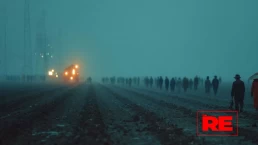
If this bill becomes the blueprint for the future, we’re looking at a country that’s slowly replacing national rights with conditional privileges. One where your stability depends on who you work for, not what protections the Constitution promises. And that’s the part no one wants to say out loud. This isn’t about Trump alone. It’s not even about the Republican Party alone. This is about a long arc of policy shift, one that’s been decades in the making, that trades in moral neutrality to preserve capital and control. It’s the slow erosion of oversight dressed up as state freedom. And that erosion doesn’t come for everyone at once. It starts with the people least able to fight back. So let’s close this with the real questions, the ones we have to ask if we’re serious about truth:
Who benefits from a system where labor is legal but citizenship is denied? Agribusiness. Landowners. Politicians who promise “tough” immigration while depending on that labor class to keep their economies afloat. They get cheap labor, political cover, and no accountability.
What happens when oversight is gutted and the power to regulate is handed to states with poor labor records? You get fragmentation. Confusion. Inconsistency. In red states, you get silence. In blue states, maybe protection, but that’s a geographic lottery. Workers’ rights become zip-code dependent.
When? Now. This isn’t five years out. The bill is moving. The rhetoric is already here. Enforcement trends, ICE contracts, H-2A expansions, they’re all in motion.
Where does it go if unchecked? Toward a future where a subclass of people, mostly brown, mostly poor, mostly voiceless, exist in America to work, but never belong. Where labor is welcomed, but life is conditional.
Why does it matter? Because once the country accepts the idea that some people can be legal but not equal, it doesn’t stop there. The slope doesn’t care about your citizenship papers. If we let labor control become policy, it’s only a matter of time before that control finds its way to more groups, more spaces, more lives.
We’re not at the edge of this cliff, we’re already halfway down it. The only question is whether we keep tumbling, or finally hit the brakes and ask what the hell we’re allowing to be normalized.
That’s the ripple. This is the warning. And if we don’t take it seriously, we’re not just rewriting immigration law, we’re rewriting the meaning of freedom.
U.S. Department of Labor. (2024). Office of Foreign Labor Certification – H-2A program performance data. https://www.dol.gov/agencies/eta/foreign-labor/performance
Costa, D., & Martin, P. (2021). Temporary foreign workers in U.S. agriculture: The H-2A visa program in 2020. Economic Policy Institute. https://www.epi.org/publication/h-2a-visa-program-2020/
Gee, L., Gardner, M., Hill, M., & Wiehe, M. (2017). Undocumented immigrants’ state and local tax contributions. Institute on Taxation and Economic Policy. https://itep.org/undocumented-immigrants-state-local-tax-contributions-2017/
Gee, L., Gardner, M., Hill, M., & Wiehe, M. (2017). Undocumented immigrants’ state and local tax contributions. Institute on Taxation and Economic Policy. https://itep.org/undocumented-immigrants-state-local-tax-contributions-2017/
U.S. Immigration and Customs Enforcement. (2023). Detention management statistics. https://www.ice.gov/detention-management
U.S. Department of Labor, Office of Inspector General. (2020). COVID-19: Increased risks to migrant H-2A workers raise concerns about the integrity of the labor certification process. https://www.oig.dol.gov/public/reports/oa/2020/06-20-001-03-321.pdf
If this work helped you understand something more clearly, support it by:
Buying the books | Visiting the Newsstand | Making a donation
One voice. One message. One Goal. Truth.
No spam. No schedules.
The Truth is Underfunded. That's Why This Exists.
No ads. No sponsors. No filter. Just the truth, unpacked, explained, and raw.
Defining Policy. Power. Consequence.
See how to add us to your home screen