The Ripple Effect
-News and Commentary-
Too Big to Fail: The Untold Story of the U.S. Dollar
By TP Newsroom Editorial | Ripple Effect Division
Today in The Ripple Effect, we are discussing the birth of something most people use every day, stress about constantly, vote around, and chase endlessly yet barely understand: the U.S. dollar. Not the dollar as money, but the dollar as power, as the world’s reserve currency, the foundation for international trade, debt, oil, stability, and control. And most people in this country have no idea how that happened. They don’t teach it in school. It doesn’t show up on the news. But it didn’t happen by accident. It was strategic. It was calculated. It was built. And it all started at a quiet mountain resort in New Hampshire, while the world was still at war.
The year was 1944. World War II wasn’t over yet, but the end was close enough for Allied nations to start thinking about what came next. Economies were wrecked. Gold was being hoarded. Countries were broke, unstable, and isolated. Trade had collapsed. The Great Depression had already taught the world what a global economic spiral could look like. So 44 countries gathered at Bretton Woods to figure out how to build something new, a financial system that would bring stability after a generation of chaos. What they came up with was a system that centered everything around the U.S. dollar. And we, as Americans, didn’t just accept that role, we orchestrated it.
See, by that point in history, the U.S. held more than two-thirds of the world’s gold reserves. We were the only major economy not physically devastated by war. Our factories were running. Our banks were strong. And politically, we had the credibility to make a global ask. So the offer we made was simple: let every other country peg their currency to the dollar, and we would peg the dollar to gold, at $35 an ounce. That gave the illusion of stability. It created a sense that even though money was now being exchanged through paper, there was still something real behind it. If you were a country trading in dollars, you were, in theory, still trading in gold.
And the world agreed. Not because they had no choice, but because in that moment, the U.S. was offering something no one else could: confidence. Trust. Order. Backed not just by paper, but by military power, industrial dominance, and control of the world’s largest supply of gold. That agreement at Bretton Woods locked the U.S. dollar in as the center of the financial universe. Not because it was morally superior. Not because our government was smarter. But because we were in the right place, at the right time, with the right leverage.
If this work helped you understand something more clearly, support it by:
Buying the books | Visiting the Newsstand | Making a donation
One voice. One message. One Goal. Truth.
No spam. No schedules.
The Truth is Underfunded. That's Why This Exists.
No ads. No sponsors. No filter. Just the truth, unpacked, explained, and raw.
Defining Policy. Power. Consequence.
See how to add us to your home screen
What people don’t realize is that this was never just about economics. This was about control. Whoever controls the currency controls the terms of trade. And once the world agreed to measure everything against the dollar, we weren’t just playing the game, we were writing the rules. The World Bank and the International Monetary Fund were both created out of Bretton Woods too, and surprise, they were headquartered here. The dollar became the gatekeeper of global loans, global trade, global stability. And that mattered, because if your country wanted to borrow money, rebuild infrastructure, or stabilize your economy, you needed dollars to do it.
But the catch, the part that never gets explained to the average person is that the dollar’s strength wasn’t just about value. It was about belief. About perception. The entire system was built on a shared agreement that America wouldn’t break its promise. That the dollar really would stay backed by gold. That the price would hold. That the exchange would remain trustworthy. But just like any promise built on power instead of principle, that belief had an expiration date.
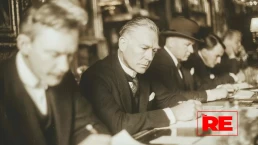
By the early 1970s, the promise made at Bretton Woods was starting to crack. America had been printing more dollars than it had gold to back, quietly testing the limits of global trust. The Vietnam War had drained the economy. Social programs under Lyndon Johnson’s “Great Society” were expanding. Inflation was climbing. And foreign governments were starting to notice. They looked at the U.S. balance sheet and started asking hard questions. If every dollar was supposed to be redeemable for gold at $35 an ounce, why were there far more dollars in circulation than there was gold in Fort Knox? Countries like France and West Germany weren’t just asking, they were acting. They began demanding gold in exchange for their growing stacks of dollars. And under the Bretton Woods system, the U.S. was obligated to deliver. But if we honored those redemptions at scale, we’d bleed our gold reserves dry. Which meant the entire foundation of global finance, trust in the dollar, was at risk of collapse.
So in August 1971, President Richard Nixon went on national television and made a decision that would permanently change the world economy. With no vote, no international negotiation, and no real warning, he ended the gold standard. Just like that. He closed the “gold window,” declaring that the U.S. would no longer convert dollars into gold at a fixed rate. It was called the Nixon Shock and it lived up to the name. Suddenly, the U.S. dollar was no longer tethered to anything tangible. It became what’s known as a fiat currency, money backed by nothing but government decree and global confidence. No gold, no silver, no asset to tie it down. It was simply worth what people believed it to be worth. That moment didn’t just kill Bretton Woods. It birthed the world we live in now. A world where currency values float. Where markets swing based on perception. Where debt becomes the fuel for everything.
Most Americans never understood what that shift really meant. But the rest of the world paid attention. Countries scrambled to readjust. Gold prices exploded. Some nations attempted to peg their currencies to new benchmarks, but without the dollar’s weight, nothing held. In the chaos, America had to do something fast to keep the dollar at the center of the system or risk losing global control. So we made a new deal, one that’s rarely taught in textbooks but still shapes geopolitics to this day: the petrodollar.
After Nixon ended the gold standard, the U.S. cut a deal with Saudi Arabia and the rest of OPEC. The agreement was simple oil would only be sold in U.S. dollars. In return, the U.S. would provide military protection and economic cooperation. What that did was force every country in the world that needed oil, which is to say, all of them, to first obtain U.S. dollars before buying it. That created permanent demand for the dollar, even though it was no longer backed by gold. Instead of being tied to a metal, it was now tied to energy. Global trade was now locked into our currency. It wasn’t just clever it was strategic power consolidation disguised as economic policy. And once oil was priced in dollars, the dollar’s status as the world’s reserve currency was secured, even without a gold foundation.

But that also set us on a path we’ve never fully come back from. Because without the guardrails of gold, there was nothing to stop America from printing and spending at will. The government could run massive deficits without immediate punishment. The Federal Reserve could manipulate interest rates freely. Debt could pile up endlessly, because demand for the dollar stayed strong no matter what. The system rewarded short-term political wins and long-term instability. And while other countries had to worry about real currency risk, we could simply pass the consequences forward. For decades, that system worked—at least on the surface. But the cracks that started in 1971 never went away. They just got buried under stimulus, military spending, tax cuts, and global borrowing.
The petrodollar system kept the illusion alive. The belief in the dollar was propped up by the reality that every country still needed it. But now, in 2025, that belief is starting to show signs of strain. Countries are diversifying. Alternatives are being discussed. And America, for all its influence, is sitting on a mountain of debt that no longer looks manageable. The gold window may have closed fifty years ago, but the consequences of that decision are still playing out and they’ve shaped the very idea of inflation, debt, and economic control in ways most people never realize.

Most people hear that the U.S. dollar is the world’s reserve currency and just nod like it’s trivia. A fact. A random flex from the finance world. But very few understand what that actually means or how deeply it affects everything from the price of eggs to the interest rate on your house to whether your country goes to war. Being the world’s reserve currency is not just about prestige. It’s about control. It means that the global economy functions in dollars by default. When countries trade, they trade in dollars. When central banks store value, they store it in U.S. Treasury bonds. When oil is sold, when international loans are issued, when commodities are priced, it all happens in dollars. Not because America says so, but because the system was built that way and for decades, there was no viable alternative. But that position comes with a strange double-edged sword. It gives the U.S. an enormous advantage. It also locks us into a financial trap most people can’t see.
Here’s how the advantage works. Because the world needs dollars to do business, there’s always a steady demand for U.S. currency. That means the U.S. can print money and borrow money in a way no other country can. If a smaller country runs a deficit, its currency weakens. Investors pull out. Interest rates rise. The economy gets punished. But when the U.S. runs a deficit? We sell Treasury bonds. The world buys them. That debt gets absorbed. And the dollar stays strong, even when we’re financially reckless. That’s what people mean when they say we can “borrow from ourselves.” We are, in a sense, exporting our debt to the rest of the world and daring them to call our bluff. And they don’t because they need the dollar more than they want to challenge it.
It also means the U.S. doesn’t really face the same consequences other countries do when we make bad economic choices. We have a financial cushion most nations don’t. We can spend into wars, recessions, bailouts, and social programs without crashing the currency, because demand for the dollar never fully disappears. That’s the luxury of being the reserve currency. But here’s the trap: when you know the world needs your money, you stop being careful with it. And over time, what was once an advantage becomes a weakness. You start relying on debt. You start manipulating interest rates to keep markets calm. You start printing money because the consequences are never immediate. And you start building an economy on belief instead of balance.
That’s what has happened to the U.S. over the last fifty years. We built an economy on spending. Not because we were stupid, but because the system rewarded it. Presidents on both sides of the aisle learned the same thing: cut taxes, increase spending, let the Federal Reserve tweak rates to balance it all out later. And since the world kept buying our debt, there was no emergency brake. No one could tell us no. And we convinced ourselves that because the dollar was in demand, the system was healthy. But demand does not mean sustainability. And now, as global markets shift, and as new players like China and BRICS start testing alternatives, the foundation of dollar dominance doesn’t feel as solid as it used to.
The irony is, being the world’s reserve currency gave us incredible power but it also gave us an addiction to leverage. We don’t just use the dollar. We weaponize it. We sanction countries through the financial system. We freeze assets. We influence elections by controlling access to international banking. And whether people agree with those choices or not, the truth is the same: we don’t just participate in the global economy, we police it. And eventually, other countries start looking for ways to opt out. Because no one wants to be permanently dependent. No one wants to be punished with their own money.
That’s where the conversation is headed now. Countries are asking whether the dollar can remain the default forever. They’re looking at gold, at digital currencies, at regional trade agreements. Not because the dollar is collapsing but because the world is tired of being tied to the political choices of one nation. And while the U.S. still holds the throne, that grip is not what it used to be. The cracks are forming. And those cracks didn’t come from outside. They came from inside from the choices we made, the money we printed, the promises we stretched too far, and the assumption that the world would never walk away.
Journalism You Can Hold. Insight You Can Own.
Books Magazines Companion Guides White Papers More
Your support funds the research, reporting, and long-form analysis behind TP Newsroom
Once the gold standard was gone and the dollar was floating freely, the United States was effectively unshackled. No more gold limits. No more obligations to hold value. No more hard stop on how much could be printed, borrowed, or promised. And with global demand for the dollar locked in through oil and trade, there were no immediate consequences for spending more than we had. So that’s exactly what we did. Slowly at first. Then at full speed. What began as a calculated pivot became a long-term dependency, on deficit spending, on low interest rates, and on the belief that no matter how bad the books looked, someone out there would always be willing to buy more U.S. debt. That’s the real legacy of post-Bretton Woods America. Not innovation. Not industrial strength. Not balanced budgets. But the construction of a financial system built almost entirely on controlled debt. A system where the Federal Reserve became the ultimate backstop. And every time we ran into trouble, recession, war, political collapse we reached for the same fix: spend more, borrow more, print more.
This wasn’t a partisan strategy. It was a bipartisan addiction. Ronald Reagan exploded the national debt in the 1980s under the flag of tax cuts and military expansion. George H.W. Bush followed with war spending. Bill Clinton temporarily reversed the trend, but the moment passed. George W. Bush pushed it to a new level with two unfunded wars and massive tax breaks. Barack Obama responded to the financial crisis with bailouts, stimulus packages, and emergency intervention to prevent collapse. Donald Trump cut taxes again and approved trillions in COVID relief. Joe Biden followed up with infrastructure packages, expanded social programs, and more COVID stimulus. And through all of it, the pattern stayed the same: campaign on responsibility, govern through deficits, and let the Fed figure out how to keep inflation from blowing the whole thing up.
The problem wasn’t just the amount of debt. It was the philosophy behind it. Debt became a tool of convenience, not emergency. Interest rates were used like a cheat code, lower them to keep markets happy, raise them when inflation pops up, then lower them again as soon as people start to panic. And for decades, it worked. The U.S. could borrow trillions, and nothing crashed. The stock market grew. Housing prices climbed. Wages stagnated, but credit expanded. And because the pain wasn’t immediate, nobody stopped the cycle. Voters weren’t mad about deficits. Politicians weren’t punished for debt. And every time a president tried to talk about responsibility, they were laughed off the stage or replaced with someone who promised more without sacrifice.
What most people didn’t realize was that this kind of debt spiral comes with compounding consequences. You don’t feel them in year one or year two. But over decades, the cost of servicing that debt paying the interest on what we’ve borrowed starts to dominate the budget. That’s where we are now. The U.S. spends hundreds of billions of dollars a year just on interest. Not on roads. Not on education. Just interest. And because we’re borrowing at higher rates than we were before, that number is growing fast. Faster than anyone predicted. And unlike other forms of spending, we can’t cut that line. It’s not optional. It’s owed.

The addiction also changed the way we approach every national problem. Instead of fixing structural issues, we apply financial patches. Instead of reforming systems, we stimulate demand. Instead of tightening the belt, we inflate the currency and hope no one notices. And because the dollar still dominates globally, we’ve been able to get away with it. But getting away with something is not the same as fixing it. And underneath the surface, the weight of this model is starting to show. Inflation has returned in a way we haven’t seen in decades. Housing is out of reach. Interest rates are being forced higher. And the same tools we once used to fix the economy are now part of the problem.
This is what people need to understand: the U.S. didn’t get here by accident. We got here by design. We built a system where endless borrowing was rewarded, where economic reality could be deferred, and where the rest of the world was pressured to play along. And now, as those pressures build and those deferrals run out, the tools that once saved us might not work the next time. Because when debt becomes the default solution, and interest becomes a budget line bigger than defense, and people start asking real questions about the value of the dollar, there’s no room left to maneuver. We’re still in the driver’s seat. But the gas tank’s low, the brakes are fading, and the road ahead looks a lot less stable than we’ve been told.
In the late 1990s, something happened in America that felt almost unthinkable, at least by today’s standards. The federal budget balanced. For the first time in decades, the United States wasn’t just reducing the deficit. It was running a surplus. The country was bringing in more money than it was spending. And it didn’t happen by accident. It was the result of a rare combination of economic boom, political deal-making, and public pressure that all collided under President Bill Clinton. Whether people liked him or hated him, Clinton pulled off something no president since Eisenhower had done: he slowed the growth of government spending while increasing tax revenue, and the books, at least on paper, looked clean. But what most people forget is that this wasn’t just about numbers. It was a moment. A brief, fragile period where fiscal responsibility became fashionable again, and where the idea of a sustainable economy felt possible. And just like that, it vanished.
The 1990s were a perfect storm for economic optimism. The Cold War had ended. Defense spending dropped. Global trade was expanding. NAFTA was signed. The internet was exploding. Wall Street was on fire. Unemployment was low. Tax revenue was flooding in from capital gains, income taxes, and a white-hot tech sector that hadn’t crashed yet. Clinton, for all his baggage, knew how to sell stability. He framed the budget surplus not just as a policy win, but as a moral win, proof that government could be efficient, smart, and forward-thinking. And Congress, at the time led by Newt Gingrich and a Republican majority, surprisingly agreed. The two sides fought bitterly on everything else, but they aligned on the idea that debt was a threat, and the deficit had to shrink. That bipartisan moment was short-lived, but it was real. And it produced numbers that are still hard to believe when viewed from today. By the end of the 1990s, the U.S. government was not only out of the red, it was paying down old debt.
The Congressional Budget Office even projected that if those policies held, the entire national debt could be eliminated by 2010. Let that sink in. Twenty years ago, America had a clear path to being debt-free within a decade. But the problem with balance, especially in politics, is that it doesn’t satisfy anyone for long. Voters wanted more tax cuts. Politicians wanted more spending. Markets wanted more liquidity. And the moment things got tight again, the old habits returned. People started asking why we should be running surpluses when we still had roads to fix, programs to expand, military strength to maintain. And just like that, the discipline cracked.
What’s important to remember about the Clinton surplus is not just that it happened, but how quickly it was erased. The surplus years were between 1998 and 2001. That’s it. Three years. And then came the shift. The tech bubble burst. The economy cooled. The 2000 election tore the country open. And just a few months into George W. Bush’s presidency, the surplus was gone. Completely. In its place came new tax cuts, two massive wars, and a new phase of American economics, one where deficits were no longer treated as dangerous, just inconvenient. But for that one stretch in the late ’90s, there was a glimpse of what responsibility could look like. A country that lived within its means. A budget that wasn’t driven by crisis or ideology. It didn’t last. But it happened. And its absence today is not just felt in the numbers, it’s felt in the culture. Because once the system realized it could operate without balance, it stopped trying to chase it at all.
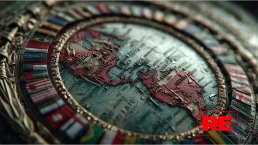
The Clinton surplus didn’t just disappear, it was dismantled. And it didn’t take long. As soon as George W. Bush took office in 2001, the political tone shifted from restraint to reassurance. The pitch was simple: the government had too much money, and the people deserved it back. So came the first round of major tax cuts, passed under the banner of economic growth. At the same time, the dot-com bubble was already bursting, and the economy was beginning to slow. But the real rupture came later that year. September 11th changed everything. Overnight, the country entered a war footing, and the blank checkbook came back out. The War in Afghanistan. The War in Iraq. Massive increases in defense spending. Emergency funding. And no tax hikes to pay for any of it. Instead, the government doubled down on the debt model, borrow now, pay later. The surplus vanished. The national debt soared past $6 trillion. And once again, the idea of fiscal balance was shelved for the sake of short-term political survival.
Then came 2008. The financial system collapsed under its own weight, decades of deregulation, reckless banking practices, subprime loans, and the illusion that housing prices could only go up. Wall Street imploded, but Washington blinked. The Bush administration signed off on hundreds of billions in emergency bailouts. And by the time Barack Obama took office, the economy was in freefall. Job losses were historic. Banks were crumbling. Confidence was shattered. So what did we do? We went even deeper. Obama signed a nearly $800 billion stimulus package, one of the largest in U.S. history at the time. It helped stabilize the economy, but it also solidified the playbook. When things get hard, government spends big. It wasn’t irresponsible. It was reactive. But it also meant that even Democrats, the party that had once delivered a surplus, were now fully onboard with permanent deficit spending as standard economic policy. The national debt crossed $10 trillion, then $15 trillion. And no one really fought to stop it.
Obama’s presidency wasn’t just about recovery, it was about survival. The country was in a fragile state. And the debt, though alarming, was abstract to most Americans. The markets were recovering. Unemployment was falling. Inflation stayed low. So the spending didn’t feel dangerous. But what it did was set a tone, if the government needed to intervene, there was no limit. And the Federal Reserve backed that tone by keeping interest rates near zero for almost the entire decade. It kept the economy stable. It kept the cost of debt cheap. But it also locked us into an economic system that could not afford to return to “normal” without triggering pain.
Then came Donald Trump. His campaign promised fiscal conservatism, but his policies leaned into the exact opposite. In 2017, he signed the Tax Cuts and Jobs Act, a massive overhaul that reduced corporate tax rates and lowered personal tax rates across the board. It was sold as a way to spur growth. And in the short term, it did. The markets surged. GDP ticked up. But the national debt exploded even further, because the cuts were not paid for. And once again, Washington reached for the same excuse: deficits don’t matter as long as the economy is growing. But even that logic was tested by what came next.

In 2020, COVID-19 hit and everything stopped. Businesses closed. Unemployment spiked. Supply chains broke. Fear spread faster than the virus. And the government, once again, reached for the only tool it trusted: emergency spending. Trillions were pumped into the economy. Direct payments to households. Expanded unemployment. Loans to businesses. Bailouts to industries. Eviction moratoriums. Rent relief. State and local funding. Round after round of stimulus. Over $5 trillion in new federal spending, passed across two presidencies, in less than two years. And almost none of it was offset. There was no new revenue. No major tax reform. Just more debt this time at historic scale.
By the time the COVID wave receded, the national debt had crossed $30 trillion. And the country had crossed a psychological line. Because now, even in peacetime, even during recovery, massive spending had become normalized. No one talked seriously about paying it down. Politicians barely pretended to care about the long-term consequences. The Federal Reserve kept rates low until inflation finally exploded in 2021, and even then, the correction came too late to undo the damage. The cycle was complete. The surplus days were a distant memory. And every modern presidency, Republican and Democrat, had played a role in building a system that required more debt, more stimulus, more manipulation just to keep standing.
That’s where we are now. Trapped in a model that rewards risk and punishes caution. Where economic growth is measured by how much money the government injects into the system. Where every crisis is met with another round of spending. And where the long-term consequences, higher inflation, weaker purchasing power, growing inequality, are explained away as temporary. But they are not temporary. They are the result of decades of policy choices made under the assumption that the dollar’s dominance would shield us from reality forever.

Inflation is one of those words that gets thrown around like background noise, repeated on cable news, tossed into campaign speeches, printed in bold across headlines. But most people still don’t really know what it means. They feel it. They live it. But they don’t always understand what causes it, how it works, or why it suddenly seems like a force no one can control. They just know groceries cost more, rent keeps rising, and every year, their money stretches less than it did before. What gets lost in the noise is that inflation isn’t just about price increases. It’s about pressure, built-up pressure inside a system that’s been manipulated, stretched, and patched for decades. And now, after fifty years of shortcuts and overspending, that pressure is no longer quiet.
At its core, inflation happens when too much money is chasing too few goods. That’s the textbook version. But in reality, it’s never just one thing. It’s a combination of supply shocks, labor disruptions, loose monetary policy, and in America’s case a long history of injecting cash into the economy to solve deeper structural problems. When COVID hit, for example, the government spent over five trillion dollars trying to keep the economy afloat. And at the time, most people supported it. Businesses were closed. People were out of work. Rent was due. It felt like a necessary move to avoid collapse. But when you flood the system with money, and that money isn’t tied to actual production or productivity, the value of that money starts to erode. Prices adjust. Not all at once, but over time. Slowly, then suddenly.
And what made this wave of inflation different was how broad it became. It wasn’t just gas. It wasn’t just eggs. It hit every sector at once, housing, cars, construction, travel, services, even basic utilities. Because when interest rates had been low for a decade, and the Federal Reserve kept printing, and politicians kept borrowing, everything in the system was inflated, asset values, stock prices, corporate margins. So when inflation finally broke loose, it didn’t just rise quietly. It snapped. And everyday Americans, already stretched thin, got hit the hardest.
If this work helped you understand something more clearly, support it by:
Buying the books | Visiting the Newsstand | Making a donation
One voice. One message. One Goal. Truth.
No spam. No schedules.
The Truth is Underfunded. That's Why This Exists.
No ads. No sponsors. No filter. Just the truth, unpacked, explained, and raw.
Defining Policy. Power. Consequence.
See how to add us to your home screen
But the most dangerous part of inflation isn’t the price hike, it’s the panic. Because inflation eats at the two things a stable economy relies on: confidence and predictability. When people don’t know how much things will cost next month, they change their behavior. They spend differently. They hoard. They postpone investments. Businesses freeze hiring. Banks tighten credit. And once that uncertainty spreads, it becomes hard to unwind. That’s why inflation isn’t just a number on a chart. It’s a threat to the psychological foundation of the economy. It’s what turns slow-burning problems into full-scale recessions.
And here’s where it gets even harder to talk about, because inflation isn’t just about current policy. It’s about every choice we’ve made over the last fifty years to avoid real economic discipline. Every bailout, every tax cut, every war we didn’t pay for, every stimulus package, every time the Federal Reserve cut interest rates to prop up a market instead of letting it correct naturally, that all adds up. None of it is isolated. It’s layered. And eventually, the layers get too heavy to ignore. That’s what this inflation wave represents. Not just bad luck or bad timing, but the bill finally coming due for years of imbalance.
The public conversation around inflation often gets framed like it’s someone’s fault, this president, that policy, this moment in time. But the truth is, this didn’t start in 2020. It didn’t even start in 2008. It started the moment the dollar left the gold standard and the country realized it could spend without limit. And instead of using that power wisely, we used it recklessly. We replaced sustainable growth with artificial demand. We papered over hard decisions with temporary fixes. And now, with debt levels higher than ever, and interest rates rising just to keep inflation from exploding, the system we built is tightening on itself. There are fewer levers left to pull. And the people who did nothing to create this problem, the ones working hourly jobs, trying to afford housing, struggling to cover groceries, are paying for it the most.

For decades, the Federal Reserve was treated like the adult in the room, the institution that would step in quietly, adjust a few rates, calm the markets, and keep everything under control. When inflation rose, it would raise interest rates. When growth slowed, it would lower them again. That cycle, raise, cut, stabilize, became the core tool America used to manage the economy. But what most people never realized was how dependent we became on that tool. And how limited it really is once the damage is already done. The Fed doesn’t build houses. It doesn’t hire workers. It doesn’t lower gas prices or fix broken supply chains. It manages perception. It pulls the levers of credit. And it sets the cost of borrowing for everything from mortgages to business loans. That worked—until it didn’t. Because once inflation broke out after COVID, the Fed was forced to do something it hadn’t done in years: raise interest rates fast, and raise them hard. And when it did, the cracks in the system showed immediately.
The logic is simple on paper. Higher interest rates slow down spending. They make borrowing more expensive. That’s supposed to cool the economy and reduce inflation. But in real life, the impact is brutal. When interest rates rise, mortgages spike. Homebuyers get priced out. Rent goes up. Credit card debt becomes more expensive. Small businesses struggle to borrow. Student loans stretch further. And even though the policy is aimed at controlling inflation, the people paying the price aren’t the ones who caused it. The system isn’t surgical. It’s blunt. And this time, the pain is spreading.
What’s worse is that the Federal Reserve doesn’t have many good options left. If it keeps raising rates, it risks tipping the economy into a deep recession. But if it lowers them too soon, inflation could reignite and spiral again. That’s the trap. The same interest rate cuts that helped us avoid collapse in 2008 and during COVID are now off the table. Because inflation is no longer theoretical, it’s real, it’s visible, and the public feels it every day. The Fed’s old tools can’t fix this because the problem is no longer just cyclical. It’s structural. It’s the result of decades of cheap money, political spending with no discipline, and a financial system that taught everyone, from corporations to governments to consumers, that debt is just how things work now.
And this is where the consequences of being the world’s reserve currency start to feel different. In the past, we could run up massive debt and still keep rates low because demand for the dollar stayed strong. But now, with global competitors rising and inflation staying sticky, the usual confidence isn’t as automatic as it once was. The Fed has to act more aggressively just to maintain the same level of control. And that means every rate hike hits harder. Every delayed decision carries more risk. Every press conference becomes a signal that can move trillions. The Fed isn’t just managing the economy anymore. It’s managing national anxiety.

And underneath all of this is a simple truth most economists won’t say out loud: the American financial system, as it stands, is not designed to handle high interest rates long term. Our entire economy is built on borrowing. From personal debt to corporate leverage to government bonds, the assumption for years has been that credit would always be cheap. That’s why homes cost what they do. That’s why businesses expand the way they do. That’s why the national debt ballooned past $30 trillion without a full-blown panic. Because low interest rates made it all seem manageable. But now, as those rates rise, the cost of everything increases, not just for consumers, but for the government itself. And that cost isn’t temporary. It’s baked into the future.
This is why inflation matters. Not just because it hurts now, but because it limits what we can do next. The safety net is stretched. The Fed’s playbook is worn thin. And the idea that we can fix this with another quick policy change or a one-time payment is a fantasy. Inflation forced the Fed into a corner. Interest rates locked the country into a slower, more painful economy. And unless we address the root causes, our addiction to debt, our refusal to balance budgets, our reliance on printing instead of producing, we’re going to stay stuck in a cycle where every fix creates the next crisis.
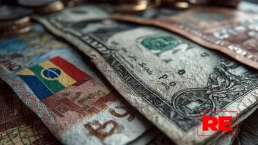
For as long as most people have been alive, the U.S. dollar has been the undisputed heavyweight in the global economy. Oil trades in it. International loans are settled in it. Governments stockpile it as reserves. It’s not just our currency, it’s the world’s default. But behind that dominance is a quiet reality the average American doesn’t see: that leadership position is not guaranteed. It’s not locked in by force or treaty. It exists because enough countries have continued to believe in the dollar’s reliability, even when they didn’t believe in our politics. That belief, like any belief, has limits. And right now, in boardrooms, in backchannels, and at high-level economic summits around the world, a growing number of countries are asking the same question: what if we don’t need the dollar anymore?

This is where BRICS enters the conversation. Originally a loose acronym for Brazil, Russia, India, China, and South Africa, BRICS started as an economic talking point, emerging markets that could challenge Western dominance someday. But over time, it has evolved into something more intentional. These countries aren’t just growing their economies. They’re building systems that intentionally reduce reliance on the dollar. Bilateral trade deals in native currencies. Gold-backed payment systems. Central bank reserves shifting away from U.S. treasuries. Quiet moves, not meant to crash the dollar overnight, but to chip away at its grip, piece by piece, transaction by transaction.
And the effort isn’t limited to the original five. BRICS has expanded. Countries like Iran, Argentina, Egypt, and Saudi Arabia have either joined or expressed interest in joining the bloc. That alone should raise alarms. Because when a country like Saudi Arabia, the very cornerstone of the petrodollar system, starts publicly exploring alternatives to U.S. financial dominance, it means the floor beneath the dollar is not as solid as it used to be. It means the system that kept global demand locked in is starting to leak. Slowly. But undeniably.
China, in particular, is moving with purpose. It’s brokering deals in yuan. It’s increasing gold reserves. It’s creating trade partnerships with nations willing to transact outside the dollar altogether. And while none of this signals an immediate dethroning, the long game is clear. Diversify. Decentralize. De-Americanize the global economy. Not with one big announcement, but with a thousand small ones. And the more countries that get on board, the easier it becomes for others to follow.
Now, let’s be clear: the U.S. still holds immense leverage. Our financial system is deeply embedded into the global infrastructure. SWIFT transactions, international banking, regulatory influence, military power, all of it gives the dollar weight beyond numbers on a spreadsheet. But the cracks are forming. And they’re forming not because the world is hostile, but because the world is cautious. Our debt is ballooning. Our politics are chaotic. Our leadership changes direction every four years. And other nations are tired of being exposed to that instability. They don’t want to be punished for U.S. decisions. They don’t want their economies tied to our inflation, our interest rates, our elections.
That’s the real risk, not collapse, but slow erosion. The dollar doesn’t need to fall apart overnight to lose power. It just needs to lose momentum. If ten percent of global trade moves away from it, then twenty, then thirty, that’s enough to shift pricing models. That’s enough to reduce demand for U.S. treasuries. That’s enough to increase borrowing costs. That’s enough to break the illusion of invincibility. And once that illusion breaks, it doesn’t come back easily.
What BRICS and its allies are doing is not a declaration of war. It’s a declaration of independence, from a financial system they no longer fully trust. And whether or not they succeed is almost secondary. The fact that they’re trying openly, strategically, with global coordination says everything. It means the era of automatic American dominance is over. Not because someone else took it. But because we let it get sloppy. We took the position for granted. We stopped maintaining the house. And now the neighbors are building something of their own.

If the last fifty years were defined by the rise and dominance of the U.S. dollar, the next fifty will be shaped by how well we adapt to the possibility that it may not always be the center of the global economy. That’s not fearmongering, it’s realism. Because while the dollar still commands authority, the world is changing around it. Quietly. Quickly. And sometimes permanently. Countries are no longer asking whether there should be alternatives. They’re building them. And while the U.S. still carries weight, the question isn’t whether we can stay on top forever, it’s whether we’re preparing for what comes next, or pretending that it will never arrive.
At the core of this shift is something most Americans have barely started to pay attention to digital currencies. Not just crypto. Not Bitcoin. Not speculation. But full-scale government-issued digital currencies. China is already testing the digital yuan. It’s not theoretical. It’s live. Pilots are running in multiple cities, and it’s being used for real purchases. It’s programmable. It’s trackable. And it’s fully under state control. That kind of financial infrastructure gives China a strategic tool the U.S. doesn’t currently have. Imagine a country being able to bypass sanctions, move money cross-border instantly, tie transactions to behavior, or even enforce economic policy in real time, all without touching the dollar. That’s not just innovation. That’s power. And the U.S., while researching a digital dollar, is still years behind in rollout and public trust.
And while China is moving forward with its digital infrastructure, piloting a full-scale central bank digital currency, tying trade directly to the yuan, building rails the West hasn’t even started laying, the U.S. is still fighting over what to regulate, what to censor, and what political lines not to cross. Just recently, President Trump signed an executive order on AI. On paper, it’s about ensuring American leadership in artificial intelligence. But in practice, it reads more like a cultural statement than a technological blueprint. It focuses on bias audits, domestic guardrails, and government use restrictions, not on building the systems that would counter what China is building. And that’s the problem. We say we want to lead, but too often, we legislate to make a point, not a plan. While we argue about platform bans and free speech, China is building the infrastructure to replace us and they aren’t waiting for us to settle the politics before they deploy it.
But the real issue isn’t technology, it’s credibility. The world will not move away from the dollar because of code or speed. It will move away if it no longer believes the U.S. can manage its economy responsibly. If our elections continue to look unstable. If our debt continues to climb unchecked. If our global leadership fractures along partisan lines every four years. The dollar is backed by faith. And faith, once it starts to slip, doesn’t always crash but it slides. Gradually. And then irreversibly.
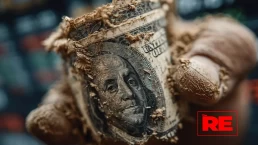
For most people living in America, this shift won’t feel like a switch flipping. It won’t be dramatic. It’ll be subtle. Higher borrowing costs. More expensive imports. Fewer countries willing to hold U.S. debt. Gradual inflation that’s harder to fight. And a growing sense that the financial strength we once took for granted isn’t as automatic as it used to be. That’s how global power shifts now, not with tanks or invasions, but with currency swaps, trade deals, and technological infrastructure. This is economic diplomacy in the 21st century, and the U.S. isn’t losing. But we’re no longer unchallenged either.
So what does that mean for everyday Americans? It means the world is not waiting on us anymore. And if we don’t stabilize our financial policies, if we keep treating debt as limitless, if we weaponize the dollar without caution, if we ignore the warning signs coming from BRICS, from China, from global markets, we may find ourselves in a world that no longer needs the dollar the way it used to. Not because it failed overnight, but because it stopped evolving.
There is still time to correct course. We can build a credible digital dollar. We can lead international cooperation around transparency and fairness. We can reduce spending in meaningful ways. We can stop pretending that record debt and permanent deficits are harmless. But doing that requires something rare in American politics: restraint. Planning. And honesty. And the truth is, we haven’t shown much of any of that in a very long time.
The world doesn’t need us to collapse for things to change. All it needs is for our influence to thin out just enough for another system to emerge. And that’s already happening. Quietly. Intentionally. Piece by piece.
The dollar built this era. But this era may not belong to the dollar much longer.
America was never promised this position, we earned it, and then we spent decades pretending we couldn’t lose it. The rise of the dollar wasn’t magic. It was strategy. It was timing. It was leverage. And now, the world is rebalancing. Quietly. Gradually. Reluctantly. Not because they want chaos, but because they’ve seen what happens when one nation holds the power to print its way through every crisis and weaponize the system when it chooses. If we want to hold the center, we have to stop taking it for granted. Because the future won’t be decided by who shouts the loudest. It’ll be decided by who builds the next system, and whether the rest of the world believes they can trust it.
U.S. Department of State. (n.d.). Nixon and the end of the Bretton Woods system, 1969–1976. U.S. Department of State.
Federal Reserve History. (n.d.). The Smithsonian agreement.
International Monetary Fund. (2019). Do old habits die hard? Central banks and the Bretton Woods gold window. IMF Working Paper
National Bureau of Research (Dallas Fed). (2014). Federal Reserve policy and Bretton Woods. LINK
National Bureau of Economic Research. (2016). The operation and demise of the Bretton Woods system. NBER Working Paper No. w23189.
Eichengreen, B. (2022). Stablecoins and central bank digital currencies: Policy and regulatory challenges (Working Paper)
Goodell, G., & Al Nakib, H. D. (2021). The development of central bank digital currency in China: An analysis.
Carnegie Endowment for International Peace. (2021). China’s digital yuan: An alternative to the dollar‑dominated financial system
Stanford University. (n.d.). ‘Controllable anonymity’ or ‘managed anonymity’ and China’s digital yuan.
Investopedia. (n.d.). What is the gold standard? History and collapse LINK
Investopedia. (2003). Bretton Woods Agreement and the institutions it created. LINK
Time. (2016, August 15). The U.S. dollar hasn’t been linked to gold for 45 years. Here’s why. Time.
If this work helped you understand something more clearly, support it by:
Buying the books | Visiting the Newsstand | Making a donation
One voice. One message. One Goal. Truth.
No spam. No schedules.
The Truth is Underfunded. That's Why This Exists.
No ads. No sponsors. No filter. Just the truth, unpacked, explained, and raw.
Defining Policy. Power. Consequence.
See how to add us to your home screen