The Ripple Effect
-News and Commentary-
Forecast Denied: How Climate Denial and Budget Cuts Turned a Texas Storm Into a Mass Casualty Event
By TP Newsroom Editorial | Ripple Effect Division
The storm that hit Central Texas in early July wasn’t some random, unexpected disaster. It was forecasted. Rain was coming. Floods were possible. NOAA and the National Weather Service issued warnings. But somehow, by the time the rain stopped, more than 100 people were dead. A lot of them were children. Parents sent their kids off to summer camps, and they didn’t come home. That’s not just tragedy. That is a failure.
The numbers tell the basic story. In less than 24 hours, over 20 inches of rain hit parts of Central Texas. That’s more than quadruple what had been predicted for some counties. Kerr County, which sits along the Guadalupe River, was one of the hardest hit. Entire roads were washed away. Cars floated. Emergency services were overwhelmed. But the worst part was what happened to Camp Mystic. A girls’ summer camp. Dozens of kids were caught off guard when the river rose. Tents, cabins, people all swept away. As of July 7th, 104 confirmed dead. 41 missing. And the worst part? Some of this could’ve been prevented.
NOAA did issue alerts. Flood watches. Flash flood warnings. They came in as early as the night of July 3rd. The problem was: they weren’t taken seriously. Local officials didn’t issue evacuations. Camps stayed open. Roads stayed full. And when the “flash flood emergency” hit around 4 a.m. on July 4th, it was already too late for a lot of people to move. So now we’re left asking the same question that comes up every time:
Who gets blamed?
If this work helped you understand something more clearly, support it by:
Buying the books | Visiting the Newsstand | Making a donation
One voice. One message. One Goal. Truth.
No spam. No schedules.
The Truth is Underfunded. That's Why This Exists.
No ads. No sponsors. No filter. Just the truth, unpacked, explained, and raw.
Defining Policy. Power. Consequence.
See how to add us to your home screen
Some people went straight for the politics. And they weren’t necessarily wrong. Earlier this year, under the Trump administration’s so-called DOGE program, which stands for the Department of Government Efficiency, over 1,200 NOAA employees were laid off. Around 600 of those were in the National Weather Service. Meteorologists. River forecasters. Emergency response liaisons. The people who track events like this and give local governments the heads-up. But they were called “excess” and “replaceable.” And now here we are.
Some supporters tried to defend the agency. “NOAA did its job,” they said. “Warnings were issued.” And that’s technically true. But it ignores what actually makes a warning matter. It’s not about the red alert. It’s about public trust. And the truth is, people don’t trust institutions anymore. Not when they’ve been told, over and over again, that everything is political, even science. When you spend years attacking expertise, mocking forecasts, and defunding environmental programs, you create a system where even the right warnings don’t land the right way.
Then came the part that made everything worse: Musk’s AI assistant, Grok, posted about the flood. It claimed that DOGE cuts reduced forecasting accuracy by 50% and directly blamed the Trump administration for the deaths at Camp Mystic. It named a number, 23 dead girls from that camp, and it spread like wildfire. Problem is, nobody could verify where Grok got that number. Could’ve been a real leak, could’ve been a scraped post, could’ve been clickbait. But once it hit the internet, it didn’t matter. The story took off. So now you’ve got political leaders scrambling. Texas officials blaming federal cuts. Federal leaders denying everything. Right-wing media calling it manipulation. Left-wing media calling it negligence. And the public, stuck in the middle again, watching the same cycle: tragedy, blame, deflection, nothing changes. But if we’re being honest, the issue is bigger than just this flood.
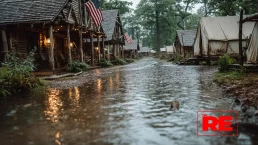
This isn’t just about a forecasting error or a bureaucratic screw-up. This is about the consequences of climate denial. This is about how predictable weather has become unpredictable, and how politics has made that harder to admit. Because the science isn’t confused. Global temperatures are rising. Ocean heat is increasing. Rainfall is getting more extreme, less consistent, and more destructive. And events like this flood? They’re not one-offs. They’re part of a larger shift. But in the U.S. and especially in places like Texas we’re still pretending climate change is up for debate. We’re still passing laws to keep climate language out of schoolbooks. We’re still funding fossil fuels. We’re still calling it “politics” instead of what it is: infrastructure failure and climate breakdown, caused by human choice.
So when people ask, “How did this happen?” the real answer is layered. Yes, the rain was extreme. Yes, the forecast missed the mark. But deeper than that, it happened because the system we built wasn’t built to believe the truth. Truth got politicized. Science got discredited. And now we’re dealing with the fallout, not just in dollars, but in lives.
Camp Mystic should’ve been safe. Kids should’ve come home. But they didn’t. And the worst part is that, unless something changes, this won’t be the last time we have this conversation. Because this wasn’t just a Texas tragedy. It was an American warning. One we’ve seen before. One we’ll probably ignore again.
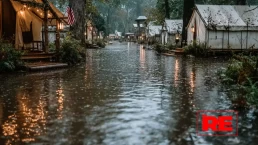
People didn’t die in Texas because there were no warnings.
They died because the warnings weren’t good enough, and because we’ve built a culture that treats science as optional, and experts as disposable. This part of the story starts with DOGE, the so-called Department of Government Efficiency. Created in 2025 under Trump’s second term, it was branded as a cleanup mission. “Drain the swamp” 2.0.
When the floods hit Central Texas, all of that mattered.
Kerr County isn’t New York or Los Angeles. It’s rural. Spread out. With limited emergency infrastructure. The local governments depend on regional forecasting offices to deliver not just data, but interpretation. They need someone to tell them what the numbers mean, what’s changing on the ground, and how fast they need to act. When you lose those forecasters, you don’t just lose bodies. You lose the ability to translate risk into response.
That’s exactly what happened here.
There was a flash flood watch on July 3rd.
There was a flash flood warning by the early hours of July 4th.
And by 4:11 a.m., a Flash Flood Emergency was issued by the Austin-San Antonio NWS office.
But that final alert came after 10 inches had already fallen, and it predicted another 5–10 inches still to come. Local responders were already overwhelmed. Parents were asleep. Camps didn’t have time to move. By that point, everything was reactive. Not proactive. That’s not a technology failure, it’s a human coordination failure caused by downsizing and distrust.
And the thing is, this was preventable. That’s not hindsight talking, it’s on record.
Meteorologists had been warning for years that staffing cuts would have a direct impact on lead times, model accuracy, and communication speed. A 2023 GAO report even flagged NOAA’s overreliance on outdated tech and underpaid contractors. It predicted exactly this kind of disaster: one where models miss the severity, alerts don’t trigger action, and rural areas get overwhelmed. But the response from DOGE? Cut anyway.
The belief was that AI would fill the gap. They argued that automation and machine learning models would replace traditional forecasting. They cut regional experts in favor of centralized AI tools. That works for some things, basic temperature prediction, wind patterns, routine forecasts. But extreme weather needs human interpretation. River dynamics, terrain impacts, flash flood behavior, that’s not something you just leave to an algorithm. Especially when human lives are at stake. The political spin made it worse. Once the backlash started, Republican leaders were quick to defend the cuts.

They claimed NOAA was still overfunded. They blamed local agencies for “not taking action.”
They pointed fingers at Democrats for “politicizing tragedy.” Some even tried to say this was just a “freak storm”, nothing you could plan for. But that’s not true.
The climate data was clear. Texas had already seen multiple 500-year floods in the past decade. The frequency of these events has been increasing for years. And this storm wasn’t a fluke. It was part of a growing pattern that scientists have been tracking, and warning about, for over a decade. What made this different was that we were less prepared than we’ve ever been.
Not because we didn’t have the science. Because we chose not to use it.
There’s also something no one’s really saying out loud: part of the reason these cuts were allowed to happen is because weather forecasting isn’t seen as “politically important.” It doesn’t get headlines. It doesn’t drive voter turnout. It’s quiet, behind-the-scenes infrastructure. Until it fails.
And when it fails, it doesn’t just fail the left or the right, it fails families. It fails schools. It fails parents who thought their kids were going to spend the weekend canoeing and ended up identifying bodies. So yeah, the warnings technically went out. But if the warning is late, unclear, or delivered in a system that’s been hollowed out and discredited, does it still count?Because here’s what really happened in Texas: A storm was coming. The models knew it.
The people who could’ve made that model matter weren’t there. And now families are burying their kids while politicians argue about budgets. This wasn’t just a mistake. It was a result.
This flood in Texas wasn’t some random act of nature. It wasn’t rare. It wasn’t unpredictable. It was the latest entry in a pattern we’ve seen forming for decades, a pattern we’ve studied, documented, warned about, and still chosen to ignore. The only reason this keeps getting labeled as a surprise is because, politically, it’s more convenient to pretend the sky is confused than to admit we are.
There is nothing theoretical about climate change anymore. We’re living in it. And not just in a slow, creeping way, this is acceleration. Storms are bigger, temperatures are hotter, and rainfall is more extreme. That is measurable, and it’s not debatable. According to NOAA, the heaviest 1% of rain events in the United States have become significantly more intense since the 1960s. In the Midwest, rainfall from these extreme storms is up by 42%. In the Northeast, it’s up by over 55%. We are not dealing with consistent, manageable rain, we are dealing with high-intensity dumps of water that infrastructure was never built to handle.
The Texas flood in July 2025 is a perfect example. Forecasts said to expect 3 to 5 inches of rain. What hit was over 20 inches in some places, in less than 24 hours. That’s not a miss. That’s a collapse of the predictive model. It tells you something isn’t just off, it’s completely out of calibration. The atmosphere is holding more moisture than it used to, and when that moisture breaks, it breaks hard. The physics are simple: warmer air can hold more water. And global temperatures are already over 1.1°C above pre-industrial levels. The IPCC has stated clearly that for every 1°C of warming, extreme rainfall events can increase by 4 to 8%. That’s not alarmism. That’s factual science, just like saying 1 plus 1 is two. Why deny it or argue it?
But we don’t even need international data to see it. It’s happening here. The United States has seen a steady increase in what NOAA calls billion-dollar disasters, weather events that cause at least one billion dollars in damage. From 1980 to 2023, there were 363 of those events. In 2023 alone, we saw 28. Texas has had more than its share of hurricanes, wildfires, droughts, and now this. The July flood will almost certainly be added to that list. Entire roads were destroyed. Campgrounds were leveled. Emergency responders were stretched beyond capacity. Families lost everything. And still, the response from officials sounded like the same script: it was unfortunate, unexpected, and no one could have seen it coming. That’s just not true.
This storm fit the exact definition of what scientists have been warning us about. Short bursts. High rainfall. Warm Gulf moisture feeding instability over flash-flood terrain. The setup wasn’t complicated. Central Texas, especially the Hill Country around the Guadalupe River, is already known as one of the most flash-flood-prone areas in the nation. Local topography channels rainfall into narrow, fast-moving rivers. And when you combine that with hotter air, more water in the sky, and a political environment that underfunds both infrastructure and forecasting, you don’t get surprised. You get results like this.
What hurts is knowing this isn’t new. We’ve seen this coming. In fact, we’ve lived through previews of it before. Hurricane Harvey in 2017 dropped more than 60 inches of rain on the Houston area. Studies after Harvey confirmed that at least 20% of that rainfall could be directly attributed to human-driven climate change. The rain in Harvey wasn’t just a natural disaster, it was evidence. Scientists knew then that the models had to be updated, that the assumptions about “normal” rainfall no longer applied. And yet, nearly a decade later, we’re still treating events like the Kerr County flood as isolated tragedies instead of ongoing consequences.
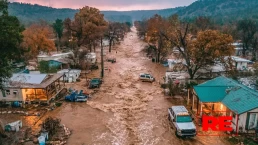
I don’t have the privilege of pretending this is abstract. I’m raising kids in a world where the weather is unpredictable, not just in the day-to-day sense, but in the system-wide way. There are places in the world right now where droughts and floods are happening in the same month. India. Sudan. Canada burning through wildfire season while dealing with record flooding in the east. The global water cycle is breaking down. NASA satellites have shown that drought severity and flood intensity are increasing at the same time. That doesn’t happen in a stable climate. That happens when the system itself is losing balance.
And here in the United States, we keep pretending we’re somehow exempt. We act like the storm is someone else’s problem. We send thoughts and prayers, argue about funding, and then watch the next one hit. And when it hits, whether it’s Katrina, Sandy, Harvey, or now this flood in Texas, we ask the same questions as if we haven’t already heard the answers.
The problem isn’t the rain. It’s what we’ve done to the climate, and what we’ve refused to do in response.
We’ve pumped carbon into the atmosphere for over a century. We’ve cut forests, burned fossil fuels, and treated energy policy like a short-term business decision instead of a long-term survival strategy. And when the data got inconvenient, we downplayed it. We let political pressure silence science. We allowed climate denial to move from the fringe into the mainstream. And that silence has become a weapon. Because when you convince enough people that everything is “too political,” they stop listening to the people trying to save them.
I don’t care if it’s uncomfortable to say it: this flood was a climate event. A man-made one. And it won’t be the last. We need to stop treating weather as isolated drama and start acknowledging it as consequence. Because until we do, the forecasts will keep coming, the floods will keep rising, and the death tolls will keep climbing. And all we’ll be able to say afterward is the same tired line: “No one saw it coming.” That line’s a lie. We did see it coming. We just didn’t care enough to act.
You can’t talk about this Texas flood or any of the climate disasters hitting this country without talking about what’s happening politically. Because the weather didn’t just change on its own. It changed while a coordinated effort was underway to make sure no one took the warning signs seriously.

Journalism You Can Hold. Insight You Can Own.
Books Magazines Companion Guides White Papers More
Your support funds the research, reporting, and long-form analysis behind TP Newsroom
For decades now, the Republican Party has taken an aggressive stance not just against climate policy, but against climate science itself. It didn’t start with Trump, but under him it became mainstream. What used to be backroom oil lobby talking points became part of national party platforms. What used to be carefully worded policy disagreements turned into full-on rejection of the facts. And that shift came with a cost: funding cuts, staff eliminations, science censored in schools, and a public that was trained to think “climate change” was just another opinion.
Let’s start with education. Over the past ten years, Republican-led legislatures in states like Texas, Florida, and Tennessee have all either reduced or outright banned the use of the term “climate change” in public school curricula. In 2022, the Texas State Board of Education rejected textbook materials that explicitly connected human activity to global warming. They argued that it was “ideological” and “unbalanced.” So students across the state were taught a watered-down version of environmental science that left out the most critical truth: that we are the ones driving these changes. That kind of decision doesn’t just affect classrooms. It shapes how future voters see the world. When children grow up being told that science is political, they stop trusting the people with the data. They start thinking every crisis is up for debate. That becomes the norm and then when a real emergency hits, nobody knows who to believe.
It’s not just schools. The censorship moved into federal agencies. Under Trump’s first term, the EPA scrubbed its climate change webpage. Mentions of global warming were removed from official documents. Reports were delayed, rewritten, or shelved. And now, in his second term, those same tactics have been formalized through DOGE. What DOGE really did was strip the government of institutional memory. NOAA lost over 1,200 staff this year. The National Weather Service lost 600 people, many of them regional experts and early-career forecasters. These weren’t back-office paper-pushers. These were the people who interpret flood models, coordinate warnings, and brief local officials when things are about to go sideways.

But they were seen as excess. As waste. So they were cut. Because somewhere along the line, the idea of investing in long-term public safety became too expensive. Especially if it supported a narrative the right wing had already decided to reject. And it doesn’t stop at layoffs. In many states, Republican lawmakers are actively trying to ban local climate policies. In Florida, Governor DeSantis signed legislation rolling back local regulations that addressed climate resilience. In Texas, similar measures have prevented cities from setting stricter environmental standards than the state allows. That means if a town wants to prepare for the kind of flood that just happened in Kerr County, it has to work within state limitations that were designed to keep the oil and gas industry comfortable, not the people safe.
There’s also the issue of money. Fossil fuel companies have been the single largest donors to Republican PACs and campaigns for decades. That influence shows. Climate bills stall. Regulations get stripped down. Oil subsidies stay untouched. And even now, as insurance companies pull out of flood-prone areas and FEMA begs for funding, lawmakers are still arguing about whether the science behind climate change is “settled.”
It is settled. It’s been settled. What isn’t settled is whether we’ll admit it.
What makes it worse is how quickly this denial turns into misinformation. After the Texas flood, Elon Musk’s AI assistant, Grok, posted that DOGE cuts reduced NOAA’s forecasting ability by 50% and blamed the Trump administration for the deaths at Camp Mystic. That post went viral. And even though Grok’s exact data couldn’t be verified, the damage was done. The public saw the headline, not the retraction. That’s how this system works now: throw out enough noise and people stop trying to figure out what’s real.
But here’s what’s real: the Republican Party has built its entire climate position around refusal. Refusal to believe the science. Refusal to invest in prevention. Refusal to accept accountability. That refusal doesn’t just stall progress, it invites disaster. Because when you stop preparing for what’s coming, you start reacting to what you could’ve avoided. Texas is paying that price. Again. And the people paying it most are not the ones in the Capitol or on the oil company boards. It’s everyday residents. Working-class families. Parents who thought their kids were safe at camp. It’s rescue workers stretched thin. It’s school districts that can’t rebuild fast enough. It’s people who don’t have the privilege of packing up and moving somewhere “safer.”

Climate change isn’t political. The response to it is. And in this country, that response has been shaped by a party that decided denial was more profitable than action. We didn’t just get here by accident. We were driven here, by decisions, by cuts, by votes, by messaging. This flood was the result of a long chain of people saying no when they should’ve said yes. No to investment. No to facts. No to future-proofing.
And until that changes, the storms will keep coming and so will the damage.
We spent a lot of time in this piece calling out Republicans. And that’s because the truth demands it. When a party drives policy that leads to denial, defunding, and disaster, there’s no neutral ground. That responsibility has to be named. But I also understand the other side of it. I get the mindset.
Conservatives, at least the ones who still believe in actual governance, see themselves as fiscal hawks. They believe in smaller government, lower taxes, less spending, and more personal responsibility. That’s their framework. And from their angle, programs like NOAA or the National Weather Service start to look like bloated line items. Too many offices. Too many federal workers. Too much money going to people most Americans never hear about. So when someone like Trump or DeSantis says, “We’re cutting the fat,” their base cheers. Because to them, it sounds like discipline. Like smart leadership. But here’s the problem: discipline without foresight is dangerous. You can trim a budget, but if you cut into muscle or nerve, you paralyze the system. That’s what’s happening. These aren’t just abstract policy positions, they’re creating real-world gaps that put people at risk. A thousand fewer NOAA staffers isn’t just a cost-saving measure. It’s a missing forecast. It’s a slower emergency response. It’s a town that doesn’t evacuate in time. And all of that adds up to a much bigger bill later, financially and morally.
The irony is that while these people claim to be about saving money, the long-term cost of their decisions is astronomical. Climate disasters are already costing the United States billions annually. In 2023 alone, weather-related events caused $92 billion in damages. That number’s only going up. You can’t claim to be fiscally responsible when you’re ignoring the very crises that will bankrupt cities and bleed the federal government dry. That’s not strategy. That’s shortsightedness. And look, I get it. Not everyone wants to plan for 50 years from now. Not everyone wakes up thinking about glaciers or sea levels or what kind of storm might hit their grandkids’ generation. For some people, it’s about now. Right now. Today’s jobs, today’s taxes, today’s fight. But if that’s the approach, then let’s stop pretending it’s patriotism. Because there is nothing patriotic about leaving your country weaker tomorrow than it is today.

It’s not just political hypocrisy, it’s a moral one. If you truly believe in protecting your family, your community, your legacy, then you can’t turn away from climate. You can’t vote for people who gut science. You can’t support leaders who mock experts while the streets flood and the power grid collapses. That’s not protection. That’s abandonment. That’s saying, “I got mine—good luck to the rest of you.”
And maybe that’s where this whole thing breaks open. Maybe the truth is, some people are okay with that. Maybe they’ve made peace with trading tomorrow for comfort today. But let’s be clear, if you can look your grandson in the eye and say, “I knew what was coming, and I chose not to stop it,” then own that. Don’t hide behind slogans or party lines. Just say it: “I chose convenience over responsibility. I chose now over next.”
But don’t expect the rest of us to co-sign it. Because some of us are still fighting for a future we won’t get to see. Some of us are raising kids who will inherit the consequences of choices they didn’t make. And some of us believe that leadership isn’t just about what you cut, but about what you protect.
Texas didn’t need to be a headline this week. Those kids didn’t need to die. The warnings were there. The models were accurate. The rain was real. But the belief, the political will, that’s what failed. We can’t fix the weather. But we can fix the choices that make it worse. And we better start. Because history doesn’t care about excuses. Only outcomes.
American Public Media Research Lab. (2025, July 6). Texas floods reveal limitations of disaster forecasting under climate crisis. The Guardian. https://www.theguardian.com/us-news/2025/jul/06/texas-floods-forecast-climate-crisis
Axios. (2025, July 7). How the Texas floods compare to the deadliest floods of the past decade. https://www.axios.com/2025/07/07/texas-floods-death-toll-hurricane
Environmental Protection Agency. (2023). Climate change indicators: Heavy precipitation. https://www.epa.gov/climate-indicators/climate-change-indicators-heavy-precipitation
IPCC. (2021). Chapter 11: Weather and climate extreme events in a changing climate. In AR6 Climate Change 2021: The Physical Science Basis. https://www.ipcc.ch/report/ar6/wg1/chapter/chapter-11
Le Monde. (2024, October 19). Flooding in France: Global warming is generating more severe episodes of heavy precipitation. https://www.lemonde.fr/en/environment/article/2024/10/19/flooding-in-france-global-warming-is-generating-even-more-severe-episodes-of-heavy-precipitation_6729863_114.html
National Centers for Environmental Information. (2024). U.S. billion-dollar weather and climate disasters. NOAA. https://www.ncei.noaa.gov/access/billions/
NASA Earth Observatory. (2023). GRACE satellite data show global water cycle extremes. https://earthobservatory.nasa.gov/features/WaterCycle
United States Government Accountability Office. (2023). Climate resilience: Opportunities to strengthen NOAA’s efforts to prepare for climate change. https://www.gao.gov/
World Meteorological Organization. (2023). State of Global Climate 2023. https://public.wmo.int/en/our-mandate/climate/wmo-statement-state-of-global-climate
If this work helped you understand something more clearly, support it by:
Buying the books | Visiting the Newsstand | Making a donation
One voice. One message. One Goal. Truth.
No spam. No schedules.
The Truth is Underfunded. That's Why This Exists.
No ads. No sponsors. No filter. Just the truth, unpacked, explained, and raw.
Defining Policy. Power. Consequence.
See how to add us to your home screen