Deployed at Home: What 700 Marines Reveal About Power, Law, and the American Line
The Ripple Effect
-News and Commentary-
Deployed at Home: What 700 Marines Reveal About Power, Law, and the American Line
By TP Newsroom Editorial | Ripple Effect Division
If this work helped you understand something more clearly, support it by:
Buying the books | Visiting the Newsstand | Making a donation
One voice. One message. One Goal. Truth.
No spam. No schedules.
The Truth is Underfunded. That's Why This Exists.
No ads. No sponsors. No filter. Just the truth, unpacked, explained, and raw.
Defining Policy. Power. Consequence.
See how to add us to your home screen
I saw the headline and paused. “700 Marines deployed to California.” No context. No explanation. Just a flash alert with more heat than clarity.
Then I jumped over to Facebook and it was already a mess. One post called it illegal. Another said it proves we’re being invaded. Then came the usual flood of Constitution quotes from folks who never cared about Article anything until now.
But most of the noise had one thing in common: it was wrong. Not because people are dumb. Because nobody ever broke this down for them in plain language. So let’s do that now. No drama. No politics. Just the framework. The actual rules.
The first thing we need to talk about is Title 10. This is the part of U.S. law that governs the use of federal military forces. When someone says the president is calling in the military, this is usually the bucket they’re reaching into. Title 10 allows the federal government to activate military branches, including the Marines—under direct command of the President or Secretary of Defense. It’s what kicks in when there’s a war, a major federal emergency, or a large-scale operation requiring national coordination.
Then there’s Title 32, which is different. Title 32 covers the National Guard, but under state control with federal funding. In other words, a governor can use their own Guard troops for local emergencies, like hurricanes or riots, and the federal government picks up the tab. The troops wear the uniform, but they’re still operating as part of the state.
Now here’s the part that gets people twisted: Posse Comitatus. This law goes all the way back to 1878, and it basically says that the U.S. military can’t be used as a domestic police force. You can’t have soldiers walking your streets doing traffic stops, arresting civilians, or running surveillance without strict, specific exceptions. That law was written to keep the military from turning into a federal police state. It’s about separation—defense abroad vs. policing at home.
But there are exceptions. And that’s where the Insurrection Act comes in. This law is the loophole, written into the same code, that says in extreme circumstances—like rebellion, invasion, or when local law enforcement can’t maintain order—the President can bypass Posse Comitatus and use active-duty military on American soil. It’s rare. It’s controversial. But it’s legal.
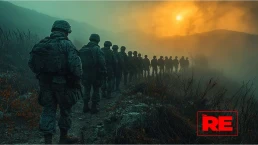
Trump’s decision to deploy 700 Marines to California wasn’t pulled out of thin air. It’s part of a broader narrative he’s pushing—one where immigration is painted as a threat big enough to justify military force. Whether you agree with the move or not, the legality of it depends entirely on how the deployment is structured. If those Marines are under Title 10 authority and being used in support roles—not policing or arresting—it may be completely lawful. If it veers into boots-on-the-ground enforcement, that’s where it crosses lines.
This is where people get stuck: they hear “military” and assume it must be illegal. But the legal framework is built for flexibility. And that’s exactly what’s being tested right now. What makes this moment risky isn’t just the deployment—it’s the precedent. Once you start using active-duty military to address civilian issues like immigration, you blur the lines between national defense and domestic control.
And history tells us once that line is crossed, it’s hard to walk it back.
So yes, it’s complicated. Yes, there are legitimate legal questions. But if we’re going to argue about it, let’s at least be arguing from a place of truth—not panic. That’s the point of The Truth Project. No spin. Just structure. And the clarity to make sense of the chaos.
Let’s dig deeper.
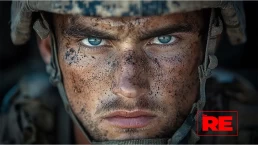
This deployment didn’t happen in a vacuum. It came right after a wave of headlines about increased border crossings and alleged cartel activity leaking into southern California. It plays directly into Trump’s campaign narrative that immigration equals chaos. But legally, the use of Marines under Title 10 means something specific, they are under federal control, not local authority. That distinction matters. A lot.
Federal troops under Title 10 can support border patrol with logistics, construction, intel, and even surveillance, but they cannot make arrests or act as law enforcement without invoking the Insurrection Act. That’s the firewall. And if you don’t see that line clearly, it’s easy to confuse support with suppression.
Now let’s talk history.
The Posse Comitatus Act was signed in 1878, largely as a reaction to the Reconstruction era. After the Civil War, federal troops were used across the South to enforce new laws and civil rights protections. White Southern leaders didn’t like that. So, when they regained power, one of the first things they pushed for was to get the military out of law enforcement. Hence, Posse Comitatus, Latin for “power of the county.” The idea was that civilian law should be enforced by civilian authorities, not soldiers.
Fast forward to today, and the core of that law still stands. But it’s been tested. During Hurricane Katrina, for instance, debates broke out over the use of military assistance when local systems collapsed. After 9/11, the boundaries got even murkier with the introduction of the Patriot Act and growing federal surveillance powers. And during Trump’s presidency, those boundaries were pushed harder than they’ve been in decades.
So here we are again. Another test. Another chapter in the ongoing question: Who gets to use force on U.S. soil, and under what conditions?

And let’s not forget optics. When the public sees Marines in uniform standing on American streets, even if they’re just there for support, it sends a message. Whether intentional or not, it creates the perception of martial control. And perception, in politics, is half the game.
This is why it matters how we talk about this stuff. Language matters. Framework matters. Most people aren’t reading the fine print in the U.S. Code. They’re scrolling headlines, reacting to soundbites, and building their opinions based on emotion, not structure.
So we’re going to keep walking through it. Piece by piece. Not to push fear or praise. But to pull back the curtain and explain the machine.
Because when power moves like this, you better understand the blueprint. That’s the only way to know whether it’s being followed—or rewritten in real time.
But here’s the deeper issue: once you start normalizing military deployment for political optics, you invite abuse.
And I don’t say that lightly. Because we’ve seen this pattern before. Not just in the U.S., but globally, leaders flexing military muscle to stir fear, distract from policy failures, or appear “tough” right before an election cycle. It works. People feel like something is being done. But it also chips away at the wall that’s supposed to separate political agendas from military operations.
And that wall matters. Without it, you start confusing patriotism with obedience. You start teaching the public to expect soldiers instead of solutions. The more you lean on uniforms to solve social issues, whether it’s immigration, protests, or public safety, the less you’re using policy, community, or law.
We saw this in D.C. in 2020. Peaceful protesters in Lafayette Square were met with tear gas and military police. Not because it was necessary—but because the image made a point. That’s the danger here. It’s not always about law. Sometimes, it’s about the message.
And that brings us to now. Whether you support Trump’s move or not, the truth is that this moment is being engineered to trigger reaction. Fear drives engagement. Engagement drives power. And the people caught in the middle—immigrants, military families, everyday citizens—are being used as props in a much bigger stage play. So what do we do with that? We stay grounded. We keep asking real questions. Not just “is this legal?” but “is this healthy?” Not just “can the president do this?” but “should any president normalize this?”
This isn’t about left or right. It’s about how close we let the military come to our front doors before we stop and say, “enough.”
Because once the boots are on the ground, it’s already too late to ask where the line was. Let’s stop pretending this is just about California, or just about immigration, or just about Trump. It’s not. This is about how power moves and who notices when it does.

Because what we’re watching isn’t a one-off decision. It’s a pattern. And patterns don’t start big and loud. They start subtle. They start with headlines you scroll past. With language that sounds reasonable. With moves that feel like “just a precaution.” And by the time the pattern becomes clear, it’s already policy. It’s already precedent. And you’re already too late to push back.
Deploying 700 Marines under Title 10 might be technically legal. But legality has never been the full measure of right and wrong. Jim Crow was legal. Japanese internment was legal. Slavery was legal. The point is: legality is a floor, not a ceiling. It tells you what’s allowed, not what’s just.
And when you keep lowering the bar for what’s allowed, don’t act surprised when people stop looking up.
Let’s be honest. A lot of Americans are numb. Not stupid, numb. We’ve had so much political noise, culture war hype, scandal, violence, and chaos thrown at us over the last 8–10 years that it’s easy to let your guard down. Easy to just assume that “this must be normal now.” And that’s the trap.
Because while we’re distracted, the rules are being bent. Rewritten. Or just ignored.
And we feel it. Even if we don’t always have the words. We feel it in the rise of conspiracy thinking. We feel it in the tribal energy behind every news story. We feel it in the growing sense that the government isn’t neutral anymore, t’s either a savior or an enemy, depending on your side. That’s a dangerous place to be. Not because disagreement is bad—but because shared reality becomes impossible.
So let’s bring it back to the Marines.
Ask yourself why this decision was made now. Why 700 Marines. Why California. Why this language. Why this timing. Because the truth is, this isn’t about solving the border crisis. If that were the case, there’d be a coordinated strategy across federal and state lines, involving housing, asylum, processing, enforcement, and community resources. But there’s no real plan. Just a show of force. You don’t fix immigration with uniforms. You fix it with infrastructure.

But this isn’t about fixing. It’s about signaling. It’s about sending a message that says “we’re in control,” even if the reality on the ground is the same chaos as before. That’s the playbook. Perform control. Project power. Pretend solutions.
And it works. Because it taps into fear. It gives people the illusion that something is being handled, when in truth, nothing structural has changed. The only thing that’s shifted is the threshold for how comfortable we are seeing the military involved in domestic life.
And here’s where that slope gets slippery. Today, it’s Marines on the border. Tomorrow, it’s soldiers assisting during “election security.”
Or standing by during “protests.”
Or “protecting” polling locations.
Or being “on hand” for “civil unrest” after a controversial court ruling.
You see how that logic builds? You don’t need to be paranoid to connect those dots. You just need to look at history.
Because once something is normalized, it’s no longer questioned. And the people in power, any party, any president start reaching for that tool more often. Because it works. And because we’ve stopped asking them why. That’s the danger of this moment. Not the deployment itself. But the silence around it.
Look around. Where’s the outrage? Where’s the press conference from Congress? Where’s the bipartisan pushback saying, “Hey, let’s pause and talk about the implications of this”? Nowhere. And that tells you everything. We’ve reached a place where the military can be deployed on U.S. soil, with almost no public debate, and half the country just shrugs. That should scare you. Not because it means tanks in the streets tomorrow. But because it means we’ve lost track of the guardrails. The military was never meant to be a tool for domestic political theater. It was meant to defend the country, not define it.
And the longer we confuse those roles, the easier it becomes to rewrite the rules in plain sight.
Here’s what makes this even more complicated: the military isn’t the villain here. Most soldiers, Marines, and officers don’t want to be involved in domestic issues. They signed up to serve, not to be pawns in a partisan chess game. But they don’t write the orders—they follow them. That’s the chain of command.
So the responsibility doesn’t fall on the boots on the ground. It falls on us.
On the press to ask better questions.
On the public to stop getting distracted by the drama and start paying attention to the structure.
On leaders—if there are any left who still care about the republic more than reelection, to say: “enough.”
Because this isn’t a red state vs. blue state issue. This is a power vs. people issue. And if we’re not careful, we’re going to wake up one day and realize that we’re living in a country that still feels like a democracy—but no longer functions like one.
So what do we do?
We do what The Truth Project was built to do.
We explain.
We strip the emotion.
We walk people through the systems.
We make the invisible rules visible again.
Because once you see how power works—how it moves, how it hides, how it justifies itself—you can’t unsee it. And that’s when you stop being a spectator and start being a force. This isn’t about being anti-military. This is about being pro-boundaries. Because when it comes to government power, boundaries aren’t suggestions. They’re the only thing that keeps authority in check.
And when those boundaries blur, your rights are the first thing to fade.

Here’s the thing about power: it never disappears. It just shifts. Sometimes quietly. Sometimes violently. But it always moves. And the people who survive those shifts, the ones who stay grounded when the ground is shaking, are the ones who saw it coming. Not because they were prophets. But because they were paying attention.
We’ve reached a point in American history where we have to start asking harder questions. Not about what’s legal. But about what’s sustainable. Not just what’s possible, but what’s wise. Because what we’re watching with these deployments—what we’ve watched for years now across politics, media, law enforcement, surveillance, and public trust, is a slow but steady unraveling of institutional clarity. Everything’s getting murkier. Meaner. More performative. Less principled. And the truth is, empires don’t usually explode.
They erode.
The Roman Empire didn’t fall in one night. It rotted from within while pretending to still be golden. The Ottomans, the Macedonians, the British, all of them had a season where their power seemed inevitable. Permanent. Unshakeable. Until it wasn’t. Most empires last about 200 years at their peak. Not forever, just long enough to feel like they’ll never fall. Every few generations, the world resets. Not because anyone planned it that way, but because power doesn’t care about your traditions. It only respects leverage. And if you lose that, economically, morally, globally, it moves on.
So where does that leave us?
Is America still the empire? The leader of the free world? The model of democracy? Or are we watching the slow start of something else—a shift toward a new global order where our grip loosens and another nation steps up? I don’t know. Nobody does. But I know the signs. And this is one of them.
When you see a nation start using military power to fix civilian problems, that’s not strength, that’s desperation. That’s a government trying to force order because it can’t earn trust. That’s what countries do when the center can’t hold and the system starts eating itself. This isn’t a left or right issue. This is a collapse-of-consensus issue.
And collapse doesn’t always look like chaos. Sometimes it looks like control. Like curfews and checkpoints. Like “emergency authorizations.” Like “temporary measures” that slowly become permanent. Not because someone’s twirling a villain’s mustache behind the scenes, but because we let too much slide. We made too many excuses. We got too tired to keep watch. This moment matters. Not because of what happens this week, but because of what becomes possible next month. Next year. Next administration.
Once the military is treated like a solution, every crisis becomes an excuse.
A protest becomes a threat.
A policy debate becomes a national emergency.
An election becomes a security risk.
And the machine starts running on fear instead of law.
So what do we do now?
We remember that the American experiment was never guaranteed. It was an idea. One that only works if people believe in it enough to defend it—not just with flags and slogans, but with discipline. With truth. With real checks and balances, even when it’s inconvenient.
That’s what The Truth Project is about.
It’s not about outrage.
It’s about clarity.
It’s about helping people spot the shift before it becomes a slide. Because if this really is the beginning of a new chapter in the American story—whether that means reform or reckoning or something we can’t yet name—then the job now isn’t to pick sides. It’s to stay awake.
And if nothing else, let this be the moment where we stop waiting for someone else to sound the alarm.
Because it’s already ringing.
Brennan Center for Justice. (2025, June 12). Brennan Center: The Posse Comitatus Act explained. Retrieved from https://www.brennancenter.org/our-work/research-reports/posse-comitatus-act-explained
Kealy, S. J. (2003). Reexamining the Posse Comitatus Act: Toward a right to civil law enforcement. Yale Law & Policy Review, 21, 383–412. https://scholarship.law.bu.edu/faculty_scholarship/2095
Law.LSU.edu. (2018). The Posse Comitatus Act and related matters [Congressional Research Service Report R42659]. https://biotech.law.lsu.edu/blog/R42659-1.pdf
National Immigration Law Center. (2025, January). FAQ: Use of the military for immigration enforcement. https://www.nilc.org/resources/faq-on-use-of-the-military-for-immigration-enforcement/pdf scholarlycommons.law.emory.edu+15
University of Texas System. (2020). Posse Comitatus Act: Training bulletin TB026. https://www.utsystem.edu/sites/default/files/offices/police/policies/TB026PosseComitatus.pdf
Air University (AF). (2017). The origins of the Posse Comitatus. https://www.airuniversity.af.edu/Portals/10/ASPJ/journals/Chronicles/baker1.pdf
Protect Democracy. (2024, September 25). The Insurrection Act and National Guard authorities, explained. https://protectdemocracy.org/work/domestic-deployment-military-explained/
Reuters. (2025, June 8). Does U.S. law allow Trump to send troops to quell protests? https://www.reuters.com/world/us/does-us-law-allow-trump-send-troops-quell-protests-2025-06-08/
If this work helped you understand something more clearly, support it by:
Buying the books | Visiting the Newsstand | Making a donation
One voice. One message. One Goal. Truth.
No spam. No schedules.
The Truth is Underfunded. That's Why This Exists.
No ads. No sponsors. No filter. Just the truth, unpacked, explained, and raw.
Defining Policy. Power. Consequence.
See how to add us to your home screen

Deportation by the Numbers: What Trump Didn’t Do
The Ripple Effect
-News and Commentary-
Deportation by the Numbers: What Trump Didn’t Do
By TP Newsroom Editorial | Ripple Effect Division
If this work helped you understand something more clearly, support it by:
Buying the books | Visiting the Newsstand | Making a donation
One voice. One message. One Goal. Truth.
No spam. No schedules.
The Truth is Underfunded. That's Why This Exists.
No ads. No sponsors. No filter. Just the truth, unpacked, explained, and raw.
Defining Policy. Power. Consequence.
See how to add us to your home screen
I woke up to a headline on the news that said, “Trump frustrated with current deportation rates—plans to increase ICE operations to fulfill campaign promises.” Now, depending on how you hear that, it sounds like he’s the man at the wheel. A tough-on-immigration, no-nonsense enforcer disappointed that deportations are too soft under his watch. But here’s the thing, I know better.
So I paused, sat down, and started digging. And what I found?
The numbers don’t back that up. Not even close. Let’s walk through the raw math, strongest to weakest, so we’re all looking at the same receipts.
Joe Biden, from 2021 to 2023, oversaw more than 4.4 million deportations in just two years. That includes Title 42 expulsions, which was an emergency removal used during the pandemic to turn people away at the border without processing, under the claim of public health safety, along with formal removals and voluntary returns.
In fiscal year 2022 alone, over 2.3 million removals and returns were recorded, and by 2023, the administration was averaging over 6,300 deportations per day, mostly from the southern border. Barack Obama, from 2009 to 2017, logged approximately 3.2 million deportations over two full terms. His peak year was 2012, with over 409,000 formal removals. He even earned the nickname “Deporter in Chief” from immigrant rights groups. Most of those removals were processed through the Secure Communities program which is a system that automatically checked fingerprints from local police arrests against federal immigration databases, flagging undocumented individuals even if they had no convictions or were picked up for minor infractions.
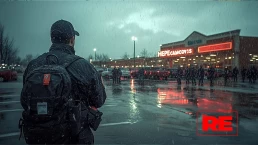
Donald Trump, across his full term from 2017 to 2021, oversaw about 1.2 million deportations total. In 2017, it was 226,000. In 2018, 256,000. In 2019, 267,000. And in 2020, during the pandemic, it dropped to 185,000. But even before COVID, Trump’s highest year didn’t come close to Obama’s. Let that soak in. The man being painted as the most aggressive immigration enforcer didn’t even crack the top two, not in totals, not in yearly averages, not in border expulsions.
So why does it feel like Trump was doing more?
Because of how the story is framed. Trump’s era was loud. The raids were televised. ICE activity was in your face. Kids in cages. Border wall speeches. Everything was branded like a WWE storyline. That showmanship created the illusion of dominance, even when the data said otherwise. Meanwhile, Biden and Obama were running a quieter, colder machine. No shouting. No photo ops. No show. Just systems. Just process. Just thousands of people removed daily, efficiently, and silently. So when I hear anchors say Trump is “disappointed” in the current deportation numbers, I hear a man realizing he got outperformed by the very Democrats he tried to paint as soft.
This is not opinion. It is math. And this is exactly why The Ripple Effect exists. To strip the spin, kill the noise, and show you what is really happening beneath the headlines.

Let’s start with the obvious: Donald Trump may not have led in deportations, but he dominated in something else, messaging. The numbers show he was behind. But the story? The story made him look like the only man with a plan. That disconnect is not accidental. It is designed.
This is how political framing works: it is not about what is true—it is about what is felt. The GOP understands that. They do not have to lead in metrics. They just have to lead in message control. And Trump, whatever else he is, mastered the show.
From the moment he came down that escalator, his strategy was rooted in fear. Not data. Not policy. Fear.
Fear of invasion. Fear of the other. Fear of a border collapse. And every time ICE made a public arrest, every time Border Patrol marched a group in front of a news camera, that fear got legs. It became real in the minds of voters. The actual mechanics of immigration enforcement? Boring. Paperwork. Court dates. Removal proceedings. Detention logistics. None of that makes for great TV. So it gets cut. What we are left with is performance. What we are fed is theater. And Trump understood how to direct the show. Now contrast that with the Democrats. Biden’s administration quietly moved more bodies, yes. But they did it with zero narrative control. No cohesive framing. No national conversation about strategy. Just stats buried inside DHS reports and a press office that can barely keep up.
Obama had the same problem. He deported millions, but lost the story. So instead of being seen as a strong enforcer, he got labeled weak by the right and heartless by the left. No win. No cover. Just backlash.

That is what framing does. It decides who gets credit, who gets blamed, and who gets forgotten—even when the scoreboard says otherwise.
And the scoreboard right now? It says this: Biden is leading on removals, Trump is leading on messaging, And the American public is being led in circles. It is the same playbook that sells lies as leadership and optics as outcomes. And we fall for it—over and over—because we have been trained to believe the man with the loudest mic must be the one doing the most work.
But truth does not raise its voice. It just stands. Quiet. Undeniable. Waiting for somebody to look beneath the noise. This part right here? That is the work.
Here’s the thing people forget: deportation doesn’t just disappear when the news stops talking about it. Whether it’s a Democrat or a Republican in office, the machine keeps moving. Quietly. Relentlessly. But the moment it stops looking like it’s moving, politicians panic. And that panic? That’s when things get dangerous. Let’s zoom in on Trump. When his administration realized he was falling behind Biden and Obama in deportation numbers, the conversation shifted. He wasn’t leading the scoreboard, and that bruised his brand. He ran on immigration. It was supposed to be his issue. His leverage. His proof of “strength.”
By the middle of his term, Trump had deported fewer people than either of the two Democratic presidents before him. Biden’s administration was quietly outpacing him in raw volume. Obama had already set records during his own two terms. And when that reality finally caught up to Trump? He didn’t adjust the strategy. He didn’t improve the process. He didn’t make policy more efficient. No. They went for optics. He demanded the story change.
And that’s where the Home Depot incident comes in.
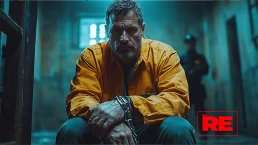
Reports say Stephen Miller—Trump’s senior adviser and architect of his immigration platform—was in a heated meeting with top ICE officials. Trump had been pressing the same question over and over: Why are our deportation numbers so low? Why aren’t we doing more? Why aren’t we out in the field getting them?
That’s when one of the ICE leaders fired back. Frustrated. Done with the back-and-forth. He said, on record:
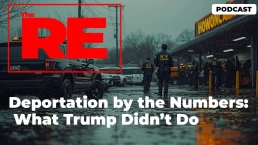
“You want numbers? I can go to Home Depot right now and get you 30 undocumented immigrants before lunch.” And then they did it.
They got in the car, drove to a Home Depot in Washington, D.C., and arrested 30 undocumented immigrants on the spot. No warrants. No investigations. No court orders. Just presence. Just bodies. Just optics.
After that, policy shifted. They stopped targeting based on risk or offense and started targeting based on volume. Arrest first. Ask later. Everybody was fair game.
And that’s when immigration enforcement went from systematic to desperate. It became a public chase scene—Trump trying to catch up to the deportation totals of the men he once called weak.
This is what happens when ego outruns policy. When deportation becomes a scoreboard, people become pawns. And the numbers, even when achieved through chaos, get framed as “strength.”
But you can’t confuse volume with strategy.
The truth is, the policy wasn’t broken. The optics were. And Trump, obsessed with his image, didn’t want to fix the system. He wanted to fix the camera angle.
From that moment forward, everything changed.
The policy quietly shifted. It stopped being about threat level, criminal records, or public safety risk. It became about accessibility. Visibility. Volume. The directive became: arrest first, ask questions later. It didn’t matter if someone was waiting on paperwork, had no priors, or had been living here for twenty years. If you were undocumented and easy to grab, you were now fair game.
Immigration enforcement went from systematic to desperate. It turned into a public chase scene, built to make Trump look like the strongman he had always claimed to be because at that point, it wasn’t about protecting borders. It was about protecting ego.
And here’s where it gets even more twisted: it worked.
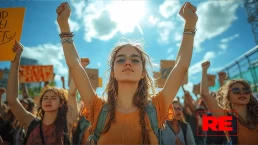
The public, by and large, didn’t know the numbers. They didn’t see the daily DHS stats. What they saw was headlines. Images. ICE raids on the evening news. They saw buses. They saw shouting. They saw badges and bodycams. And in their minds, that translated to action, even if the reality underneath was chaotic, directionless, and aimed more at appearances than accountability. What should’ve been a data-driven, risk-based system became theater.
And the people caught in it? They were not nameless. They were fathers pulled while working. Mothers arrested during school drop-off. Day laborers detained for trying to feed their kids. No charges. No appeals. Just paperwork, vans, and silence. The kind of silence that follows you even after you’re gone. This wasn’t about enforcement. This was about a narrative being forced into existence by any means necessary. Trump wasn’t leading. He was catching up. Desperately. Loudly. Sloppily. And the media, knowingly or not, helped him do it.
When they reported on the ramp-up without context, when they echoed the “tough on immigration” soundbites without showing the math, they gave the performance legitimacy. They sold panic as power. But here’s the truth that outlives the spin: you can’t confuse noise for leadership. And you can’t confuse volume for vision.
Trump didn’t fix the system. He didn’t improve outcomes. He just widened the net and turned the cameras on. And when the story didn’t go his way, he changed the scene.
What is actually happening?
A shift from risk-based enforcement to mass roundups designed to inflate deportation stats and recapture a failing political narrative.
Why is it happening now?
Because Trump’s brand was immigration—and when the numbers didn’t prove dominance, they manufactured dominance by changing tactics.
Who gets swept up?
Day laborers. Service workers. Parents. People without records. People waiting on paperwork. Anyone who fits the visual of “illegal” when a camera is near.
Where is it happening?
Public. Strategic. Loud. Parking lots, bus depots, neighborhoods with cameras. Not crime zones. Narrative zones.
How does it play out?
The public sees raids. Trump gets to talk tough. Supporters feel like order is being restored. And communities lose fathers, mothers, and providers, silently, permanently.
This isn’t enforcement. It’s stagecraft. And we have to stop mistaking noise for leadership. Because what Trump gave us wasn’t a secure border. It was a reality show with consequences. He was not ahead. He was chasing the scoreboard. And somewhere along the line, immigration policy stopped being about America and started being about ego.
The numbers tell one story. The headlines told another. And the people who disappeared in between? They didn’t have a mic.
Migration Policy Institute. (2024). Comparing the Biden and Trump deportation records. https://www.migrationpolicy.org/article/biden-deportation-record/
Migration Policy Institute. (2023). The Obama record on deportations: “Deporter in Chief” or not? https://www.migrationpolicy.org/article/obama-record-deportations-deporter-chief-or-not
Pew Research Center. (2014, October 2). U.S. deportations of immigrants reach record high in 2013. https://www.pewresearch.org/short-reads/2014/10/02/u-s-deportations-of-immigrants-reach-record-high-in-2013/
FactCheck.org. (2024, February 27). Breaking down the immigration figures. https://www.factcheck.org/2024/02/breaking-down-the-immigration-figures/
FactCheck.org. (2024, February 27). Breaking down the immigration figures. https://www.factcheck.org/2024/02/breaking-down-the-immigration-figures/
If this work helped you understand something more clearly, support it by:
Buying the books | Visiting the Newsstand | Making a donation
One voice. One message. One Goal. Truth.
No spam. No schedules.
The Truth is Underfunded. That's Why This Exists.
No ads. No sponsors. No filter. Just the truth, unpacked, explained, and raw.
Defining Policy. Power. Consequence.
See how to add us to your home screen
Locked and Loaded: How America's Gun Obsession Is Rewriting the Meaning of Freedom
The Ripple Effect
-News and Commentary-
Locked and Loaded: How America's Gun Obsession Is Rewriting the Meaning of Freedom
By TP Newsroom Editorial | Ripple Effect Division
If this work helped you understand something more clearly, support it by:
Buying the books | Visiting the Newsstand | Making a donation
One voice. One message. One Goal. Truth.
No spam. No schedules.
The Truth is Underfunded. That's Why This Exists.
No ads. No sponsors. No filter. Just the truth, unpacked, explained, and raw.
Defining Policy. Power. Consequence.
See how to add us to your home screen
There’s a strange thing about the gun debate in America: everybody claims to know what it’s about, but almost nobody’s talking about the real thing.
It’s not just the shootings, though they keep happening. It’s not just the laws, though they’re inconsistent across states. And it’s not even about the Constitution—not really. It’s about belief. About identity. About what people want to be true about the world they live in.
To the conservative mind, the gun represents a promise, that no matter what chaos is happening out there, no matter who’s in office, or what the system decides to do, they’ve still got a measure of control. A way to defend themselves. A way to stand up. And underneath that is often fear: fear that the world is getting worse, that danger is around every corner, that if you don’t protect yourself, no one else will.
To the liberal mind, the gun represents a failure, proof that this country refuses to evolve, refuses to prioritize human life over hardware, refuses to admit that what was written in the 1700s might not fit a world where children are doing lockdown drills. Underneath that is also fear: fear that someone’s rage, ignorance, or instability might end up becoming your child’s last memory.
And here’s the problem: both sides think the other side’s fear is irrational.
Conservatives often look at liberals and say, “You’re letting emotion dictate policy. You’re trying to legislate away the dangers of life.”
Liberals look back and say, “You’re so scared of losing your autonomy, you’ve made violence a virtue.”
Neither side fully trusts the other to be honest, to be fair, or to be capable of compromise. And if we’re being real? That’s not just about guns.
That’s about everything.
But when it comes to guns, the divide is sharper—because there’s no halfway point. You either think more guns equal more safety, or you think more guns equal more danger. You either believe regulation is oppression, or you believe it’s protection. You either trust the system, or you don’t.
And that’s why it’s so damn hard to move forward.
This isn’t just a policy disagreement. It’s two worldviews that no longer speak the same language. One side thinks “freedom” means being armed enough to fight tyranny if necessary. The other thinks “freedom” means not being afraid to send your kid to school.
And neither of those definitions leaves a lot of room for nuance.
But let’s be honest, this isn’t just about ideological purity.
It’s about power.
It’s about control.
And it’s about who gets to set the tone for what freedom really looks like in this country.
Because the right to bear arms doesn’t exist in a vacuum. It exists inside a culture. A political machine. A media ecosystem. A personal identity.
And once it becomes part of who you are—you can’t compromise on it without feeling like you’re giving up a part of yourself.
That’s the real reason this debate doesn’t move.
It’s not gridlock. It’s identity lock.
And the longer we keep treating it like a policy problem instead of a cultural reckoning, the more stuck we’ll stay.
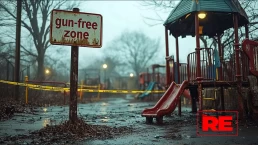
Here’s the truth I’ve come to accept: fear is the real ammo behind every argument about guns in this country.
It’s not always obvious. It’s not always loud. But it’s always there, just beneath the surface. And no matter how different the language, the lifestyle, or the zip code, that fear is driving both sides.
But what makes this dangerous is that the fear isn’t being processed, it’s being weaponized. And the people doing it? They’re professionals. Politicians, lobbyists, culture warriors they’ve all learned how to take our anxiety, wrap it in identity, and sell it back to us as belief.
And it works.
Let’s start on the conservative side. Because honestly, that’s where the narrative has been the most aggressively shaped, and the most stubborn.
According to Pew Research, 81% of conservative Republicans say owning a gun is essential to their personal freedom. Not helpful. Not important. Essential. That’s not just a statistic. That’s a worldview.
And I’ll be real—when I hear that, I don’t automatically roll my eyes. I pause. I think. Because I know what it’s like to want control. To want to feel safe in a world that doesn’t always make sense.
A lot of these folks don’t trust the system. And I get that. Hell, I don’t trust the system half the time. So for them, owning a gun isn’t about looking tough. It’s about not feeling helpless. It’s about insurance, against collapse, against crime, against being powerless.
But there’s a flip side that people don’t talk about: overcompensation.
The average gun owner owns five guns. And while that might make sense for a hunter, a collector, or someone in security—there’s a line between preparedness and paranoia. And we passed it.
There are more guns in America than people—393 million firearms for a population of 330 million. And half of those guns? They’re owned by just 3% of adults.
That’s not security. That’s stockpiling. That’s building a fortress mindset where the solution to every threat is “buy another one.” And the industry eats it up.
Organizations like the NRA figured this out decades ago. Once just a sporting club focused on marksmanship, the NRA morphed into a multi-million dollar political machine. They pull in over $200 million a year—and most of it goes toward making sure nothing changes.
They don’t talk about safety anymore. They talk about government tyranny. They talk about “defending the Second” like it’s a battlefield.
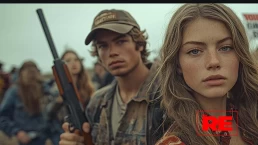
And every time there’s a mass shooting—sales go up.
Let that sink in.
After Uvalde. After Parkland. After Vegas. Every time someone walks into a public space with an AR and shatters the country’s sense of safety, people don’t stop buying—they rush to the store. In 2020 alone, during COVID and social unrest, Americans bought 23 million guns. And 5 million of those were first-time buyers.
Why?
Because fear sells.
And the more you’re told “they’re coming for your rights,” the more you believe you’re under attack.
On the flip side, you’ve got liberals. And I’m not gonna lie—this is where I live most of the time. But even here, there are blind spots.
To the liberal mindset, the gun isn’t power—it’s vulnerability. It’s the wild card. The uncontrollable factor that turns an argument into a tragedy. Liberals don’t see guns as tradition. They see them as a systemic failure we’ve never corrected.
And when you look at the numbers? That view makes a lot of sense.
The U.S. makes up 4% of the world’s population, but accounts for 35% of all global mass shootings. Guns are now the leading cause of death for children and teens in America—not disease, not accidents, not drugs. Guns. States with higher gun ownership have higher gun deaths. That correlation is real, year after year. Meanwhile, states with stricter laws, like New York or Massachusetts, consistently have the lowest gun death rates in the country.
So yeah—when liberals say “common-sense reform,” it’s not coming from nowhere. They’re watching kids get gunned down in schools. They’re watching grocery stores, churches, nightclubs, concerts all turn into scenes of carnage. And they’re wondering why nothing moves.
And here’s what makes it worse: the people want change.
A 2023 Gallup poll found that 92% of Americans support universal background checks. 89% support red flag laws. 81% support raising the minimum gun purchasing age to 21.
We agree. The people agree.
But nothing happens.
And that’s when the frustration becomes moral. When liberals stop trying to legislate and start calling it what they see: cowardice. They believe regulation isn’t just policy—it’s proof that a society values life. And when it’s missing, they see it as negligence.
But this side has its flaws too.
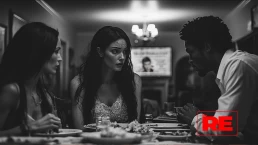
Liberals often come across as condescending, especially to folks who grew up around guns. They write off rural culture. They mock it. They assume that anyone who’s not ready to hand in their weapons must be “brainwashed by Fox News.”
But people don’t abandon their beliefs just because you shame them. They dig in. They get louder.
And sometimes, the liberal stance lacks consistency. One day it’s “defund the police,” the next it’s “only cops should have guns.”
But how can you trust a system you say is broken… and then want that same system to hold all the firepower?
That’s a contradiction people feel, even if they don’t say it out loud.
Now here’s where I really live, the middle.
Not politically neutral. Not centrist in the weak way. Just real. Practical.
Most people I talk to aren’t extremists. They’re not trying to ban everything. They’re not trying to militarize their neighborhood. They just want balance. They want their rights respected and their lives protected.
And what’s wild? Most Americans agree on the fundamentals. Mental health screenings for gun owners? Yes. Red flag laws? Yes. Waiting periods? Background checks? Raising the age to 21? All yes.
But the voices pushing for balance don’t get airtime. Because balance doesn’t fundraise. It doesn’t go viral. It doesn’t fire up a base.
And so the extremes keep the microphone. And the rest of us are left whispering logic in a room that’s too loud to hear it.
So while the left and right stay locked in ideological warfare—each accusing the other of destroying the country—the truth is that most people want the same thing: a world where the gun isn’t the center of every conversation. Where it’s not a status symbol, a threat, a fear, or a performance.
Just something that exists—safely, sanely, and with real accountability.

There’s a point where the numbers stop feeling real. Where tragedy becomes routine. And that’s the scariest part.
Because the more we argue about what guns mean, the less we talk about what they do.
I’ve stopped counting how many school shootings I’ve read about. How many times I’ve seen footage of kids running from classrooms, parents sobbing outside police lines, and politicians standing in front of cameras saying the same recycled lines.
“This is not who we are.”
“Now is not the time for politics.”
“Our thoughts and prayers are with the families.”
But it is who we are.
And now is the time for politics—because we’re dying while they stall.
Guns are now the leading cause of death for children and teenagers in America. Let that sit in your chest for a second. Not cancer. Not car crashes. Not drugs. Guns. According to the CDC, more than 4,700 kids were killed by guns in 2021 alone—and that number isn’t dropping. It’s growing.
We’ve become a country where children are trained to survive shootings before they’re taught long division.
Where teachers carry trauma they didn’t sign up for.
Where lockdown drills are as routine as fire drills, and no one blinks when they hear about a “code red” at a local elementary school.
And somehow, we’ve decided this is normal.
But it’s not just schools. The ripple hits everywhere.
Movie theaters. Grocery stores. Churches. Nightclubs. Parades. Offices. Parking lots. Gas stations. Malls. Nail salons. Public parks. Subway cars.
There’s almost nowhere left where someone hasn’t pulled a trigger in public and changed a hundred lives in less than ten seconds.
And here’s what they don’t tell you: the damage doesn’t stop when the shooting ends. Survivors don’t just heal. They live with the echo.
The sound of shots. The smell of blood. The locked jaw. The hypervigilance. The fear of crowds. The guilt of survival.
We treat it like an event.
For them? It’s a forever.
We spend more time debating the right to own a weapon than we do grieving the people destroyed by them. We pass “thoughts and prayers” like loose change. We normalize murder with words like “tragic,” “shocking,” “unthinkable.”
But it is thinkable. It happens all the time. And not just in blue cities or red towns. Not just in one type of neighborhood.
Gun violence has no loyalty. It touches everyone.
But it hits differently depending on your zip code.
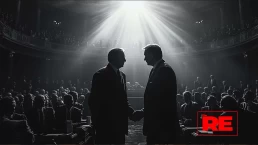
In lower-income Black and Latino communities, it’s often dismissed as “gang violence.” That phrase alone strips the human out of it. It makes the victims sound like they signed up for it. Like they deserved it. But they didn’t.
Most of them were just walking home. Sitting on porches. Leaving work. Riding the bus.
Their stories don’t trend. Their names don’t go viral. And the media rarely follows up. But they’re just as dead. Just as traumatized. Just as deserving of justice.
Meanwhile, in rural towns, suicide by firearm is skyrocketing. Quiet, isolated areas—places where the gun is a normal part of the household, are now seeing an epidemic of despair. Fathers. Teenagers. Veterans.
They’re not being killed by others. They’re using the weapon they kept for “protection” on themselves.
66% of all gun deaths in America are suicides.
We don’t talk about that enough.
We don’t talk about how owning a gun in the house increases the chance of death—not from intruders, but from yourself or someone you love.
We also don’t talk enough about domestic violence.
Women living in homes with a gun are five times more likely to be killed by their partner. Five. And yet in many states, abusers can still legally buy and keep firearms—even after restraining orders. Even after charges. Even after multiple victims.
Why?
Because we’ve built laws around fear, not prevention. Around ideology, not evidence. And the cost is measured in funerals.
And here’s what’s even wilder—we could fix this. We could reduce it.
We’ve seen other countries do it. Australia implemented a mandatory buyback after a mass shooting in 1996. Gun deaths plummeted. New Zealand banned semi-automatics after the Christchurch massacre. Canada tightened national red flag laws. Even in the UK—where police don’t carry firearms—gun homicides are almost nonexistent.
But America?
America has 4% of the global population and over 40% of the world’s civilian-owned guns. We’re in a league of our own—and not in a good way.
And every time a solution is brought to the table, someone yells, “You’re trying to take our rights!”
But nobody’s trying to take anything. We’re trying to stop the bleeding.
And I get it—people want to feel protected. They want to feel like they’re not vulnerable to the world falling apart.
But the irony is… the guns aren’t keeping us safe.
They’re keeping us stuck.

There’s a moment in every conversation about guns where it stops being about rights and starts being about who gets to define the rules of the world. That’s where we are. Because this debate? It’s not just stuck. It’s strategically frozen. And the longer we pretend it’s just about laws or liberty, the longer we avoid the real truth: we are a country more committed to the idea of freedom than the outcome of safety.
We’ve built a culture that defends the symbol harder than the people standing next to it. And that’s not freedom. That’s ego dressed in patriotism.
I’ve said it before, but I’ll say it again: we’re not really arguing about the Second Amendment anymore. We’re arguing about identity. About control. About how people see themselves in a system that constantly feels like it’s breaking underneath them. And when people feel like they’ve lost control, the easiest way to get it back is to hold something in your hand that says, “You’ll listen now.”
But the gun isn’t listening. It doesn’t negotiate. It doesn’t care if you’re liberal, conservative, Black, white, rich, poor, scared, brave, or just tired. It only does one thing.
So if we’re going to get serious about this conversation—really serious—then we have to start asking the questions nobody wants to answer. The ones that don’t fit cleanly into red or blue. The ones that don’t raise money or rack up retweets. The ones that make people uncomfortable. Especially the ones that make us uncomfortable.
Let’s ask them.
Who really benefits from keeping America stuck in this gun war? Not the families. Not the victims. Not the teachers or students or everyday people just trying to live. The ones who benefit are the manufacturers. The lobbyists. The politicians running on fear. The media channels making millions off outrage. They’ve created an entire economy around the idea that fear equals power. And guns are the product. Every mass shooting is followed by a press conference. But it’s also followed by a stock bump for gun companies. That’s not a bug. That’s the business.
What would it actually take to shift the culture? Not just policy. Not just regulation. But a full cultural realignment. It would take people realizing that safety is not weakness. That surrendering a little control isn’t the same as surrendering your freedom. That rights come with responsibility—not just legally, but morally. It would take us redefining what strength looks like. Because strength isn’t walking around with an AR-15 strapped across your chest at a farmer’s market. Strength is knowing you don’t need to.
When did fear become more American than hope? That’s the question that hits me hardest. Because it didn’t used to be this way. There was a time when being “free” meant you could build something. Dream something. Feel safe enough to raise a family, open a shop, walk to school. Now, “freedom” feels like a shield. Like a stance. Like something you have to protect violently or lose forever. We’ve let fear hollow out what freedom was supposed to feel like.
Where’s the middle ground? It’s here. It’s always been here. Most of us live in it. But middle ground doesn’t mean silence. It doesn’t mean being polite while people die. It means demanding better from both sides. Demanding smarter policy from conservatives who only say “no.” Demanding more consistent strategy from liberals who fumble the message. And demanding humanity from a system that’s learned how to operate without it.
Why are we still stuck? Because power never gives itself up. Because fear is profitable. Because outrage keeps people in place. But also? Because we let it. Because it’s easier to repost a headline than have a hard conversation at the dinner table. It’s easier to pick a side than ask yourself why you believe what you believe. It’s easier to stay comfortable than to look at a kid crying in a lockdown drill and admit: we failed her.
We talk so much about protecting the future. But we’re scared to change the present. And until that shifts, we’ll keep burying kids in the name of a freedom nobody can agree on.
One story. One truth. One ripple at a time. This is The Ripple Effect, powered by The Truth Project.
Centers for Disease Control and Prevention. (2024). Fast facts: Firearm injury and death. https://www.cdc.gov/firearm-violence/data-research/facts-stats/index.html axios.com+13
Centers for Disease Control and Prevention. (2024). Preventing firearm violence and injuries impacting children and teens. https://www.cdc.gov/firearm-violence/php/research-summaries/children-and-teen-impacts.html
Pew Research Center. (2024, July 24). Key facts about Americans and guns. https://www.pewresearch.org/short-reads/2024/07/24/key-facts-about-americans-and-guns/
Pew Research Center. (2023, April 6). Gun deaths among U.S. children and teens rose 50% in two years. https://www.pewresearch.org/short-reads/2023/04/06/gun-deaths-among-us-kids-rose-50-percent-in-two-years/
Futures Without Violence. (2024, June). Guns and domestic violence fact sheet. https://futureswithoutviolence.org/wp-content/uploads/2025/02/Guns-and-Domestic-Violence-Fact-Sheet-June-2024.pdf
Federal Bureau of Investigation. (2022). Active shooter incidents in the United States. https://www.fbi.gov/file-repository/reports-and-publications/active-shooter-incidents-in-the-us-2022-042623.pdf
Everytown for Gun Safety Support Fund. (n.d.). Firearms are the leading cause of death for American children and teens. https://everytownresearch.org/graph/firearms-are-the-leading-cause-of-death-for-american-children-and-teens/
If this work helped you understand something more clearly, support it by:
Buying the books | Visiting the Newsstand | Making a donation
One voice. One message. One Goal. Truth.
No spam. No schedules.
The Truth is Underfunded. That's Why This Exists.
No ads. No sponsors. No filter. Just the truth, unpacked, explained, and raw.
Defining Policy. Power. Consequence.
See how to add us to your home screen

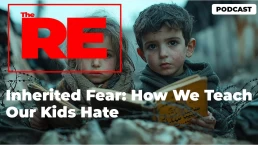
Inherited Fear: How We Teach Our Kids Hate
The Ripple Effect
-News and Commentary-
Inherited Fear: How We Teach Our Kids Hate
By TP Newsroom Editorial | Ripple Effect Division
If this work helped you understand something more clearly, support it by:
Buying the books | Visiting the Newsstand | Making a donation
One voice. One message. One Goal. Truth.
No spam. No schedules.
The Truth is Underfunded. That's Why This Exists.
No ads. No sponsors. No filter. Just the truth, unpacked, explained, and raw.
Defining Policy. Power. Consequence.
See how to add us to your home screen
Fear does not come standard. It is inherited.
We are not born afraid of other people. We are not born knowing who to watch, who to avoid, who we are supposed to be better than. We learn that. Bit by bit. Story by story. Silence by silence. Fear gets passed down the same way we pass down family recipes, songs, faith, and superstition. It just shows up in different forms. A look. A rule. A warning whispered before school. And over time, it starts to feel like instinct.
But it is not instinct. It is programming.
I know because I broke that cycle. My son doesn’t fear police. He doesn’t flinch when he sees a uniform or shrink when they pass by, in fact he shakes their hand, gets in the front of their cars, pushes the sirens. And that is because I never modeled fear for him. Police have showed up at my home, guns drawn—and that has happened multiple times—I never cowered. I never yelled. I never played the fool or gave them energy to match. I spoke clearly. I explained. I de-escalated with presence, not panic. The truth is, I’ve lived through some wild, toxic situations. My ex-wife and I had a volatile relationship. There were guns pulled. There were fights. Pans and pots thrown. A neighbor got tossed through a door. It was chaos, and the police were called more than once. But in all of that, I was never arrested, well not for any of that. The only time I got locked up was because someone had to be, and I happened to be the drunk one that night. And even then, my son did not walk away scared. Because what he saw in those moments was me handling it. I did not make excuses. I did not break. I used my words. I used my mind. And I made sure he saw that fear was not required. That fear was not inherited. That he could choose something different. And he did.
That was not by chance. That was by choice.
Because fear is taught. And if it can be taught, then it can be unlearned. And if it can be unlearned, then we need to start talking about who is doing the teaching and why.
It is easy to point fingers at schools, media, politics. And they play a part, no question. But a lot of it starts earlier than that. At home. Around the dinner table. In the language we use. The warnings we give. The people we do not invite. The history we leave out. Fear is not just what gets said. It is what gets repeated. It is what gets absorbed without being questioned.
White children are taught who to avoid. Palestinian children are taught who to fight. Israeli children are taught who wants to destroy them. Black children are often taught to brace before they walk outside. And in every one of those cases, there is an adult standing nearby thinking they are doing the right thing. Keeping them safe. Preparing them for the world. But preparation without context is just indoctrination. And after a while, nobody remembers where the fear came from. They just carry it forward.

This is not a cultural issue. It is a human one.
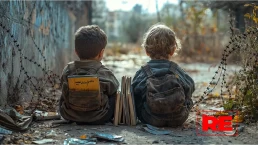
We pass down fear like we pass down last names. And unless someone interrupts the cycle, that fear just keeps getting sharper. It becomes the reason a child stops trusting, stops connecting, stops imagining a different kind of future. And it does not always look dramatic. Sometimes it looks quiet. Sometimes it looks like a kid who no longer speaks up. Who stays on their block. Who does not reach out. Sometimes it looks like a boy watching a uniform and thinking, “I am not safe.” Not because of anything that happened—but because of what he was told to believe.
This article is about that belief. The one we pass down without meaning to. The one that shapes our instincts before we ever question them. The fear that is not based on experience, but repetition. And what it costs us when we mistake that fear for wisdom.
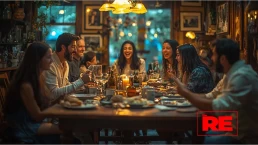
What people do not always realize is that fear is not always loud. Sometimes it comes wrapped in silence. In ritual. In the things we never say, but always do. It shows up in bedtime stories, in holiday traditions, in side-eye glances across the room. A kid might never hear the word enemy, but he will still learn who to stay away from. A little girl might never be told she is in danger, but she will still learn who to fear. That is how fear moves. Quietly. Consistently. Across generations.
This is not just a Black issue or an American issue. This is human behavior. A global inheritance.
A white child in rural Tennessee may never meet a Black person in their early years, but they already have an idea of who we are. They learn it from the jokes, the warnings, the “lock your door” glances. That fear gets folded into their worldview long before they form opinions of their own. A Palestinian child grows up knowing where the checkpoints are, what the sound of drones means, and which direction to run. They do not have to be taught the politics to absorb the fear. Israeli children, growing up on the other side of that wall, hear different stories. They hear about existential threats, historical betrayal, the constant need for survival. They are not born hating anyone. But they learn who not to trust. And once it is in the bloodstream, it becomes hard to separate fear from identity.
Here in America, the transmission works just as efficiently. It may come through different tools, but it arrives just the same. Some white families raise their kids to see authority as safety and outsiders as risk. Some Black families raise their kids to anticipate harm, prepare for bias, and carry the weight of watching their back. In both cases, the children did not earn that weight. They inherited it.
And it goes beyond race. Evangelical kids are taught that liberals hate them. Coastal kids are taught that the South is ignorant. Muslims are taught to brace for stares in airports. Immigrants are taught to blend in quickly or risk becoming a target. Every community has its own version. And in most cases, the adults passing that fear down think they are doing something good. Something protective. But fear passed off as wisdom is still fear. And when it becomes generational, it stops looking like trauma and starts looking like tradition.
That is what makes it so dangerous.
Because once fear becomes the default, everything gets filtered through it. You stop asking questions. You stop building trust. You stop imagining that anything else is possible. And you start seeing the world in survival terms. Us versus them. Familiar versus foreign. Safety versus threat. And when that framework takes root, it becomes very hard to unlearn.
That is how we get kids who are already building walls before they ever build friendships. That is how we get twelve-year-olds ready to fight for causes they barely understand. That is how we get young men who see the police as the enemy, even before they have had a personal experience, because the fear was handed to them like a family heirloom.
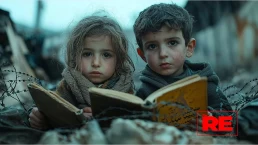
But as we said before—fear is not instinct. It is inherited. And if that is true, then someone, somewhere, has to be willing to stop the cycle. Someone has to be willing to teach something else.
The longer I watch the world, the more I realize fear does not just divide—it defines. It decides who gets close and who gets blamed. Who is seen as human and who is seen as a problem. And the deeper that fear runs, the more we start confusing it for wisdom. We start acting like being cautious is being smart. Like being suspicious is being prepared. But sometimes what we call survival is just inherited trauma that no one ever dared to unpack.
This is not just about Black and white. This is not just about America. This is about the way fear gets woven into identity until people cannot separate the two. It is about how a white child in Alabama and a Jewish settler in the West Bank can grow up with the same story running in their heads—different enemies, same framework. It is about how a Palestinian boy and a Black boy in Detroit can both learn that safety is not something you ask for, it is something you fight for. And it is about how, without realizing it, we all start carrying stories that were never fully ours. Stories of loss, of betrayal, of violence. Stories that were handed down, not to heal us—but to prepare us for the worst.
And the worst part is, we end up living down to that fear.
We start limiting who we love. Who we befriend. Who we hire. Who we help. We start drawing lines before we ever see if they need to be drawn. And all of it is done in the name of protection. But the cost of that protection is real. Because a child raised in fear becomes an adult shaped by it. And an adult shaped by fear rarely knows how to lead without control, how to protect without violence, or how to live without looking over their shoulder.
So who needs to care about this? Every parent. Every educator. Every person who claims to want peace but still passes down bias in their daily choices. What can be done? We have to start with language. With what we let slide. With what we call normal. With what we keep silent about. When will it matter again? It already does. Every school hallway. Every traffic stop. Every election season where fear gets sold as strategy. Where is this playing out? In Jerusalem. In Jackson. In school board meetings. In TikTok comment sections. Anywhere fear becomes more familiar than truth. And why is this bigger than it looks? Because if we do not teach something new, we will keep reliving the same story. New generation. Same cycle. Just with different names, flags, and uniforms.
Fear is not our birthright. It is just what we were given. But it does not have to be what we pass down.
One story. One truth. One ripple at a time.
This is The Ripple Effect, powered by The Truth Project.
American Psychological Association. (2021, June). Raising anti‑racist children [Monitor on Psychology]. https://www.apa.org/monitor/2021/06/anti-racist-children
Meltzoff, A. N., & Gilliam, W. S. (2024). How children acquire racial biases [Journal article]. Daedalus. https://thereader.mitpress.mit.edu/how-children-acquire-racial-biases/
ResearchGate. (2017). Steele, J. R., & Williams, A. Children’s implicit attitudes toward targets who differ by race and gender. Child Development. https://www.researchgate.net/publication/366985001_Children%27s_implicit_attitudes_toward_targets_who_differ_by_race_and_gender
DeGruyter Brill. (2022). Parental prejudice & children’s bias: Study finds children internalize parents’ racial biases when closely identified. Journal of Moral Education. https://www.degruyterbrill.com/document/doi/10.1515/jom-2022-0175/html
Time. (2023, August 28). It might be possible to reduce bias in kids, new research suggests. https://time.com/6308910/kids-bias-structural-inequality-study/
If this work helped you understand something more clearly, support it by:
Buying the books | Visiting the Newsstand | Making a donation
One voice. One message. One Goal. Truth.
No spam. No schedules.
The Truth is Underfunded. That's Why This Exists.
No ads. No sponsors. No filter. Just the truth, unpacked, explained, and raw.
Defining Policy. Power. Consequence.
See how to add us to your home screen
Why Black Men Keep Losing Ground
The Ripple Effect
-News and Commentary-
Why Black Men Keep Losing Ground
By TP Newsroom Editorial | Ripple Effect Division
If this work helped you understand something more clearly, support it by:
Buying the books | Visiting the Newsstand | Making a donation
One voice. One message. One Goal. Truth.
No spam. No schedules.
The Truth is Underfunded. That's Why This Exists.
No ads. No sponsors. No filter. Just the truth, unpacked, explained, and raw.
Defining Policy. Power. Consequence.
See how to add us to your home screen
You have probably heard the phrase before. Crabs in a barrel. A group scrambling toward the top, stepping on each other, pulling each other back, convinced there is only space for one to make it out. We use it to describe how we treat each other. But the problem is not just that we pull each other down. The real problem is that too many of us are not even reaching for the top. We are arguing over who deserves to climb, while the whole structure keeps us boxed in.
This is not a new observation. We talk about systems. We talk about oppression. And yes, they exist. Yes, the game is rigged. But here is the part we do not say enough: once you know the game is rigged, you have a choice. You either adapt, or you stay stuck blaming the dealer. And if I am being honest—too many of us stay stuck.
I know because I was one of them.
I spent most of my life believing I could outsmart the rules. I was smart. I knew how to work the room, run the operation, solve the problem. But I did not want to follow the protocol. I believed the rules did not apply to me—especially the ones I thought were built to keep me out. I believed in raw talent, not paperwork. Vision, not degrees. Until I got passed over. Again. And again.
At work, I was told a degree was not required. That it would be helpful, but not necessary. That kind of language sounds polite. Sounds flexible. But what it really meant was: we will promote you when we are ready, and this missing credential gives us a clean reason not to. I watched others move ahead without credentials. I watched exceptions get made. But for me? No exceptions. Just explanations.
Now here I am, almost 50, finishing a degree that will not change my past, will not unlock a promotion, and probably will not move the needle on my income. I am doing it now because I finally understand the structure. Not just what it asks—but how it moves. And what I see clearly now is what I wish I understood earlier: knowing the system is unfair does not mean you stop playing. It means you learn how to win anyway.
That is what Black women figured out.
By the numbers, Black women are the most formally educated group in the country. They hold more degrees than Black men. They own more homes than Black men. They have higher average incomes. Not because they were handed more. But because they figured out how to flip the structure. They studied the map while we were still arguing about whether we should have to use it. They learned the rules and beat them at their own game.

Let us start with the numbers.
In 2023, Black men were less likely to earn a college degree than any other major demographic in America. Fewer than 30 percent had completed a bachelor’s or higher. Compare that to nearly 50 percent of white men, and over 60 percent of Black women under 40. And it is not just education. Black men also rank lowest in homeownership across race and gender. Financial literacy, wealth-building tools, long-term planning. Most of it never even enters the conversation until a crisis hits. And by the time it does, we are already playing from behind.
Now you can blame the system. And there is no question the system plays a part. Generational exclusion, redlining, underfunded schools, hiring bias, incarceration. All of it real. All of it measurable. But those barriers, as real as they are, do not explain everything. They do not explain why, within the same conditions, Black women are graduating, buying homes, starting businesses, and outpacing us. They do not explain why, generation after generation, we keep acting like effort and intelligence alone should be enough.
Because here is the truth. Being brilliant means nothing if you are undisciplined. Being creative means nothing if you are disorganized. And wanting more means nothing if you refuse to build structure around it. That is what gets us. Not lack of skill. Lack of structure.
We chase entrepreneurship but never set up a retirement account. We create platforms but never form legal entities. We invest in our brand but not our credit score. And when we fall behind, we get angry. Not always at the system. Sometimes at each other. At the brother who got there first. At the friend who bought the house. At the cousin who plays the corporate game and wins. Because deep down, we believe success is a zero sum game. That if he got it, I cannot. That if she moved ahead, I must have been left behind. And that scarcity mindset makes everything feel personal even when it is not.
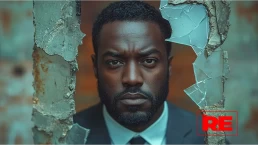
This is the real root of the crab in a barrel problem. It is not just about hate. It is about fear. Fear that we will be forgotten. Fear that we will be average. Fear that there is only enough space at the top for one of us, and if we are not that one, then we are nothing. So we perform. We front. We fake power instead of building it. We mimic ownership instead of creating it. We spend money we do not have to look like we are already there. And all the while, the system does not have to do anything. Because we are doing the job ourselves.
You can see it in every city. In every circle. Men who had potential but never discipline. Men who had vision but no blueprint. Men who had support but never saw it because they were too busy trying to be the one. Men who knew the rules but refused to play because they thought they were above it. I know those men. I was one of them. Sometimes I still am.
But now I see it. And it does not make me bitter. It makes me clear.
Because the truth is, we are not being held down by each other. We are being held down by the habits we refuse to name. We are losing because we keep confusing rebellion for strategy. We think not following the rules makes us free. But freedom without structure is just chaos. And too many of us are still mistaking noise for leadership.
We need a new standard. Not a new speech. Not another viral quote. A new standard. One that centers long term thinking, financial literacy, emotional maturity, health, legacy. Not just hustling. Not just surviving. Not just proving we are better than the next man. But building in a way that lets all of us eat without needing to climb over each other to do it.
Because if we keep treating success like a seat at a table built for one, we will never know what it means to actually win as a people.
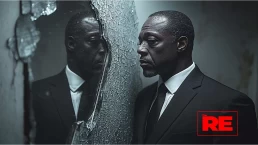
At some point, we have to admit that this is not who we are. Struggle is not our personality. Pain is not our culture. We carry it, yes. We inherit it, yes. But it was never supposed to define us. Somewhere along the line, we stopped separating the system that broke us from the habits we chose to keep. We started calling dysfunction normal. We started calling avoidance strength. And we started looking at each other like threats instead of teammates.
I say this with love, but also with full clarity. Nobody is coming to save us. And nobody should have to. If we know the system is not built for us, then why do we keep acting surprised when it fails us? Why are we still waiting for a clean invitation to play in a game we know is already running? The truth is, we have everything we need. We have talent. We have resilience. We have ideas, stories, presence, brilliance. What we do not have is unity. What we do not have is long term discipline. What we do not have is the ability to prioritize progress over ego.
We are the only community that still treats success like a limited resource. And we pay for that in every way that matters. We lose ground while we debate style. We lose ownership while we fight for credit. We let pain define us because we are too afraid to imagine who we might be without it. But here is the truth. That pain never belonged to us. It was handed to us. It was thrown at us. But it is not ours to keep.
So what now? Who needs to hear this? Every man still waking up bitter that the system never gave him a fair shot. Every brother still chasing status instead of stability. Every voice that has something real to offer but keeps waiting for permission to lead. What can be done? Start by telling the truth. Start by calling the pattern what it is. Not a conspiracy. A cycle. A mindset. One that we have the power to stop.
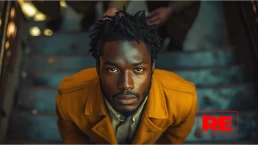
When will it matter? It already does. Every day we wait is a day we lose. The next generation is already watching. Already mimicking. Already choosing whether to follow our mistakes or follow our growth. Where is this playing out? In every barbershop. Every group chat. Every unspoken competition between friends who should have been business partners. Every home without a will. Every dream with no paperwork behind it. Why is this bigger than it looks? Because we cannot build a future if we do not trust each other to share it. And we will not trust each other until we stop looking at the man next to us as competition for a spot at a table we were always meant to own together.
We have worn pain like it was a uniform. Carried it like it was identity. But the truth is, our greatness has never come from how well we survive. It comes from how deeply we build. How boldly we protect each other. How far we go when we stop trying to be the one and start choosing to be the team.
This pain was never our identity. It was just the chapter we were born into.
One story. One truth. One ripple at a time.
This is The Ripple Effect, powered by The Truth Project.
U.S. Census Bureau. (2023, October 17). Census Bureau releases new educational attainment data: 39% of women and 36.2% of men ages 25 and older hold a bachelor’s degree or higher in 2022. U.S. Census Bureau.
Pew Research Center. (2025, January 23). Key facts about Black Americans. https://www.pewresearch.org/short-reads/2025/01/23/key-facts-about-black-americans/
Progressive National Policy Institute. (2024, January). Men of color in higher education [Fact sheet]. https://pnpi.org/menofcolor-fact-sheet/
National Association of Realtors. (2023, March). 2023 snapshot of race and home buying in America [PDF]. https://www.nar.realtor/reports-and-research/research-reports/snapshot-of-home-buying-in-america
Federal Reserve Bank of St. Louis. (2025, April 28). Homeownership rates by race and ethnicity: Black alone in the United States
U.S. Bureau of Labor Statistics. (2024, December). Labor force characteristics by race and ethnicity, 2023. Bureau of Labor Statistics. bls.g
What the Confederate Flag Still Promises
The Ripple Effect
-News and Commentary-
What the Confederate Flag Still Promises
By TP Newsroom Editorial | Ripple Effect Division
If this work helped you understand something more clearly, support it by:
Buying the books | Visiting the Newsstand | Making a donation
One voice. One message. One Goal. Truth.
No spam. No schedules.
The Truth is Underfunded. That's Why This Exists.
No ads. No sponsors. No filter. Just the truth, unpacked, explained, and raw.
Defining Policy. Power. Consequence.
See how to add us to your home screen
A photo of a young white boy resting his head on a folded Confederate flag laid across a grave circulated not long ago. His eyes were closed. His body still. The setting quiet. At first glance, it felt like a tribute. A moment of innocence dressed as reverence. But it was not innocence. It was instruction. That image did not capture history. It captured inheritance.
The boy was not saluting the past. He was absorbing a version of it that has been curated, protected, and repackaged for generations. A flag that represented six years of rebellion has been wrapped in over a century of mythology. And in that image, a child was being given his place in that mythology.
This is what America does when it is afraid of losing control. It builds memory into tradition. It takes defeat and rebrands it as dignity. The Confederate flag should have been buried with the Confederacy. Instead, it became something more dangerous. It became familiar.
The Confederacy lasted six years. That is not legacy. That is barely a moment. But in that moment, a group of Southern states left the Union and went to war with the federal government to protect their power and their economic system. That system was built on unpaid labor. They called it tradition. They called it independence. But what they were protecting was ownership. Human ownership.
The historical record does not whisper about this. It says it plainly. Mississippi’s secession declaration stated, “Our position is thoroughly identified with the institution of slavery.” Texas said slavery was a blessing, ordained by God. South Carolina said the federal government had become hostile to the rights of slaveholding states. They did not fight for vague ideas of freedom. They fought for control. They fought to keep wealth flowing into the hands of the few by keeping millions in chains.
When people say the war was about protecting their way of life, they leave out what that life depended on. Plantations, exports, generational wealth, and political clout—all of it rested on one truth: their economy was built on free labor. The Confederate states did not hide that. They codified it. And when they lost the war, they did not lose that belief. They simply buried it deeper, repackaged it, and handed it down.
When the Confederacy fell, its symbols should have fallen with it. But they were kept alive, sometimes quietly and sometimes publicly, depending on how much power needed to be defended. When the federal government threatened to integrate schools, the flag reappeared. When civil rights legislation passed, it flew higher. When Black and brown families moved into white neighborhoods, it showed up in windows and on fences. The flag never represented memory. It represented resistance—resistance to equity, to demographic change, to any shift in the status quo.
And by 1965, that resistance found a new reason to harden.
That year, the Immigration and Nationality Act passed. It eliminated quotas based on national origin and opened America’s borders to more non-European immigrants than ever before. It was not just a policy shift. It was a psychological one. For the first time, white Americans were forced to consider the possibility that the country they believed belonged to them might not always look like them.
The demographic anxiety that followed was not subtle. Politicians warned of cultural dilution. Neighborhoods tightened their lines. Political movements grew around a single idea: that whiteness was slipping. And just like that, the Confederate flag was no longer a relic. It became a rallying point.
It started appearing in state legislatures again. It became a symbol at political rallies, school board protests, and marches where people claimed they wanted to “take their country back.” But back from who? From what? The country had changed, yes—but the fear was not about change. The fear was about loss. Loss of dominance. Loss of default status. Loss of the unspoken belief that America was, at its core, built for one kind of person.
That is why the image of that boy struck me. Not because it was rare. But because it was so common it felt rehearsed. Someone gave him that flag. Someone placed him in that moment. Someone told him that this symbol was worth honoring.
They did not say slavery. They did not mention rebellion. They just said heritage. But heritage without accountability is just denial in a nicer frame.

The real cost of this mythology is not just symbolic. It is structural. The longer a lie lives, the more comfortably it hides. The Confederate flag was never just a piece of cloth. It was a code. And like all codes, its power grew in the silence around it.
Once the Civil Rights Movement forced open the conversation about race, that flag reentered the public square under a new name—heritage. But the timing said everything. As laws changed and new faces arrived in neighborhoods and boardrooms and classrooms, many white Americans felt the ground shift. The cultural dominance they were raised with no longer moved unquestioned. And instead of adapting, many decided to defend what they believed was being taken from them.
That is how a six-year rebellion became a permanent symbol. Not because the Confederacy deserved it, but because the fear it represented never ended. It simply found new forms.
And over time, those forms evolved. What started as nostalgia turned into grievance. What was once framed as Southern pride became something harder. Something sharper. You could see it in the language. In the rallies. In the signs. In the sudden rise of terms like “real Americans,” “globalists,” “replacement theory,” and “heritage not hate.” These were not just slogans. They were warning signs. Because when pride becomes weaponized, it no longer stays pride. It becomes permission.
Permission to rewrite history.
Permission to center whiteness as loss.
Permission to view diversity as threat.
Permission to escalate.
And that escalation did not happen in the shadows. It walked out into the open, wearing camouflage and carrying flags. Charlottesville was not a flashpoint. It was a declaration. “Jews will not replace us” was not a fringe chant. It was the next chapter. The same structure. Just louder. Just angrier. Just more willing to say the quiet part out loud.
The Confederate flag was already back in circulation, but now it started flying beside other symbols. Swastikas. Kekistan memes. Viking helmets. Crusader shields. What used to be regional became international. What used to be coded became explicit. The language of the Lost Cause merged with the language of fascism, and the overlap was not subtle. It was deliberate.

This is where the myth metastasizes.
When people realize they cannot win with nostalgia alone, they start reaching for control. They move from memory to ideology. From culture war to actual war rhetoric. And we have watched that shift happen in real time. The internet made it faster. The last decade made it visible. January 6th made it undeniable.
The Confederate flag was carried through the Capitol that day. Not beside the American flag, but in defiance of it. That moment revealed exactly what we had refused to admit—that the divide was no longer North versus South. It was not about preserving land or states’ rights. It was about preserving whiteness. And whiteness, once threatened, has always been willing to do whatever it takes to reassert itself.
That is the modern turn. What began as a Southern rebellion has become a national identity crisis. And what many are calling white nationalism now is not new. It is the natural evolution of a fear that started long before Trump, long before the Tea Party, even long before Reagan. This started the moment whiteness stopped being the unquestioned center of American life.
The Confederate flag is not the final form. It is the entry point. It is the softened version. The acceptable version. The conversation starter that leads to something much more dangerous when left unchecked.
And that is what we are seeing now. This is not about flags anymore. It is about movements. It is about ideology. It is about what happens when a shrinking majority is told they no longer own the full narrative—and instead of making room, they double down. They find each other. They organize. They adapt. And they radicalize.
We are not watching a resurgence of old racism. We are watching the modern version learn how to dress itself in patriotism, religious language, constitutional arguments, and internet culture. But underneath all of it is the same idea. Someone believes this country was theirs. And now, they are trying to take it back by any means necessary.
There are people in this country who would rather burn it down than share it. That is not exaggeration. That is not rhetoric. That is the truth playing out in real time. The deeper truth—the one people keep dancing around—is that whiteness in America was never just an identity. It was a currency. And now that it is losing value, the people who inherited it are panicking. Lyndon B. Johnson once said, “If you can convince the lowest white man he’s better than the best colored man, he won’t notice you’re picking his pocket. Hell, give him somebody to look down on, and he’ll empty his pockets for you.” That was decades ago. But it still holds. What we are seeing today is the long tail of that strategy. Poor white Americans were sold a myth. Told that their skin alone gave them value. And when the system failed them—when wages stagnated, when power shifted, when their status stopped being automatic—they turned back to the only thing they were ever promised: superiority. Not opportunity. Not truth. Just the comfort of feeling above someone else.
That is the root of this Confederate nostalgia. It was never about pride. It was about position. That flag is not being passed down because of what it meant. It is being passed down because of what it still offers—identity, certainty, and a sense of rightful ownership in a country that feels unfamiliar to the people who once defined it. But that inheritance is no longer passive. It is becoming political. Strategic. Dangerous. And if we keep pretending this is just fringe behavior, we will miss what is growing beneath the surface. The ones who believe this country belongs to them are not giving up quietly. They are organizing. Rebranding. Running for office. Shaping school curriculums. Writing laws. And the further their power slips, the more extreme their vision becomes.

This matters now because we are not dealing with a single moment. We are dealing with a sustained campaign. The story being sold is not just that something was lost. It is that something was stolen. And that is what makes this dangerous. Because once someone believes they are the rightful owner of the country—and that it was taken from them—violence starts to feel like justice. This is not about flags anymore. It is about what those flags make people feel justified in doing. And the longer we let the myth sit unchallenged, the more generations will grow up believing that lie, and acting on it.
This is not about the past. It is about what we are still passing forward. What we are still teaching. And what we are still too afraid to say plainly: that American identity was never supposed to be shared. And now that it has to be, the people who believed it belonged to them are willing to dismantle the entire country to avoid standing on equal ground.
One story. One truth. One ripple at a time.
This is The Ripple Effect, powered by The Truth Project.
American Civil Liberties Union. (n.d.). The Confederate flag: A symbol of hate. https://www.aclu.org/other/confederate-flag-symbol-hate (aclu.org)
Southern Poverty Law Center. (2023, June). Hate on display: Confederate flags and monuments. https://www.splcenter.org/2023/06/15/hate-display-confederate-flags-and-monuments (splcenter.org)
U.S. Department of Justice. (2021). Enemies in our homeland: Domestic terrorism and hate groups in America. https://www.justice.gov/archives/opa/Press-Releases/domestic-terrorism-hate-groups-report/
National Museum of African American History and Culture. (2022). The Confederate flag and collective memory. In Slavery and freedom exhibition. Smithsonian Institution. https://nmaahc.si.edu/explore/exhibitions/slavery-and-freedom/confederate-flag/
Pew Research Center. (2021, September 2). Public awareness of hate in the U.S. and views on the Confederate flag. https://www.pewresearch.org/politics/2021/09/02/public-awareness-hate-us-confederate-flag/
National Park Service. (2020, June 19). The Confederate legacy and battlefield preservation. U.S. Department of the Interior. https://www.nps.gov/articles/confederate-legacy.htm


The Silent Crisis: Femicide and the Global War on Women
The Ripple Effect
-News and Commentary-
The Silent Crisis: Femicide and the Global War on Women
You can scroll through your feed right now and see it. A woman missing. A woman murdered. A woman beaten, abandoned, silenced. Sometimes she’s nameless. Sometimes she’s a hashtag. But no matter how often it happens, we never really stop to ask the deeper question: why is this normal now?
Why is it normal for women to be afraid of walking home? Why is it normal for them to carry keys like weapons? Why is it normal for them to send texts saying “made it home safe” like it’s an achievement instead of a basic human expectation? And most of all—why is it that when they die, the world treats it like background noise?
This isn’t about one country or one culture. This is happening everywhere. Women are being killed—not because they were in the wrong place at the wrong time, but because the world made the wrong choices and called them tradition. Because too often, women are punished for leaving. Punished for refusing. Punished for speaking. Punished for simply existing outside of someone else’s control.
You start to notice a pattern when you look past the headlines. It’s not that these deaths are random. It’s that they’re allowed. And when something is allowed long enough, it starts to look like culture. It starts to sound like, “that’s just how things are.” And that’s where the danger lives. Not just in the act of violence—but in the silence that follows it.
In too many places, the system doesn’t fail women. It never even tried to protect them in the first place. Police don’t follow up. Courts don’t listen. Neighbors don’t get involved. And when it’s over, the questions come: What was she wearing? Why was she out late? Did she provoke him? As if a woman’s murder can be justified with enough speculation.
And for the record—this isn’t about women needing protection. Women don’t need to be saved. They need people to stop ignoring how normal their deaths have become. Because if murder becomes normalized, then so does everything that leads up to it. The threats. The control. The stalking. The abuse. The moment he raises his voice in public and nobody steps in. The moment she files a report and it disappears into paperwork. The moment people say, “That’s between them.”
No, it’s not. It’s between all of us.
So no, this piece isn’t about just another headline. This is about the culture that teaches men they own women, and the silence that teaches the rest of us to look away.
the numbers don’t lie. How laws are written in ways that excuse the violence. And how the global normalization of gender-based murder says more about us than we want to admit.
But first, sit with this: if womanhood itself puts you at risk—what kind of world have we built?

The most exhausting thing about this is that the numbers are already out there. People see them. They’ve been published. They’ve been tweeted. They’ve been studied. But still—nothing really changes. Because somewhere deep down, the world has accepted that women dying like this is just part of life. Something tragic, yes, but not something urgent. Not something to stop. Just something to report and then forget.
According to the UN, more than 81,000 women and girls were killed in 2021—and more than half of them died at the hands of someone they knew. Not a stranger. Not a random act. Someone they loved. Someone they tried to leave. Someone they trusted. That’s the part people skip over. These are not isolated incidents. This is a pattern. And we all know it.
In some places, they call it femicide. In most places, they don’t call it anything at all. It just becomes a domestic dispute. A private matter. A headline for one day and then silence. No national registry. No political pressure. No coordinated response. Just a body and a burial.
And the stories repeat. In Mexico, it’s ten women a day. In South Africa, a woman is killed every four hours. In India, women are still being murdered over dowries, and no one blinks. And in the United States, we pretend things are better—but Black women are still dying at higher rates, Indigenous women are still going missing, and we’re still asked to explain why we stayed instead of why no one helped.
And if we defend ourselves? If we fight back? Suddenly we’re violent. Suddenly we’re the ones being investigated. I’ve watched women go to prison for surviving. I’ve watched courts punish them for not being passive enough. Like we’re supposed to just die quietly if we can’t get out in time.
But this isn’t just about laws. It’s about everything under the surface—the things that shape how people react when women are in danger. It’s about the way we still see male aggression as something natural. As something we’re supposed to tolerate until it kills us. It’s about how people roll their eyes when we talk about safety, and how the media still says things like “crime of passion,” like that makes the pain any easier to bear.
It’s about what happens when we go to the police and they tell us there’s nothing they can do. When we go to court and they tell us there’s no evidence. When we ask for help and are told, “Well, he’s never hit you before, has he?” It’s about the churches that tell us to forgive and the families that tell us to keep it quiet. The neighbors who hear it happening and turn up the volume on the TV. The judges who say, “He just lost control,” and the headlines that call him a good father who made a mistake.
Violence doesn’t always look like a crime scene. It starts as silence. As control. As isolation. It starts when he checks your phone. When he tells you no one else will love you. When he says he’s sorry but never stops. And by the time it’s physical—by the time it’s deadly—it’s already been allowed for years.
And if you’re poor? If you live in a rural area? If you don’t speak the language? If you’re undocumented? It gets even harder. Because now you don’t just have to survive him—you have to survive the system that’s been trained not to see you.
I’m not saying every man is dangerous. I’m saying every system we live in has been built to protect power, and too often, power is used to hurt women and walk away untouched.
Femicide is not a mystery. It’s not sudden. It’s not rare. It is a consequence of every moment the world told us to be quiet, to stay put, to not make it worse.
But we’ve been quiet long enough. And we are not the ones making it worse.

The hardest part about surviving is knowing that some people only listen after you’re gone. They listen when the story is tragic enough, when the photo goes viral, when the outrage feels safe. But before that—when we’re still here, still speaking, still asking to be seen—they scroll past. They change the subject. They tell us it’s complicated. But it’s not complicated. It’s just inconvenient. It’s inconvenient to admit that the world was not built for women to feel safe. It’s inconvenient to admit that too many men are taught love means possession, and that losing control justifies violence. It’s inconvenient to admit that we’ve created a culture where a woman’s pain has to be public and extreme to be believed.
We’ve built a system where silence is encouraged until it’s too late. Where warning signs are ignored. Where early violence is dismissed as “passion,” and real protection only comes after a body has hit the floor. And here’s the truth no one wants to say out loud: this violence doesn’t start with murder. It ends there. It starts when a man believes he has the right to control. It starts when communities protect abusers instead of victims. It starts when institutions make excuses instead of changes. And it ends when the people who could have done something stay quiet because it wasn’t their sister. Wasn’t their friend. Wasn’t their daughter.
But it could have been. It could still be. And if that doesn’t make you stop and think—then you’re part of the silence too.
We don’t need to be rescued. We don’t need more headlines. We need the people who say they care to start acting like it. That means better laws, faster response times, real consequences. That means shelters that don’t run out of beds. Judges who don’t give second chances to abusers. Schools that teach boys about consent and girls about worth. And communities that know the difference between privacy and protection.
We deserve to live without apology. To walk without fear. To speak without being punished for it. To leave and not be hunted down for doing so. If the price of being a woman is always measured in threat level, in body count, in trauma—then this world is not as civilized as it claims to be.
And I don’t care how many policies get passed, how many campaigns go viral, how many people light candles at vigils—until the systems change, we will keep burying women who were just trying to live. And we will keep asking the same question: why is this still allowed?

The Holy Land Myth: Power, Faith, and the Fight Over Belonging
The Ripple Effect
-News and Commentary-
If this work helped you understand something more clearly, support it by:
Buying the books | Visiting the Newsstand | Making a donation
One voice. One message. One Goal. Truth.
No spam. No schedules.
The Truth is Underfunded. That's Why This Exists.
No ads. No sponsors. No filter. Just the truth, unpacked, explained, and raw.
Defining Policy. Power. Consequence.
See how to add us to your home screen
It’s always the same land.
Not the same people. Not the same armies. But always the same land. Always the same stretch of earth that the world keeps bleeding over, century after century. Jerusalem. Gaza. The West Bank. A place so small you could cross it in less than a day. And yet, generation after generation, it’s been the center of global conflict, holy declarations, and political collapse.
They call it sacred. They call it the birthplace of civilization. But when I look at it now, it feels like something else. It feels like a graveyard for belief. Not because God disappeared—but because too many people keep trying to own Him. Too many are convinced that their version of faith is the only one allowed to live there. And because of that, everyone else becomes an intruder. A threat. An enemy. And then it starts again.
I’ve been watching the headlines, watching people online tear each other apart over who’s right, who started it, who’s justified. Like this is something new. Like the latest shooting or airstrike is a brand-new chapter in some sudden story. But none of this is new. This is a cycle. A violent, heartbreaking loop dressed up as defense, cloaked in righteousness, and backed by centuries of inherited pain.
You’ve got people chanting “Free Palestine,” and you’ve got people defending Israel’s right to exist. And here’s what I believe: both sides are telling their truth. Both have roots. Both have grief. Both have real trauma, and both have been manipulated by systems that have used their suffering for agendas that go way beyond peace.
This land has been carved up by outsiders more times than anyone can count. The Crusades sent armies under the banner of the church. The Ottomans ruled with empire. The British came in after World War I and took their turn drawing borders. Then the UN stepped in, the U.S. offered its backing, and line after line was drawn on maps by people who didn’t live there, didn’t grow up there, didn’t carry the weight of what that soil means.
The result? You now have two groups—both with generational ties to the same place, both carrying wounds from betrayal, war, exile, and loss—being forced to exist inside a story that keeps reducing them to villains or victims. One narrative at a time. One news cycle at a time.
And I keep thinking: who gets to belong when belonging has been turned into a weapon? Who gets to be safe when safety is defined by control? Who gets to claim home when home is wrapped in checkpoints, rubble, and silence?
I’m not writing this to declare who’s right. I’m not writing it to offer an answer or a slogan or a side. I’m writing it because the longer I watch this unfold, the more I see how deeply the world has failed both peoples. Not just in the politics—but in the way we talk about it. In the way we ignore the history and reduce everything to hashtags and anger.
This story deserves more than that. It deserves more than headlines. It deserves more than silence. It deserves honesty. Because behind the rockets, behind the flags, behind the ancient texts and the modern speeches, there are people. Families. Children. And what they’re all being told—year after year, war after war—is that peace isn’t possible unless one of them disappears.
I don’t believe that. I believe more than one story can be true at the same time. I believe more than one people can have a claim to the same home. I believe that if we’re ever going to move forward, we have to stop choosing whose grief is valid and start asking why we keep letting pain do all the talking.
So that’s where this starts. With memory. With land. With loss. And with the courage to sit in the complexity instead of trying to solve it in a sentence.
To understand what’s happening now, you have to go back—not just a few decades, but centuries. Because this isn’t just a political conflict. It’s a long, layered collision of empire, faith, colonization, and survival.
Start with the Crusades in the 11th century. European Christian armies invaded the Middle East under the banner of reclaiming the Holy Land from Muslim control. For nearly 200 years, they launched war after war—slaughtering Jewish and Muslim civilians, looting cities, and declaring divine right over land they didn’t build, didn’t know, and didn’t understand. The goal wasn’t peace. It was domination dressed as salvation.
Fast forward to the Ottoman Empire. From 1517 to the end of World War I, the region we now call Israel and Palestine was ruled by the Ottomans. Muslims, Christians, and Jews lived under Islamic rule, often unequally, but with relative coexistence. There were tensions, yes. But the world wasn’t watching yet. The land was not yet divided by global powers. It wasn’t yet a symbol of modern nationalism.
Then World War I shattered that world. The Ottomans fell. The British stepped in.
In 1917, the British issued the Balfour Declaration—a one-page document that promised to establish “a national home for the Jewish people” in Palestine. But here’s the problem: they had already promised the same land to the Arabs in exchange for help fighting the Ottomans. And just like that, one of the most complex betrayals in modern history was set in motion.
By 1922, Britain had full control over Palestine under a League of Nations mandate. Jewish immigration, largely fueled by rising antisemitism in Europe, increased dramatically. Arab resistance grew just as fast. There were riots, massacres, and political unrest on both sides. But it didn’t stop.
Then came the Holocaust. Six million Jews murdered by the Nazis. The world watched it happen. And after the war, guilt ran deep—especially in Europe and the U.S. And so, in 1947, the United Nations passed Resolution 181: a plan to partition Palestine into two states—one Jewish, one Arab.
The Jewish leadership accepted it. The Arab leadership did not. War broke out.
In 1948, Israel declared independence. And in the violence that followed, more than 700,000 Palestinians were displaced or forced to flee. Villages were wiped out. Families were scattered. That moment is remembered by Palestinians as the Nakba—the catastrophe. And for Jewish survivors of the Holocaust, it was finally a beginning. A homeland. A place where they could exist without fear.
Two truths. One land. And a wound that never closed.
In 1967, Israel won the Six-Day War and took control of the West Bank, Gaza Strip, and East Jerusalem—territories that Palestinians hoped would form their future state. Since then, those areas have remained occupied, policed, and fractured—surrounded by checkpoints, settlements, and barbed wire. Gaza, in particular, has been under an air, land, and sea blockade since 2007.
Today, the imbalance is real. Israel is a nuclear-armed state with U.S. military backing, a high-tech defense system, and full control over borders, movement, and trade. Palestinians live under military occupation, often without citizenship, subject to laws they didn’t vote for, in a state that doesn’t officially exist. Their economy is broken. Their youth are traumatized. Their options are limited.
But still—both peoples call this home.
That’s what makes this so complicated. And so heartbreaking. This is not a fairytale. This is not good versus evil. This is a decades-long spiral where pain is inherited, and history keeps getting rewritten by the side with the louder microphone.
And now, with every bomb, every shooting, every tweet, the world gets louder, but not wiser. Because people don’t want to understand. They want to be right.
But there’s no easy truth here. Only the one nobody wants to say:
More than one story is true. More than one people has suffered. And until that’s admitted out loud, this cycle is going to keep spinning.
It’s easy to frame this as a foreign problem. To act like what’s happening between Israel and Palestine is something far away, detached from our lives here. But when I really sit with it, I see the echoes everywhere. I see it in how we talk about race in America. I see it in how we process grief, how we pick sides, how we hold onto our own trauma while ignoring someone else’s. What’s happening there isn’t just about land—it’s about identity, history, survival, and the way the world keeps breaking people into categories that were never built to hold them.
In the U.S., the conversation around this has become a landmine. People are afraid to speak because they don’t want to say the wrong thing, or they know that whatever they say is going to be misinterpreted. You criticize Israeli policies and suddenly you’re called antisemitic. You talk about Palestinian displacement and you’re accused of supporting terrorism. There’s no space to hold complexity. No space to say, “This is painful on both sides.” It’s all outrage. All binary. All weaponized narratives. And in the middle of that storm are real people who are just trying to survive.
The people in Gaza are living under blockade—cut off, surveilled, and surrounded. Their homes get bombed. Their power goes out. Their hospitals are under-resourced. Their passports don’t exist. Their children grow up with drones in the sky and no promise of future. On the other side, Israeli families are teaching their kids where the safe room is. They’ve got rocket apps on their phones and trauma baked into every generation. They carry the memory of genocide while trying to maintain a nation that’s constantly under threat. Both peoples are trapped inside a trauma that isn’t just historical—it’s present, it’s personal, and it’s getting passed down.
But when people try to speak about both at the same time—when they try to say that more than one people is suffering—it gets drowned out. Because this conflict isn’t just physical. It’s rhetorical. It’s about whose grief gets headlines. Whose stories get centered. Whose pain gets validated. The war isn’t just over land. It’s over language. Over narrative. Over memory. And the more we let politicians, media outlets, and armchair commentators frame it in absolutes, the more impossible the future becomes for the people who actually live in it.
The truth is, we are watching two groups of people bleed from the same wound, but from different angles. One is trying to hold onto safety. The other is trying to return to home. Both feel like they are being erased. Both feel like they’ve been betrayed. And in that space, it becomes easy to justify more violence. Because when survival feels like a zero-sum game, empathy feels like surrender.
What I keep coming back to is the cost of silence. The cost of picking a side just because it’s easier than dealing with the full weight of what’s really going on. We’ve all been trained to look for clean answers, to find a villain and a victim. But this story doesn’t work like that. There’s no ending where one group walks away whole and the other disappears quietly. That’s the fantasy. The reality is, peace will only come when more than one truth is allowed to stand.
This war is not about right versus wrong. It’s about two people who were both promised the same land, both scarred by history, and both being told they can’t coexist. But what if that lie is the very thing keeping the cycle alive? What if the goal was never coexistence, but control? What if the violence isn’t failure, but design?
I don’t know how it ends. I’m not claiming to have the answer. But I know this: if we can’t even say that both sides are hurting without getting attacked, then we’re not ready for peace. We’re not ready for justice. And we’re not being honest about what it really costs to keep letting this story play out like a rerun that nobody’s willing to turn off.
So that’s where I’ll leave it for now. Not with a solution, but with a reflection: this isn’t just a conflict. It’s a reckoning. A reckoning with memory, with power, with faith, and with the ways we keep choosing control over healing. And until that shifts, the land will keep burning, and the people will keep burying their futures in the name of their past.
God’s Country: When Faith Becomes a Flag and the Flag Becomes a God
The Ripple Effect
-News and Commentary-
God’s Country: When Faith Becomes a Flag and the Flag Becomes a God
If this work helped you understand something more clearly, support it by:
Buying the books | Visiting the Newsstand | Making a donation
One voice. One message. One Goal. Truth.
No spam. No schedules.
The Truth is Underfunded. That's Why This Exists.
No ads. No sponsors. No filter. Just the truth, unpacked, explained, and raw.
Defining Policy. Power. Consequence.
See how to add us to your home screen
There are churches across this country where the cross has quietly been replaced by the flag. You walk in, and instead of reverence, you feel politics. Instead of scripture, you hear slogans. And instead of humility, you get certainty. Loud, unapologetic certainty.
In these churches, Trump isn’t just a man. He’s become a symbol. Not for faith, but for ownership. For many of the people filling those pews, he’s the embodiment of a world they feel slipping through their fingers. A world where they were the default. Where everything made sense. Where they didn’t have to explain themselves or share the stage or even think too deeply about what fairness really meant.
Now, look none of this happened overnight. This is a slow-moving transformation we’ve been watching for years, even if we didn’t want to name it. Faith, in this country, has been shifting. It’s been moving away from something private, sacred, and deeply personal and inching toward something political. Something performative. Something that doesn’t just live in people’s hearts but tries to dictate how everybody else lives too.
And that’s where we are now. We’re watching religion morph into something strategic. Faith has become a flag. A brand. A kind of national costume people wear to claim authority, or claim victimhood, depending on the day.
Trump didn’t create this movement. He just knew how to speak to it. He saw a country full of people feeling forgotten. People watching their neighborhoods change, their jobs disappear, their kids grow up with different values. And instead of offering real solutions, he offered something way more powerful: permission. Permission to be angry. To feel superior. To remember a time when their world felt “normal,” even if that normal excluded everyone else.
He didn’t offer policy. He offered nostalgia, wrapped in scripture. And for a lot of folks, that was enough.
That’s the thing. When people are afraid, and they don’t feel educated enough to challenge systems or interrogate power, they grab hold of whatever makes them feel secure. And history tells us, over and over again, that one of the most effective tools for controlling people isn’t force, it’s faith.
Or at least, the illusion of faith.
Go back to the Crusades. Go back to colonization. Look at how Christianity was used to justify slavery, to legitimize Jim Crow, to pave the way for Manifest Destiny. Look at how religion became the shield for conquest and the moral cover for genocide. That’s not anti-religion, that’s just history. That’s how power works when it wants to look righteous while doing harm.
And that’s what we’re dealing with today. That same pattern. A movement that’s less about theology and more about authority. Less about God and more about keeping a certain kind of American identity on top.
We’ve got people screaming about freedom while banning books. Demanding truth while silencing educators. Preaching about family values while voting against food stamps and housing assistance and every policy that actually helps families survive.
This is not about belief. This is about branding. This is about what happens when religion stops being sacred and starts being useful to the people trying to hold on to power.
And the scariest part? It’s not just that they believe in Trump. It’s that they’ve started to believe through him. That their political identity is now indistinguishable from their spiritual one. That opposing him isn’t just political, it’s heresy.
So what do you do with that? How do you respond when belief becomes weaponized? When obedience becomes the expectation? When people would rather burn the system down than share the table?
That’s what this piece is about.
It’s about a country trying to baptize its grief.
It’s about people who feel like they’re losing everything they once had, and are willing to call the ashes holy if it means not having to accept change.
This isn’t new. It’s just louder. And now it’s got a pulpit, a platform, and in many ways, a presidency.
Let’s talk about how we got here.
Let’s go back before Trump. Let’s go back centuries. Let’s talk about how conquest always wore a cross when it wanted to look clean. Let’s break down how this country keeps using faith to tell stories that justify domination.
Because once you see that pattern, you can’t unsee it.
And if faith is going to be part of the story, then it’s time to ask:
Who’s actually speaking for God?
If you go far enough back, you’ll start to notice something strange. Almost every major act of violence in Western history, if it lasted long enough or killed enough people, eventually got blessed by somebody’s God. The Crusades weren’t just wars. They were pilgrimages. Holy missions. Men rode thousands of miles with swords and crosses on their backs, believing they were saving souls by taking land. Killing for Christ.
Colonization followed the same pattern. European nations sailed across oceans not just for gold or trade routes, they brought missionaries. They brought Bibles. They told entire continents their cultures were savage and that salvation could only be found through surrender. And somehow, the gospel always came with a flag attached to it.
In America, we called it Manifest Destiny. The idea that this land, stolen, occupied, already full of people, was somehow given to white settlers by God himself. That expansion was sacred. That the suffering of others was just the price of progress. You fast-forward through slavery, Reconstruction, Jim Crow, and you see it again: faith, over and over, being used not to liberate, but to legitimize. To make injustice feel divine. To make resistance feel sinful.
And here we are in 2024. And the pattern hasn’t changed, it’s just wearing a red hat instead of a robe.
Christian nationalism is not a fringe belief anymore. It’s a political movement. A voting bloc. A legislative engine. It’s senators quoting scripture while stripping away rights. It’s school boards banning books in the name of “family values.” It’s pastors telling their congregations that Democrats are evil, Black Lives Matter is demonic, and any attempt at racial equity is Marxist brainwashing.
And it’s not even subtle. You can go on social media right now and find clips of entire churches chanting Trump’s name from the pulpit. People laying hands on cardboard cutouts of him like he’s been anointed. These aren’t cults in the woods. These are suburban megachurches, institutions with non-profit status, security teams, and YouTube channels with millions of views.
This isn’t about theology anymore. It’s about branding. God, guns, and country. That’s the holy trinity now.
And Trump? He’s not a moral leader. He’s not studied, or humble, or even remotely spiritual. But he understands iconography. He knows how to perform power. He gave white conservative America something they hadn’t had in a while: someone who fought for them, lied for them, raged for them, without apology. And in return, they gave him something even more valuable: religious immunity. It didn’t matter what he did, how he spoke, or who he hurt, because he stood at the center of their cultural grief and told them, “You’re still the chosen ones.”
He told them the decline they felt wasn’t their fault, it was the fault of immigrants, feminists, liberals, and people of color. He told them they didn’t have to grow. They just had to fight. And suddenly, salvation looked like a fist instead of a hand.
This is the moment we’re in. Where white Christian nationalism is no longer just part of the conversation, it’s setting the agenda. Books are being banned. Teachers are being surveilled. Trans kids are being targeted. And all of it is being wrapped in religious language.
But make no mistake, this isn’t about Jesus. It’s about power. It’s about hierarchy. It’s about keeping the old America on life support through divine performance. Because if they admit the country is changing, if they admit that it’s no longer theirs alone, they might have to grieve. And grieving would mean letting go.
So instead, they cling to a weaponized version of faith. One that doesn’t ask them to change. One that doesn’t ask them to serve. One that says: “You were right all along. God is on your side. Now fight like it.”
So now we’ve got churches that feel like campaign stops, laws that read like sermons, and a country where “God” gets invoked more often on the Senate floor than in Sunday school. But this isn’t just happening in the abstract. This isn’t just rhetoric floating in the air. It’s shaping real life.
Let’s talk about what that looks like. It looks like abortion bans that don’t make room for rape, for incest, or even for the life of the mother—all in the name of a “Christian nation.” It looks like LGBTQ+ kids growing up in states where their identities are being criminalized, erased, or treated like moral failures. It looks like voter suppression laws that just so happen to target communities of color—passed by politicians who talk about “God’s will” like it’s a campaign promise. And it looks like January 6th. Where crosses and Confederate flags marched side by side. Where “Jesus Saves” banners waved over broken windows and tear gas. Where people beat police officers and then bowed their heads in prayer. That wasn’t an anomaly. That was theology made visible. That was Christian nationalism stepping out of the shadows and saying, “We are the country.”
But here’s what a lot of people miss, this isn’t happening in isolation. This American version of politicized faith? It looks real different from what’s happening globally. Take Pope Francis, for example. During his tenure, he preached climate justice. He condemned greed. He called for compassion over condemnation. He washed the feet of prisoners and immigrants and refugees. He wasn’t trying to win a culture war, he was trying to hold on to humanity.
In Latin America, in parts of Africa, and in global faith movements outside the U.S., there’s a shift happening. A move toward justice. Toward equity. Toward the kind of gospel that confronts power instead of aligning with it. So while America leans deeper into control, deeper into punishment, deeper into division dressed up as devotion—other parts of the world are asking what faith looks like when it chooses mercy instead of dominance.
That contrast matters. Because it proves that belief doesn’t have to look like this. That religion doesn’t always lead to oppression. That faith can liberate just as much as it can manipulate, but only when it’s rooted in truth. Only when it’s separated from the thirst for power.
And maybe that’s the scariest question we’re facing right now: what happens when belief is built on power instead of truth? What happens when people stop seeing God as love and start using him as leverage? What happens when a whole nation starts confusing their political comfort with divine right?
The answer is what we’re living through. A spiritual war. Not between good and evil. But between power and purpose. Between memory and accountability. Between a God who welcomes and a God who only protects the chosen.
And as this battle plays out, every one of us has to decide what we actually believe in. Not just who we vote for. Not just what we post. But what we hold sacred. Because if we’re not careful, we won’t just lose the separation of church and state—we’ll lose the ability to tell the difference between the two.


Home of the Brave. Land of the Free. 100% Polarized.
The Ripple Effect
-News and Commentary-
Home of the Brave. Land of the Free. 100% Polarized.
By TP Newsroom Editorial | Ripple Effect Division
If this work helped you understand something more clearly, support it by:
Buying the books | Visiting the Newsstand | Making a donation
One voice. One message. One Goal. Truth.
No spam. No schedules.
The Truth is Underfunded. That's Why This Exists.
No ads. No sponsors. No filter. Just the truth, unpacked, explained, and raw.
Defining Policy. Power. Consequence.
See how to add us to your home screen
My father is a lifelong Democrat. Not a bandwagon type. Not a “vote blue no matter who” kind of guy. He’s built for it—military medals, academic degrees, a life of discipline and honor. He’s served this country in every way that counts: with blood, with brains, with a belief in the system itself. And to him, that belief still matters. Still holds weight. Still means something.
But his flaw? His moral compass is too damn pure.
He’s the last Boy Scout. Straight shooter. Believes in order, honor, and the idea that if you do good, good will follow. He raised me on that. Raised me to believe in fairness, in dignity, in playing by the rules. And for most of my life, I wanted to believe it too.
But I’ve seen too much.
So now I push back. I tell him, “That’s the lie they feed us to keep us in line.”
Because the truth? Good doesn’t always win. Liars win. Cheaters win. Bullies win because they don’t care about the consequences—and most good people do. That’s the edge. That’s the game. That’s the country.
He doesn’t want to believe that. He can’t. And that’s where his disappointment comes from—not just in politics, but in people. He gives, gives, and gives—always putting others first. And when they don’t reciprocate, when the world doesn’t reward his integrity, it hits him like a punch to the chest. Not because he’s weak. But because he still believes it should be different.
And when it comes to Republicans, that heartbreak shows up as disbelief.
Not hatred. Not name-calling. Just this quiet, stubborn refusal to understand how they see the world. Especially when it comes to Trump.
To him, Trump is the embodiment of everything wrong with America. A man with no honor, no humility, no real sense of public duty. To even entertain that kind of leadership feels like a betrayal—not just of Democratic values, but of American ones. He looks at Republicans and asks, “How can you stand behind this man?”
And I get that. I do.
But I also know people on the other side.
People I trust. People who love their families, work hard, live with principle—and they vote Republican. Not out of ignorance, but out of a different set of priorities. They care about taxes. They care about regulation. They care about gun rights, school choice, business freedom. And they’re not crazy for that.
In fact, if Trump wasn’t Trump—if the man wasn’t a liar, a cheater, and morally bankrupt—I might not have an issue.
Let me say that again: If he were anyone else, this would be a completely different conversation.
Take George W. Bush. I didn’t like his policies. I didn’t agree with the war, or how he handled Katrina, or a bunch of things in between. But I never questioned whether he believed in what he was doing. I never thought he was using the presidency to settle scores or protect himself from prosecution. I disagreed with Bush, but I didn’t distrust his soul.
That’s the difference.
I don’t believe Trump has a soul for this job.
I don’t think he believes in anything outside of himself.
And when I say this to the reasonable Republicans I know—the ones with some distance from the noise—they usually nod. They say things like, “I didn’t vote for Trump. I voted against the alternative.” Or, “I didn’t like Biden. I didn’t trust Kamala.” And I get that. That’s democracy. That’s honest conflict. That’s what this country was built to handle.
But then there’s the other group.
The die-hards. The defenders. The ones who say Trump is a good man, a man of faith, a man of the people.
That’s when it all breaks down.
Because that kind of loyalty—that blindness—it’s not political. It’s tribal. It’s cultish. And it’s no different than what I see in my father sometimes. That unshakeable belief in his side’s righteousness. That refusal to imagine the other side as fully human, fully nuanced, or even occasionally right.
And I’m over here in the middle. Arguing with both sides. Screaming into the void like: Maybe y’all are both wrong. Because I don’t need someone to agree with me.
I just need someone who isn’t faking it.
Someone who understands that leadership isn’t just about passing laws—it’s about setting tone. Holding the weight of the office. Being accountable. Owning your flaws instead of deflecting them. That’s not left or right. That’s human.
But right now, America isn’t asking for leaders. It’s asking for avatars.
America’s divide isn’t just political—it’s psychological. Over the last twenty years, we’ve drifted from disagreement to complete moral separation. What we’re watching isn’t a debate between liberals and conservatives anymore. It’s a full-blown identity war, where each side is convinced they’re not just right—they’re righteous.
The language we use has changed. We don’t argue policy—we declare moral superiority. We don’t listen to nuance—we hunt for contradictions to discredit. For a country that claims to value freedom, we’ve become addicted to certainty. The right calls the left weak and godless. The left calls the right bigoted and brainwashed. But underneath that noise, something deeper is happening. We’ve stopped reflecting, and we’ve started performing—for our tribes, for our timelines, for our own sense of control in a country that feels like it’s spiraling.
Part of the problem is structural. In 2004, only 39% of Americans lived in what political scientists call “landslide counties”—areas where one political party dominates by over 20 points. By 2020, that number had climbed to over 58%. That means more than half the country now lives surrounded almost entirely by people who vote just like them. Our social bubbles are political ones, and those bubbles are shrinking. The more we stay inside them, the harder it becomes to even imagine someone on the other side having a valid point.
And when the only people we talk to think like us, we stop questioning ourselves. Instead of humility, we develop a sense of spiritual correctness—that our politics reflect our goodness. That our votes aren’t just strategic; they’re moral proof. But that mindset erodes everything democracy depends on. It kills honest dialogue. It turns doubt into betrayal. And it allows extremists on both sides to dominate the conversation, because they’re the ones willing to yell the loudest and bend the truth the farthest.
The rise of social media only accelerated this. Platforms that were supposed to connect us now reward outrage, not reflection. Algorithms push what’s controversial, not what’s constructive. You’re more likely to go viral for attacking someone than understanding them. So people perform. They curate outrage. They dunk, they drag, they “destroy” the other side with a quote or a meme—because likes feel like impact. But in reality, none of this is changing minds. It’s just deepening the trenches.
And here’s the truth most people don’t want to admit: you can be right about the facts and still wrong about how you carry yourself. You can hold the right position and still have no compassion. You can vote blue or red and still lack the ability to reflect, to admit you don’t have all the answers.
That’s why I always go back to this principle: in a democracy, you’re supposed to lose sometimes. That’s how the system works. You vote, someone wins, and if it’s not your guy, you organize and try again. I’ve never had a problem with a candidate enacting the platform they ran on—even if I didn’t agree with it. If it was Bush? I’d argue with his choices, sure. But I wouldn’t deny his right to govern. He won. That’s how it goes. The people made a choice.
But what we’re dealing with now is different. It’s not about losing to a different political vision. It’s about losing to someone who doesn’t respect the office, the truth, or the people who live under his policies. Trump didn’t just challenge Democratic ideals—he challenged the idea of shared reality. He lied about elections. He attacked the media. He openly praised dictators while undermining his own intelligence agencies. And yet, his base stuck with him. Not just politically, but spiritually. They didn’t just support his policies—they adopted his worldview. That’s not democracy. That’s dogma.
And the same thing happens on the left in different ways. When people on my side start canceling anyone who says the wrong thing or applying purity tests that no one can pass, it becomes clear: we’ve all got our blind spots. Both sides have built echo chambers that punish reflection and reward performance. Because in today’s America, admitting you’re wrong—or even that you’re uncertain—feels like weakness. And nobody wants to look weak in front of their team.
But the price for that kind of pride is high. While we argue about symbols and slogans, real issues keep getting worse. Healthcare costs are the highest in the developed world, and over 100 million Americans are saddled with medical debt. Wages haven’t kept up with inflation in over forty years. Housing is so expensive that entire generations are stuck renting forever. We’re still having debates over whether teachers deserve to be paid a living wage. Climate disasters are happening with increasing frequency and severity, and yet they barely make the news anymore unless someone dies.
And still—we scream at each other online like any of that noise is helping.
So where does that leave us?
It leaves us in a country where being “right” is more important than being kind. Where winning an argument feels more satisfying than fixing a problem. Where parties are more loyal to power than to the people who gave them that power in the first place.
The truth is, we can’t keep pretending this divide is just about policy. It’s not. It’s about identity. It’s about fear. It’s about pride. And until we start reflecting—truly reflecting—we’re not going to heal anything.
We don’t have to agree. But we do have to start asking better questions.
Not, “How do I beat the other side?”
But, “What am I missing?”
“What don’t I see?”
And maybe most importantly:
“What if I’m wrong?”
I don’t identify as a moderate. That label doesn’t fit. Because what I believe isn’t lukewarm or neutral—it’s just not packaged the way either side wants to hear it. I’m not undecided. I’m not both-sides-ing every issue. I’m just exhausted by the performance politics, the moral gymnastics, the blind loyalty dressed up as principle. What people call “the middle” today isn’t some safe space between left and right. It’s the place where people go when they’re done with the bullshit.
The middle is made up of people who are pro-gun and pro-background checks. People who believe in lower taxes and universal healthcare. People who want strong borders and humane immigration. People who don’t care about party loyalty—they care about results, ethics, and whether or not someone’s lying straight to their face.
But here’s the problem: there’s no political infrastructure for that kind of thinking. No party. No machine. No media outlet that profits from nuance. What we get instead is noise. Loud, shallow noise that treats everything like a team sport. And if you’re not wearing the jersey, they don’t want to hear you.

I’ve had Republicans tell me that being concerned about Trump’s character means I must be a radical leftist. And I’ve had liberals accuse me of enabling fascism because I dared to criticize their tactics. That’s the box we’ve built. You either fall in line or you’re thrown out of the conversation.
But here’s what most people forget: a whole lot of us live in the real world, not in political theory. We’re raising kids. Running businesses. Trying to afford groceries that somehow doubled in price in the last two years. We care more about how our communities feel than how our feeds look. We care about decency, stability, and long-term impact—not just today’s trending topic.
And yet, we’re ignored by both parties. Because we’re not loud enough. We’re not extreme enough. We’re not profitable enough to be pandered to.
You don’t see thoughtful people going viral. You don’t see nuance getting airtime. Because neither party, neither algorithm, makes money off people who say, “Actually… that’s complicated.”
But that doesn’t mean we’re not here.
We’re the ones who want reform, but not chaos. Accountability, but not vengeance. Progress, but not performance. We’re the ones who still believe in democracy—not because it’s perfect, but because it’s the best tool we have to keep imperfect people in check.
We understand the danger of polarization, not as a concept, but as a lived experience. We’ve lost friends. Split families. Been called traitors by people we used to break bread with. Not because we changed our values—but because we refused to conform to theirs.
And if I’m being honest? The middle is lonely.
You get attacked from both sides. Mocked for not being radical enough. Judged for not being loyal enough. But the middle is also where the grown folks live. It’s where hard conversations happen. It’s where you admit you don’t know everything, and that real solutions take compromise, not purity tests.
The truth is, I don’t need to be right all the time. I don’t need to have the last word. I just need leaders who aren’t lying to me, who aren’t trying to distract me with culture wars while they hand out tax breaks to billionaires or gut education in the background.
And if that sounds too “moderate” for some of y’all? Fine.
Call it what you want.
But I’m not moving.
Because I’m not in the middle to be safe.
I’m in the middle to see clearly.
And from where I’m standing?
It’s not left vs. right.
It’s truth vs. propaganda.
It’s people vs. power.
It’s survival vs. spin.
And the sooner we stop letting parties define what’s worth fighting for, the sooner we’ll remember that this country was never meant to be won.
It was meant to be shared.
So where does that leave us?
It leaves us in a country where most people are more loyal to their party than to the truth. Where disagreement is seen as betrayal, and nuance is treated like weakness. Where winning isn’t enough—you have to humiliate the other side while you’re at it.
And the longer we live like this, the more ungovernable we become. Because there’s no system—no democracy, no movement, no institution—that can survive when the people inside it stop believing anyone outside their bubble is worth listening to.
We keep saying things like “America is better than this,” but is it?
We lock up people for petty crimes while billionaires rewrite tax codes. We demand perfection from struggling workers while giving scandal-plagued leaders second, third, fourth chances. We say we value truth, but most of us don’t even read past a headline. We’re addicted to certainty, allergic to humility, and damn near incapable of sitting with a thought long enough to actually understand it.
But here’s what I believe—here’s what I know: the country isn’t just broken because of who’s in office. It’s broken because we forgot how to be citizens. We outsourced our thinking to influencers and cable news hosts. We stopped doing the hard work of asking better questions. We stopped expecting more—not just from leaders, but from ourselves.
If you want a better country, it starts with that.
It starts with rejecting moral shortcuts. With asking why you believe what you believe. With calling out your own side when it’s wrong, not just the other one. It starts with refusing to be manipulated by fear. With refusing to let politicians sell you enemies to keep your attention off the systems they refuse to fix.
It starts by remembering that leadership isn’t about who yells loudest—it’s about who holds the most weight with the least ego.
And no, this isn’t about unity. I’m not naive.
We’re not all going to get along.
We’re not all going to agree.
We shouldn’t.
But disagreement doesn’t have to mean dehumanization. We don’t have to treat politics like warfare. We don’t have to write off half the country like they don’t count. Because once we do that—once we believe that compromise is cowardice and that only our version of America is valid—then democracy is already dead. We just haven’t signed the papers yet.
So what comes next?
I don’t have a clean answer. But I know this much: I’ll keep standing where I’m standing—outside the extremes, eyes open, heart intact. I’ll keep calling out hypocrisy no matter what party it wears. I’ll keep telling the truth, even when it’s inconvenient. Even when it gets me labeled, dismissed, or unfollowed.
Because at the end of the day, I don’t need to win an argument.
I just need to look my kids in the eye and say, I didn’t lie to you.
I didn’t follow the crowd.
I didn’t worship false idols.
I didn’t stop thinking.
I stayed human.
And maybe—just maybe—that’s the most radical thing you can do in America right now.

Time. (2020, November). It’s Clear That America Is Deeply Polarized. No Election Can Overcome That. Time. https://time.com/5907318/polarization-2020-election/
The Verge. (2024, September 10). Nearly 40 states back surgeon general’s social media warning labels. The Verge. https://www.theverge.com/2024/9/10/24240920/state-ags-back-surgeon-general-social-media-warning-labels
U.S. Department of Health & Human Services, Office of the Surgeon General. (2023). Social media and youth mental health: The U.S. Surgeon General’s advisory. https://www.hhs.gov/sites/default/files/sg-youth-mental-health-social-media-advisory.pdf
U.S. Department of Health & Human Services, Office of the Surgeon General. (2023). Social media and youth mental health: The U.S. Surgeon General’s advisory. https://www.hhs.gov/sites/default/files/sg-youth-mental-health-social-media-advisory.pdf
Center for Politics. (2022, August 24). The “Big Sort” continues, with Trump as a driving force. Center for Politics. https://centerforpolitics.org/crystalball/the-big-sort-continues-with-trump-as-a-driving-force