The Ripple Effect
-News and Commentary-
Superman Is Just a Movie… Right? Not in 2025
By TP Newsroom Editorial | Ripple Effect Division
Today in The Ripple Effect, we’re talking about Superman or better yet, how people turned a movie that isn’t even out yet into another front in America’s never-ending culture war. I wasn’t even looking for it. I was just scrolling Facebook, trying to take a break from everything I had to do that day. Swipe, swipe, swipe, then, boom, the trailer for the new Superman movie popped up.
Now I’ve seen a couple versions of it floating around. One had him flying, another showed some giant creature and one had a dog. But this version, this one looked sharp. Clean visuals, interesting tone, and something about it just felt like it might be worth watching. Maybe even seeing in theaters. Then I saw a Vanity Fair piece talking about early buzz. They said the reviews were in. Said it was “true to the comic book feel.” Whatever that means. I didn’t dig too deep. I just kept scrolling. And then I saw the comments.
That’s where everything went sideways. Somebody posted about the director being woke. One guy claimed Henry Cavill was the real Superman and anything else was a liberal agenda. Mind you, the movie isn’t even out yet. Nobody’s seen it. There’s no real public review to argue over, no score to point to, no performance to praise or criticize.
But somehow it’s already trash. Not because of the acting. Not because of the writing. Not because of the direction. Because someone decided it didn’t fit their team. And that right there, that’s the heart of this conversation.
If this work helped you understand something more clearly, support it by:
Buying the books | Visiting the Newsstand | Making a donation
One voice. One message. One Goal. Truth.
No spam. No schedules.
The Truth is Underfunded. That's Why This Exists.
No ads. No sponsors. No filter. Just the truth, unpacked, explained, and raw.
Defining Policy. Power. Consequence.
See how to add us to your home screen
We don’t watch movies anymore to enjoy them. We watch to see if they pass our personal politics test. Left or right. Safe or unsafe. With us or against us. We used to ask: What’s it about? Now we ask: Who made it, and what side are they on? And that mindset? That’s poison. That’s how we ruin art, ruin conversation, ruin trust. And it’s not just about Superman. This is every thing now. Football, vaccines, Bud Light, education, TikTok, immigration, rap lyrics, your favorite fast-food chain, your local school board, even your neighbor’s lawn sign.
Everything is either a signal that you’re one of them, or one of us.
It’s like people don’t even want to be entertained anymore unless the entertainment agrees with them first. And if it doesn’t? Cancel it, drag it, boycott it, before it even comes out. And I’m sitting there thinking, damn, how did we get here?
How did Superman, arguably the most universally recognized superhero in the world become a political weapon? It’s Superman. He wears red, white, and blue. He saves people. He’s literally an alien immigrant who fights for justice. But now, depending on who you ask, he’s either too liberal or too conservative. Too soft or too militarized. Too emotional or too robotic.
It’s crazy. And it says a lot more about us than it does about any one movie.
Because what we’re really doing is showing just how uncomfortable we’ve become with anything that doesn’t reinforce what we already believe. It’s like people are allergic to nuance. If it’s not 100% aligned with your view, it must be propaganda. And that’s the problem. The problem isn’t Superman. The problem is the politicization of everything. The fact that even escapism can’t escape politics.

And look, I get it. We’re not robots. People are passionate. Politics touch everything, from your wallet to your rights to your kids’ futures. But, do we need to bring that into everything?
We used to at least have neutral ground, a movie, a song, a soda. But those days feel gone.
Now I’m not saying the people making these movies don’t have agendas. Sometimes they do. Sometimes they’re pushing diversity in ways that feel forced. Sometimes they are trying to course-correct for years of exclusion and imbalance. But the knee-jerk backlash? That’s not about the movie. That’s about projection. We’ve turned culture into a proxy war. And Superman just happened to get drafted. But here’s the thing: the danger isn’t just that we’re fighting. It’s that we’ve lost the ability to even enjoy something without looking over our shoulder to see if it’s socially acceptable to like it. We used to go to movies to get away from the mess. Now we bring the mess with us. And if Superman, of all people, can’t fly above that? Then maybe the problem isn’t Hollywood. Maybe the problem is us.
So let’s go ahead and pull the curtain back.
Because this didn’t start with Superman. Or Bud Light. Or even Colin Kaepernick. This goes way back, back to when politics figured out that fear sells and stories shape belief. Let’s start with something nobody wants to admit: Entertainment has always been political.
You think Birth of a Nation was just a film? That movie literally helped revive the Ku Klux Klan. Reagan didn’t just happen to be an actor who became president. He was handpicked because he could deliver lines and charm a camera. Politics saw the power of image and never let it go.
And over time, the system got smarter. Subtler. More coordinated. By the time we hit the late ‘80s and early ‘90s, you had think tanks, Heritage, AEI, Manhattan Institute, working hand-in-hand with media outlets and political donors to seed ideology through film, TV, and especially talk radio. Enter Rush Limbaugh, and later, Fox News.
Fox was a game-changer. Not just because it gave conservatives a home, but because it framed the entire media ecosystem as liberal by default, even when it wasn’t. That one move gave them permanent underdog status. The rebel brand. And from there, every blockbuster, every award show, every casting decision got thrown under a microscope. Meanwhile, the left wasn’t innocent either. The post-Obama Hollywood wave was all about inclusion, but sometimes it was heavy-handed. Not thoughtful. More like checklist casting. More like “look at us, we’re aware,” rather than actually doing the deeper work. And when people called it out, they got labeled bigots. So what did that do? Push people right back into the arms of the other side. Because if the only two choices are “woke” or “ignorant” a lot of people will pick neither. Or worse, pick the one that doesn’t call them names.
But here’s where it really turned into a system.
When Citizen’s United passed in 2010 and corporations were allowed to throw unlimited money into politics, a lot of that money didn’t just go into campaigns, it went into culture warfare.
You start seeing ad buys, think pieces, lobby-backed social media pushes. Public relations companies getting hired to “monitor” brand sentiment, frame certain actors or directors as problematic, or push moral panic. Some of the backlash isn’t organic, it’s engineered. Because what better way to keep people distracted than turning art into ammunition? Even school curriculums started getting attacked. CRT. Library books. AP African-American studies. All of it under the same umbrella: “protecting values.” But what values? And whose? Now even Pixar can’t release a movie without being accused of pushing an agenda. Netflix drops a documentary and the first question isn’t “is it good?” but “is it fair to my side?”
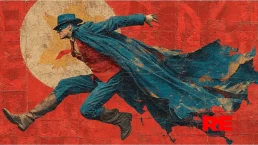
You can’t escape it. Because somewhere along the line, we stopped teaching people how to separate media criticism from political identity. And now everything is identity. You wear a mask? Identity. You drink Starbucks? Identity. You liked Barbie? Identity. You watched Sound of Freedom? Identity.
And the truth is, most people don’t even know they’re playing the game. They think they’re just speaking their mind, calling out “bias.” But what they’re really doing is reacting exactly how the system trained them to react. Because this machine isn’t new. It’s been working the angles for decades. What’s new is the scale and how little room it leaves for anyone who just wants to live in the middle. We’re now in a world where people have to pick a team not because they want to, but because not picking one is treated as suspicious.
You liked the new Superman? You must be woke. You hated it? Must be MAGA. You say “I don’t know yet”? Now you’re spineless.
It’s exhausting. But it’s also by design. Because division is a distraction. If we’re busy fighting over cartoon movies and soda brands, we’re not talking about wage stagnation, healthcare, climate, student debt, housing, or surveillance. We’re not asking why corporations own the airwaves or why billionaires own our data. We’re arguing over pixels.
And Superman just happened to be the latest spark.
Let’s pull up a few receipts, because this isn’t just a feeling, it’s measurable now.
We’ll start with Bud Light.
April 2023, they did a small partnership with trans influencer Dylan Mulvaney. It wasn’t a full-blown campaign, just one custom can. One. And yet, that moment triggered a full-scale boycott. The kind of boycott that took Anheuser-Busch from being a neutral American beer to a “woke brand” in MAGA eyes.
The numbers? $27 billion in lost market value over the next two months. Sales dropped by over 24% nationally. A Harvard CAPS-Harris poll showed over 50% of conservative respondents said they’d “never buy Bud Light again.” It didn’t matter that the campaign wasn’t political.
It became political. Because somebody said it was.
Now flip it.
Let’s talk about Barbie. The most pink, light-hearted movie ever. On paper? Fun, nostalgic, Mattel IP. But once people saw the feminist undertones, the commentary on patriarchy, the hot takes came fast. The Daily Wire ran an op-ed calling it “man-hating propaganda.” Ben Shapiro made a whole video ranting against it. Fox News said it was “indoctrinating girls into a liberal worldview.” And what happened? It became the highest-grossing movie of 2023. $1.4 billion globally. Audience breakdown: 65% female, but the biggest growth? Women over 35. Moms. Professionals. People tired of being called hysterical for having opinions. So was it too liberal? Or did it actually speak to a market no one thought mattered?
Then there’s Sound of Freedom. Now this one’s tricky. The film is about child trafficking. On paper, important subject. But the rollout? Immediately hijacked by QAnon believers. All of a sudden, a movie about a real issue became a rallying cry for the far right. You had theaters full of people yelling “God’s children are not for sale!” and media outlets either praising it as revolutionary or attacking it for pandering to conspiracy theorists.
Again, it didn’t matter what the filmmakers said.
It only mattered what people believed it represented.
Journalism You Can Hold. Insight You Can Own.
Books Magazines Companion Guides White Papers More
Your support funds the research, reporting, and long-form analysis behind TP Newsroom
Now here’s the NFL. 2020 Black Lives Matter protests are everywhere. The league suddenly “cares” about race. Painted end zones. Jersey slogans. Kneeling finally allowed, “kinda.” But the response from fans? Mixed. Viewership dropped 7% that season. Social media sentiment was flooded with “keep politics out of sports” comments, even though politics had always been there. Military flyovers? National anthem rituals? League-funded military ads? All political.
Same energy with The Little Mermaid remake. Disney cast Halle Bailey, a Black actress, as Ariel. She’s talented. She sings. But suddenly, it was a problem. “Ariel isn’t Black.” “They’re changing history.” “Wokeness ruined another classic.” A fictional character. A mermaid. Caused global backlash. #NotMyAriel trended in over 13 countries. Meanwhile, the actual data? The film grossed nearly $570 million worldwide. Highest streaming debut on Disney+ for any film in 2023. And yes, Black and Latino households were the highest-engaged demographics. So what are we really mad about? Cause this isn’t about accuracy. Or staying true to source material. This is about control. Narrative control. Comfort control. Identity control. We could go all day: Target lost $10B in valuation over LGBTQ+ pride displays. Netflix had backlash from both sides over Dave Chappelle’s specials. Harry Potter got pulled into gender debates over J.K. Rowling’s tweets. Taylor Swift got political and lost Republican fans, then gained millions more. It’s all the same pattern. If it leans even 1% outside someone’s worldview? Cancel it. If it pushes back? “They’re forcing their agenda.” If it stays neutral? “They’re afraid to take a stand.”
But here’s what the numbers prove: The loudest people online don’t always match real-world behavior. A 2023 Pew Research study found: Only 10% of Americans generate over 90% of political content online. And most of those users? White, over 50, and deeply partisan. So you’ve got a small group dominating the noise, framing the conversation, and making everything feel like a war, even when it’s just a movie.

That’s the part that matters. Because it’s not just how loud people are. It’s what that noise costs us. It costs us the ability to just enjoy things. To laugh. To cry. To see something and feel something without checking whether it passed the tribal smell test.
Now here’s the uncomfortable part nobody wants to talk about.
For all this noise, left, right, boycotts, hashtags, think pieces, hot takes, most people?
They’re just trying to live. They’re not on Twitter arguing about casting choices.
They’re not boycotting beer. They’re not writing essays about whether Superman is too soft now or not American enough. They’re trying to pay rent. They’re trying to raise kids. They’re trying to not lose their damn minds. But the internet, the news, the algorithms, they don’t reward middle ground. They don’t promote nuance. They don’t amplify people who say, “Eh, I don’t know. Maybe it’s complicated.” You either clap hard or burn it down.
That’s the game now.
And it’s dangerous because the middle is shrinking. Not politically, necessarily. But emotionally. Culturally. Socially. You can feel it. People afraid to say what they think in meetings.
Creators scared to post anything without a disclaimer. Neighbors dodging eye contact because of a bumper sticker. Everything’s tense. And when everything’s tense, people crave certainty.
They crave “teams.” They crave labels that make it easier to say: “You’re one of us or one of them.” That’s how we end up with this constant binary. Democrat vs Republican. Woke vs Anti-woke. Good vs Evil. And in that system, there’s no room for “both.”
There’s no space for “maybe.”
But let’s play a what if for a second. What if we stopped asking what side Superman was on and started asking what side we’re on? Like really asked: Are we defending free thought? Or punishing it when it makes us uncomfortable? Are we looking for unity? Or just trying to win?Are we creating room for dialogue? Or just hunting the next headline to hate? And from there, what if, big what if, we actually started exploring other pathways? Not just politically. Culturally. Institutionally. Call it a third-party mindset. Not necessarily a third political party (though that might help), but a third cultural option: One where every movie isn’t a referendum on morality. One where we don’t call people “traitors” for liking a different flavor of art. One where kids can grow up seeing characters that don’t look like them and still feel inspired, not threatened.
Would that be so bad? Would it be so wrong to try not to weaponize every little thing? I don’t know. I think about that sometimes.
Think about how tired people are. How exhausted we all are from trying to decode every post, every joke, every trailer, every casting announcement like it’s a CIA memo. There has to be another way.
Maybe not a utopia. Maybe not even unity. But something better than this high-stakes purity test that’s slowly choking the joy out of being human. Because that’s what this really is. It’s not about Superman. It’s not about the flag. It’s not even about politics. It’s about identity. About people being told, over and over again, that they can’t like what they like, or say what they feel, or show who they are unless it checks someone else’s box. And that’s not democracy.
That’s just emotional fascism wrapped in tribal loyalty.
So yeah, maybe it’s time for a third lane. A way to engage without being consumed.
A way to care without collapsing. A way to build something that doesn’t require total allegiance to one side or the other. And if that sounds soft to you. Maybe you’ve forgotten what real strength looks like. Because strength is nuance. Strength is listening. Strength is saying, “I don’t agree with you and I’m still here.” If we ever get that back? We might just be able to watch a movie again without fear, without shame, without a war.
Here’s the truth: It was never about Superman, not really. It’s about how we’ve let politics creep into every inch of our lives. How we’ve allowed tribalism to replace trust, outrage to replace curiosity, and sides to replace stories.
We don’t ask “What’s true” anymore. We ask “Whose side said it”, We don’t ask “Is it good?” We ask “Is it safe to like?” That’s the sickness and we keep feeding it. A superhero movie, one not even out yet, becomes another battleground for who’s ruining America.
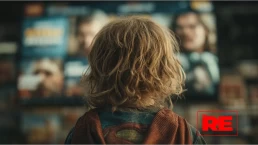
A director gets dragged not because of what they made, but because of who someone thinks they are. And people pile on not even knowing what they’re mad at. Just knowing they’re supposed to be mad. That isn’t media, that isn’t accountability, that’s performance. We’re performing rage for clicks. We’re performing outrage for loyalty.
And underneath it all, we’re scared to admit how lost we are without the map of “us vs them.”
But the truth? The real truth?
Most people aren’t thinking about Superman like that. They’re thinking about their mortgage.
Their kid’s school. The job they hate but can’t leave. The world getting hotter. The rent getting higher. The loneliness getting heavier. This culture war?
It’s noise on top of noise. And every time we make something like a movie into a litmus test, we’re just proving how little trust we have left, for each other, for institutions, for ourselves. But there’s a choice here. We don’t have to play this game. We can choose to ask better questions.
We can choose to engage, not attack. We can choose to pause before dragging, before labeling, before assuming. Because maybe, just maybe, there’s more power in building than breaking. Maybe there’s more courage in saying, “I don’t know yet,” than pretending you’ve got the full picture from a comment thread. And maybe the real heroes aren’t wearing capes or boots or badges. Maybe they’re just people trying, quietly, honestly, to make space for something better.
That’s the ripple I care about. Not the noise. Not the fire. But the truth underneath it. The human story we keep forgetting in the middle of all these performances. This isn’t about politics.
It’s about permission. To like what you like. To think what you think. To be more than a vote, a tribe, a side. Because at the end of the day, we all want the same damn thing: To feel safe.
To feel seen. To feel free. So if that’s the goal, if that’s still the dream, then let’s stop turning everything into a war and start turning some things back into joy. Even if it’s just a movie. Even if it’s just Superman.
Pew Research Center. (2025, May 8). Americans’ trust in one another is declining.https://www.pewresearch.org/2025/05/08/americans-trust-in-one-another
Gallup. (2023). In 2024, record-high shares of Republicans identified as conservative and Democrats as liberal.https://news.gallup.com/poll/655190/political-parties-historically-polarized-ideologically.aspx
Gallup. (2024, March). Satisfaction with U.S. democracy edges up from a record low.https://news.gallup.com/poll/655220/satisfaction-democracy-edges-record-low.aspx
Pew Research Center. (2025, May 8). Republicans’ trust in information from national news and social media has risen.https://www.pewresearch.org/short-reads/2025/05/08/republicans-have-become-more-likely-since-2024-to-trust-information-from-news-outlets-social-media
Gallup. (2024, October). Americans agree nation is divided on key values: 80% see deep division.https://news.gallup.com/poll/650828/americans-agree-nation-divided-key-values.aspx
Pew Research Center. (2024, November 14). Americans’ trust in scientists continues to decline.https://www.pewresearch.org/science/2023/11/14/americans-trust-in-scientists-positive-views-of-science-continue-to-decline
Reuters. (2023, June 10). “From beer to books: How everything became political.” New York Magazine.
https://nymag.com/intelligencer/2023/08/how-everything-became-political.html
If this work helped you understand something more clearly, support it by:
Buying the books | Visiting the Newsstand | Making a donation
One voice. One message. One Goal. Truth.
No spam. No schedules.
The Truth is Underfunded. That's Why This Exists.
No ads. No sponsors. No filter. Just the truth, unpacked, explained, and raw.
Defining Policy. Power. Consequence.
See how to add us to your home screen