The Ripple Effect
-News and Commentary-
Media, Mistrust, and the Loss of Shared Fact
By TP Newsroom Editorial | Ripple Effect Division
Today in The Ripple Effect, we’re exploring how America lost its common truth and how one quiet decision from the 1980s still shapes every headline, every hashtag, and every argument online. In 1987, President Ronald Reagan’s administration repealed a decades-old policy called the Fairness Doctrine. It wasn’t flashy. It didn’t dominate the nightly news. But it changed the DNA of American media.
The Fairness Doctrine had been simple on paper: if you held a broadcast license, you had to present contrasting viewpoints on controversial issues. It wasn’t censorship, it insured informational responsibility. The rule came from an era when the airwaves were considered public property, and with that privilege came accountability. Broadcasters were supposed to inform, not inflame.
When Reagan removed it, the media environment shifted almost overnight. The decision effectively told every network and radio host, You no longer have to balance the conversation. Within a few years, talk radio exploded, loud, opinionated, one-sided. Rush Limbaugh went national in 1988. By the early ’90s, partisan radio became the new town square, and truth began to splinter.
At first, it didn’t look dangerous. Americans still tuned in to Walter Cronkite’s successors, still read local papers, still trusted journalists. But under the surface, something fundamental was breaking: the shared reference point of fact. The Fairness Doctrine had acted like a referee, invisible when play was fair, but crucial when things got heated. Once it disappeared, every outlet could define truth however it wanted. And here’s the thing the deregulation wasn’t just political, it was philosophical. Reagan’s administration believed in the market’s invisible hand, that competition would create balance. Let a thousand voices bloom, they said. The public will sort it out. But the market doesn’t reward balance. It rewards attention.
And outrage gets more clicks than nuance. That’s where the fracture began.
If this work helped you understand something more clearly, support it by:
Buying the books | Visiting the Newsstand | Making a donation
One voice. One message. One Goal. Truth.
No spam. No schedules.
The Truth is Underfunded. That's Why This Exists.
No ads. No sponsors. No filter. Just the truth, unpacked, explained, and raw.
Defining Policy. Power. Consequence.
See how to add us to your home screen
By the time the internet arrived, the media wasn’t one ecosystem, it was tribes. Cable networks realized the same model that made conservative talk radio profitable could also drive ratings on TV. Fox News launched in 1996 with a clear ideological lane; MSNBC followed with its own counter-lane. CNN tried to stay centered, but neutrality doesn’t trend. Suddenly, Americans weren’t watching the news. They were watching their version of it. The idea of “shared fact” started to vanish, replaced by opinion, spin, and algorithmic echo chambers.
But to understand how deep this goes, you have to look at what “truth” meant before it was marketized. In the mid-20th century, the press operated under a social contract. Journalists were gatekeepers not perfect, but bound by ethics and scarcity. There were only so many channels, so many newspapers, so many voices. Accuracy mattered because space was limited. Once the gates opened, everyone became a publisher. And when everyone’s a publisher, truth becomes content. The repeal of the Fairness Doctrine didn’t just deregulate speech, it deregulated trust.
What Reagan likely saw as a small win for free expression became the foundation for a new economy of information one where facts compete for market share, and algorithms decide what’s real. That shift laid the groundwork for everything that followed: 24-hour news cycles chasing emotional reaction over verified context. Online outrage industries turning opinion into brand loyalty. And a generation raised to scroll, not source. Think about how we consume news now. The same clip can appear on five feeds with five different captions each designed to trigger a different tribe. The information hasn’t changed, but the meaning has. That’s what the loss of shared fact looks like, a nation reading five versions of the same sentence and arguing over which one’s real.

To see how far we’ve drifted, look at the numbers. In the 1970s, trust in U.S. media hovered around 70 percent, according to Gallup. Today, it’s barely 30 percent, the lowest since polling began. That decline isn’t random. It tracks perfectly with deregulation, consolidation, and the explosion of partisan identity. And yet, every time another scandal breaks, another network implodes, or another journalist gets labeled “fake news,” the reaction is the same: How did this happen? But it didn’t just happen. It was engineered, slowly, quietly, through a series of policy choices and cultural shifts that turned information into entertainment and debate into identity.
We lost the referee and decided the crowd could call the game. Now, decades later, we’re living in the result: a society where facts are optional, truth is tribal, and algorithms play God. The irony is that the Fairness Doctrine was born out of fear of propaganda the very thing we now drown in daily. When regulators created it in 1949, their concern was that a handful of broadcasters could manipulate public opinion. They believed balance was the antidote. When it vanished, that safeguard went with it and we never built a new one. What replaced it wasn’t free discourse. It was monetized division.
The platforms that came later from cable networks to social media giants learned the same lesson radio hosts had discovered in the late ’80s: rage sells. Fear spreads. And once you start feeding an audience emotion instead of information, they’ll never stop coming back for more. That’s where we are now in a constant loop of reaction, validation, and distrust. People don’t tune in to learn; they tune in to confirm. We didn’t just lose faith in journalists we lost faith in each other.
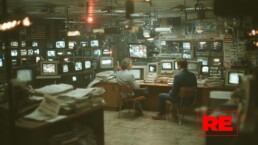
When Reagan’s repeal of the Fairness Doctrine took hold, it didn’t feel like much at first. People still trusted the evening news.But slowly, television turned from a public service into a business model, and that model began rewarding emotion instead of accuracy. Cable networks learned they could make more money by arguing than agreeing. Outrage got ratings; ratings sold ads; ads shaped the kind of “truth” people were willing to hear. That’s how a national conversation became a competition for attention. News turned into entertainment, and entertainment turned into a kind of religion. The more divisive the sermon, the bigger the congregation. What started as deregulation became distortion, and before anyone realized it, the anchor’s job wasn’t to inform, it was to perform.
By the time the internet showed up, the ground had already shifted. Journalism had lost its referee, and algorithms stepped in to take its place. Only, algorithms don’t care about fairness or context, they care about time spent, clicks made, and feelings triggered. The same story that once required two verifiable sources now just needed traction. A headline wasn’t written to clarify anymore; it was written to capture. Social platforms perfected the formula: fear, anger, or validation in twelve words or less. They turned public discourse into private ecosystems where belief was fed back to you like a mirror. You didn’t need a newsroom you needed a following. You didn’t need credentials, you needed engagement. And the more you posted, the more you existed.
That shift changed the relationship between truth and audience. The press was no longer a bridge; it was a brand. Every outlet found its market, every ideology found its algorithm, and America stopped debating facts and started debating interpretations. Fox News rose on the promise of “balance,” CNN clung to legacy credibility, and a thousand independent voices filled the gaps, each claiming to be the antidote to bias. But bias wasn’t the problem anymore, trust was. When people stopped believing there were rules to the game, every side made their own. Misinformation didn’t need to be true; it just needed to feel true, and once something feels true, fact-checking it almost doesn’t matter. The correction never travels as fast as the outrage.
This is the world we inherited from that single policy shift in 1987: one where the loudest person wins and the most consistent liar gets crowned as “authentic.” Every advancement in technology only sped the cycle up. Podcasts replaced radio hosts, Twitter replaced columnists, and “influencer” became a job title for people who learned that confidence pays better than expertise. There’s a reason the term “mainstream media” turned into an insult—it stopped representing the center and started representing control. People wanted to believe they were seeing behind the curtain, but half the time the curtain was just another screen. The result is a country addicted to commentary, skeptical of fact, and desperate for validation. Everyone’s talking, nobody’s listening, and somehow everyone believes they’re the only ones telling the truth.
What we’re seeing now isn’t just a political divide, it’s a psychological one. It’s what happens when generations grow up not trusting the same sources, not reading the same headlines, not even agreeing on what the word “truth” means anymore. The older generation still remembers when journalism had weight, when you could sit at dinner and argue about the story, not about whether the story was real. But for everyone else, especially those raised online, the line between opinion and reporting is gone. News is content. Facts are filters. And what we choose to believe says more about our identity than our intellect. That’s the real damage: once truth becomes emotional, it stops being universal.
This is why the conversations feel impossible. You can’t argue someone out of a reality they didn’t reason themselves into. When information becomes tribal, correction sounds like attack. You can show people data, video, verified sources and it won’t matter, because they already decided who they trust, and it’s usually not you. And maybe that’s the cost of choice. We built a world where everyone gets their own version of the news, their own version of history, their own set of heroes and villains. It feels empowering until you realize the power isn’t yours it belongs to the platforms feeding you what keeps you online.

It’s easy to say this is just politics, but it’s not. It’s personal. It’s the coworker who looks at you sideways after reading a headline you never saw. It’s the neighbor convinced the election was stolen because someone on YouTube said it was. It’s the friend who quietly unfollows you after a post that doesn’t fit their algorithmic worldview. It’s the slow unraveling of social fabric, the trust that made disagreement possible without contempt. We didn’t lose civility overnight. We lost it every time truth got replaced with narrative, and every time we rewarded that swap with a click, a share, or a cheer.
And now, that same dynamic bleeds into everything. Government. Medicine. Education. If you want to see how deep the fracture runs, look at the pandemic. One side believed the experts were lying. The other believed anyone who questioned the experts was dangerous. The result? Millions of people stopped listening entirely. That’s the danger of mistrust, it doesn’t stop at the news. It spreads to the institutions that keep a democracy standing. Once people believe the system is rigged, every fact becomes suspect. Every policy becomes propaganda. Every election becomes theater. That’s how democracies erode, not from coups or invasions, but from exhaustion. From people who stop showing up because they don’t believe the truth is worth finding anymore.
And you can feel that exhaustion everywhere. In the tone of debates. In the sarcasm online. In the way people talk more about “winning” conversations than understanding them. We’ve turned discourse into sport and journalism into entertainment, and the casualty has been quiet—faith in anything collective. The government doesn’t fix it, the media doesn’t fix it, and tech doesn’t want to fix it because division is profitable. So it becomes a cycle: people get angry, algorithms feed the anger, news outlets cover the anger, and politicians exploit it. Then we go back online and start the loop again.
But what’s worse is how normal it’s become. We laugh at misinformation. We meme it. We build communities around shared delusions. People don’t ask what’s true anymore, they ask what’s trending. And in that vacuum, opportunists thrive. They build platforms around rage, monetize fear, and call it “truth-telling.” It’s not new, it’s just faster, louder, and packaged better. The tragedy is that some of them actually believe they’re helping, because when you live inside your own echo chamber long enough, propaganda starts to sound like purpose.
So now we’re here. A nation that can’t agree on the score, the field, or even the rules. The referee’s gone. The players are armed with microphones. And the crowd has split into teams that don’t just want to win, they want the other side to disappear. It’s chaos disguised as freedom, and we’ve been calling it democracy.
Journalism You Can Hold. Insight You Can Own.
Books Magazines Companion Guides White Papers More
Your support funds the research, reporting, and long-form analysis behind TP Newsroom
The question isn’t just how we got here it’s whether we can ever climb back out. The truth used to be the ground we stood on. Now it’s a battlefield, and everyone’s fighting from a different hill. Somewhere along the way, we stopped treating information as a shared resource and started treating it like property. What’s mine can’t be yours, and what’s yours can’t be trusted. But truth doesn’t work like that. It doesn’t need permission to exist. It just needs people willing to defend it, even when it’s inconvenient, even when it costs. The hardest part isn’t finding facts; it’s accepting them once they cut against your comfort. That’s where the breakdown really lives not in politics, not in media but in the fragile space between ego and accountability.
You can trace the power lines easily enough. Politicians learned how to weaponize distrust. Media companies learned how to package it. Tech companies learned how to monetize it. And the rest of us learned how to live with it. That’s what makes this era so dangerous, it’s not outrage that’s killing truth, it’s apathy. People see corruption and shrug. They see misinformation and scroll. They see division and call it normal. We used to talk about civic duty; now we talk about content. We replaced dialogue with algorithms and wonder why everything feels scripted. It’s not just a communications crisis, it’s a moral one. Because when facts lose their weight, everything else collapses behind them.
The who in all this is us the audience, the consumers, the voters, the sharers. We reward speed over substance and outrage over nuance. We complain about bias while feeding it through our own filters. The what is an industry that learned to survive by dividing. The when is right now, a generation living through the fallout of decisions made decades ago. The where is everywhere, from classrooms to courtrooms to living rooms. And the why, the why is complicated, but maybe it’s as simple as fatigue. The constant noise, the constant crisis, the constant performance, it’s exhausting. And when people get tired enough, they stop caring who’s right. That’s when democracy doesn’t need enemies; it just needs silence.
So maybe the only way forward is smaller. Local. Personal. Less spectacle, more substance. Stop asking who’s telling the truth and start asking who’s showing their work. Stop measuring credibility by production value and start measuring it by transparency. The solution won’t come from Washington or Silicon Valley; it’ll come from individuals who decide that attention isn’t worth more than accuracy. That curiosity still matters. That nuance isn’t weakness. Maybe the future of truth isn’t about returning to the old systems it’s about rebuilding trust from the ground up, one honest conversation at a time.
And maybe that’s what this whole experiment was always about not perfecting the system, but testing whether people could handle freedom when it comes with uncertainty. The truth is still out there, buried under noise, waiting on people who care enough to dig for it. It won’t trend. It won’t go viral. But it’ll hold. Because even after all this chaos, the truth doesn’t bend people do.
One story. One truth. One ripple at a time.
This is The Ripple Effect, powered by The Truth Project.
Federal Communications Commission. (1987). Fairness Doctrine repealed. Federal Register, 52(105). https://www.fcc.gov/document/fairness-doctrine-repealed
Pew Research Center. (2024, May 15). Americans’ trust in news media continues to decline. https://www.pewresearch.org/short-reads/2024/05/15/americans-trust-in-news-media-continues-to-decline/
Habermas, J. (1989). The Structural Transformation of the Public Sphere: An Inquiry into a Category of Bourgeois Society. MIT Press
Wardle, C., & Derakhshan, H. (2017). Information disorder: Toward an interdisciplinary framework for research and policymaking. Council of Europe. https://rm.coe.int/information-disorder-toward-an-interdisciplinary-framework-for-researc/168076277c
McChesney, R. W. (2004). The Problem of the Media: U.S. Communication Politics in the Twenty-First Century. Monthly Review Press
Stroud, N. J. (2011). Niche News: The Politics of News Choice. Oxford University Press.
Nielsen, R. K., & Fletcher, R. (2022). The growing distrust of journalism in the digital age. Digital Journalism, 10(5), 745–762. https://doi.org/10.1080/21670811.2021.1981984
If this work helped you understand something more clearly, support it by:
Buying the books | Visiting the Newsstand | Making a donation
One voice. One message. One Goal. Truth.
No spam. No schedules.
The Truth is Underfunded. That's Why This Exists.
No ads. No sponsors. No filter. Just the truth, unpacked, explained, and raw.
Defining Policy. Power. Consequence.
See how to add us to your home screen