The Ripple Effect
-News and Commentary-
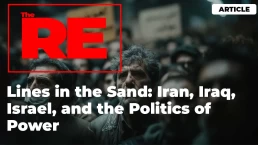
Lines in the Sand: Iran, Iraq, Israel, and the Politics of Power
By: TP Newsroom Editorial | Ripple Effect Division
We’re stepping into a story bigger than politics. Bigger than any one war, religion, or ideology. This is about what happens when the most powerful nations on Earth decide they know what’s best for the rest of the world, and start drawing borders without understanding the people who live inside them. It’s about Iran. It’s about Iraq. It’s about Israel and Palestine. But more than anything, it’s about the United States and the way we’ve spent the last century playing God in a region that was never ours to fix, only ours to exploit.
I don’t remember the first time I saw war in the Middle East, but I remember the feeling it left behind. I was young, watching the news, probably too young to fully grasp what I was seeing. The screen showed explosions in places I couldn’t pronounce, reporters ducking in and out of sand-colored buildings, and helicopters cutting across smoky skies. I didn’t understand the details, but I understood the message: over there was dangerous. Over there was broken. And over there, America was always trying to fix something. I grew up thinking we were the good guys. That we were the peacekeepers. That war was something we did reluctantly, but always for the right reasons.
If this work helped you understand something more clearly, support it by:
Buying the books | Visiting the Newsstand | Making a donation
One voice. One message. One Goal. Truth.
No spam. No schedules.
The Truth is Underfunded. That's Why This Exists.
No ads. No sponsors. No filter. Just the truth, unpacked, explained, and raw.
Defining Policy. Power. Consequence.
See how to add us to your home screen
But as I got older, I started asking harder questions. I started learning names like Mossadegh and Hussein. I started hearing phrases like “Weapons of Mass Destruction” and “collateral damage.” I started realizing that the maps we memorize in school were not shaped by the people who lived on the land, but by outside forces who treated entire cultures like chess pieces. I learned that the modern Middle East didn’t just emerge out of religious conflict or tribal rivalries, it was carved up by Western powers who didn’t care who they displaced, as long as the oil kept flowing and the control stayed intact.
That realization changes everything. Because once you know that the United States helped overthrow Iran’s democratically elected leader in 1953, not because he was a threat to his people, but because he wanted to control his country’s oil, you can’t unsee it. Once you know that we funded both sides of the Iran-Iraq War, that we propped up Saddam Hussein with one hand and demonized him with the other, that we used fear and falsehoods to justify a war that killed hundreds of thousands of Iraqi civilians, it gets harder to hold on to the idea of American innocence. Once you know that the land Israel now occupies was promised by British colonizers to European Jews while Palestinians already lived there, and that ever since, the United States has armed one side of the conflict while claiming to be a neutral broker of peace, it becomes impossible to talk about “the region” without naming the fingerprints we left all over it.
This is not about blaming America for everything. It’s about understanding that we didn’t walk into a broken place, we helped break it. And when you know that, the news starts to sound different. Every time a bomb drops, every time a child cries out in rubble, every time a politician says “instability,” you start to hear what they’re really saying. They’re not talking about chaos that came out of nowhere. They’re talking about the fallout from a century of manipulation, of installation, of betrayal, of war wrapped in democracy’s flag.
The United States didn’t just inherit a mess. It played architect. It didn’t stumble into conflict. It orchestrated it. From the Sykes-Picot Agreement that divided the Ottoman Empire into colonial zones, to the CIA’s covert actions during the Cold War, to the direct invasions of the early 2000s, we have shaped the fate of millions with the stroke of a pen, the drop of a bomb, or the stroke of a deal. We trained leaders. We funded coups. We sold weapons. We gave money to Israel while talking peace with Palestine. We imposed sanctions on Iran while fueling Iraq. And through it all, we told ourselves we were helping.
But if we were helping, why is the region still burning? Why are there still refugee camps packed with people who have lived through three wars in one lifetime? Why are countries like Syria and Yemen trapped in civil wars, often fought with weapons we manufactured and sold to both sides? Why are generations of children growing up afraid of drones, afraid of checkpoints, afraid of soldiers they cannot understand who speak a language they do not know?
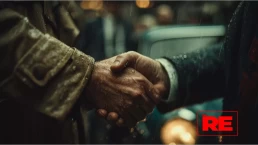
These aren’t questions that get answered in a soundbite. They’re questions that demand history. They demand accountability. And they demand that we stop pretending the Middle East is chaotic by nature. It’s not. It’s chaotic because the West, especially the United States, decided to treat it like a game board instead of a region filled with real people, real communities, and real sovereignty. What we call a crisis is often just the logical consequence of people trying to survive the borders we imposed, the governments we replaced, and the wars we funded.
Now let me be clear about something before we go further. I am not anti-American. I am not one of those people who believes the United States is the root of all evil or that everything we do is wrong. Truth is, I’m pro-America. I believe in strength. I believe in territory. I believe in empire, at least in the sense that a dominant power helps maintain order. If global peace ever exists, it will likely exist under the rule of whoever has the biggest stick. That’s not a moral claim. That’s just history. Empires shape eras, and I’d rather live under one I understand than one that would erase me.
So no, my issue isn’t that America has been playing the empire role. My issue is that we lie about it. We act like we’re peacekeepers while moving like war strategists. We use the language of freedom and democracy, but we execute plans that are all about control, positioning, and influence. And honestly, I’d respect it more if we just owned it. If we said, yes, we’re here to control the oil. Yes, we’re here to install allies. Yes, we’re shaping the region in our image. What bothers me is the performance. The innocent face. The clean hands. We act like we stumbled into conflict, when in reality, we engineered it.
China does not pretend to be anything other than what it is. Neither does Russia. But the United States? We sell the world on morality while running black ops, pushing coups, and signing arms deals behind closed doors. That’s the contradiction that gets under my skin. It’s not empire that offends me. It’s the hypocrisy. The fake humility. The selective outrage. The inability to admit we are not simply a force for good instead we are a force for interest. And if that’s what it is, then call it what it is and stop dressing it up. Because if we’re going to act like Rome, we might as well speak Latin. Say what we mean. Own the power we’re claiming. And be honest about what it costs.
That’s where this begins. With truth. With context. With ownership. And with the understanding that the story of the Middle East is not just their story but it’s ours too. And we are not finished paying for it.
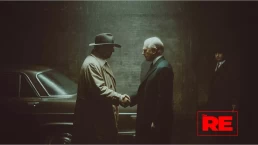
To understand why the Middle East looks the way it does today, you have to stop looking at it like a region and start seeing it for what it has always been to the West: a resource. Not just for oil, although oil changed everything, but for geography, leverage, ideology, and global positioning. The modern history of Iran, Iraq, and Israel is not simply about who lived where or who hated who. It is about the way Europe and the United States carved up the land for their own gain, then acted confused when the people who lived there refused to accept it.
This began long before the modern United States had global power. In 1916, during World War I, Britain and France sat down and made a secret deal called the Sykes-Picot Agreement. It was not a negotiation between countries in the region. It was a backroom map sketch between colonial powers who were already planning how to divide the Middle East once the Ottoman Empire collapsed. The plan ignored tribal identities, religious boundaries, ethnic communities, and long-standing trade routes. What mattered most was control. Britain took parts of Palestine, Jordan, and Iraq. France grabbed Syria and Lebanon. There was no democratic process, no self-determination, no consultation with the people who would live under these new flags. Borders were not drawn based on culture. They were drawn with rulers and greed.
The impact of Sykes-Picot is still unfolding today. Entire nations were stitched together or ripped apart without consent. Sunni and Shia Muslims, who already had their tensions, were placed under the same political roofs. Kurdish populations were left stateless. Arab nationalism was manipulated. And when resistance inevitably came, it was labeled as instability, radicalism, or terrorism. But the instability was not native. It was manufactured.
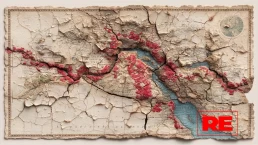
Fast forward a few decades, and the United States steps onto the scene with a new weapon: oil. In the early 1950s, Iran elected a new prime minister, Mohammad Mossadegh. He was educated, secular, and widely supported by his people. One of his first major acts in office was to nationalize Iran’s oil industry, which had been under the control of the British-owned Anglo-Iranian Oil Company, now known as BP. Britain was furious. The United States, still building its Cold War empire, saw an opportunity. With British support, the CIA orchestrated a coup in 1953 to overthrow Mossadegh. This operation, known as Operation Ajax, was one of the earliest examples of American intelligence using covert force to shape foreign governments. It worked. Mossadegh was removed. The Shah of Iran, who had fled, was reinstalled. He ruled for the next twenty-six years with authoritarian control, backed by American weapons and protected by American interests.
That single moment, one that most Americans never learn about, changed everything. Iranians knew what happened. They knew their democracy had been crushed. They knew who pulled the strings. And when the Islamic Revolution exploded in 1979, driving the Shah into exile and replacing his regime with a theocracy, it was not simply a religious uprising. It was political revenge. It was historical memory. It was decades of humiliation boiling over. And from that point on, Iran no longer trusted the West. To this day, that distrust defines almost every U.S.–Iran interaction. It is not about hating freedom. It is about remembering betrayal.
While the United States was losing its grip on Iran, it was tightening its grip on Iraq. In the 1980s, Saddam Hussein’s regime was seen as a valuable partner. He was secular. He was anti-Iran. He wanted power. And he was willing to kill for it. When Iraq and Iran went to war in 1980, the United States backed Iraq. Quietly. Indirectly. But strategically. Intelligence, money, chemical precursors, all of it found its way into Saddam’s hands. Even as Saddam was gassing his own people, even as civilians were dying by the hundreds of thousands, the West turned a blind eye because Iran was the bigger enemy. Later, in a twist of almost unbelievable hypocrisy, those same weapons and atrocities were used as the justification for invading Iraq in 2003.
That invasion was one of the most devastating modern examples of American intervention gone wrong. It was built on the claim that Iraq possessed Weapons of Mass Destruction. That claim was false. The evidence was manipulated. The result was chaos. Over two hundred thousand Iraqi civilians died. Infrastructure was destroyed. A brutal insurgency rose. And with Saddam gone, Iran expanded its influence into Iraq, creating the very threat we had originally claimed to prevent.
In the middle of all of this sits Israel. Created in 1948 as a response to the Holocaust, the State of Israel was born out of real trauma and generational horror. Jewish people needed safety. The world had failed them. But the creation of Israel was not done through shared negotiation. It was facilitated by Britain through the Balfour Declaration and finalized through the displacement of over 700,000 Palestinians who were already living on the land. This became known as the Nakba, or “catastrophe.” To the West, Israel was a beacon of democracy in a volatile region. To many Arabs, it was another Western-backed intrusion that replaced one people’s suffering with another’s.
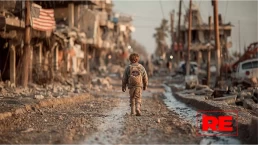
Since then, the United States has supported Israel without question. Over three billion dollars in military aid flows from Washington to Tel Aviv every year. U.S. veto power protects Israel at the United Nations from sanctions and accountability. And all the while, illegal settlements expand, blockades tighten, and generations of Palestinians grow up in occupied territories with no state, no passports, and no rights.
Through all of this, coups, wars, occupations, the West has maintained one consistent strategy: act first, explain later. Whether it was drawing borders in the dark, toppling governments with a smile, or selling weapons across battle lines, the same logic always applied. Stability is what we define it to be. Freedom is what we allow it to look like. Democracy is what we control. And if you resist, you are a threat.
This is the part of the story where people start saying things like “It’s complicated,” or “Everyone over there is always fighting.” But that is a distraction. It is only complicated if you refuse to trace the line. And yes, people have been fighting in the Middle East for centuries, but not like this. Not with this level of manipulation. Not with this kind of outside interference. What we are watching now is not ancient tension. It is engineered instability. It is blowback. It is empire showing up without its armor on. We cannot talk about modern Iran without talking about 1953. We cannot talk about Iraq without talking about 2003. We cannot talk about Israel without talking about 1948. And we cannot talk about terrorism without asking what we define as violence and who we are willing to call innocent.
History is not just a set of facts. It is a trail of decisions. And the West’s decisions in the Middle East have led to millions of lives lost, families displaced, futures stolen, and a generation that looks at the so-called free world and sees hypocrisy instead of hope. This is not the past. It is the soil the present grows out of. And the longer we pretend that today’s conflict has no roots, the more likely we are to keep watering it with ignorance and arrogance. The borders were drawn. The rules were enforced. And now the consequences are knocking.
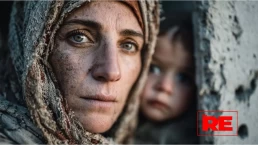
You can only rewrite another country’s story for so long before the pages start bleeding. The impact of the West’s role in shaping the Middle East didn’t stay confined to textbooks, declassified memos, or CIA documents buried in government archives. It became personal. It became generational. It became normal for millions of people to grow up with trauma that was never theirs to carry in the first place. And the worst part is that for a lot of Americans, we still think of it as foreign policy. Over there. Their problem. Their war. But that is a lie of distance.
When the United States overthrew Iran’s government in 1953, it didn’t just install a friendly monarch. It triggered a chain of reaction that led to one of the most hostile and enduring stand-offs in modern diplomacy. The Shah, propped up with American dollars and weapons, cracked down brutally on dissent. Secret police. Torture. Surveillance. The more we praised him as an ally, the more his people turned against him. By the time the Iranian Revolution exploded in 1979, their hatred wasn’t just for the regime. It was for the West that enabled it. They remembered who installed him. They remembered who stole their voice. And they remembered who left when it all burned down. That memory still lives in their political identity. Every chant of “Death to America” isn’t born from ignorance. It’s born from history that Americans were never taught.
The same pattern repeats in Iraq, where our involvement turned a dictatorship into a failed state. When we invaded in 2003, we promised liberation. We promised weapons would be found. We promised democracy would rise. What we delivered instead was collapse. The power vacuum left after Saddam’s fall was not filled by freedom. It was filled by chaos. Sectarian violence. Insurgencies. U.S. soldiers in firefights with militias we didn’t understand, in neighborhoods we couldn’t pronounce, trying to win hearts and minds of people whose lives we had just ripped apart.
And while our troops rotated back home, often traumatized and forgotten, Iraqis never got a break. Bombings became part of daily life. Infrastructure crumbled. Children grew up without schools, clean water, or safety. And as American politicians shifted focus to the next crisis, Iraq stayed broken. We didn’t just remove a dictator. We removed a center of gravity. And into that void came power grabs, extremist groups, and foreign influences, including Iran’s growing presence, the very outcome we had claimed to prevent. But the consequences didn’t stop at Iraq’s borders. The rise of ISIS didn’t just happen in a vacuum. It happened in the ruins of a war we started and never truly ended. The Islamic State was born out of resentment, out of revenge, out of the wreckage we left behind. And when they began beheading journalists and slaughtering civilians, we called it evil. Which it was. But we refused to admit the fire started with our match.
Meanwhile, in Israel and Palestine, the war is daily. It’s not even called a war anymore, it’s called a “conflict,” as if that word could hold the weight of seventy-five years of occupation, exile, and generational trauma. The United States continues to fund Israel’s military to the tune of billions of dollars every year, all while claiming to support a two-state solution. But you cannot claim peace while funding only one side. You cannot call it democracy when one people vote and another people live under curfew, blockade, and surveillance. You cannot call it defense when the rubble is filled with children’s toys and blown-out apartments. Palestinians are not just fighting an army. They are fighting erasure. They are fighting a global narrative that refuses to see them as fully human. And while we frame their resistance as terrorism, we never stop to ask what we would do in their place. If your home was taken, your movements restricted, your future choked by concrete walls and checkpoints, would you be silent? Would you wait politely for negotiations that never come? Or would you do what humans have always done when left with nothing? You would fight.
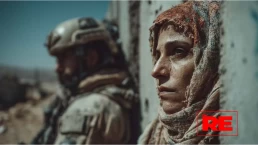
This isn’t about choosing sides. It’s about choosing truth. And the truth is that America’s fingerprints are on every part of this. Our money. Our weapons. Our diplomatic shields. Our vetoes. Our silence when it’s inconvenient and our speeches when it serves us. We built alliances not based on justice but on leverage. We made deals with regimes that committed atrocities because they were “our” allies. And then we acted shocked when the blowback came home. Because the blowback always comes home.
It came home in the form of 9/11, an attack orchestrated not by nations but by people raised in regions we had destabilized for decades. It came home in the form of Islamophobia, of surveillance programs, of mosques being burned and families being watched. It came home in the form of soldiers sent into wars of confusion, then abandoned when they returned. It came home in the form of trillions of dollars spent on wars that never ended and futures that never arrived. It came home in the form of refugee crises we don’t want to own and hate we pretend not to understand. We were not just fighting a war over there. We were reshaping the world from over here. And now, as the Middle East continues to fracture and shift, we still talk like we are neutral. Like we are referees in a fight between ancient enemies. But we are not referees. We are participants. We are funders. We are architects. And we are complicit.
There are children in Gaza who have never seen a blue sky without drones. There are teenagers in Baghdad who have only known life under occupation or instability. There are parents in Tehran who teach their children how to hide from protests and pray they don’t disappear for speaking their minds. There are people across these nations who are not extremists, not soldiers, not ideologues, just people trying to survive the weight of choices made far from their homes, in offices and war rooms across the Atlantic. And here in the United States, we wonder why they hate us. We wonder why the peace never holds. We wonder why the fire keeps spreading. Maybe the answer isn’t in their religion, or their culture, or their politics. Maybe the answer is simpler than that. Maybe the fire spreads because the match never left our hands.
At some point, we have to stop pretending that history is behind us. The wars we started are still being lived. The lines we drew are still bleeding. The weapons we sold are still firing. The policies we passed are still suffocating lives half a world away. America may have pulled troops out of certain places, but empire doesn’t retreat, it reorganizes. It restructures. It rebrands. And the people who live in the shadow of it keep waking up to consequences we barely think about anymore.
We still talk like we are a moral force. Like our involvement in the Middle East was about freedom, democracy, or human rights. But if we had cared about any of those things, we would have listened to the people who lived there. We would have asked before acting. We would have studied the culture instead of scripting it. We would have protected civilians instead of counting them as collateral damage. We would have respected sovereignty instead of punishing independence. Instead, we made a habit of deciding what was best for other countries. And every time it went wrong, we called it a lesson. But lessons don’t mean much when someone else is paying the price. The truth is that empire, even when it is dressed in democratic clothing, still operates like empire. It still believes that some lives are more valuable than others. It still moves in the name of profit, not people. It still confuses dominance with destiny. And the United States, whether we admit it or not, has spent the last hundred years acting like a global landlord, dictating rules, installing leadership, controlling access, and punishing anyone who resists.
But here’s the question we never seem to ask ourselves: what happens when the empire loses control? What happens when the influence starts to fade? What happens when the rest of the world stops believing in the American dream and starts preparing for a world without us at the center? Because that’s already happening.
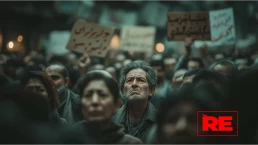
China is building relationships in Africa and the Middle East that do not require allegiance to Western ideology. Russia is making moves through backchannels and proxy states, using disinformation the same way we once used firepower. Iran is forming coalitions, building cultural loyalty, investing in soft power where American bombs once fell. Even European allies are beginning to hedge, recognizing that U.S. leadership is no longer guaranteed.
Meanwhile, at home, we are fractured. Distracted. Drowning in domestic noise. Our schools are fighting over history. Our cities are cracking under inequality. Our politics have become theater. And while we debate over bathrooms, book bans, and cable news outrage cycles, the world is recalibrating without waiting for us to catch up. This is not fear-mongering. It is reality. Every empire ends. Not always in fire, not always in revolution—but always in decline. And decline doesn’t start with military defeat. It starts with moral erosion. It starts when a country loses the ability to be honest with itself. It starts when power becomes so normal that it forgets how to be responsible.
So what comes after empire?
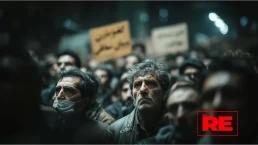
Maybe the better question is what do we become if we refuse to let it go? What do we become when we keep reaching for control without reflection? When we keep enforcing order abroad while spiraling at home? When we keep preaching freedom while funding oppression? If America is going to lead, then it must lead with integrity. Not just might. Not just dollars. Not just technology. But truth. That means acknowledging the damage done. That means accepting that being the global superpower came with blood on the books. That means teaching our children not just who we saved, but who we sacrificed. That means choosing humility over performance. And most of all, that means stepping into the future without pretending the past was clean. Because if we do not face what we have done, we will keep creating more of it. More conflict. More chaos. More enemies convinced that the only way to survive is to resist us by any means necessary. Empires fall not because they lose to others, but because they lose themselves. They forget what power is supposed to be for. They forget that strength without accountability is not strength at all. It is fear. It is insecurity. It is the death rattle of a nation too proud to admit it does not have all the answers anymore.
I am not afraid of America losing control. I am afraid of what we will do trying to get it back. I am afraid of who we will hurt while pretending we are the victims. I am afraid of how many more lines we will draw in the sand before we realize the tide is coming either way. So maybe this is where the Ripple ends, not in resolution, but in reckoning. Because what comes after empire is not always something we choose. But what we can choose is whether we face that moment with honesty or hide behind the same old slogans.
The lines were drawn. The damage was done. The future is watching. What we do next will say everything.
Operation Ajax (1953 CIA coup in Iran)
Britannica. (2025, May). 1953 coup in Iran. In Britannica. Retrieved June 27, 2025, from https://www.britannica.com
PBS. (2023, October). CIA admits 1953 coup it backed was undemocratic. PBS NewsHour. foreignpolicy.com
Washington Post. (2025, June 19). The U.S. helped oust Iran’s government in 1953. Here’s what happened.
U.S. support for Iraq during Iran–Iraq War (1980s)
Global Policy Forum. (n.d.). US and British support for Hussein regime. Global Policy Forum.
U.S. military aid to Israel
Council on Foreign Relations. (n.d.). U.S. Aid to Israel in Four Charts. CFR.org
Watson Institute, Brown University. (2024). U.S. spending on Israel’s military operations and related U.S. operations in the region, October 7, 2023–September 30, 2024. Costs of War Project. Watson.Brown.edu
If this work helped you understand something more clearly, support it by:
Buying the books | Visiting the Newsstand | Making a donation
One voice. One message. One Goal. Truth.
No spam. No schedules.
The Truth is Underfunded. That's Why This Exists.
No ads. No sponsors. No filter. Just the truth, unpacked, explained, and raw.
Defining Policy. Power. Consequence.
See how to add us to your home screen