The Ripple Effect
-News and Commentary-
Immigration and the Limits of American Opportunity
By TP Newsroom Editorial | Ripple Effect Division
America has always defined itself through promise rather than outcome. Life, liberty, and the pursuit of happiness were never guarantees of success, only guarantees of the chance to try. That distinction matters, because over time it has blurred, both inside the country and beyond it, until opportunity itself began to feel less like something conditional and more like something expected.
That expectation did not come from misunderstanding or bad faith. It grew out of how the country described itself for generations. America was taught, spoken about, and presented as a place where effort mattered, where systems worked well enough to reward persistence, and where progress, even if slow, was possible. Over time, that idea became cultural shorthand. It was reinforced through education, media, political language, and global influence, until it functioned less as a principle and more as a baseline assumption.
What made this belief feel reasonable were moments when the country appeared to expand in ways that supported it. Civil rights reforms, immigration changes, periods of economic growth, and humanitarian commitments all signaled movement toward a more inclusive version of the national story. From both the outside and the inside, it looked as if the country was widening its moral and legal boundaries, becoming more open and more aligned with the ideals it claimed to hold. That forward motion gave the impression that opportunity would continue to grow alongside intention.
At the same time, the systems responsible for carrying that promise did not expand at the same pace. Housing, education, healthcare, labor markets, and public infrastructure remained limited, shaped by political compromise, budget constraints, and institutional inertia. The language of opportunity grew broader and louder, while the capacity of systems stayed finite. Over time, the space between those two realities became one of the central tensions shaping public life.
This tension is experienced by immigrants and citizens alike, though in different ways. For people arriving with the expectation that opportunity would be accessible and stable, the reality often feels delayed or conditional in ways that were never clearly communicated. For people already living within the system, the sense that promises keep multiplying without visible improvement in daily life creates frustration and confusion. Both groups are responding to the same imbalance, even when public narratives encourage them to see each other as the cause.
What makes this difficult to talk about is that no single decision explains it. There was no moment where the system suddenly broke or the country deliberately chose contradiction. Instead, the current condition emerged gradually, shaped by decades of moral intention, political compromise, economic pressure, and global positioning. Each step made sense in its own context, but together they produced outcomes that are harder to reconcile.
As a result, frustration accumulates without a clear target. Immigrants hear that the country stands for opportunity, yet encounter systems that feel rigid and slow to respond. Citizens are told that growth and inclusion strengthen the nation, yet experience instability and stagnation in their own lives. Political leaders continue to speak in the language of promise, even as fewer people believe participation will meaningfully change the conditions they face.
This is where disengagement begins to feel logical. When outcomes seem disconnected from effort, when cycles repeat regardless of who is in power, and when the gap between rhetoric and reality goes unaddressed, people adjust their expectations. They stop listening closely. They stop assuming that understanding the system will give them influence within it. Silence becomes less a sign of apathy and more a form of resignation.
The question, then, is not simply why people want to come to America, or why others feel strained by that desire. It is how a nation built around opportunity came to speak in absolutes while operating within limits it rarely names directly. Answering that question requires stepping away from slogans and toward the legal, moral, and structural shifts that followed the civil rights era, not to assign blame, but to understand how intention, policy, and perception slowly moved out of alignment.
If this work helped you understand something more clearly, support it by:
Buying the books | Visiting the Newsstand | Making a donation
One voice. One message. One Goal. Truth.
No spam. No schedules.
The Truth is Underfunded. That's Why This Exists.
No ads. No sponsors. No filter. Just the truth, unpacked, explained, and raw.
Defining Policy. Power. Consequence.
See how to add us to your home screen
The changes that followed the civil rights era were not originally designed as an immigration project. They began as a moral correction aimed inward. The Civil Rights Act of 1964 was meant to address legally enforced discrimination that contradicted the country’s stated values. But once the United States formally rejected race based hierarchy in domestic law, it became increasingly difficult to justify other government systems that still relied on similar distinctions, including immigration rules that openly favored certain national origins over others.
This mattered beyond legal consistency. During the Cold War, the United States was competing on ideology as much as power, presenting itself as a democratic alternative to authoritarian systems. Civil rights reform became part of that global message. America was not only correcting injustice at home, but signaling what it claimed to represent to the world. That posture created pressure to align immigration policy with the moral language now embedded in law and national identity.
The Immigration and Nationality Act of 1965 reflected that shift. By eliminating the national origins quota system and replacing it with a framework centered on family reunification and limited employment categories, the law did not announce open borders. It changed the structure quietly. Family based pathways meant that immigration was no longer a one time event. Each legal entry created the possibility of future entries, not immediately, but predictably over time. The system began to sustain itself through legal relationships rather than fixed caps tied to national origin.
At the time, this change was not widely understood as transformative. Lawmakers emphasized fairness and equality rather than scale. Few anticipated how much the new structure would shape long term immigration patterns, partly because the law did not promise expansion outright. It promised neutrality. But neutrality, when combined with global inequality and family networks, produced growth without requiring anyone to openly authorize it.
Humanitarian policy reinforced this direction. Cold War politics created special pathways for refugees and defectors, particularly from communist countries. These admissions carried moral and strategic weight. Accepting people fleeing oppression strengthened America’s self image while also establishing an expectation that the country would respond to displacement with protection. Over time, refugee admissions became more formalized, shifting from occasional responses to an ongoing system of resettlement.
By the 1980s, the system was expanding not only through new arrivals, but through legalization. The Immigration Reform and Control Act of 1986 attempted to reconcile enforcement with reality by granting legal status to millions of people already working in the country, while promising future control through employer sanctions. Legalization succeeded in creating lawful residents and future citizens, but it also fed back into the family based system created decades earlier, extending the pipeline lawmakers once believed would remain limited.
Economic policy added another layer. The Immigration Act of 1990 expanded employment based visas and updated categories to reflect labor market demand. Immigration was framed not only as a moral or humanitarian issue, but as an economic one. America positioned itself as a destination for skill and opportunity, a message that carried globally even as the practical limits of absorption were rarely discussed openly.
As the system grew larger and more permanent, political pressure shifted toward enforcement. Reforms in the mid 1990s increased penalties, shortened due process, and expanded removal authority. After September 11, immigration enforcement became tied more directly to national security, adding surveillance and detention to an already complex structure.
By this point, a contradiction had fully taken shape. The country continued to speak in the language of opportunity, fairness, and refuge, while operating a legal system that was increasingly rigid, punitive, and administratively strained. Congress struggled to reconcile these pressures and increasingly relied on inaction. Executive discretion filled the gaps, producing temporary programs meant to manage permanent conditions.
What began as a moral correction in the 1960s evolved into a layered system shaped by intention, compromise, and unintended consequence. No single law promised unlimited access. Together, however, they created a structure where expectations consistently grew faster than capacity. The promise became more expansive. The rules became more complicated. The distance between what people believed America offered and what the system could realistically deliver widened over time.
That distance is what people are reacting to now, even when debate collapses into slogans, border imagery, or partisan blame. Understanding it requires holding the sequence together and recognizing how moral language, legal structure, economic signaling, and political avoidance combined to produce a system where opportunity remains central to national identity while feeling increasingly difficult to access in practice.
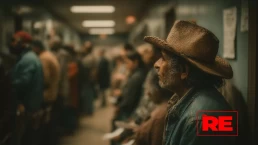
For people who immigrate to the United States under the promise of opportunity, the lived experience often looks very different from what they expected before arriving. This is not because the country is uniquely dishonest or openly hostile, but because the system they encounter is far more conditional and delayed than the language surrounding it ever makes clear. Opportunity exists, but it is filtered through legal status, time, money, geography, and institutional capacity in ways that are difficult to see from the outside.
Many immigrants arrive believing that effort will lead to stability, that working hard and following the rules will eventually produce security. What they encounter instead is a system that requires constant navigation. Progress is slow and uncertain. Legal standing often lags far behind social and economic contribution. Temporary visas stretch on for years. Permanent status remains unresolved. Family separation becomes a routine administrative outcome rather than an acknowledged human cost. The distance between participation and belonging grows quietly.
This is especially common for those who enter through family based pathways. These routes are legal and structured, but they are also slow and deeply bureaucratic, often taking decades from initial sponsorship to final resolution. During that time, life continues. People work, pay taxes, raise children, and integrate into communities while remaining in a state of partial inclusion. Their ability to plan, invest, or take risks is limited by uncertainty they cannot control. Opportunity exists, but it remains deferred rather than fully realized.
Refugees and asylum seekers encounter a different version of the same tension. They are welcomed through humanitarian language that emphasizes protection and moral responsibility, yet the systems meant to support them are often underfunded and inconsistent. Access to stable employment is limited. Legal processes move slowly. Uncertainty becomes a defining feature of daily life. Safety may be granted, but stability takes much longer to arrive, and clarity about the future is often absent.
Over time, this uncertainty shapes behavior. Long term planning feels risky. Investment in education, property, or entrepreneurship is delayed or avoided altogether. Even those who eventually secure permanent status carry years of constraint and stress forward with them. Their relationship to institutions is shaped by prolonged exposure to systems that felt opaque and unresponsive during the most vulnerable stages of their lives.
What makes this experience harder is the expectation, often unspoken, that gratitude should outweigh frustration. Opportunity is framed as something given rather than something structured, and questioning the system is sometimes treated as entitlement rather than as a reasonable response to inconsistency. This discourages open discussion about how the system actually operates and keeps many of its limitations unexamined.
At the same time, immigrants are fully exposed to the broader economic pressures facing the country. Rising housing costs, unstable healthcare access, wage stagnation, and labor insecurity affect them just as they affect citizens, often more sharply. The promise of upward mobility collides with an economy that increasingly rewards capital over labor, making progress slower and less predictable than many anticipated. When advancement does not arrive, disappointment is often internalized rather than attributed to limits that were never clearly explained.
For those without legal authorization, these contradictions are even sharper. Many are drawn by the same opportunity narrative, reinforced by family networks and economic necessity, only to find themselves working in informal economies where exploitation is common and legal protection is limited. Enforcement policies shift unpredictably, creating periods of relative stability followed by sudden fear. Lives are built in the margins, sustained by necessary labor that remains largely invisible, while pathways to legitimacy remain uncertain or unavailable.
Across these experiences, a consistent pattern appears. Immigrants are asked to invest time, labor, and trust into a system that speaks clearly about opportunity but delivers it unevenly and slowly. Contribution often comes long before recognition. Belonging remains conditional well after commitment has been demonstrated.
This gap between promise and reality does more than shape individual outcomes. It influences how immigrant communities relate to the country as a whole. Trust becomes cautious. Participation becomes strategic. Civic engagement is often postponed until legal status feels secure, reinforcing broader patterns of disengagement in public life. Survival and stability take priority, while questions of belonging and influence remain unresolved.
Understanding this experience is necessary not to argue for or against immigration, but to see how a system built on moral intention and legal structure produces consequences that slogans and statistics rarely capture. Immigrants are not responding to a single policy failure. They are navigating the accumulated effects of promises extended without full acknowledgment of the limits required to sustain them.

For people already living inside the system, the experience looks different from the outside, but it is shaped by the same basic mismatch between promise, capacity, and outcome. Most people are not reacting to immigration itself so much as to the sense that the systems shaping everyday life no longer respond clearly or honestly to effort or participation. Schools feel stretched. Housing feels harder to access. Healthcare feels unpredictable. Wages feel disconnected from work. When those pressures are constant, broad moral language about openness and opportunity can feel distant, even dismissive, if it is not matched by visible improvement in daily life.
This is where frustration begins to take shape, not as hostility toward newcomers, but as doubt about whether anyone is managing the trade offs responsibly. People are told that growth, inclusion, and expansion strengthen the country, yet their own experience is one of stagnation, instability, or decline. Over time, the question shifts. It is no longer about whether the values are right, but about whether the system applying them is honest about its limits and costs. When that honesty feels absent, trust erodes quietly.
Institutions feel this pressure directly. Local governments, school districts, hospitals, and social service agencies are usually the first to absorb population change, but they operate within funding models and regulatory structures that were not designed for constant expansion without sustained investment. When resources feel thin, responsibility becomes unclear. Federal policy sets direction. States oversee implementation. Local institutions handle the consequences. No single level fully owns the outcome, and frustration accumulates without a clear place to land.
Public conversation rarely captures this layered reality. Instead, debate collapses into moral arguments or enforcement language that leaves little room to acknowledge that multiple pressures are operating at once. Citizens who raise concerns about capacity are often treated as intolerant, while being told simultaneously that systems are functioning as intended. When everyday experience contradicts that assurance, people stop asking questions, not because they lack concern or empathy, but because questioning feels both socially risky and politically pointless.
Over time, this reshapes how people participate in civic life. Engagement becomes cautious and selective. Voting continues, but with lowered expectations. News is consumed, but without the belief that understanding will translate into influence. Many people retreat into private concerns, focusing on work, family, and survival, while public life becomes something to watch rather than shape. The loudest voices remain visible, but they no longer reflect how most people actually feel.
Institutions adapt to this disengagement in predictable ways. Communication becomes safer and more generalized. Difficult trade offs are avoided in favor of symbolic actions that signal values without addressing constraints. Decisions are framed as necessary or inevitable rather than as choices that carry costs. Over time, this weakens the sense that governance is a shared responsibility and reinforces the belief that decisions are made elsewhere, beyond reach or revision.
The effects build gradually. When people no longer feel that effort or participation produces a proportional response, legitimacy fades without collapsing outright. Rules are followed, but enthusiasm disappears. Consent becomes passive rather than active. The distance between public language and private experience grows, and with it the sense that speaking up carries more risk than benefit.
What makes this especially destabilizing is that citizens and immigrants are often framed as opposing sides, even though both are responding to the same structural imbalance. One group feels promised opportunity that arrives slowly and conditionally. The other feels stability slipping without clear explanation. Both encounter a system that speaks fluently about ideals but rarely explains its limits, and both are left to manage the consequences largely on their own.
This shared condition rarely appears in public conversation because it resists simple framing. It requires acknowledging that moral commitments and material capacity have to move together to remain sustainable, and that failure to align them produces frustration across communities rather than cohesion. Without that acknowledgment, institutions focus on managing perception, and citizens increasingly choose disengagement over confrontation.
The result is a public space where dissatisfaction is widespread but scattered, where concerns are real but poorly translated into policy, and where the absence of honest discussion about trade offs allows narrative conflict to substitute for structural understanding. What looks like hostility is often exhaustion, and what looks like apathy is often a quiet decision to stop engaging with systems that no longer feel responsive.

What this all adds up to is not a dramatic failure, but a slow drift. The country defined itself around opportunity, expanded its moral language in response to real injustice, and adjusted its laws and systems to reflect that shift, but it kept speaking as if capacity would naturally expand to match expectation. Over time, the gap between what was promised and what could realistically be delivered stopped being temporary and became structural, even though the language never changed to reflect that reality.
That gap helps explain why the current moment feels so unsettled without producing much movement. People are not arguing about the same thing. Some are defending values. Some are reacting to strain in their daily lives. Some are responding to personal disappointment. Others are reacting to systems that feel broken or unresponsive. Each reaction makes sense on its own, but there is no place where those perspectives come together honestly. Instead, conflict plays out on the surface while the deeper trade offs remain mostly unspoken.
This pattern persists less because of ideology and more because of incentives. Political leaders are rewarded for clear messaging and moral positioning, not for explaining limits or trade offs. Acknowledging constraints is risky. Naming costs creates backlash. Adjusting the promise means adjusting how the country sees itself, which is harder than continuing to use familiar language while managing consequences quietly. As a result, rhetoric stays broad and optimistic even as systems become tighter and more strained.
There is little reason to think this will correct itself. Population growth, housing shortages, economic pressure, labor instability, and administrative overload are not short term problems. They are features of a system that expanded its commitments without fully aligning infrastructure, governance, or public understanding to support them. Without deliberate adjustment, those pressures build gradually, creating a sense that everything feels heavier even when nothing appears to have collapsed outright.
If this continues, disengagement will deepen. Immigrants will keep investing effort into systems that delay belonging. Citizens will keep feeling that participation does not lead to stability or influence. Institutions will keep relying on process language and abstraction to maintain legitimacy. Public debate will grow louder, not because people care more, but because fewer people believe anything will actually change. Loud voices will keep being mistaken for majority opinion, and silence will keep being misread as agreement.
None of this requires bad intent. It only requires avoidance. Avoiding honest conversations about capacity. Avoiding clear acknowledgment of limits. Avoiding the work of aligning moral language with material reality. In that environment, managing perception becomes easier than managing structure, and narrative becomes a substitute for governance rather than a reflection of it.
The real risk is not that the country abandons its values, but that those values lose meaning through repetition without adjustment. Opportunity turns into a slogan rather than a condition. Inclusion becomes symbolic rather than practical. Enforcement becomes reactive rather than intentional. Trust erodes not because people reject the ideals, but because they no longer believe the system can deliver them in a way that feels fair or predictable.
Changing course does not depend on a single law or political victory. It depends on changing how the country talks to itself about what it can and cannot sustain. That means admitting that opportunity has always been conditional, that limits are not moral failures, and that honesty about trade offs is necessary for legitimacy. Without that shift, reform efforts will continue to repeat the same cycle under new language.
Until then, the country will continue living inside the contradiction it created, committed to an expansive vision of itself while operating within increasingly tight systems, asking individuals to absorb the friction that institutions refuse to name. The frustration and disengagement people feel are not signs of sudden breakdown. They are the predictable result of a promise that was never fully reconciled with what it takes to keep it real.
One story. One truth. One ripple at a time.
This is The Ripple Effect, powered by The Truth Project.
-U.S. National Archives and Records Administration. (n.d.). Civil Rights Act (1964). https://www.archives.gov/milestone-documents/civil-rights-act U.S. House of Representatives, Office of the Historian. (n.d.).
-Immigration and Nationality Act of 1965. https://history.house.gov/Historical-Highlights/1951-2000/Immigration-and-Nationality-Act-of-1965/
-ImmigrationHistory.org. (n.d.). Immigration and Nationality Act of 1965 (Hart-Celler Act). https://immigrationhistory.org/item/hart-celler-act/
-U.S. Citizenship and Immigration Services. (n.d.). Refugee timeline. https://www.uscis.gov/about-us/our-history/stories-from-the-archives/refugee-timeline
-Library of Congress, Guides. (n.d.). Immigration Reform and Control Act of 1986. https://guides.loc.gov/latinx-civil-rights/irca
-Congress.gov. (2025). Primer on U.S. immigration policy (CRS Report No. R45020). https://www.congress.gov/crs-product/R45020
-U.S. Congress. (1990). Immigration Act of 1990. https://www.congress.gov/bill/101st-congress/senate-bill/358
-Migration Policy Institute. (2015). The geopolitical origins of the U.S. Immigration Act of 1965. https://www.migrationpolicy.org/article/geopolitical-origins-us-immigration-act-1965
-Pew Research Center. (2015, September 30). How U.S. immigration laws and rules have changed through history. https://www.pewresearch.org/short-reads/2015/09/30/how-u-s-immigration-laws-and-rules-have-changed-through-history/
-American Immigration Council. (2024, June 24). How the United States immigration system works. https://www.americanimmigrationcouncil.org/fact-sheet/how-united-states-immigration-system-works-fact-sheet/
If this work helped you understand something more clearly, support it by:
Buying the books | Visiting the Newsstand | Making a donation
One voice. One message. One Goal. Truth.
No spam. No schedules.
The Truth is Underfunded. That's Why This Exists.
No ads. No sponsors. No filter. Just the truth, unpacked, explained, and raw.
Defining Policy. Power. Consequence.
See how to add us to your home screen