The Ripple Effect
-News and Commentary-
The Hidden Cost of Feel-Good Volunteering
By TP Newsroom Editorial | Ripple Effect Division
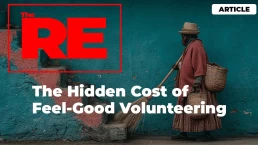
It is easy to feel good when you help. You fly across the country, maybe even the world, land in a village or neighborhood that looks nothing like yours, then spend a weekend painting a wall, handing out supplies, and smiling for photos. On paper, you volunteered. You served. You gave back. Yet when you pack your bags, board your flight, and head home, what did you really leave behind? A better world, or just a better picture for your profile? This is not to shame anyone for wanting to help. The intention might be pure. But somewhere along the way, volunteerism turned into branding. It became a bullet point on a résumé, a curated Instagram reel, and a bonding trip for corporations looking to check the “community impact” box. The result? A version of service that feels more like performance than progress. This shift did not happen overnight. It evolved alongside nonprofits chasing attention, social media rewarding optics over outcomes, and entire industries profiting off feel-good missions. Somewhere in between the airport arrival selfies and the farewell dinners, the people being helped became a backdrop. And if we are honest, many of those communities never asked for help in the first place. They asked for dignity, investment, and long-term solutions—not a weekend makeover. The deeper issue here is not just ineffective help, it is how privilege allows some to pop in and out of crisis while others never get to leave it. That imbalance shapes everything: who gets funded, who gets centered, and who stays stuck in the same conditions long after the cameras are gone.
If this work helped you understand something more clearly, support it by:
Buying the books | Visiting the Newsstand | Making a donation
One voice. One message. One Goal. Truth.
No spam. No schedules.
The Truth is Underfunded. That's Why This Exists.
No ads. No sponsors. No filter. Just the truth, unpacked, explained, and raw.
Defining Policy. Power. Consequence.
See how to add us to your home screen
The system that enables surface-level volunteering is not accidental. It is designed to cater to comfort over complexity. For decades, short-term service trips, corporate volunteer days, and nonprofit “impact events” have prioritized optics, not outcomes. These experiences are often marketed more like travel packages than acts of service. You pick a destination, pay a fee, maybe get a branded T-shirt, and for a few days, you’re part of something meaningful or so it seems. But behind the brochures and smiling group photos lies a more uncomfortable truth: these experiences are structured to center the volunteer, not the community. Projects are often chosen based on what is doable in a weekend, not what is needed in the long term. Paint a school, build a bench, donate shoes. These efforts may feel good, but rarely do they address systemic issues like underfunded education, failing infrastructure, or generational poverty. It is not that these contributions do nothing, but rather that they often do not last and sometimes, they even do harm.
Voluntourism, as it is often called, can undercut local economies by replacing paid labor with free outsider help. It can reinforce harmful power dynamics, casting the volunteer as the hero and the local community as helpless. Even worse, it can breed dependency or mistrust when promises are made and then left hanging. At the organizational level, nonprofits and NGOs compete for attention and funding, and those who can showcase happy volunteers and fast results tend to win. So, the cycle continues. Volunteers are celebrated, donations pour in, and the community becomes a backdrop for someone else’s growth. What gets missed in all of this is the reality that real change is not convenient. It is slow, messy, and rooted in relationships. It requires listening before acting and staying long after the photo op. In that sense, true service asks far more of us than just showing up. It asks us to stay, to support, and to be willing to give without always needing to be seen.

Now let’s cut through the feel-good fog and look at the numbers. According to the United Nations, the global volunteer tourism industry is valued at over $2.6 billion annually. That is not chump change. In fact, some estimates suggest as many as 1.6 million people engage in some form of voluntourism each year, particularly from wealthier nations like the United States, Canada, the United Kingdom, and Australia. These travelers often pay thousands of dollars to volunteer abroad, with fees ranging from $1,000 to over $6,000 per trip depending on the destination and the host organization. That money rarely stays in the hands of the communities being “helped.” Instead, a large portion goes to travel agencies, NGOs, or administration-heavy intermediaries.
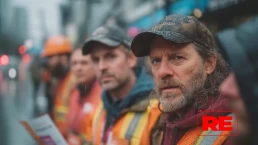
Domestically, corporate volunteerism has also surged, but the impact is questionable. While 60 percent of Fortune 500 companies offer paid time off for volunteering and nearly 90 percent promote some form of corporate social responsibility program, only a fraction actually measure long-term outcomes for the communities they serve. According to a study by Deloitte, while 70 percent of employees say volunteerism improves morale, only 25 percent of nonprofits agree that it actually helps them meet their goals. That gap is telling. Feelings of fulfillment on one side are not lining up with meaningful change on the other.
Take the case of short-term missions and service trips aimed at building homes or schools abroad. Research from the journal World Development revealed that in places like Haiti and Guatemala, these foreign-led projects often lead to abandoned buildings, unfinished work, and strained relationships. Local construction workers are frequently sidelined in favor of free labor flown in from overseas. The result? Economic disruption paired with incomplete aid. In Uganda, for example, the rise of orphanage voluntourism has created a booming industry of faux orphanages. The country has over 500 orphanages, but UNICEF data shows that 80 percent of the children living in them have at least one living parent. That statistic exists because there is money to be made in keeping these children in institutions that cater to donors and visiting volunteers.
Even in U.S.-based programs, the math often skews the reality. Nonprofits might boast about the thousands of hours logged by volunteers, yet rarely report on how those hours translated into lasting results. A 2022 study from the Urban Institute found that fewer than 30 percent of surveyed nonprofits had mechanisms in place to evaluate the long-term success of their volunteer programs. That means most organizations are moving bodies through programs without asking whether it actually works. Add to that the reality that many volunteers are offered positions that do not match the community’s highest needs but are instead aligned with volunteer skill levels, time constraints, or comfort zones. And when that happens, communities are once again placed in the background of someone else’s growth arc.

So, when we say “volunteering,” we need to ask who benefits, where the money flows, and whether the story we are telling matches the outcome that actually unfolds. Because if those numbers are saying anything loud and clear, it is that smiles and selfies have a cost, and somebody else is often footing the bill.
So where does that leave us? At its core, volunteerism was never supposed to be about optics or ego. It was supposed to be about showing up and making real change, even when no one was watching. Yet over time, the act of helping has been transformed into an industry of convenience. When service becomes structured to benefit the volunteer more than the community, then the people who were supposed to be supported are often left holding nothing but the weight of someone else’s experience.
This issue is not simply about volunteers doing a bad job. It is about the system that trains them to prioritize quick fixes over meaningful engagement. The feel-good culture surrounding service has created a mindset where showing up is enough, where smiles replace strategy, and where impact is measured by how people feel instead of what was actually accomplished. And because of that, we rarely ask the harder questions. Who requested the help in the first place? What does the community truly need? When will the work be turned over to the people who live with the outcomes? Where are the long-term solutions? And why do we keep repeating the same surface-level responses?

This matters because it affects the integrity of support systems around the world. If service becomes a performance, then those in need become props. That mindset builds programs that are short-lived, disconnected, and more focused on visibility than impact. Communities are surveyed, filmed, written about, and pitied, yet few are empowered to lead or define their own healing. And while volunteers move on with new perspectives or résumé boosters, the communities are often left to clean up the emotional and structural mess that was never theirs to begin with.
It also matters because every hour of service carries weight. Every volunteer who shows up represents a choice. And when those choices are based on image, convenience, or self-fulfillment, then the people most in need are left navigating a system that was never designed to hold them. We have to stop pretending that good intentions alone are enough. It is time to center those who are impacted, to share power instead of simply sharing time, and to remember that the most effective service often begins by stepping back and listening.

The real work is not about parachuting in. It is about building with. It is about creating support models that last, honoring the voices that live the experience, and shifting the narrative from savior to servant. Because in the end, service should not be something that simply feels good. It should be something that creates lasting, measurable, and community-approved change. And that kind of help, the quiet and consistent kind, is the only help worth giving.
Deloitte. (2016). 2016 Impact Survey: Building leadership skills through volunteering [PDF]. Deloitte.
Deloitte. (n.d.). Pro bono and skills‑based volunteering. Deloitte US.
Driving Change. (2021). Volunteer tourism: A paradox of impact. University of Michigan.
Save the Children. (n.d.). Voluntourism industry statistics. In World Nomads. Retrieved June 27, 2025, from World Nomads website (industry valued at $2.6 billion; 1.6 million voluntourists annually)
Avolio, B., et al. (2024). Doing good or doing harm? A critical examination of voluntourism in a globalized world [Blog]. Human Rights Research.
The New Humanitarian. (2005, Nov. 8). Fake orphans to attract donor funds. In coverage of UNICEF findings
UNICEF. (n.d.). The negative impact of institutionalisation on children [PDF]. unicef.org