
The Ripple Effect
-News and Commentary-
No Shelter Here: When Emergency Housing Becomes a Waiting Room
By TP Newsroom Editorial | Ripple Effect Division
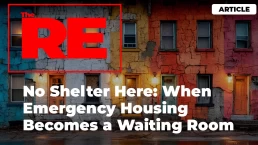
They said there would be help. That somewhere, in some part of the city, there was a bed waiting. A voucher. A room. Maybe even a second chance. You show up with your life stuffed into a duffel bag and a few names saved in your phone, thinking that support means something more than a voicemail box and a busy signal. But the truth is, support is conditional. It only works if you know the system, if you show up early enough, if your story checks all the boxes, and if someone at the front desk believes you deserve help. Emergency housing in this country was never built to hold the weight of everyone who needs it. It was designed to be temporary, a quick stopover for people between homes, but it has turned into a waiting room for nowhere. Shelters set rules like curfews and check-ins that mirror probation, while transitional housing requires you to prove your worth before you even get a chance to rest. Some programs offer hotel rooms that expire in days, forcing people to uproot again before the dust settles.
If this work helped you understand something more clearly, support it by:
Buying the books | Visiting the Newsstand | Making a donation
One voice. One message. One Goal. Truth.
No spam. No schedules.
The Truth is Underfunded. That's Why This Exists.
No ads. No sponsors. No filter. Just the truth, unpacked, explained, and raw.
Defining Policy. Power. Consequence.
See how to add us to your home screen
You begin to realize it is not just the lack of space, it is the lack of stability, and that lack is by design. People are shuffled from office to office, told to try again next week, reminded that resources are limited, and warned not to get too comfortable because nothing is guaranteed. The longer you stay in the system, the more it feels like punishment for not being able to escape it fast enough. And yet, there are buildings sitting vacant, hotels closed down, and housing units off-limits because the paperwork is never quite right or the funding dried up or the rules changed again. What was meant to be a bridge has become a barrier. What was meant to be help has become control. You were promised emergency shelter, but what you got was an obstacle course wrapped in bureaucracy, branded as care.

At some point, the question stops being about why the system is broken and starts being about who actually benefits from it staying this way. Emergency housing is no longer functioning as a safety net. Instead, it has become a long, drawn-out process built from stacked paperwork, endless intake forms, repetitive referrals, and disconnected databases that rarely communicate with one another. You can walk into a government office looking for shelter and walk out with nothing more than a brochure. Case managers are so overwhelmed with files and follow-ups that they forget your name by the second visit. Shelters run at full capacity and lack both beds and staff, while the intake process alone can stretch for hours or even days before confirming what you already knew from the start , you have nowhere to go. For families, the experience becomes even heavier. Women with children are often told they need to apply through a different system, with different criteria, or to visit a completely separate location. Single men face even fewer choices and often fall to the bottom of the housing priority list. LGBTQ youth are regularly turned away from religious shelters or forced to hide parts of themselves just to be accepted. Immigrants hit language walls, documentation requirements, and fear of exposure. Black and Latino families are more likely to be pushed into these cycles of housing insecurity because of decades of income inequality and racial discrimination. However, they are also among the least likely to receive fast-track placements or priority assistance.
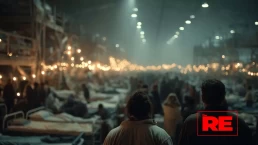
This system does not simply delay people. It wears them down. The very programs meant to transition people to permanent housing require job placement, therapy evaluations, multiple rounds of verification, and constant check-ins to prove that you deserve a roof over your head. You are not just surviving. You are performing. Every day becomes a new test, a test of worthiness, of patience, and of resilience. These delays are not just unfortunate. They are deliberate. They turn help into a filter, pushing people who cannot keep up back into the streets. While all of this plays out for those in crisis, others are thriving behind the curtain. Developers win contracts to build transitional units that never get completed. Property managers get government funding to operate halfway solutions that never evolve. Nonprofit directors can report progress based on enrollment numbers, not successful exits. Budgets increase year after year because need keeps growing, but outcomes remain the same. The system continues to serve itself, while those it claims to protect are stuck waiting in line, bouncing between offices, and eventually falling off the radar completely.

Behind the buzzwords of “emergency housing” and “transitional support” are staggering statistics that paint a bleak and deeply unequal picture. In the United States, over 653,000 people were reported as homeless in 2023, marking a twenty percent rise in just a two-year span. That alone makes it the highest recorded count since the federal government began tracking in 2007. However, those numbers are not evenly spread. California, for example, accounts for nearly one third of the entire national homeless population with over 180,000 individuals. That is not just a crisis. It is a complete collapse in public infrastructure and accountability. In New York City, more than 100,000 people including nearly 40,000 children are living in the shelter system as of early 2024. And yet even with a budget of over three billion dollars allocated for homelessness initiatives, wait times for stable housing often stretch beyond eighteen months. But numbers do more than show scale. They reveal patterns. Black Americans make up approximately thirteen percent of the population but represent nearly forty percent of the homeless community. Indigenous groups face homelessness at rates up to eight times higher than white Americans. LGBTQ youth, particularly trans youth, account for more than twenty percent of all young people experiencing homelessness, often due to family rejection, abuse, or structural exclusion. When you look at who is left waiting, who is pushed into these holding zones of housing insecurity, the math itself becomes indictment.

The financial side is just as damning. Emergency shelters, temporary motel placements, and housing voucher programs are often positioned as cost-saving tools, but in truth they bleed cities dry without delivering permanent results. Take Los Angeles as a case study. In 2022, the city spent over eighty thousand dollars per unit to build interim housing solutions that were neither permanent nor scalable. Some of these sites sat vacant for months after completion due to staffing shortages, zoning disputes, or failure to meet occupancy standards. Meanwhile, hotel voucher programs in San Francisco cost over three hundred dollars per night per person, a figure that could easily cover a standard apartment lease in many nearby cities. These temporary answers end up costing more than permanent housing solutions, but because they are easier to secure funding for, they remain the default. In many cities, the bottleneck lies in the Section Eight voucher system. Nearly two million households rely on these vouchers, but the waitlists are often closed, frozen, or decades long. In places like Washington D.C. and Chicago, the average wait time for a housing voucher is eight to twelve years. And even when a family receives one, they still face landlords who refuse to accept government assistance, a problem that has become so widespread that some states have introduced anti-discrimination laws to force compliance. Still, enforcement remains weak, and denial continues without consequence. The broader system of emergency housing has become a patchwork of mismatched goals. While agencies track success by how many people are “served,” they rarely follow up on how many find long-term stability. According to the National Low Income Housing Coalition, the United States has a shortage of over seven million affordable rental homes for extremely low-income renters. In simpler terms, for every one hundred families who need deeply affordable housing, there are only thirty-six units available nationwide. That supply-demand imbalance is not just a policy failure. It is a public health threat.

Medical data reinforces this crisis. People without stable housing are far more likely to suffer from chronic illnesses including asthma, hypertension, untreated diabetes, and mental health conditions such as depression and PTSD. Homeless individuals also experience mortality rates three to four times higher than the general population. Families stuck in transitional housing often report increases in child behavioral issues, missed school days, and long-term emotional distress. These are not soft consequences. These are measurable, cascading harms that begin the moment someone loses their address. Even so, many of the “solutions” offered by state and city programs come with red tape disguised as structure. In order to qualify for transitional housing, many families are forced to prove employment or pursue job training, pass drug screenings, undergo counseling, or attend mandatory life skills courses. On paper, this may sound logical. In practice, it creates a permanent audition for survival. People must constantly show improvement in order to remain housed, as if basic shelter is something to earn rather than a right. And every missed appointment or late form can send someone back to square one. Private contractors have also found ways to profit from the pain. In recent years, there has been an uptick in companies winning multimillion-dollar contracts to operate emergency housing facilities, often with little oversight. Some firms are paid per head, meaning there is no direct incentive to move people into permanent housing. The longer someone stays in “transitional” limbo, the more money these groups make. And yet, because they provide what governments call a service, they are treated as partners in the solution rather than contributors to the problem. What becomes clear through all of this is that the emergency housing system in America is not truly designed to end homelessness. It is built to manage it. It responds with short-term fixes instead of systemic change. It funnels billions into temporary programs while ignoring the root causes of displacement such as income inequality, wage stagnation, gentrification, and the dismantling of public housing. It measures success through occupancy rather than exits. It creates a theater of support that looks like progress but feels like purgatory.

If housing is supposed to be a human right, then why does it feel like a waiting game no one wins? The farther you look down the line, the more it becomes clear: the system wasn’t just built to help people survive in the meantime—it was built to be the meantime. From intake paperwork to unreturned calls, from mandatory workshops to shared motels, the process has stopped being about moving people out of crisis and instead become about managing the optics of care. We’ve built a hallway with no doors, a process with no end, and called it compassion. But who really benefits from that? It’s not the single mother in Tulsa who’s been bouncing between hotels and shelters for nine months, trying to keep her job while getting her kids to school. It’s not the older veteran in Atlanta who qualified for a voucher years ago but still hasn’t found a landlord who’ll take it. It’s not the LGBTQ teenager sleeping on a friend’s floor in Detroit because her family said her identity made their home “unsafe.” Those are the people this system claims to protect, but somehow they always seem to be the ones waiting. The ones benefiting are the developers who secure tax incentives to build “affordable” housing that few can actually afford. It’s the consulting firms brought in to design outreach strategies that look good in reports but don’t result in real shelter. It’s the city departments that measure success by how many people enter the system instead of how many exit it. When you ask who this matters to—it matters to anyone who’s ever been told to “just apply for help” only to find themselves stuck in a loop that never moves. It matters to every community where housing costs are rising and the lines outside the shelters are growing longer. It matters to the people trapped in these holding patterns. And it should matter to everyone funding it.
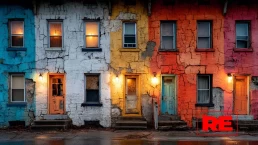
What happens next depends on what we’re willing to admit. That maybe the system was never broken. Maybe it was designed this way. That our crisis response has become an industry in itself. That emergency housing isn’t a bridge—it’s become a business. And the longer people are kept in transition, the longer those contracts stay funded, those nonprofits stay operating, and those politicians stay praised for doing “something.”
When this changes is up to us. It will change when we stop measuring effort and start demanding outcomes. When we stop asking how many people are being served and start asking how many are finally safe. Where it will matter most is in the cities with exploding populations and shrinking affordable housing—places like Los Angeles, New York, Houston, Chicago, and Phoenix, where housing insecurity no longer belongs to the margins, but now sits in the middle of the working class. Why it has to change is because hope shouldn’t come with a waiting list. Stability shouldn’t depend on a lucky draw in a rigged system. Survival shouldn’t come at the cost of dignity.
So here we are. A nation with the means to house people, yet not the will. A system wrapped in caring language but run like a business. If we don’t ask different questions—if we don’t demand different results—we will keep building programs that look good on paper but trap people in place. And if you’ve ever had to choose between staying on a stranger’s couch or sleeping in your car, you already know that “somewhere” isn’t the same as home.
U.S. Department of Housing and Urban Development. (2023). 2023 Annual Homelessness Assessment Report: Point-in-Time Estimates of Homelessness [PDF]. https://www.hud.gov/sites/dfiles/PA/documents/2023_PIT_Count_By_the_Numbers.pdf
U.S. Department of Housing and Urban Development. (2023). 2023 Annual Homelessness Assessment Report to Congress (Part I) [PDF]. https://www.huduser.gov/portal/sites/default/files/pdf/2023-AHAR-Part-1.pdf
California State Auditor. (2023). Homelessness in California (Report No. 2023‑102.1). https://www.auditor.ca.gov/reports/2023-102-1/
Reuters. (2024, July 25). Governor Newsom orders removal of California homeless encampments. https://www.reuters.com/world/us/governor-newsom-orders-removal-california-homeless-encampments-2024-07-25/
U.S. HUD. (2024, February). Homelessness rose to more than 653,000 in 2023 [Press Release]. https://www.apha.org/publications/public-health-newswire/articles/2024/02/15/homeless-report
Coalition for the Homeless. (2025). State of the Homeless 2023: Facts on New York City Shelters. https://www.coalitionforthehomeless.org/state-of-the-homeless-2023/
National Low Income Housing Coalition. (2023). The Gap: A Shortage of 7 Million Affordable Rental Homes. https://nlihc.org/gap
If this work helped you understand something more clearly, support it by:
Buying the books | Visiting the Newsstand | Making a donation
One voice. One message. One Goal. Truth.
No spam. No schedules.
The Truth is Underfunded. That's Why This Exists.
No ads. No sponsors. No filter. Just the truth, unpacked, explained, and raw.
Defining Policy. Power. Consequence.
See how to add us to your home screen