
The Ripple Effect
-News and Commentary-
The Pendulum Swing: Wokeness, Whiteness, and the Quiet Return to "Normal"
By TP Newsroom Editorial | Ripple Effect Division
I didn’t see anything wrong with the ad. That’s what I keep coming back to. The now-infamous American Eagle campaign, Sydney Sweeney in a pair of jeans, blonde hair, blue eyes, sunlit and framed like a billboard from the early 2000s. The tagline said something about “great genes,” or maybe it was “great jeans,” depending on who you ask. Either way, it sparked an immediate firestorm. Online outrage lit up with accusations: racist, white supremacist, Aryan-coded. Commentators pulled up old language about eugenics, purity, and beauty standards. But when I saw it? I saw a pretty white girl in jeans. That’s it. Nothing more. And I’ve been asking myself why that was my reaction.
Maybe it’s because, for most of my life, whiteness in media wasn’t seen as political, it was just normal. It was so ingrained, so constant, that it didn’t raise questions. And maybe it’s also because I’ve dated white women, been surrounded by that aesthetic, and never had to interpret it as threatening. That doesn’t make the criticism wrong. But it does make me reflect on what I see, what I’ve internalized, and what changed in how we interpret images like this.
There was a time when whiteness didn’t need to explain itself. You could be blonde, blue-eyed, and on a billboard, and no one would ask why. But that was during an era when the country was over 80 percent white. Statistically, it reflected the population. It wasn’t inclusive, but it wasn’t surprising. It was a mirror of who held the most space demographically. That doesn’t mean it was fair, and it sure doesn’t mean it wasn’t biased. But if you were looking at it by the numbers, it made a certain kind of sense. In 1970, white Americans made up nearly 88 percent of the population. Black Americans were around 11 percent. Asians didn’t even register above one percent. Latinos, despite being present, weren’t counted as a separate demographic. So when the media was white, the leadership was white, the magazine covers were white , it wasn’t challenged. It was simply reflective of a world built in a certain image.
If this work helped you understand something more clearly, support it by:
Buying the books | Visiting the Newsstand | Making a donation
One voice. One message. One Goal. Truth.
No spam. No schedules.
The Truth is Underfunded. That's Why This Exists.
No ads. No sponsors. No filter. Just the truth, unpacked, explained, and raw.
Defining Policy. Power. Consequence.
See how to add us to your home screen
But what happens when the numbers shift? What happens when representation starts to catch up, not just demographically, but intentionally? Suddenly, everyone starts noticing who’s on the cover. Who gets the campaign. Who gets to represent “all of us.” And then you feel it, the pendulum swinging.
I remember the years right after George Floyd, the cultural floodgates opened. Corporations rebranded overnight. Every photo shoot had to include every shade of brown, every body type, every flag. It wasn’t always sincere, but it was loud. It was meant to correct history. But then, just as quickly, you could feel the air shift again. People started grumbling. Politicians started legislating. Executives stopped returning DEI calls. The pendulum, once heavy with justice, began swinging back toward comfort.
That ad was a spark, not because it was overtly offensive, but because it reminded people that whiteness doesn’t go away. Even when the world tries to balance itself, whiteness has a way of reclaiming center stage, through nostalgia, familiarity, or in this case, denim. And if I’m being honest, the ad didn’t feel like a threat to me. But that’s exactly what’s worth unpacking.
I’ve got a reader who writes in consistently. He’d get upset when I talked about racism too broadly. “Not all white people,” he’d say. “You’re lumping me in with people I don’t agree with.” And to his credit, he wasn’t wrong. He said it to my father once, too, and I remember it vividly because of how sincere he was. That voice stuck with me and made me think outloud.
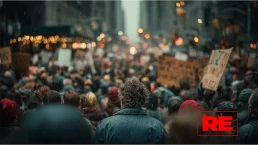
What happens when someone gets told over and over again that they’re part of the problem, that their skin color is a sign of guilt, that their silence is violence, even when they think they’re trying? At what point does that person say, “Fine, if that’s who you think I am, I’ll stop explaining myself”? That kind of exhaustion has a ripple effect too. And it doesn’t excuse racism. But it does explain resistance, you can lump in reparations and slavery into the same thought process and argument.
I don’t think most people are reacting to ads like this because they hate diversity. I think they’re tired of having to justify not being racist, not being the ones who were slave owners, not being th e ones in the KKK, not the ones justifying who can say what word. They’re tired of walking into a conversation already accused. And on the flip side, people who’ve been fighting for decades — for visibility, for justice, for inclusion — are tired of seeing the world quietly slide back to what it was. That’s where we are now. Somewhere between backlash and burnout, between overcorrection and erasure. Everyone feels like something’s being taken from them.
And somehow, a girl in a pair of jeans ended up in the middle of all of it.
Let’s just be honest about what happened. The 1960s weren’t just about marches and speeches. They were about a country that was finally being forced to reckon with its own contradictions. On one side, you had the Civil Rights Movement , Black Americans fighting to be treated like human beings in the country they helped build. No more “colored” drinking fountains. No more sitting in the back of the bus. No more black schools being funded like prisons while other schools had brand-new libraries and full staff. This wasn’t about asking for special treatment, it was about getting out from under Jim Crow and finally breathing. That’s why you had the March on Washington. That’s why Martin Luther King stood there and said, “I have a dream.” Because at that moment, Black America wasn’t asking for more, it was demanding and screaming enough.
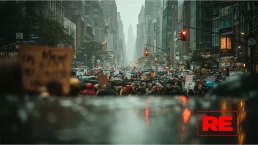
But here’s what most people don’t talk about, while all of that was happening, the United States quietly did something else that would shape the next 60 years just as much: it opened the gates. Immigration policy shifted. New laws passed. The message was clear: send us your tired, your poor, your huddled masses or as it’s famously written, “the wretched refuse of your teeming shore.” That wasn’t just poetry. That was policy. And what it did was start the process of changing who makes up this country.
Before 1965, immigration was based on racist quotas. The old laws, like the Immigration Act of 1924 were designed to keep America white. Straight up. They gave massive preference to immigrants from Northern and Western Europe while limiting everyone else especially Asians, Africans, and people from Latin America. That law was designed to preserve the ethnic makeup of the country: white, Christian, and Western.
But in the wake of the Civil Rights Movement, America had to confront its own hypocrisy. You can’t claim to be a beacon of freedom on the global stage if your immigration laws still scream racial preference. So Congress passed the Hart-Celler Act in 1965, and President Lyndon B. Johnson signed it into law at the foot of the Statue of Liberty.
Here’s what Johnson said that day:
“This bill that we sign today is not a revolutionary bill. It does not affect the lives of millions… Yet it is still one of the most important acts of this Congress and of this administration. For it does repair a very deep and painful flaw in the fabric of American justice. It corrects a cruel and enduring wrong in the conduct of the American Nation.”
He was talking about ending racial preference in immigration. And what followed was nothing short of transformational. The 1965 Act abolished the national origins quota system, replacing it with a system that favored family reunification and high-skilled workers. And while it didn’t look like much on the surface, it blew the gates wide open, especially for Asian, Latin American, Caribbean, African, and Middle Eastern immigrants. That’s when the real demographic change began.
So while the Civil Rights Movement was demanding dignity and equality for Black Americans, the Immigration and Nationality Act of 1965 was reshaping who could call themselves American next.
And that’s the setup: the Statue of Liberty’s poem gave it the poetic face, but Hart-Celler made it law. That’s the moment where America went from “majority white Christian European” to “multicultural, multilingual, and racially mixed.” That’s the point where the demographic trend lines started to bend.
Journalism You Can Hold. Insight You Can Own.
Books Magazines Companion Guides White Papers More
Your support funds the research, reporting, and long-form analysis behind TP Newsroom
So let’s look at what the country actually looked like, by the numbers.
In 1960, America was overwhelmingly white. Non-Hispanic white Americans made up about 88.6% of the population. Black Americans came in at 10.5%. Asians and Indigenous people weren’t even fully counted yet, and Hispanics were either folded into the white category or tracked inconsistently, if at all. By 1970, things started to shift but just barely. Whites dropped slightly to 87.5%, Black Americans ticked up to 11.1%, and if you dig into the census, Hispanics made up around 6.4%. Asians were still under 1%.
Fast forward to 1980, and immigration had started to leave a visible mark. The white population dropped again to 83.1%. Black Americans held steady at 11.7%. Hispanics jumped to 12.5%, and Asians started to show up more clearly, falling somewhere between 1.5 and 2%. By the year 2000, that shift had accelerated. Whites had dropped to 75.1%. Black Americans were holding at 12.3%, while Hispanics surged to 18.7%, and Asians climbed into the 4% range.
By 2020, the shift was undeniable. Non-Hispanic white Americans had dropped to 57.8%, no longer the overwhelming majority. Black Americans remained steady at 12.1%. Hispanics held strong at 18.7%, and Asians continued to rise, reaching 5.9%. On top of that, multiracial Americans, people who didn’t fit neatly into a single category , made up another 4.1%.
That’s a 30-point drop in white representation in just 60 years. And let’s be clear it’s not because white people disappeared. It’s because immigration policies changed, birth rates shifted, and people who had been labeled “other” for decades started getting counted.
So here’s the honest question: if you go from being nearly 90% of the population to just under 60%, how should that reflect across society? Should that same 90% still dominate all media? All leadership? All ownership? If you make up 58% of the population, but still take up 85% of airtime, ad space, and top-level decision-making does that make sense?
And flip it the other way. If Black Americans are 12%, does it make sense they make up 32% of the prison population? If Hispanics are 19%, why are they barely visible in major corporate boardrooms or high-level government roles? If Asians are pushing 6%, why are they still mostly shown as one-note in film, tech, or medicine?
That’s what this is really about not race-baiting, not guilt, just logic. If society was fair, you’d expect the distribution of power, wealth, incarceration, housing, and media presence to somewhat reflect the population. But when every category is out of sync? When whites are underrepresented in prison but overrepresented in legacy wealth and media? When Black and Hispanic Americans are overrepresented in poverty and underrepresented in ownership? That’s not coincidence. That’s design.
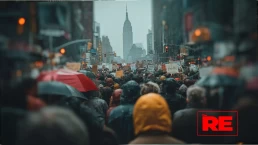
And that’s where the pendulum comes in. When one group had dominance by numbers, by culture, by structure and the numbers start to shift but the system doesn’t? That creates tension. You’re trying to put new people into old roles and pretend the math still works. It doesn’t.
So when people say, “Hey, why does this ad feel different?” Or “Why am I seeing less of me in TV or politics or media?” It’s not always because they’re hateful. Sometimes they’re just reacting to what they don’t understand: the country they thought they knew changed, and no one ever broke the math down for them.
And the people trying to be represented? They’re not asking for more than their share — they’re just asking for visibility that makes sense based on who actually lives here now.
This isn’t about blame. It’s about alignment. If you want fair society, then the population should be the baseline. It should be your measuring stick. Not feelings. Not who’s loudest. Not who’s trending.
Just numbers. Just truth.
Now let’s make it plain. If this country’s demographics have changed and they have, then everything that flows from that should logically change too. But it didn’t. Not right away. Not without resistance. Because culture doesn’t move at the same speed as math. The census can say one thing, but institutions? They lag. They cling to the old default, the old image, the old majority, even as the numbers under their feet keep shifting.
Look at advertising. Look at media. Look at homeownership. Look at hiring. Look at tech. For decades after the demographics started changing, the people on the screen, the people at the table, the people holding the pen they didn’t reflect that change. The system was built by a certain group, and it kept prioritizing that group even as the country changed around it. And here’s the part nobody likes to say out loud: that wasn’t accidental. That was design. Because power doesn’t hand itself over just because the math changed. It has to be pushed. It has to be rebalanced.
But once that push finally came once movements got loud enough, visible enough, undeniable enough it triggered something else: backlash. Not just from racists or extremists. From regular-ass people who just weren’t ready to have the mirror flipped on them. People who grew up thinking they were neutral, they were normal, they were America. And now the narrative was saying, “You’re just one part of it.” That’s a tough pill to swallow when you’ve never had to take it before.
So what did they do? They started calling diversity “wokeness.” Started saying inclusion was “forced.” Started acting like being centered was their right not a historical accident. And they clung to nostalgia like it was a life raft. Make America Great Again wasn’t about policy. It was about imagery. It was about flipping the dial back to a time when everything on the screen looked like them. When the country didn’t question who was allowed to be seen, to be powerful, to be heard.
But let’s put a spotlight on that logic. If white Americans are 57.8% of the country today, and every other group is growing, then by what math should they still dominate 90% of the commercial, media, and financial space? If you say representation should match the country, then that’s what equity is. Not more. Not less. Just reflection. If we’re 12% Black, 18% Latino, nearly 6% Asian, over 4% mixed, and growing fast then that should show up in what we see, how we’re sold to, and who gets the attention.
And this isn’t about guilt. I’m not asking anyone to apologize for being white, just like I’m not apologizing for being Black. That’s not what this is. This is about proportionality. About alignment. Because if you’re saying diversity feels threatening, then what you’re really saying is visibility makes you feel replaced. And if visibility equals replacement in your brain, then you might need to ask yourself why you thought everything was supposed to be yours in the first place.
We don’t live in a country that’s 88% white anymore. So stop acting like we should. That’s just a fact. It doesn’t mean burn everything down. It doesn’t mean erase anyone. But it does mean rethinking who we see. Who gets the campaign. Who’s allowed to be normal. Because that word “normal”, has always been weaponized. “Normal” used to mean white, thin, straight, able-bodied. And anything else was niche. “Urban.” “Foreign.” “Diverse.” Now? Normal is complicated. It has an accent. It’s multilingual. It comes with hijabs, and braids, and gender fluidity, and wheelchairs, and wrinkles, and brown skin.
And I get it, I really do. People don’t want to walk into every conversation already labeled. It’s like how some people look at every Black man like he’s dangerous, criminal, lazy, until he shows up in a suit. I’ve been there. I’ve watched the shock on people’s faces when I arrive on a film set and they realize I’m not “the help”, I’m the boss. Or when a manager once said to me, “You’re just like every other Black person we arrest, just in a suit and tie.” That’s not a compliment. That’s a confession.

That’s the tension we’re sitting in now, a kind of cultural exhaustion that isn’t just political, it’s personal. You’ve got white Americans who don’t identify with racism, who weren’t raised on hate, who never flew a Confederate flag or burned a cross, and yet, they feel accused. They feel like no matter what they do, it’s not enough. That the rules keep changing. That they’re walking into every conversation already guilty, guilty of history, guilty of silence, guilty of not being “woke enough” or not angry enough or not apologetic enough. And for some of them, especially the ones who did vote for Obama, who did show up to marches, who did believe in change, the fatigue is real.
And you can hear it in their voices. “If diversity means constantly being blamed, what am I supposed to do with that?” You hear it in school board meetings, in DEI retreats, in corporate halls where people now whisper the very things they used to post online, because the climate changed. Again.
That’s what people miss. We didn’t just swing the pendulum forward after George Floyd. We also swung it back. Quietly. Subtly. Subtractively. One reversed policy here. One quiet layoff there. One commercial featuring a blonde girl in jeans that sends a signal: It’s okay. We’re coming back to center now.
But here’s the catch: there is no center anymore. Because both sides feel like the other side is taking too much. One group thinks they’re losing the culture. The other thinks they never had a fair stake in it to begin with. And meanwhile, the institutions? They just want the noise to stop. So they do what institutions always do, retreat to safety, nostalgia, and whoever’s least likely to call legal.
This isn’t about jeans. It’s about fatigue. From all directions. And that fatigue is breeding resentment, withdrawal, and, more dangerously, replacement. Because when people get tired of being told they’re wrong, they don’t always get better. Sometimes they just get quiet and wait. That’s the part nobody wants to say out loud. But we’re seeing it already. The swing back isn’t loud. It’s subtle. It’s data-driven. It’s happening in boardrooms and budgets. In hiring freezes and quietly dropped campaigns. In the reruns of “normal” we’re being fed.
And here’s issue, nobody wants to admit it. Because if we admit it, we have to ask why. Why did so many people abandon the push for change so quickly? Why did the companies stop posting black squares? Why did the “diverse and inclusive” committees disband? Why did we start hearing, “DEI isn’t effective,” right after it started getting real?

That’s the trick of identity in this country , it doesn’t just tell you who you are, it tells other people who they think you’re supposed to be. And right now, everybody feels misrepresented. A lot of white people aren’t racist. They’re not marching with tiki torches, they’re not quoting replacement theory, they’re not storming school boards. But they’re still tired. Tired of feeling like every story on TV is trying to prove they’re the villain. Tired of watching their traditions get relabeled as oppressive. Tired of being told that their success is unearned, their grandparents were complicit, and their silence is violence.
So yeah, that Sydney Sweeney ad wasn’t just about a girl in jeans. It hit a nerve. Because it reminded people of an America where whiteness didn’t have to explain itself and made others fear that we were heading back to it.
And that’s the edge we’re standing on. We’re not in the middle of a culture war, we’re at the end of an emotional one. The kind of war that doesn’t need guns, just narratives. Quiet shifts. Budget changes. Words taken off the website. Diversity statements rewritten in passive voice. Because what used to be a demand for progress is now being repackaged as a return to “neutrality.” But neutrality isn’t neutral when the foundation it defaults to is skewed.
This isn’t about blaming white people. It’s not about giving Black or brown or queer or immigrant folks a free pass either. It’s about recognizing that when a society moves too fast without anchoring the shift in truth and understanding, people get whiplash. And when they don’t feel seen, they retreat. And when they retreat long enough, they start rewriting the rules from the shadows. That’s what this is. A quiet revision.
Because the truth is, a lot of people didn’t hate the progress, they just didn’t feel included in it. They didn’t get a script. They didn’t get tools. They didn’t get language. All they got was shame and slogans and deadlines to say the right thing on camera or in an email. And when that became too much, they disengaged. Not because they’re bigots. Because they’re human. And exhausted. And afraid of saying the wrong thing one more time.
That doesn’t make the progress wrong. It just means we fumbled the rollout.
And now? Now we’re watching the pendulum swing back, not with outrage, but with algorithms. Not with rallies, but with hiring decisions. Not with hate speech, but with silence. And if we don’t start talking about it for real, for real, we’re gonna end up right back where we started. Different decade. Same silence.
So no, this isn’t about jeans. Or commercials. Or Hollywood actresses. It’s about something deeper: a country still trying to figure out what it means to change without erasing, to include without accusing, to move forward without pretending we’re all starting from the same place.
But we’re not. And if we can’t admit that? Then we’re not building a future. We’re just remixing the past, louder this time, with a different cast.
United States Census Bureau. (2021). Non‑Hispanic whites comprise 57.8% of total U.S. population in 2020. In List of U.S. states by non‑Hispanic white population.
Pew Research Center. (2022, June 14). A brief statistical portrait of U.S. Hispanics. Retrieved from https://www.pewresearch.org/science/2022/06/14/a-brief-statistical-portrait-of-u-s-hispanics/
Prison Policy Initiative. (2023). Racial and ethnic disparities in incarceration. Retrieved from https://www.prisonpolicy.org/research/racial_and_ethnic_disparities/
Bureau of Justice Statistics. (2023, November 30). Prisoners in 2022 – statistical tables. Retrieved from https://bjs.ojp.gov/press-release/prisoners-2022-statistical-tables
Office of Juvenile Justice and Delinquency Prevention. (2023). State detention rates by race/ethnicity, 2021. Retrieved from https://www.ojjdp.gov/ojstatbb//corrections/qa08611.asp
University of California, Santa Barbara. (n.d.). Remarks at the Signing of the Immigration Bill, Liberty Island, New York. Retrieved from https://www.presidency.ucsb.edu/documents/remarks-the-signing-the-immigration-bill-liberty-island-new-york
Docsteach (National Archives). (n.d.). President Lyndon B. Johnson Signing the Immigration Act. Retrieved from https://www.docsteach.org/documents/document/lbj-immigration-act
Asian American Education Project. (n.d.). Immigration and Nationality Act of 1965 – Civil Rights. Retrieved from https://asianamericanedu.org/immigration-and-nationality-act-of-1965.html
The Sentencing Project. (2023, October 11). One in five: ending racial inequity in incarceration. Retrieved from https://www.sentencingproject.org/reports/one-in-five-ending-racial-inequity-in-incarceration/
USA Facts. (2022). U.S. population by year, race, age, ethnicity & more. Retrieved from https://usafacts.org/data/topics/people-society/population-and-demographics/our-changing-population/
If this work helped you understand something more clearly, support it by:
Buying the books | Visiting the Newsstand | Making a donation
One voice. One message. One Goal. Truth.
No spam. No schedules.
The Truth is Underfunded. That's Why This Exists.
No ads. No sponsors. No filter. Just the truth, unpacked, explained, and raw.
Defining Policy. Power. Consequence.
See how to add us to your home screen