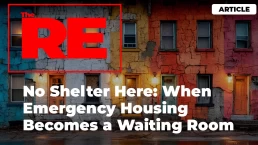
No Shelter Here: When Emergency Housing Becomes a Waiting Room
The Ripple Effect
-News and Commentary-
No Shelter Here: When Emergency Housing Becomes a Waiting Room
By TP Newsroom Editorial | Ripple Effect Division
They said there would be help. That somewhere, in some part of the city, there was a bed waiting. A voucher. A room. Maybe even a second chance. You show up with your life stuffed into a duffel bag and a few names saved in your phone, thinking that support means something more than a voicemail box and a busy signal. But the truth is, support is conditional. It only works if you know the system, if you show up early enough, if your story checks all the boxes, and if someone at the front desk believes you deserve help. Emergency housing in this country was never built to hold the weight of everyone who needs it. It was designed to be temporary, a quick stopover for people between homes, but it has turned into a waiting room for nowhere. Shelters set rules like curfews and check-ins that mirror probation, while transitional housing requires you to prove your worth before you even get a chance to rest. Some programs offer hotel rooms that expire in days, forcing people to uproot again before the dust settles.
If this work helped you understand something more clearly, support it by:
Buying the books | Visiting the Newsstand | Making a donation
One voice. One message. One Goal. Truth.
No spam. No schedules.
The Truth is Underfunded. That's Why This Exists.
No ads. No sponsors. No filter. Just the truth, unpacked, explained, and raw.
Defining Policy. Power. Consequence.
See how to add us to your home screen
You begin to realize it is not just the lack of space, it is the lack of stability, and that lack is by design. People are shuffled from office to office, told to try again next week, reminded that resources are limited, and warned not to get too comfortable because nothing is guaranteed. The longer you stay in the system, the more it feels like punishment for not being able to escape it fast enough. And yet, there are buildings sitting vacant, hotels closed down, and housing units off-limits because the paperwork is never quite right or the funding dried up or the rules changed again. What was meant to be a bridge has become a barrier. What was meant to be help has become control. You were promised emergency shelter, but what you got was an obstacle course wrapped in bureaucracy, branded as care.
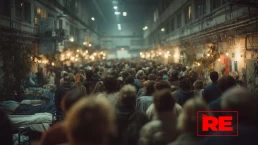
At some point, the question stops being about why the system is broken and starts being about who actually benefits from it staying this way. Emergency housing is no longer functioning as a safety net. Instead, it has become a long, drawn-out process built from stacked paperwork, endless intake forms, repetitive referrals, and disconnected databases that rarely communicate with one another. You can walk into a government office looking for shelter and walk out with nothing more than a brochure. Case managers are so overwhelmed with files and follow-ups that they forget your name by the second visit. Shelters run at full capacity and lack both beds and staff, while the intake process alone can stretch for hours or even days before confirming what you already knew from the start , you have nowhere to go. For families, the experience becomes even heavier. Women with children are often told they need to apply through a different system, with different criteria, or to visit a completely separate location. Single men face even fewer choices and often fall to the bottom of the housing priority list. LGBTQ youth are regularly turned away from religious shelters or forced to hide parts of themselves just to be accepted. Immigrants hit language walls, documentation requirements, and fear of exposure. Black and Latino families are more likely to be pushed into these cycles of housing insecurity because of decades of income inequality and racial discrimination. However, they are also among the least likely to receive fast-track placements or priority assistance.
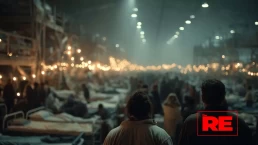
This system does not simply delay people. It wears them down. The very programs meant to transition people to permanent housing require job placement, therapy evaluations, multiple rounds of verification, and constant check-ins to prove that you deserve a roof over your head. You are not just surviving. You are performing. Every day becomes a new test, a test of worthiness, of patience, and of resilience. These delays are not just unfortunate. They are deliberate. They turn help into a filter, pushing people who cannot keep up back into the streets. While all of this plays out for those in crisis, others are thriving behind the curtain. Developers win contracts to build transitional units that never get completed. Property managers get government funding to operate halfway solutions that never evolve. Nonprofit directors can report progress based on enrollment numbers, not successful exits. Budgets increase year after year because need keeps growing, but outcomes remain the same. The system continues to serve itself, while those it claims to protect are stuck waiting in line, bouncing between offices, and eventually falling off the radar completely.
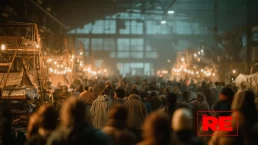
Behind the buzzwords of “emergency housing” and “transitional support” are staggering statistics that paint a bleak and deeply unequal picture. In the United States, over 653,000 people were reported as homeless in 2023, marking a twenty percent rise in just a two-year span. That alone makes it the highest recorded count since the federal government began tracking in 2007. However, those numbers are not evenly spread. California, for example, accounts for nearly one third of the entire national homeless population with over 180,000 individuals. That is not just a crisis. It is a complete collapse in public infrastructure and accountability. In New York City, more than 100,000 people including nearly 40,000 children are living in the shelter system as of early 2024. And yet even with a budget of over three billion dollars allocated for homelessness initiatives, wait times for stable housing often stretch beyond eighteen months. But numbers do more than show scale. They reveal patterns. Black Americans make up approximately thirteen percent of the population but represent nearly forty percent of the homeless community. Indigenous groups face homelessness at rates up to eight times higher than white Americans. LGBTQ youth, particularly trans youth, account for more than twenty percent of all young people experiencing homelessness, often due to family rejection, abuse, or structural exclusion. When you look at who is left waiting, who is pushed into these holding zones of housing insecurity, the math itself becomes indictment.
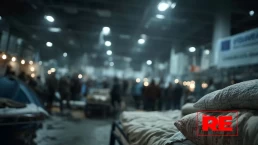
The financial side is just as damning. Emergency shelters, temporary motel placements, and housing voucher programs are often positioned as cost-saving tools, but in truth they bleed cities dry without delivering permanent results. Take Los Angeles as a case study. In 2022, the city spent over eighty thousand dollars per unit to build interim housing solutions that were neither permanent nor scalable. Some of these sites sat vacant for months after completion due to staffing shortages, zoning disputes, or failure to meet occupancy standards. Meanwhile, hotel voucher programs in San Francisco cost over three hundred dollars per night per person, a figure that could easily cover a standard apartment lease in many nearby cities. These temporary answers end up costing more than permanent housing solutions, but because they are easier to secure funding for, they remain the default. In many cities, the bottleneck lies in the Section Eight voucher system. Nearly two million households rely on these vouchers, but the waitlists are often closed, frozen, or decades long. In places like Washington D.C. and Chicago, the average wait time for a housing voucher is eight to twelve years. And even when a family receives one, they still face landlords who refuse to accept government assistance, a problem that has become so widespread that some states have introduced anti-discrimination laws to force compliance. Still, enforcement remains weak, and denial continues without consequence. The broader system of emergency housing has become a patchwork of mismatched goals. While agencies track success by how many people are “served,” they rarely follow up on how many find long-term stability. According to the National Low Income Housing Coalition, the United States has a shortage of over seven million affordable rental homes for extremely low-income renters. In simpler terms, for every one hundred families who need deeply affordable housing, there are only thirty-six units available nationwide. That supply-demand imbalance is not just a policy failure. It is a public health threat.

Medical data reinforces this crisis. People without stable housing are far more likely to suffer from chronic illnesses including asthma, hypertension, untreated diabetes, and mental health conditions such as depression and PTSD. Homeless individuals also experience mortality rates three to four times higher than the general population. Families stuck in transitional housing often report increases in child behavioral issues, missed school days, and long-term emotional distress. These are not soft consequences. These are measurable, cascading harms that begin the moment someone loses their address. Even so, many of the “solutions” offered by state and city programs come with red tape disguised as structure. In order to qualify for transitional housing, many families are forced to prove employment or pursue job training, pass drug screenings, undergo counseling, or attend mandatory life skills courses. On paper, this may sound logical. In practice, it creates a permanent audition for survival. People must constantly show improvement in order to remain housed, as if basic shelter is something to earn rather than a right. And every missed appointment or late form can send someone back to square one. Private contractors have also found ways to profit from the pain. In recent years, there has been an uptick in companies winning multimillion-dollar contracts to operate emergency housing facilities, often with little oversight. Some firms are paid per head, meaning there is no direct incentive to move people into permanent housing. The longer someone stays in “transitional” limbo, the more money these groups make. And yet, because they provide what governments call a service, they are treated as partners in the solution rather than contributors to the problem. What becomes clear through all of this is that the emergency housing system in America is not truly designed to end homelessness. It is built to manage it. It responds with short-term fixes instead of systemic change. It funnels billions into temporary programs while ignoring the root causes of displacement such as income inequality, wage stagnation, gentrification, and the dismantling of public housing. It measures success through occupancy rather than exits. It creates a theater of support that looks like progress but feels like purgatory.

If housing is supposed to be a human right, then why does it feel like a waiting game no one wins? The farther you look down the line, the more it becomes clear: the system wasn’t just built to help people survive in the meantime—it was built to be the meantime. From intake paperwork to unreturned calls, from mandatory workshops to shared motels, the process has stopped being about moving people out of crisis and instead become about managing the optics of care. We’ve built a hallway with no doors, a process with no end, and called it compassion. But who really benefits from that? It’s not the single mother in Tulsa who’s been bouncing between hotels and shelters for nine months, trying to keep her job while getting her kids to school. It’s not the older veteran in Atlanta who qualified for a voucher years ago but still hasn’t found a landlord who’ll take it. It’s not the LGBTQ teenager sleeping on a friend’s floor in Detroit because her family said her identity made their home “unsafe.” Those are the people this system claims to protect, but somehow they always seem to be the ones waiting. The ones benefiting are the developers who secure tax incentives to build “affordable” housing that few can actually afford. It’s the consulting firms brought in to design outreach strategies that look good in reports but don’t result in real shelter. It’s the city departments that measure success by how many people enter the system instead of how many exit it. When you ask who this matters to—it matters to anyone who’s ever been told to “just apply for help” only to find themselves stuck in a loop that never moves. It matters to every community where housing costs are rising and the lines outside the shelters are growing longer. It matters to the people trapped in these holding patterns. And it should matter to everyone funding it.

What happens next depends on what we’re willing to admit. That maybe the system was never broken. Maybe it was designed this way. That our crisis response has become an industry in itself. That emergency housing isn’t a bridge—it’s become a business. And the longer people are kept in transition, the longer those contracts stay funded, those nonprofits stay operating, and those politicians stay praised for doing “something.”
When this changes is up to us. It will change when we stop measuring effort and start demanding outcomes. When we stop asking how many people are being served and start asking how many are finally safe. Where it will matter most is in the cities with exploding populations and shrinking affordable housing—places like Los Angeles, New York, Houston, Chicago, and Phoenix, where housing insecurity no longer belongs to the margins, but now sits in the middle of the working class. Why it has to change is because hope shouldn’t come with a waiting list. Stability shouldn’t depend on a lucky draw in a rigged system. Survival shouldn’t come at the cost of dignity.
So here we are. A nation with the means to house people, yet not the will. A system wrapped in caring language but run like a business. If we don’t ask different questions—if we don’t demand different results—we will keep building programs that look good on paper but trap people in place. And if you’ve ever had to choose between staying on a stranger’s couch or sleeping in your car, you already know that “somewhere” isn’t the same as home.
U.S. Department of Housing and Urban Development. (2023). 2023 Annual Homelessness Assessment Report: Point-in-Time Estimates of Homelessness [PDF]. https://www.hud.gov/sites/dfiles/PA/documents/2023_PIT_Count_By_the_Numbers.pdf
U.S. Department of Housing and Urban Development. (2023). 2023 Annual Homelessness Assessment Report to Congress (Part I) [PDF]. https://www.huduser.gov/portal/sites/default/files/pdf/2023-AHAR-Part-1.pdf
California State Auditor. (2023). Homelessness in California (Report No. 2023‑102.1). https://www.auditor.ca.gov/reports/2023-102-1/
Reuters. (2024, July 25). Governor Newsom orders removal of California homeless encampments. https://www.reuters.com/world/us/governor-newsom-orders-removal-california-homeless-encampments-2024-07-25/
U.S. HUD. (2024, February). Homelessness rose to more than 653,000 in 2023 [Press Release]. https://www.apha.org/publications/public-health-newswire/articles/2024/02/15/homeless-report
Coalition for the Homeless. (2025). State of the Homeless 2023: Facts on New York City Shelters. https://www.coalitionforthehomeless.org/state-of-the-homeless-2023/
National Low Income Housing Coalition. (2023). The Gap: A Shortage of 7 Million Affordable Rental Homes. https://nlihc.org/gap
If this work helped you understand something more clearly, support it by:
Buying the books | Visiting the Newsstand | Making a donation
One voice. One message. One Goal. Truth.
No spam. No schedules.
The Truth is Underfunded. That's Why This Exists.
No ads. No sponsors. No filter. Just the truth, unpacked, explained, and raw.
Defining Policy. Power. Consequence.
See how to add us to your home screen



Broken Trust: When Nonprofits Forget the People
The Ripple Effect
-News and Commentary-
Broken Trust: When Nonprofits Forget the People
By TP Newsroom Editorial | Ripple Effect Division
You ever watch a nonprofit gala in full swing? You know the kind—glass clinking, PowerPoint slides, a mission statement flashed on every screen, and some guy in a suit walking across stage talking about how many lives were “touched” this year. Behind him, there’s a looping video montage of smiling kids, solemn-faced elders, maybe a shaky clip of a food drive set to piano chords. They say the word “impact” like it’s a confession and a currency all at once. I used to be impressed by that kind of thing. Now I just watch who’s getting the applause—and who’s nowhere near the room. What they won’t say on that stage is that this whole machine doesn’t run without pain. Pain is the fuel. Pain is the pitch. And somewhere along the way, the line between helping and harvesting got blurred. Because this isn’t about bad people.
If this work helped you understand something more clearly, support it by:
Buying the books | Visiting the Newsstand | Making a donation
One voice. One message. One Goal. Truth.
No spam. No schedules.
The Truth is Underfunded. That's Why This Exists.
No ads. No sponsors. No filter. Just the truth, unpacked, explained, and raw.
Defining Policy. Power. Consequence.
See how to add us to your home screen
It’s not even about bad intentions. It’s about the fact that entire organizations are built on a model that requires someone to be struggling, consistently. And the worse your story, the bigger the check. The more visible your wound, the more valuable your presence. Not for healing. For reporting. For optics. For that next round of funding. I’ve seen it in real time—people being coached to “tell their story” not for their own growth, but because the board needed a tearjerker. Communities being surveyed, photographed, used in grant decks, and then forgotten once the funding comes in. I’ve seen trauma turned into marketing, poverty turned into portfolio material, and success quietly buried because too much progress might threaten next year’s ask. This isn’t even hidden. It’s normalized. Wrapped in words like “amplifying voices” or “raising awareness.” But awareness without action is just exposure. And if your platform depends on the ongoing pain of the people you claim to serve, then you’re not in the business of healing—you’re in the business of maintaining the need. That’s what nobody says out loud.

That some nonprofits don’t just survive on trauma, they scale with it. They grow their staff, buy new office space, hire development teams—all based on the assumption that the pain will keep coming. That it has to. Because without it, there’s nothing to fund. So we throw galas. We print reports. We tell stories. But the people inside those stories? They’re still there. Still hungry. Still on the waitlist. Still being used to prove “impact” without ever fully receiving it. And the worst part? Many of them don’t even know they’ve become the product. The trauma economy is slick like that. Wrapped in kindness. Packaged as care. But underneath it all, the question stays the same—who’s actually healing, and who’s just getting better at telling the story?

It’s easy to call out a system from the outside, but if I’m being honest, I get it. I really do. I run a business that’s built on purpose too—built on story, meaning, belief—and there isn’t a day that goes by that I don’t think about how to grow without losing the reason I started in the first place. Because growth always comes with trade-offs. More success means more people, more systems, more infrastructure. And all of a sudden, you’re not just doing the thing—you’re maintaining the engine around the thing. That’s where the shift starts. That’s when mission starts competing with management. For nonprofits, the stakes are even higher because the money doesn’t come from the people you serve—it comes from the people watching. The donors, the board, the grant officers, the foundations with metrics and language and preferences that don’t always line up with what the community actually needs. So you tweak the messaging. You build the brand. You hire a strategist, a fundraiser, a digital comms director. And slowly, you stop serving just to serve—you start serving to report. You start building programs not because they’re what’s most effective, but because they photograph well or align with funding priorities. You add layers. You add overhead. And now you need more money just to sustain what you’ve built. That’s not greed. That’s gravity. That’s the pressure every growing organization feels—to survive, to look stable, to be taken seriously. But the bigger you get, the further you drift from the ground. From the people. From the rawness that made the work urgent in the first place. And unless someone pulls you back, unless you intentionally keep one foot rooted in the community you serve, the machine takes over. It doesn’t happen all at once. It’s subtle. You stop asking what people need and start asking what funders expect. You stop showing up and start presenting. And before you know it, the mission isn’t guiding the work anymore—it’s justifying it. That’s the part nobody wants to admit. That maybe some of these nonprofits didn’t start out exploitative. Maybe they just grew too fast, too far, without checking the compass. Maybe they became successful at scaling suffering instead of solving it. And maybe that’s the real tragedy—not that they built an empire, but that they forgot who they built it for.

At some point, the mission can get buried under the machinery. It starts with good intentions. A nonprofit launches to serve a need, uplift a community, address a gap that no one else seems to care about. But then it grows. It starts adding staff, securing grants, building infrastructure, adding departments, hiring HR, marketing, development directors, operations leads, and eventually executive leadership. And once you build the machine, you have to feed it. The cost of simply existing rises. Executive salaries in large health nonprofits often exceed $150,000 per year, and in some cases, CEOs earn millions annually. According to one 2023 nonprofit compensation report, executive director salaries commonly range from $141,000 to $241,000 depending on size and scope. That’s not necessarily a red flag, but it raises the question: who is all this for? A 2023 labor report found that over 72 percent of nonprofits can’t offer competitive pay, which means the people doing the real work often burn out and leave, taking with them the trust and relationships that were the foundation in the first place.
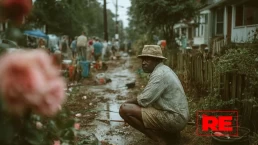
Donors still expect lean operations. They want 80 to 90 percent of every dollar to go toward programs, but many organizations quietly spend most of their funds on development, admin, and brand building. Some watchdog reports show that less than 10 percent of donations in certain organizations make it to the actual communities they serve. And the public sees it. In a recent survey, 57 percent of Americans said they trust nonprofits, but only 20 percent said they highly trust them. And nearly half—43 percent—said they’ve lost trust after a negative experience. That erosion of faith is slow, but real. It happens when people watch their trauma become someone else’s salary. It happens when volunteers see a camera show up for a photo op, but no one returns after the grant is secured. And it happens when organizations get so big that they forget what their original mission was.

There’s a balance. Growth is necessary. More money means more reach, better service, wider impact. But with every expansion, there’s a risk of forgetting the people at the center. When the budget becomes the priority instead of the body count, when hitting fundraising targets matters more than sitting in someone’s living room and listening, that’s when the shift happens. The mission becomes a message. The story becomes a strategy. And the people become a pitch. We are going to have to decide if the goal is the work or the image of the work, because they’re not always the same. And the line between them is blurry as hell. At some point, every mission-driven person hits a wall where they have to choose between staying small and rooted or scaling up and compromising. There’s no judgment in either path, but pretending they’re equal is dishonest. One stays close to the ground, tied to the people it serves. The other becomes a machine, chasing grants, marketing impressions, board satisfaction, metrics, and buzzwords that don’t always reflect change. The question of who this work is really for gets lost when leadership stops listening to the people they claim to represent. And what started as a mission becomes a brand. When that shift happens depends on pressure—pressure from funders, pressure from visibility, pressure to prove your worth every quarter. The problem is where that pressure is applied. It’s rarely felt at the top. It shows up in the programs being cut, the outreach being trimmed, the services becoming selective. And we all know why—because control follows money, and money likes comfort, not disruption. But here’s the thing. Most of us are tired of being studied, surveyed, spotlighted, and still forgotten. Tired of nonprofits asking us to show up, cry on cue, share our struggle, then disappear when the press leaves. There’s a quiet kind of exploitation that happens when our pain becomes currency. And the worst part is, it’s not always malicious. Sometimes it’s just momentum. An organization gets big, it gets busy, it builds structure, and one day it realizes the people it was built for can’t even get a meeting.
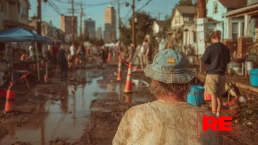
If we’re serious about changing that, then it starts with redefining success. Maybe it’s not about scale. Maybe it’s not about going national or building a brand or becoming the next TED Talk success story. Maybe it’s about being deeply effective in a few lives at a time. Maybe it’s about turning down the funding that demands we water down the truth. Maybe it’s about building models that other people can copy without us being the center. We say we want impact—but what we really want is proof that the help is real, lasting, and not a photo shoot. Until we value that over the press release, the cycle will keep spinning, and the people will keep falling through the cracks.
Bay Area News Group. (2025, June 27). Nonprofit executive compensation in San Francisco: A Chronicle analysis. San Francisco Chronicle. https://www.sfchronicle.com/sf/article/homeless-nonprofit-executive-pay-20392408.php
CharityWatch. (2024). Nonprofit compensation packages of $1 million or more. CharityWatch. https://www.charitywatch.org/nonprofit-compensation-packages-of-1-million-or-more/
Independent Sector. (2024, June 24). Strengths and challenges in a time of division: Trust in nonprofits and philanthropy report. https://independentsector.org/wp-content/uploads/2024/06/IS-Trust-in-Nonprofits-and-Philanthropy-Report_6.25.2024.pdf
BoardEffect. (2023). Public trust in nonprofits: What boards need to know. https://www.boardeffect.com/blog/public-trust-in-nonprofits-what-boards-need-to-know/
Nonprofit Quarterly. (2024). How much do Americans trust nonprofits? It’s complicated. https://nonprofitquarterly.org/how-much-do-americans-trust-nonprofits-its-complicated/
Pew Research Center. (2025, May 8). Americans’ declining trust in each other and reasons behind it. https://www.pewresearch.org/2025/05/08/americans-trust-in-one-another/
University of Iowa Nonprofit Leadership Program. (2023, June). 2023 nonprofit hiring trends & salary guide [PDF]. https://nlp.uiowa.edu/sites/nlp.uiowa.edu/files/2023-06/2023%20Nonprofit%20Hiring%20Trends%20and%20SalaryGuide.pdf
If this work helped you understand something more clearly, support it by:
Buying the books | Visiting the Newsstand | Making a donation
One voice. One message. One Goal. Truth.
No spam. No schedules.
The Truth is Underfunded. That's Why This Exists.
No ads. No sponsors. No filter. Just the truth, unpacked, explained, and raw.
Defining Policy. Power. Consequence.
See how to add us to your home screen


Deployed at Home: What 700 Marines Reveal About Power, Law, and the American Line
The Ripple Effect
-News and Commentary-
Deployed at Home: What 700 Marines Reveal About Power, Law, and the American Line
By TP Newsroom Editorial | Ripple Effect Division
If this work helped you understand something more clearly, support it by:
Buying the books | Visiting the Newsstand | Making a donation
One voice. One message. One Goal. Truth.
No spam. No schedules.
The Truth is Underfunded. That's Why This Exists.
No ads. No sponsors. No filter. Just the truth, unpacked, explained, and raw.
Defining Policy. Power. Consequence.
See how to add us to your home screen
I saw the headline and paused. “700 Marines deployed to California.” No context. No explanation. Just a flash alert with more heat than clarity.
Then I jumped over to Facebook and it was already a mess. One post called it illegal. Another said it proves we’re being invaded. Then came the usual flood of Constitution quotes from folks who never cared about Article anything until now.
But most of the noise had one thing in common: it was wrong. Not because people are dumb. Because nobody ever broke this down for them in plain language. So let’s do that now. No drama. No politics. Just the framework. The actual rules.
The first thing we need to talk about is Title 10. This is the part of U.S. law that governs the use of federal military forces. When someone says the president is calling in the military, this is usually the bucket they’re reaching into. Title 10 allows the federal government to activate military branches, including the Marines—under direct command of the President or Secretary of Defense. It’s what kicks in when there’s a war, a major federal emergency, or a large-scale operation requiring national coordination.
Then there’s Title 32, which is different. Title 32 covers the National Guard, but under state control with federal funding. In other words, a governor can use their own Guard troops for local emergencies, like hurricanes or riots, and the federal government picks up the tab. The troops wear the uniform, but they’re still operating as part of the state.
Now here’s the part that gets people twisted: Posse Comitatus. This law goes all the way back to 1878, and it basically says that the U.S. military can’t be used as a domestic police force. You can’t have soldiers walking your streets doing traffic stops, arresting civilians, or running surveillance without strict, specific exceptions. That law was written to keep the military from turning into a federal police state. It’s about separation—defense abroad vs. policing at home.
But there are exceptions. And that’s where the Insurrection Act comes in. This law is the loophole, written into the same code, that says in extreme circumstances—like rebellion, invasion, or when local law enforcement can’t maintain order—the President can bypass Posse Comitatus and use active-duty military on American soil. It’s rare. It’s controversial. But it’s legal.
Trump’s decision to deploy 700 Marines to California wasn’t pulled out of thin air. It’s part of a broader narrative he’s pushing—one where immigration is painted as a threat big enough to justify military force. Whether you agree with the move or not, the legality of it depends entirely on how the deployment is structured. If those Marines are under Title 10 authority and being used in support roles—not policing or arresting—it may be completely lawful. If it veers into boots-on-the-ground enforcement, that’s where it crosses lines.
This is where people get stuck: they hear “military” and assume it must be illegal. But the legal framework is built for flexibility. And that’s exactly what’s being tested right now. What makes this moment risky isn’t just the deployment—it’s the precedent. Once you start using active-duty military to address civilian issues like immigration, you blur the lines between national defense and domestic control.
And history tells us once that line is crossed, it’s hard to walk it back.
So yes, it’s complicated. Yes, there are legitimate legal questions. But if we’re going to argue about it, let’s at least be arguing from a place of truth—not panic. That’s the point of The Truth Project. No spin. Just structure. And the clarity to make sense of the chaos.
Let’s dig deeper.

This deployment didn’t happen in a vacuum. It came right after a wave of headlines about increased border crossings and alleged cartel activity leaking into southern California. It plays directly into Trump’s campaign narrative that immigration equals chaos. But legally, the use of Marines under Title 10 means something specific, they are under federal control, not local authority. That distinction matters. A lot.
Federal troops under Title 10 can support border patrol with logistics, construction, intel, and even surveillance, but they cannot make arrests or act as law enforcement without invoking the Insurrection Act. That’s the firewall. And if you don’t see that line clearly, it’s easy to confuse support with suppression.
Now let’s talk history.
The Posse Comitatus Act was signed in 1878, largely as a reaction to the Reconstruction era. After the Civil War, federal troops were used across the South to enforce new laws and civil rights protections. White Southern leaders didn’t like that. So, when they regained power, one of the first things they pushed for was to get the military out of law enforcement. Hence, Posse Comitatus, Latin for “power of the county.” The idea was that civilian law should be enforced by civilian authorities, not soldiers.
Fast forward to today, and the core of that law still stands. But it’s been tested. During Hurricane Katrina, for instance, debates broke out over the use of military assistance when local systems collapsed. After 9/11, the boundaries got even murkier with the introduction of the Patriot Act and growing federal surveillance powers. And during Trump’s presidency, those boundaries were pushed harder than they’ve been in decades.
So here we are again. Another test. Another chapter in the ongoing question: Who gets to use force on U.S. soil, and under what conditions?

And let’s not forget optics. When the public sees Marines in uniform standing on American streets, even if they’re just there for support, it sends a message. Whether intentional or not, it creates the perception of martial control. And perception, in politics, is half the game.
This is why it matters how we talk about this stuff. Language matters. Framework matters. Most people aren’t reading the fine print in the U.S. Code. They’re scrolling headlines, reacting to soundbites, and building their opinions based on emotion, not structure.
So we’re going to keep walking through it. Piece by piece. Not to push fear or praise. But to pull back the curtain and explain the machine.
Because when power moves like this, you better understand the blueprint. That’s the only way to know whether it’s being followed—or rewritten in real time.
But here’s the deeper issue: once you start normalizing military deployment for political optics, you invite abuse.
And I don’t say that lightly. Because we’ve seen this pattern before. Not just in the U.S., but globally, leaders flexing military muscle to stir fear, distract from policy failures, or appear “tough” right before an election cycle. It works. People feel like something is being done. But it also chips away at the wall that’s supposed to separate political agendas from military operations.
And that wall matters. Without it, you start confusing patriotism with obedience. You start teaching the public to expect soldiers instead of solutions. The more you lean on uniforms to solve social issues, whether it’s immigration, protests, or public safety, the less you’re using policy, community, or law.
We saw this in D.C. in 2020. Peaceful protesters in Lafayette Square were met with tear gas and military police. Not because it was necessary—but because the image made a point. That’s the danger here. It’s not always about law. Sometimes, it’s about the message.
And that brings us to now. Whether you support Trump’s move or not, the truth is that this moment is being engineered to trigger reaction. Fear drives engagement. Engagement drives power. And the people caught in the middle—immigrants, military families, everyday citizens—are being used as props in a much bigger stage play. So what do we do with that? We stay grounded. We keep asking real questions. Not just “is this legal?” but “is this healthy?” Not just “can the president do this?” but “should any president normalize this?”
This isn’t about left or right. It’s about how close we let the military come to our front doors before we stop and say, “enough.”
Because once the boots are on the ground, it’s already too late to ask where the line was. Let’s stop pretending this is just about California, or just about immigration, or just about Trump. It’s not. This is about how power moves and who notices when it does.

Because what we’re watching isn’t a one-off decision. It’s a pattern. And patterns don’t start big and loud. They start subtle. They start with headlines you scroll past. With language that sounds reasonable. With moves that feel like “just a precaution.” And by the time the pattern becomes clear, it’s already policy. It’s already precedent. And you’re already too late to push back.
Deploying 700 Marines under Title 10 might be technically legal. But legality has never been the full measure of right and wrong. Jim Crow was legal. Japanese internment was legal. Slavery was legal. The point is: legality is a floor, not a ceiling. It tells you what’s allowed, not what’s just.
And when you keep lowering the bar for what’s allowed, don’t act surprised when people stop looking up.
Let’s be honest. A lot of Americans are numb. Not stupid, numb. We’ve had so much political noise, culture war hype, scandal, violence, and chaos thrown at us over the last 8–10 years that it’s easy to let your guard down. Easy to just assume that “this must be normal now.” And that’s the trap.
Because while we’re distracted, the rules are being bent. Rewritten. Or just ignored.
And we feel it. Even if we don’t always have the words. We feel it in the rise of conspiracy thinking. We feel it in the tribal energy behind every news story. We feel it in the growing sense that the government isn’t neutral anymore, t’s either a savior or an enemy, depending on your side. That’s a dangerous place to be. Not because disagreement is bad—but because shared reality becomes impossible.
So let’s bring it back to the Marines.
Ask yourself why this decision was made now. Why 700 Marines. Why California. Why this language. Why this timing. Because the truth is, this isn’t about solving the border crisis. If that were the case, there’d be a coordinated strategy across federal and state lines, involving housing, asylum, processing, enforcement, and community resources. But there’s no real plan. Just a show of force. You don’t fix immigration with uniforms. You fix it with infrastructure.

But this isn’t about fixing. It’s about signaling. It’s about sending a message that says “we’re in control,” even if the reality on the ground is the same chaos as before. That’s the playbook. Perform control. Project power. Pretend solutions.
And it works. Because it taps into fear. It gives people the illusion that something is being handled, when in truth, nothing structural has changed. The only thing that’s shifted is the threshold for how comfortable we are seeing the military involved in domestic life.
And here’s where that slope gets slippery. Today, it’s Marines on the border. Tomorrow, it’s soldiers assisting during “election security.”
Or standing by during “protests.”
Or “protecting” polling locations.
Or being “on hand” for “civil unrest” after a controversial court ruling.
You see how that logic builds? You don’t need to be paranoid to connect those dots. You just need to look at history.
Because once something is normalized, it’s no longer questioned. And the people in power, any party, any president start reaching for that tool more often. Because it works. And because we’ve stopped asking them why. That’s the danger of this moment. Not the deployment itself. But the silence around it.
Look around. Where’s the outrage? Where’s the press conference from Congress? Where’s the bipartisan pushback saying, “Hey, let’s pause and talk about the implications of this”? Nowhere. And that tells you everything. We’ve reached a place where the military can be deployed on U.S. soil, with almost no public debate, and half the country just shrugs. That should scare you. Not because it means tanks in the streets tomorrow. But because it means we’ve lost track of the guardrails. The military was never meant to be a tool for domestic political theater. It was meant to defend the country, not define it.
And the longer we confuse those roles, the easier it becomes to rewrite the rules in plain sight.
Here’s what makes this even more complicated: the military isn’t the villain here. Most soldiers, Marines, and officers don’t want to be involved in domestic issues. They signed up to serve, not to be pawns in a partisan chess game. But they don’t write the orders—they follow them. That’s the chain of command.
So the responsibility doesn’t fall on the boots on the ground. It falls on us.
On the press to ask better questions.
On the public to stop getting distracted by the drama and start paying attention to the structure.
On leaders—if there are any left who still care about the republic more than reelection, to say: “enough.”
Because this isn’t a red state vs. blue state issue. This is a power vs. people issue. And if we’re not careful, we’re going to wake up one day and realize that we’re living in a country that still feels like a democracy—but no longer functions like one.
So what do we do?
We do what The Truth Project was built to do.
We explain.
We strip the emotion.
We walk people through the systems.
We make the invisible rules visible again.
Because once you see how power works—how it moves, how it hides, how it justifies itself—you can’t unsee it. And that’s when you stop being a spectator and start being a force. This isn’t about being anti-military. This is about being pro-boundaries. Because when it comes to government power, boundaries aren’t suggestions. They’re the only thing that keeps authority in check.
And when those boundaries blur, your rights are the first thing to fade.

Here’s the thing about power: it never disappears. It just shifts. Sometimes quietly. Sometimes violently. But it always moves. And the people who survive those shifts, the ones who stay grounded when the ground is shaking, are the ones who saw it coming. Not because they were prophets. But because they were paying attention.
We’ve reached a point in American history where we have to start asking harder questions. Not about what’s legal. But about what’s sustainable. Not just what’s possible, but what’s wise. Because what we’re watching with these deployments—what we’ve watched for years now across politics, media, law enforcement, surveillance, and public trust, is a slow but steady unraveling of institutional clarity. Everything’s getting murkier. Meaner. More performative. Less principled. And the truth is, empires don’t usually explode.
They erode.
The Roman Empire didn’t fall in one night. It rotted from within while pretending to still be golden. The Ottomans, the Macedonians, the British, all of them had a season where their power seemed inevitable. Permanent. Unshakeable. Until it wasn’t. Most empires last about 200 years at their peak. Not forever, just long enough to feel like they’ll never fall. Every few generations, the world resets. Not because anyone planned it that way, but because power doesn’t care about your traditions. It only respects leverage. And if you lose that, economically, morally, globally, it moves on.
So where does that leave us?
Is America still the empire? The leader of the free world? The model of democracy? Or are we watching the slow start of something else—a shift toward a new global order where our grip loosens and another nation steps up? I don’t know. Nobody does. But I know the signs. And this is one of them.
When you see a nation start using military power to fix civilian problems, that’s not strength, that’s desperation. That’s a government trying to force order because it can’t earn trust. That’s what countries do when the center can’t hold and the system starts eating itself. This isn’t a left or right issue. This is a collapse-of-consensus issue.
And collapse doesn’t always look like chaos. Sometimes it looks like control. Like curfews and checkpoints. Like “emergency authorizations.” Like “temporary measures” that slowly become permanent. Not because someone’s twirling a villain’s mustache behind the scenes, but because we let too much slide. We made too many excuses. We got too tired to keep watch. This moment matters. Not because of what happens this week, but because of what becomes possible next month. Next year. Next administration.
Once the military is treated like a solution, every crisis becomes an excuse.
A protest becomes a threat.
A policy debate becomes a national emergency.
An election becomes a security risk.
And the machine starts running on fear instead of law.
So what do we do now?
We remember that the American experiment was never guaranteed. It was an idea. One that only works if people believe in it enough to defend it—not just with flags and slogans, but with discipline. With truth. With real checks and balances, even when it’s inconvenient.
That’s what The Truth Project is about.
It’s not about outrage.
It’s about clarity.
It’s about helping people spot the shift before it becomes a slide. Because if this really is the beginning of a new chapter in the American story—whether that means reform or reckoning or something we can’t yet name—then the job now isn’t to pick sides. It’s to stay awake.
And if nothing else, let this be the moment where we stop waiting for someone else to sound the alarm.
Because it’s already ringing.
Brennan Center for Justice. (2025, June 12). Brennan Center: The Posse Comitatus Act explained. Retrieved from https://www.brennancenter.org/our-work/research-reports/posse-comitatus-act-explained
Kealy, S. J. (2003). Reexamining the Posse Comitatus Act: Toward a right to civil law enforcement. Yale Law & Policy Review, 21, 383–412. https://scholarship.law.bu.edu/faculty_scholarship/2095
Law.LSU.edu. (2018). The Posse Comitatus Act and related matters [Congressional Research Service Report R42659]. https://biotech.law.lsu.edu/blog/R42659-1.pdf
National Immigration Law Center. (2025, January). FAQ: Use of the military for immigration enforcement. https://www.nilc.org/resources/faq-on-use-of-the-military-for-immigration-enforcement/pdf scholarlycommons.law.emory.edu+15
University of Texas System. (2020). Posse Comitatus Act: Training bulletin TB026. https://www.utsystem.edu/sites/default/files/offices/police/policies/TB026PosseComitatus.pdf
Air University (AF). (2017). The origins of the Posse Comitatus. https://www.airuniversity.af.edu/Portals/10/ASPJ/journals/Chronicles/baker1.pdf
Protect Democracy. (2024, September 25). The Insurrection Act and National Guard authorities, explained. https://protectdemocracy.org/work/domestic-deployment-military-explained/
Reuters. (2025, June 8). Does U.S. law allow Trump to send troops to quell protests? https://www.reuters.com/world/us/does-us-law-allow-trump-send-troops-quell-protests-2025-06-08/
If this work helped you understand something more clearly, support it by:
Buying the books | Visiting the Newsstand | Making a donation
One voice. One message. One Goal. Truth.
No spam. No schedules.
The Truth is Underfunded. That's Why This Exists.
No ads. No sponsors. No filter. Just the truth, unpacked, explained, and raw.
Defining Policy. Power. Consequence.
See how to add us to your home screen

Deportation by the Numbers: What Trump Didn’t Do
The Ripple Effect
-News and Commentary-
Deportation by the Numbers: What Trump Didn’t Do
By TP Newsroom Editorial | Ripple Effect Division
If this work helped you understand something more clearly, support it by:
Buying the books | Visiting the Newsstand | Making a donation
One voice. One message. One Goal. Truth.
No spam. No schedules.
The Truth is Underfunded. That's Why This Exists.
No ads. No sponsors. No filter. Just the truth, unpacked, explained, and raw.
Defining Policy. Power. Consequence.
See how to add us to your home screen
I woke up to a headline on the news that said, “Trump frustrated with current deportation rates—plans to increase ICE operations to fulfill campaign promises.” Now, depending on how you hear that, it sounds like he’s the man at the wheel. A tough-on-immigration, no-nonsense enforcer disappointed that deportations are too soft under his watch. But here’s the thing, I know better.
So I paused, sat down, and started digging. And what I found?
The numbers don’t back that up. Not even close. Let’s walk through the raw math, strongest to weakest, so we’re all looking at the same receipts.
Joe Biden, from 2021 to 2023, oversaw more than 4.4 million deportations in just two years. That includes Title 42 expulsions, which was an emergency removal used during the pandemic to turn people away at the border without processing, under the claim of public health safety, along with formal removals and voluntary returns.
In fiscal year 2022 alone, over 2.3 million removals and returns were recorded, and by 2023, the administration was averaging over 6,300 deportations per day, mostly from the southern border. Barack Obama, from 2009 to 2017, logged approximately 3.2 million deportations over two full terms. His peak year was 2012, with over 409,000 formal removals. He even earned the nickname “Deporter in Chief” from immigrant rights groups. Most of those removals were processed through the Secure Communities program which is a system that automatically checked fingerprints from local police arrests against federal immigration databases, flagging undocumented individuals even if they had no convictions or were picked up for minor infractions.
Donald Trump, across his full term from 2017 to 2021, oversaw about 1.2 million deportations total. In 2017, it was 226,000. In 2018, 256,000. In 2019, 267,000. And in 2020, during the pandemic, it dropped to 185,000. But even before COVID, Trump’s highest year didn’t come close to Obama’s. Let that soak in. The man being painted as the most aggressive immigration enforcer didn’t even crack the top two, not in totals, not in yearly averages, not in border expulsions.
So why does it feel like Trump was doing more?
Because of how the story is framed. Trump’s era was loud. The raids were televised. ICE activity was in your face. Kids in cages. Border wall speeches. Everything was branded like a WWE storyline. That showmanship created the illusion of dominance, even when the data said otherwise. Meanwhile, Biden and Obama were running a quieter, colder machine. No shouting. No photo ops. No show. Just systems. Just process. Just thousands of people removed daily, efficiently, and silently. So when I hear anchors say Trump is “disappointed” in the current deportation numbers, I hear a man realizing he got outperformed by the very Democrats he tried to paint as soft.
This is not opinion. It is math. And this is exactly why The Ripple Effect exists. To strip the spin, kill the noise, and show you what is really happening beneath the headlines.

Let’s start with the obvious: Donald Trump may not have led in deportations, but he dominated in something else, messaging. The numbers show he was behind. But the story? The story made him look like the only man with a plan. That disconnect is not accidental. It is designed.
This is how political framing works: it is not about what is true—it is about what is felt. The GOP understands that. They do not have to lead in metrics. They just have to lead in message control. And Trump, whatever else he is, mastered the show.
From the moment he came down that escalator, his strategy was rooted in fear. Not data. Not policy. Fear.
Fear of invasion. Fear of the other. Fear of a border collapse. And every time ICE made a public arrest, every time Border Patrol marched a group in front of a news camera, that fear got legs. It became real in the minds of voters. The actual mechanics of immigration enforcement? Boring. Paperwork. Court dates. Removal proceedings. Detention logistics. None of that makes for great TV. So it gets cut. What we are left with is performance. What we are fed is theater. And Trump understood how to direct the show. Now contrast that with the Democrats. Biden’s administration quietly moved more bodies, yes. But they did it with zero narrative control. No cohesive framing. No national conversation about strategy. Just stats buried inside DHS reports and a press office that can barely keep up.
Obama had the same problem. He deported millions, but lost the story. So instead of being seen as a strong enforcer, he got labeled weak by the right and heartless by the left. No win. No cover. Just backlash.

That is what framing does. It decides who gets credit, who gets blamed, and who gets forgotten—even when the scoreboard says otherwise.
And the scoreboard right now? It says this: Biden is leading on removals, Trump is leading on messaging, And the American public is being led in circles. It is the same playbook that sells lies as leadership and optics as outcomes. And we fall for it—over and over—because we have been trained to believe the man with the loudest mic must be the one doing the most work.
But truth does not raise its voice. It just stands. Quiet. Undeniable. Waiting for somebody to look beneath the noise. This part right here? That is the work.
Here’s the thing people forget: deportation doesn’t just disappear when the news stops talking about it. Whether it’s a Democrat or a Republican in office, the machine keeps moving. Quietly. Relentlessly. But the moment it stops looking like it’s moving, politicians panic. And that panic? That’s when things get dangerous. Let’s zoom in on Trump. When his administration realized he was falling behind Biden and Obama in deportation numbers, the conversation shifted. He wasn’t leading the scoreboard, and that bruised his brand. He ran on immigration. It was supposed to be his issue. His leverage. His proof of “strength.”
By the middle of his term, Trump had deported fewer people than either of the two Democratic presidents before him. Biden’s administration was quietly outpacing him in raw volume. Obama had already set records during his own two terms. And when that reality finally caught up to Trump? He didn’t adjust the strategy. He didn’t improve the process. He didn’t make policy more efficient. No. They went for optics. He demanded the story change.
And that’s where the Home Depot incident comes in.
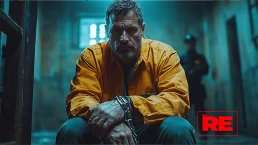
Reports say Stephen Miller—Trump’s senior adviser and architect of his immigration platform—was in a heated meeting with top ICE officials. Trump had been pressing the same question over and over: Why are our deportation numbers so low? Why aren’t we doing more? Why aren’t we out in the field getting them?
That’s when one of the ICE leaders fired back. Frustrated. Done with the back-and-forth. He said, on record:
“You want numbers? I can go to Home Depot right now and get you 30 undocumented immigrants before lunch.” And then they did it.
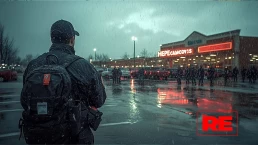
They got in the car, drove to a Home Depot in Washington, D.C., and arrested 30 undocumented immigrants on the spot. No warrants. No investigations. No court orders. Just presence. Just bodies. Just optics.
After that, policy shifted. They stopped targeting based on risk or offense and started targeting based on volume. Arrest first. Ask later. Everybody was fair game.
And that’s when immigration enforcement went from systematic to desperate. It became a public chase scene—Trump trying to catch up to the deportation totals of the men he once called weak.
This is what happens when ego outruns policy. When deportation becomes a scoreboard, people become pawns. And the numbers, even when achieved through chaos, get framed as “strength.”
But you can’t confuse volume with strategy.
The truth is, the policy wasn’t broken. The optics were. And Trump, obsessed with his image, didn’t want to fix the system. He wanted to fix the camera angle.
From that moment forward, everything changed.
The policy quietly shifted. It stopped being about threat level, criminal records, or public safety risk. It became about accessibility. Visibility. Volume. The directive became: arrest first, ask questions later. It didn’t matter if someone was waiting on paperwork, had no priors, or had been living here for twenty years. If you were undocumented and easy to grab, you were now fair game.
Immigration enforcement went from systematic to desperate. It turned into a public chase scene, built to make Trump look like the strongman he had always claimed to be because at that point, it wasn’t about protecting borders. It was about protecting ego.
And here’s where it gets even more twisted: it worked.
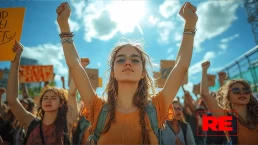
The public, by and large, didn’t know the numbers. They didn’t see the daily DHS stats. What they saw was headlines. Images. ICE raids on the evening news. They saw buses. They saw shouting. They saw badges and bodycams. And in their minds, that translated to action, even if the reality underneath was chaotic, directionless, and aimed more at appearances than accountability. What should’ve been a data-driven, risk-based system became theater.
And the people caught in it? They were not nameless. They were fathers pulled while working. Mothers arrested during school drop-off. Day laborers detained for trying to feed their kids. No charges. No appeals. Just paperwork, vans, and silence. The kind of silence that follows you even after you’re gone. This wasn’t about enforcement. This was about a narrative being forced into existence by any means necessary. Trump wasn’t leading. He was catching up. Desperately. Loudly. Sloppily. And the media, knowingly or not, helped him do it.
When they reported on the ramp-up without context, when they echoed the “tough on immigration” soundbites without showing the math, they gave the performance legitimacy. They sold panic as power. But here’s the truth that outlives the spin: you can’t confuse noise for leadership. And you can’t confuse volume for vision.
Trump didn’t fix the system. He didn’t improve outcomes. He just widened the net and turned the cameras on. And when the story didn’t go his way, he changed the scene.
What is actually happening?
A shift from risk-based enforcement to mass roundups designed to inflate deportation stats and recapture a failing political narrative.
Why is it happening now?
Because Trump’s brand was immigration—and when the numbers didn’t prove dominance, they manufactured dominance by changing tactics.
Who gets swept up?
Day laborers. Service workers. Parents. People without records. People waiting on paperwork. Anyone who fits the visual of “illegal” when a camera is near.
Where is it happening?
Public. Strategic. Loud. Parking lots, bus depots, neighborhoods with cameras. Not crime zones. Narrative zones.
How does it play out?
The public sees raids. Trump gets to talk tough. Supporters feel like order is being restored. And communities lose fathers, mothers, and providers, silently, permanently.
This isn’t enforcement. It’s stagecraft. And we have to stop mistaking noise for leadership. Because what Trump gave us wasn’t a secure border. It was a reality show with consequences. He was not ahead. He was chasing the scoreboard. And somewhere along the line, immigration policy stopped being about America and started being about ego.
The numbers tell one story. The headlines told another. And the people who disappeared in between? They didn’t have a mic.
Migration Policy Institute. (2024). Comparing the Biden and Trump deportation records. https://www.migrationpolicy.org/article/biden-deportation-record/
Migration Policy Institute. (2023). The Obama record on deportations: “Deporter in Chief” or not? https://www.migrationpolicy.org/article/obama-record-deportations-deporter-chief-or-not
Pew Research Center. (2014, October 2). U.S. deportations of immigrants reach record high in 2013. https://www.pewresearch.org/short-reads/2014/10/02/u-s-deportations-of-immigrants-reach-record-high-in-2013/
FactCheck.org. (2024, February 27). Breaking down the immigration figures. https://www.factcheck.org/2024/02/breaking-down-the-immigration-figures/
FactCheck.org. (2024, February 27). Breaking down the immigration figures. https://www.factcheck.org/2024/02/breaking-down-the-immigration-figures/
If this work helped you understand something more clearly, support it by:
Buying the books | Visiting the Newsstand | Making a donation
One voice. One message. One Goal. Truth.
No spam. No schedules.
The Truth is Underfunded. That's Why This Exists.
No ads. No sponsors. No filter. Just the truth, unpacked, explained, and raw.
Defining Policy. Power. Consequence.
See how to add us to your home screen
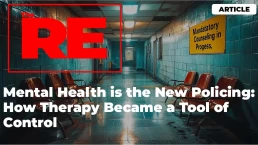
How Mandatory Therapy Became a Quiet Tool of Control
The Ripple Effect
-News and Commentary-
How Mandatory Therapy Became a Quiet Tool of Control
By TP Newsroom Editorial | Ripple Effect Division
If this work helped you understand something more clearly, support it by:
Buying the books | Visiting the Newsstand | Making a donation
One voice. One message. One Goal. Truth.
No spam. No schedules.
The Truth is Underfunded. That's Why This Exists.
No ads. No sponsors. No filter. Just the truth, unpacked, explained, and raw.
Defining Policy. Power. Consequence.
See how to add us to your home screen
It started with good intentions. Support instead of punishment. Compassion instead of correction. Schools began adding counselors. Workplaces rolled out wellness programs. Courts started pushing therapy instead of jail time. On paper, it looked like progress. A shift toward empathy. But over time, the lines began to blur. Therapy stopped being a choice. It became a requirement. A condition. A checkbox for compliance. And somewhere in that shift, the promise of care turned into a system of control.
Today, therapy is everywhere, but not always in the way people imagine it. It shows up in court mandates, HR policies, school referrals, and case management plans. It is built into sentencing deals, student discipline, and even job retention programs. And while these services can help some people, they also come with rules, deadlines, and reports. Miss an appointment, and it is a violation. Question the process, and it is defiance. You do not just receive care, you are monitored through it. Your progress is not measured by healing. It is measured by compliance.
In schools, students flagged for behavior are often referred to counseling. But the counseling is not always therapeutic. Sometimes it is just a form of surveillance. Notes are taken. Parents are called. Authorities looped in. A child struggling with grief, hunger, or trauma is suddenly under watch, not care. And the interventions come with consequences. In some districts, mental health referrals are tied to discipline records. In others, they become a step toward formal diagnoses that follow students across grade levels. What begins as support quietly builds a file.
The same logic extends into the workplace. Employers now ask employees to attend mental health seminars, complete resilience modules, or meet with wellness advisors. These efforts are branded as supportive. But behind the language of care is a structure that still prioritizes performance. Employees who do not respond well, who burn out, or who push back are flagged as unfit, and labeled replaceable. And because the tools of therapy are now embedded in HR systems, people are less likely to speak freely. They edit their emotions. They manage appearances. They learn that saying the wrong thing could trigger a process they do not control.
In the courts, it is even sharper. Judges frequently assign therapy as part of probation or diversion. It sounds humane, better than jail. But mandated therapy is not the same as voluntary care. You are assigned a provider. You are required to attend. You are evaluated by someone who reports directly to the court. You are not a client. You are a case. And if you question the process, if you struggle to connect with the therapist, or if you miss a session for reasons beyond your control, the system does not ask why. It labels you noncompliant.
I used to think therapy was about healing. That sitting across from someone with training and compassion could help a person sort through pain, confusion, or stress. And for many people, that is still true. But when therapy becomes an arm of institutional management, when it is assigned, monitored, and enforced, it stops being about healing and starts becoming about order. About control. And in those moments, it does not feel like care. It feels like supervision dressed in softer clothes.

The institutional use of therapy has expanded so quietly that most people do not realize how embedded it has become. It is no longer confined to clinics or private offices. It now exists inside school districts, courtrooms, child welfare agencies, and corporate compliance departments. Mental health language is used to justify disciplinary actions, gatekeep opportunities, and frame individuals as either cooperative or resistant. And the line between care and coercion is no longer clear.
In the criminal legal system, mandated therapy is often presented as an alternative to incarceration. But this alternative comes with strings. A person must complete a set number of sessions, attend group classes, follow behavioral plans, and submit to evaluations. These conditions are not designed for emotional healing. They are designed to produce reports. A therapist becomes part of the monitoring process, submitting notes to probation officers or judges. The therapeutic relationship is reshaped into a data stream, feeding back into the same system it is supposed to offset. And if a person cannot keep up, due to work, transportation, mental illness, or trauma, they are penalized. In some jurisdictions, failure to attend mandated therapy can result in probation violations, warrants, or reincarceration.
The same structure appears in schools. A student flagged for defiance, outbursts, or chronic absence may be referred to school-based therapy. But instead of receiving trauma-informed care, that student is often assigned a counselor whose primary job is to report behavior. Counseling notes can be reviewed by school administrators. Parents may be contacted without consent. In some districts, mental health referrals trigger mandatory reporting procedures, placing students under scrutiny instead of support. What begins as a chance to talk becomes a pathway to discipline.
In child welfare cases, mandated therapy is standard. Parents are told to attend anger management, parenting classes, or psychological evaluations. These services are often required to regain custody or even visit their children. But access is uneven. Some families wait weeks or months for an open slot. Some cannot find providers in their language or within their transportation range. Others attend sessions but struggle with the format—group therapy that does not reflect their lived experience or therapists who do not understand their cultural background. None of those factors excuse noncompliance in the eyes of the system. The requirements are rigid. The consequences are real. And the therapists, who should be offering care, become agents of accountability.
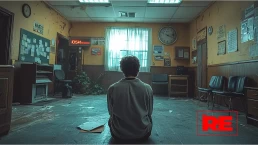
Workplaces have adopted a different approach. They frame therapy and wellness as part of employee benefit packages. But when participation becomes monitored, when mood tracking is encouraged, or when mental health becomes a checkbox on performance reviews, it stops being a benefit and becomes a tool. Some companies contract with mental health platforms that track engagement. Others encourage employees to disclose challenges, then use those disclosures to justify disciplinary action or terminations. The boundary between help and surveillance collapses. And employees learn to mask their burnout rather than risk being flagged.
This shift is often justified by appealing to science. Mental health matters. Early intervention helps. But the way institutions implement these ideas often reinforces control rather than compassion. Therapy becomes one more way to categorize people. Compliant or difficult. Improving or failing. Fit or unfit. The original intent—emotional healing—gets lost in translation. What remains is the infrastructure of care without the freedom to opt in or opt out.
And because therapy sounds soft, few people question it. A judge assigning therapy sounds thoughtful. A school offering counseling sounds progressive. A job recommending mental health days sounds supportive. But without autonomy, all of those gestures become mandates. And mandates—especially when tied to power—change the nature of the exchange. You are no longer being helped. You are being watched and managed.
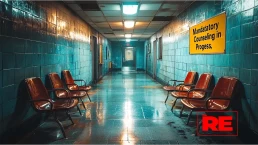
Ask someone who has been through court-mandated therapy how it felt, and you probably will not hear words like healing or clarity. You will hear words like exhausting, mechanical, or performative. People sit in sessions knowing they are being evaluated, not supported. They nod, speak carefully, and say what needs to be said to check the box. There is little space for vulnerability because the risk of being misread is too high. Every sentence feels like it could be used as evidence.
One woman in a diversion program in Pennsylvania described attending group therapy twice a week after a nonviolent offense. The sessions were run by a contracted provider who filed weekly attendance and behavior reports to the court. She said she rarely spoke. Not because she was unwilling, but because she knew any expression of anger or doubt could be interpreted as instability. Her silence was strategic. She wanted to finish the program, not open herself up to more surveillance.
In school settings, students learn quickly what counseling really means. It is not always a space to process. Sometimes it is a place where decisions get made without them. A teenager in Georgia was referred to counseling after showing signs of depression. Within weeks, the counselor contacted school administration about his behavior, and he was moved to an alternative program. He said he felt punished for being honest. His emotional honesty became part of a risk assessment. Instead of receiving support, he was reclassified.
Parents in child welfare cases often describe mandated therapy as a kind of quiet test. They are told to engage fully, but not push back. To express emotions, but not too much. To be vulnerable, but not appear unstable. That balancing act wears people down. One father in Minnesota was ordered to attend parenting classes and weekly therapy after a neglect accusation linked to housing instability. He followed every instruction but felt that nothing he did mattered. The reports continued to describe him as emotionally guarded. When he asked to change therapists, the court denied the request, citing consistency. He completed the program, but the final report still cast doubt on his readiness. His kids remained in foster care.
Even in jobs, the emotional toll is real. People are encouraged to talk about burnout or stress, but only within boundaries that keep the organization comfortable. A project manager in a tech firm described being flagged by HR after a mental health survey revealed she was overwhelmed. She was asked to meet with a wellness advisor. When she disclosed that the workload was part of the issue, she was advised to “adjust expectations” and attend stress reduction workshops. A few months later, she was put on a performance improvement plan. The company claimed it was unrelated, but she saw the connection. Speaking up made her vulnerable. The system offered therapy but not relief.
These stories repeat because the structure is the same. Offer care, tie it to compliance, and treat resistance as failure. The emotional burden lands hardest on those already under pressure—people trying to avoid jail, keep custody, graduate school, or hold onto a paycheck. The system does not make space for real healing because real healing takes time, trust, and safety. Mandated therapy creates none of those. It creates checklists. And once you are on that checklist, it is hard to feel like anything other than a number waiting to be cleared.
This kind of pressure has long-term effects. People stop trusting therapists. Students stop opening up. Parents learn to say what the caseworker wants to hear. Employees stop raising concerns. And slowly, the original goal which was to provide help becomes secondary to the process. Everyone learns how to move through the system. Few ever feel changed by it.
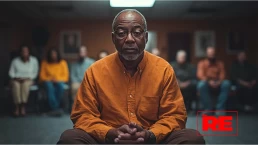
We have reached a point where mental health language is everywhere, but the freedom to actually heal is shrinking. Institutions speak about care, but what they offer is often surveillance in disguise. They tell people to open up, but then penalize what they hear. They frame therapy as a gift, but attach it to conditions. And when care is conditional, it is not really care. It is compliance management. It is behavior tracking. It is soft enforcement with a professional face.
The danger is not just that therapy has been institutionalized. The danger is that its meaning has changed. It no longer exists only to help people process pain or find clarity. It now exists inside systems that need people to behave a certain way. And when therapy becomes part of those systems, it inherits their logic. Deadlines. Metrics. Reports. Risk assessments. You are not a person healing, you are a variable to be managed. And if you do not fit the template then you are a problem to be documented.
This shift should worry all of us. Because the more therapy is used as a condition of freedom, employment, education, or family reunification, the less safe it becomes to be honest. And honesty is the foundation of any real therapeutic relationship. Without it, the process breaks. People stop sharing. They start performing. And the session becomes a stage for meeting requirements rather than a space to be seen. The irony is that a tool meant to reduce harm is now being used to produce quiet, controlled subjects. Not healed people—compliant ones.
What would it look like to reverse this trend? It would start with one core shift: therapy must return to being voluntary. Mandates can be replaced with recommendations. Referrals should come with choice. And evaluations should never be used as tools of punishment. Systems that claim to support people must separate care from compliance. If someone needs help, they should receive it freely, not under threat. And if institutions want trust, they must stop using therapy as a way to report, manage, and sort people.
So what now?
What needs to change? Therapy must be decoupled from disciplinary systems. Care should never be a condition of freedom or survival.
Who is responsible? Judges, school leaders, employers, and agency heads who confuse help with control.
Where does reform begin? In policy, but also in culture—in how we define support and how we treat those who ask for it.
When does it matter most? Before trust is broken and people stop seeking help altogether.
Why does it matter? Because if people associate therapy with punishment, we lose the chance to help them at all. And once that trust is gone, it is hard to rebuild.
Persaud, N., Charles, V., & Ramanathan, S. (2019). Mandated treatment and its impact on therapeutic outcomes: A review. International Journal of Law and Psychiatry, 67, 101–108. https://www.ncbi.nlm.nih.gov/pmc/articles/PMC6474319/
Bowyer, J., Brown, M., & Walsh, K. (2024). School counsellors’ reporting of child maltreatment: Balancing care and surveillance. Journal of Psychologists and Counsellors in Schools, Advance online publication. https://doi.org/10.1177/20556365241262552
Chick, T., & McAlister, K. (2022). Building therapeutic relationships in probation-based mental health treatment. Criminal Justice and Behavior, 47(3), 343–360. https://www.ncbi.nlm.nih.gov/pmc/articles/PMC7483174/
APA Foundation Center for Workplace Mental Health. (2022). 2022 Work and Well‑Being Survey: Employee perspectives on mental health at work. American Psychological Association. https://www.apa.org/pubs/reports/work-well-being/2022-mental-health-support/
APA & SHRM. (2025, May 5). Workplace wellness programs: Health‑care and privacy compliance. SHRM. https://www.shrm.org/topics-tools/employment-law-compliance/workplace-wellness-programs-health-care-privacy-compliance
If this work helped you understand something more clearly, support it by:
Buying the books | Visiting the Newsstand | Making a donation
One voice. One message. One Goal. Truth.
No spam. No schedules.
The Truth is Underfunded. That's Why This Exists.
No ads. No sponsors. No filter. Just the truth, unpacked, explained, and raw.
Defining Policy. Power. Consequence.
See how to add us to your home screen

How the Foster System Quietly Breaks Families in the Name of Protection
The Ripple Effect
-News and Commentary-
How the Foster System Quietly Breaks Families in the Name of Protection
By TP Newsroom Editorial | Ripple Effect Division
If this work helped you understand something more clearly, support it by:
Buying the books | Visiting the Newsstand | Making a donation
One voice. One message. One Goal. Truth.
No spam. No schedules.
The Truth is Underfunded. That's Why This Exists.
No ads. No sponsors. No filter. Just the truth, unpacked, explained, and raw.
Defining Policy. Power. Consequence.
See how to add us to your home screen
They say it is about protection. Safety. A child’s best interest. But the moment the system gets involved, that language becomes a shield. Behind it sits a machinery that does not always protect—it separates, investigates, and regulates. And once it starts, it rarely stops at just a visit. One phone call from a teacher, one report from a neighbor, one missed doctor appointment, and suddenly a parent finds themselves facing a caseworker, then a hearing, then a decision that often feels pre-decided. You can love your kids. You can be doing your best. But in the world of family regulation, that is not always enough. Because the system is not built to ask what support is missing. It is built to ask what control can be asserted.
Every year, more than six hundred thousand children are investigated by Child Protective Services in the United States. The majority of these cases are not about bruises or burns or outright abuse. They are about neglect. And neglect is one of the vaguest, most subjective labels in the legal system. A child not having new clothes. A refrigerator with limited food. A home without electricity. These are often treated not as signs of poverty, but as signs of parental failure. And when poverty gets rebranded as neglect, intervention becomes inevitable. You do not need to hurt your child to lose them. You just need to be struggling.
For families living check to check, that is the danger. The system steps in under the banner of care, but what it actually delivers is pressure. Parents are told to take classes, submit to drug tests, meet with counselors, and prove over and over that they are fit. If they miss a step, it is seen as indifference. If they push back, it is labeled as defiance. And while this process unfolds, the clock keeps ticking. Children are placed with strangers. Bonds are disrupted. And what started as help becomes surveillance. What started as concern becomes control.
I used to think the foster system was a last resort. A place for kids in serious danger. But over time, I started hearing more stories from people who had been in it. And the pattern was consistent. People were not being rescued from violence—they were being removed from instability. And instead of getting help to fix that instability, their families were broken apart. No rent relief. No food assistance. No childcare. Just an investigation, a case plan, and a warning. Comply or lose your child. And once that process starts, it is hard to stop. The system rarely admits fault. It moves forward. Paperwork gets filed. Placements get made. And the original problem—the thing that caused the struggle—never gets solved.
That is the part people do not see. The foster system is not just a safety net. It is a gatekeeper. And like most systems designed to judge worthiness, it does not handle nuance well. It decides who deserves to parent based on metrics that often have nothing to do with love or effort. They have to do with stability, income, appearance, tone, and timing. And if you fall short on those, you are at risk. Not because you are a bad parent. But because the system has no room for your kind of chaos.
The family regulation system is built like a legal maze. At the center are agencies like Child Protective Services, but surrounding them are layers of courts, contractors, and outside organizations that each play a role in deciding who gets to parent and who does not. The process begins with a report, often anonymous. That report can come from anyone—a neighbor, a school, a doctor, a stranger in a grocery store. Once the report is filed, the agency is required to investigate. And from there, what happens next depends less on the facts and more on interpretation.
The problem is that interpretation varies wildly. A messy house can be seen as lived-in or unfit. A parent who is overwhelmed might be viewed as needing help or as a threat. Caseworkers are given wide discretion to make these calls. And they are often overworked, undertrained, and operating under pressure to protect the agency from liability. That means the safer option is always removal. Because if something happens after a child is left in a home, the fallout is public. But if that child is taken away and suffers in foster care, the story rarely makes headlines.
Once a child is removed, the process becomes a case plan. Parents are given a list of requirements—often long, complex, and difficult to complete while also navigating jobs, housing, or mental health challenges. They must attend parenting classes, undergo drug tests, meet with social workers, and appear in court. Sometimes they are ordered to find new housing or employment. Sometimes they are told to cut ties with specific people in their lives. Every step is monitored. Every delay is documented. And each delay becomes another strike against them. Even when a parent is doing their best, the system is designed to doubt them. Progress is treated as temporary. Setbacks are treated as patterns.
Meanwhile, the foster system absorbs the child. Private agencies are paid to manage placements. Nonprofits receive grants to provide oversight, therapy, or supervision. Some of these organizations mean well. Others are focused on meeting quotas. And at the policy level, federal funding is tied more directly to the act of removal than to family preservation. States receive more money when a child is taken into custody than when that same child is safely kept at home. That financial incentive shifts the entire purpose of the system—from supporting families to managing them.
In many jurisdictions, there is no guaranteed legal representation for parents facing removal proceedings. That means some mothers and fathers show up in court without an advocate, trying to defend their right to raise their child against a team of lawyers, social workers, and judges who already see them as a risk. The balance of power is tilted from the start. And even when representation is provided, it is often overburdened or underfunded. Parents get lost in a maze of hearings and paperwork while their children adapt to new homes, new rules, and new expectations.
There is also very little accountability when the system gets it wrong. If a child is taken unjustly, there are no automatic consequences. If a family is separated for years based on weak evidence, there is no default path to repair. Agencies are protected by legal immunity. Caseworkers move on. Families are left to pick up the pieces. And because these stories are rarely told in full, the public perception remains the same. That if a child was removed, it must have been for a good reason.
But that assumption hides a more uncomfortable truth. The system does not always know what is best. It just knows how to document what fits the narrative. And once a family falls into that narrative, climbing out requires more than love, more than proof, and more than compliance. It requires resources, luck, and time—three things the families most affected by this system often do not have.

The system does not just take children. It takes time, dignity, and trust. Families caught in it speak of confusion, fear, and exhaustion—of waking up one day as parents and going to bed labeled as risks. The change is sudden but the recovery is slow. Even when children are eventually returned, the damage is not undone. The relationship has already been tested. The bond already strained. And the memory of being taken lingers, especially for young children who were too small to understand what was happening but old enough to remember how it felt.
Parents talk about the moment they lost control. One woman in Ohio was reported after her son missed too many days of school. She explained that her job schedule made it difficult to get him there on time. Instead of help, she received a visit from a caseworker. Within weeks, she was fighting for custody. Another father in Arizona lost his children after an anonymous call claimed he was not feeding them properly. The kitchen had food, but it was not the kind the caseworker deemed appropriate. That report became a removal order. He spent the next year trying to complete a checklist that changed every month. He never got his kids back.
These are not isolated cases. They are patterns. In many states, the majority of children in foster care are there for reasons tied to poverty, not abuse. And once a child enters the system, they face risks of their own. Studies have shown higher rates of trauma, instability, and long-term mental health struggles among foster children, especially those placed in multiple homes. Some bounce from house to house. Others age out without permanent connections. And many carry a sense of rootlessness that follows them into adulthood.
The impact does not end with the child. Siblings are often separated. Grandparents or extended family members are denied custody because of background checks, old charges, or housing restrictions. Parents are discouraged from contact unless they meet strict visitation rules, often supervised and time-limited. In some cases, they are told not to cry in front of their children during visits. The emotional distance is enforced as a condition of compliance. The system claims to be protecting children, but it rarely protects their need for closeness, consistency, or familiarity.
There is also a deep emotional toll that does not show up in case files. Parents internalize shame. Some spiral into depression, substance use, or isolation. Others give up altogether, believing the system has already made up its mind. For those who do make it through the process and regain custody, the return is rarely clean. Trust is broken. Children may have changed. And the surveillance does not always stop. A parent may live for years with the fear that another visit could come. That one wrong move could open the door all over again.
Outside the home, these cases leave scars on communities. People learn not to speak too openly about their struggles. They avoid doctors, teachers, or counselors who might report them. The presence of the system shapes behavior, not through support but through fear. That fear spreads. It teaches people to keep things quiet, to hide stress, to solve problems alone. And in the process, it disconnects the very families it claims to help.
Even the children who are never removed feel the system’s reach. Some grow up in households where caseworkers come and go. Where parents are exhausted by compliance. Where everyone knows someone who lost their kids, even if only temporarily. That awareness creates its own kind of pressure—a sense that safety is conditional. That love is not enough. That at any moment, a mistake could become a case number.

The greatest misconception about the foster system is that it acts as a safety net. In reality, it functions as a filter. It decides who deserves to parent based not on love, effort, or intent—but on performance. It measures outcomes through paperwork, case plans, and court orders, not human connection. It claims neutrality but operates with bias toward structure, conformity, and compliance. And when families do not fit that mold, they are flagged, investigated, and often separated. This is not the result of a broken system. It is the result of one functioning exactly as designed.
A system that confuses poverty with neglect will always punish the poor. A system that rewards agencies for removing children more than for supporting families will always lean toward separation. A system that fails to guarantee representation, transparency, or oversight will always produce stories of harm, because there is no mechanism to prevent them. These are not accidental outcomes. They are predictable ones. And until the foundation is rebuilt, the stories will repeat.
Reform often starts with language. Advocates now refer to Child Protective Services and similar agencies as the family regulation system. That shift matters. It reframes the conversation. Because what we are seeing is not just protection—it is control. Surveillance dressed as concern. Management framed as care. And for the families caught in its reach, the experience is not therapeutic. It is legal. It is procedural. It is high-stakes and unforgiving. Parents are not being guided. They are being monitored.
So what would real support look like? It would start before the report is filed. It would mean offering housing assistance, food support, mental health services, and community resources without the threat of removal. It would require decoupling support from punishment. If the goal is family stability, then the solution cannot be removal. It has to be investment. But that would mean changing where the money goes. It would mean rewarding prevention, not intervention. And that shift, while simple in theory, challenges a decades-old structure built on bureaucracy and reaction.
What now? What needs to change? The definition of neglect must be separated from poverty. Support must replace surveillance.
Who is responsible? Lawmakers, agency leaders, judges, and the public must stop pretending the current system is neutral.
Where should focus shift? Toward prevention, community support, and restorative family services.
When will reform matter? When families are treated as worth preserving—not managing.
Why does it matter? Because removing a child does not automatically solve anything. It often
Children’s Rights. (2023). The Child Welfare System 2023 Fact Sheet [PDF]. Retrieved from https://www.childrensrights.org/wp-content/uploads/2023/01/CR-The-Child-Welfare-System-2023-Fact-Sheet.pdf
Administration for Children and Families. (2021). Child Maltreatment 2021 Report [PDF]. https://www.acf.gov/cb/report/child-maltreatment-2021 pmc.ncbi.nlm.nih.gov+3
Casey Family Programs. (2024). Economic Supports.
National Children’s Bureau & Casey Family Programs. (2022). The Need for Justice in Child Welfare. Retrieved from https://www.cwla.org/the-need-for-justice-in-child-welfare/
Stanford Law School. (2022). Without Effective Lawyers: The Importance of Legal Representation in CPS Cases [PDF]. Retrieved from https://law.stanford.edu/wp-content/uploads/2022/11/Sankaran_Without-Effective-Lawyers.pdf
National Library of Medicine. (2023). A Systematic Review of the Impact of Placement Instability on Behavioral and Mental Health Outcomes in Foster Care Children. Maternal and Child Health Journal. Retrieved from https://www.ncbi.nlm.nih.gov/pmc/articles/PMC11199447/
If this work helped you understand something more clearly, support it by:
Buying the books | Visiting the Newsstand | Making a donation
One voice. One message. One Goal. Truth.
No spam. No schedules.
The Truth is Underfunded. That's Why This Exists.
No ads. No sponsors. No filter. Just the truth, unpacked, explained, and raw.
Defining Policy. Power. Consequence.
See how to add us to your home screen
The Hidden Cost of Incarceration: How Prison Labor Still Drives Profit in America
The Ripple Effect
-News and Commentary-
The Hidden Cost of Incarceration: How Prison Labor Still Drives Profit in America
By TP Newsroom Editorial | Ripple Effect Division
If this work helped you understand something more clearly, support it by:
Buying the books | Visiting the Newsstand | Making a donation
One voice. One message. One Goal. Truth.
No spam. No schedules.
The Truth is Underfunded. That's Why This Exists.
No ads. No sponsors. No filter. Just the truth, unpacked, explained, and raw.
Defining Policy. Power. Consequence.
See how to add us to your home screen
In America, it’s still legal to force someone to work without pay—as long as they’re in prison. That’s not a metaphor. It’s written directly into the 13th Amendment. Slavery and involuntary servitude were abolished—except as punishment for a crime. That exception has never been corrected, and over the decades, it’s been quietly molded into a system that generates billions. Today, hundreds of thousands of incarcerated people work jobs that look like any other—fields, kitchens, call centers, factories—but for wages that barely exist. Some make cents per hour. Others make nothing at all. The public is told it’s about rehabilitation, but the deeper you look, the clearer it becomes: this is not just a system of discipline. It’s a system of extraction.
Prison labor props up supply chains in nearly every state. Inmates repair roads, clean government offices, fight wildfires, manufacture goods, and even produce products for major corporations through third-party contracts. States save money by using prisoners as workers. Private companies get access to ultra-cheap labor with no benefits, no unions, and no overhead. Refusing to work can result in punishment—loss of privileges, solitary confinement, or denied parole. That kind of leverage turns a sentence into something more than just time. It turns people into a captive workforce. And the longer the system runs, the more it stops resembling justice and starts looking like a business model.
There was a time when I assumed that “doing time” meant isolation, reflection, maybe even accountability. But when you see the logistics of how prison labor operates, it changes the meaning completely. It’s not just about confinement. It’s about production. The system doesn’t just remove people from society—it puts them to work in a way that benefits those on the outside. And the people locked inside it? They’re treated less like individuals and more like inventory. In a country that prides itself on entrepreneurship, it’s not surprising that even incarceration has been turned into an industry. What’s surprising is how normalized it’s become. Somewhere along the line, we stopped asking why. And maybe that silence is what allows it to keep growing.
The prison labor economy does not run on ideology. It runs on contracts, policies, and profit margins. In some states, corrections departments operate like staffing agencies. The difference is the workers do not get to negotiate, switch jobs, or walk away. The system is propped up by a tangled web of legislation and incentives that reward both public and private sectors for keeping incarceration high and costs low. On the surface, these programs are labeled as vocational training or rehabilitation. But look deeper and you will see that many of them have little to do with skill-building and everything to do with sustaining a workforce that cannot say no.
Take the Federal Prison Industries program, known as UNICOR. It is a government-run corporation that employs inmates to manufacture furniture, electronics, textiles, and more, then sells those goods to federal agencies. In 2023, UNICOR brought in over $500 million in revenue. The average inmate worker made less than a dollar an hour. That same model plays out at the state level. In places like Arkansas, prisoners process meat for the state’s agricultural arm. In Florida, they produce uniforms for other incarcerated people. In Washington, inmates have worked in call centers answering unemployment claims during pandemic surges. Every hour worked is an hour that saves an agency money or generates a return for a vendor. These are often under contracts that would be impossible to fulfill at standard labor rates.
For private companies, the benefits are even more pronounced. Through state prison industries or third-party operators, brands can tap into a labor force that is stable, regulated, and extremely low cost. A 2017 report found that at least 4,100 corporations have directly or indirectly profited from prison labor. Some are aware. Some benefit passively through buried contracts in their supply chains. The companies range from small vendors to major global brands. And because the work is often labeled as correctional industries, it avoids many of the wage and safety laws that apply outside prison walls. There are no unions. No job mobility. No sick leave or benefits. The system is designed to ensure labor is always available and always controlled.
The incentives do not stop with companies. Many states rely on inmate labor to balance their own budgets. In Mississippi, inmates must work to gain access to parole, visitation, or other basic rights. In Texas, incarcerated people work full-time jobs without pay while the state avoids millions in staffing costs. Prisons that demonstrate high labor output often receive more funding or support for expansion. That creates a cycle where labor is not just a byproduct of incarceration, it becomes a measure of success. The more productive the prison appears, the more essential it becomes. Once that is the logic, releasing people becomes less profitable than keeping them busy.
There is also the legal structure that supports this cycle. Courts have consistently upheld forced labor in prisons under the 13th Amendment’s exception clause. Lawsuits challenging unsafe or exploitative conditions are often dismissed. In some cases, inmates have been punished for refusing jobs that were dangerous or degrading. Solitary confinement is still used in many states as a consequence for noncompliance. Meanwhile, public interest in the issue stays low. The people affected are not just out of sight, they are locked behind processes most voters never see.
At every level, the design of this economy is meant to operate quietly. Politicians avoid discussing it. Companies outsource the controversy. State agencies manage it like a routine budget line. And the public, for the most part, assumes that if someone is in prison, they probably deserve whatever comes with that sentence. That assumption, that a criminal conviction justifies anything, is what allows the system to keep running. But when you trace the money and remove the excuses, what you see is clear. It is a workforce with no protections, no freedom, and no voice. And that silence is what keeps it profitable.

Talk to someone who has worked a prison job and you will hear the same words over and over: exhaustion, frustration, humiliation. But you will also hear something colder, acceptance. For many incarcerated people, the job is not a stepping stone or a second chance. It is survival. You work because it gets you access to phone time, commissary, or a chance at parole. You work because saying no can cost you a privilege or lock you in a cell for twenty-three hours a day. In some places, you work because there is no other option. Refuse, and you are written up. Refuse again, and it gets worse. What sounds like opportunity on paper quickly becomes coercion in practice.
One former inmate in Louisiana described cleaning prison bathrooms, scrubbing blood off walls and toilets with no protective gear, for thirty cents an hour. Another, who worked in a commercial laundry facility, developed lung issues from prolonged exposure to chemical fumes. Complaints were ignored. Protective equipment was rationed. The justification was always the same. This is prison, not a job site. You do not get to negotiate conditions. You serve your time, and in the process, the system takes everything it can get from you.
When prisoners are injured on the job, they are often denied access to workers’ compensation or outside medical care. Some are disciplined for pretending to be sick or trying to get out of assignments. Others keep going, untreated, just to avoid losing their place on a list or their eligibility for release. That creates a quiet churn of harm. The labor is invisible, the injuries are undocumented, and the long-term impact is written off. Once released, many former inmates carry the damage with them, chronic pain, untreated trauma, and a work history that counts for nothing on the outside.
The mental toll is just as heavy. Incarcerated people are made to work jobs that reinforce their lack of agency. Whether they are manufacturing furniture for state offices, picking vegetables for school lunches, or sewing uniforms they will later be forced to wear, the message is clear. You do not own your time. You do not own your body. And your value is measured by how much you can produce, not by who you are or what you are trying to become. That kind of conditioning does not disappear after release. It lingers. It shows up in job interviews, in relationships, in moments where self-worth is supposed to matter. For many, it never fully goes away.

There are also ripple effects on families. When an incarcerated parent works for pennies, it is not just their time being devalued. It is their ability to support their children, contribute to household stability, or even call home regularly. Phone calls from prison can cost dollars per minute. Commissary prices are inflated. A system that pays people a few dollars a month then charges premium rates for basic needs is not rehabilitating anyone. It is draining whatever support system they have left. And when families cannot afford to keep up, the person inside suffers. The person outside suffers. The pressure spreads.
Even communities feel the impact. Many rural towns rely on prisons for jobs and economic stability. That dependency makes reform harder. A prison with a strong labor program can justify expansion or protect itself from closure. That means fewer incentives to reduce incarceration or improve conditions. In some places, prison labor is seen not as a necessary evil but as a local economic engine. That framing shifts the moral compass. It becomes harder to see inmates as people when their presence fills budget gaps and fuels contracts.
None of this is accidental. It is the result of a system designed to extract value quietly, steadily, and without public resistance. And for the people inside, it is a reminder that time served does not mean time respected. They are not seen as individuals with goals or potential. They are seen as units. Labor units, revenue units, cost-saving units. And when they get out, many face the same obstacles that led them to prison in the first place. But this time, with fewer options and more scars.
The question is not whether prison labor exists. It does. The question is what kind of country normalizes a system that turns punishment into profit while calling it justice. That contradiction is not just a legal loophole. It is a design choice. A country can either build systems that rehabilitate or systems that extract. America chose the latter. It built a model where people are removed from society, stripped of rights, and then placed into roles that serve the very same institutions that benefited from their absence. The courts convict. The prisons contain. The labor is collected. The return on that cycle is not freedom. It is output.
And what makes the cycle hard to challenge is how well it hides behind good intentions. Most prison labor programs are branded as job training. On paper, they offer structure, discipline, or work experience. But the reality on the ground is different. There is no certification. No upward mobility. No career pathway waiting on the outside. The jobs offered inside prisons rarely reflect real-world demand. Instead, they reflect the needs of the system itself—what needs to be cleaned, built, harvested, or packed. And for that, prisoners are told to be grateful. They are told it builds character. That kind of messaging is not just dishonest. It is strategic. Because if enough people believe that prison work is part of redemption, they stop questioning what is actually being redeemed.

What would it take to change this system? Not just reform it at the edges, but actually dismantle the incentive structure that keeps it running? First, it would require confronting the 13th Amendment directly and removing the language that allows forced labor. That change alone would be historic. But even with legal reform, the economic incentives would still remain. States would have to find new ways to fund corrections without relying on unpaid or underpaid labor. Companies would have to rethink their supply chains. And the public would have to shift from a mindset of punishment to one of dignity. That will not happen overnight. But it has to start with clarity.
What is happening in American prisons is not rehabilitation. It is exploitation. And the longer that distinction goes unspoken, the more this system cements itself as just another part of how things work. But it should never be normal for a country to take someone’s freedom and then charge interest on their labor. It should never be acceptable for a human being to risk injury, illness, or mental breakdown for wages that mean nothing outside a commissary slip. And it should never be okay for society to profit quietly from people it chooses not to see.
So what now?
What needs to change? The legal foundation that allows forced labor needs to be rewritten.
Who is responsible? Lawmakers, corporations, voters, and the systems that quietly benefit.
Where does the pressure come from? From the bottom up. From public awareness, from advocacy, from exposure.
When will it change? When silence becomes more uncomfortable than confrontation.
Why does it matter? Because a justice system that commodifies labor is not justice at all.
It is industry. And industry without ethics always looks for the cheapest, quietest way to grow.
American Civil Liberties Union. (2022, June). Captive labor: Exploitation of incarcerated workers [PDF]. https://assets.aclu.org/live/uploads/publications/2022-06-15-captivelaborresearchreport.pdf
United States Government. (2019). Federal Prison Industries, Inc. (UNICOR) Annual Report. Retrieved June 27, 2025, from https://www.unicor.gov/publications/reports/FY2017_AnnualMgmtReport.pdf
Prison Policy Initiative. (2023). Prison labor in the federal prisons. In The Prison Index. Retrieved June 27, 2025, from https://www.prisonpolicy.org/prisonindex/prisonlabor.html
Associated Press. (2024, January 29). Prisoners in the US are part of a hidden workforce linked to hundreds of popular food brands. https://apnews.com/article/prison-to-plate-inmate-labor-investigation-c6f0eb4747963283316e494eadf08c4e
The Nation. (2023, April 5). Exploiting prison workers for cheap sheets. https://www.thenation.com/article/society/prison-workers-exploitation/
Worth Rises. (2020). The Prison Industry: Mapping Private Sector Players [Report]. https://worthrises.org/theprisonindustry2020
If this work helped you understand something more clearly, support it by:
Buying the books | Visiting the Newsstand | Making a donation
One voice. One message. One Goal. Truth.
No spam. No schedules.
The Truth is Underfunded. That's Why This Exists.
No ads. No sponsors. No filter. Just the truth, unpacked, explained, and raw.
Defining Policy. Power. Consequence.
See how to add us to your home screen



One team two truths

One Team, Two Truths: Wrestling with Gender, Sports, and the Meaning of Fairness
Inclusion matters. But what if fairness is getting lost in the process?
I respect personal choice. I do. But something about this doesn’t sit right.
If we stop asking hard questions, we stop being honest.
This isn’t hate. It’s the truth most folks won’t say out loud.
Hear the full story, podcast and article now live.
Locked and Loaded: How America's Gun Obsession Is Rewriting the Meaning of Freedom
The Ripple Effect
-News and Commentary-
Locked and Loaded: How America's Gun Obsession Is Rewriting the Meaning of Freedom
By TP Newsroom Editorial | Ripple Effect Division
If this work helped you understand something more clearly, support it by:
Buying the books | Visiting the Newsstand | Making a donation
One voice. One message. One Goal. Truth.
No spam. No schedules.
The Truth is Underfunded. That's Why This Exists.
No ads. No sponsors. No filter. Just the truth, unpacked, explained, and raw.
Defining Policy. Power. Consequence.
See how to add us to your home screen
There’s a strange thing about the gun debate in America: everybody claims to know what it’s about, but almost nobody’s talking about the real thing.
It’s not just the shootings, though they keep happening. It’s not just the laws, though they’re inconsistent across states. And it’s not even about the Constitution—not really. It’s about belief. About identity. About what people want to be true about the world they live in.
To the conservative mind, the gun represents a promise, that no matter what chaos is happening out there, no matter who’s in office, or what the system decides to do, they’ve still got a measure of control. A way to defend themselves. A way to stand up. And underneath that is often fear: fear that the world is getting worse, that danger is around every corner, that if you don’t protect yourself, no one else will.
To the liberal mind, the gun represents a failure, proof that this country refuses to evolve, refuses to prioritize human life over hardware, refuses to admit that what was written in the 1700s might not fit a world where children are doing lockdown drills. Underneath that is also fear: fear that someone’s rage, ignorance, or instability might end up becoming your child’s last memory.
And here’s the problem: both sides think the other side’s fear is irrational.
Conservatives often look at liberals and say, “You’re letting emotion dictate policy. You’re trying to legislate away the dangers of life.”
Liberals look back and say, “You’re so scared of losing your autonomy, you’ve made violence a virtue.”
Neither side fully trusts the other to be honest, to be fair, or to be capable of compromise. And if we’re being real? That’s not just about guns.
That’s about everything.
But when it comes to guns, the divide is sharper—because there’s no halfway point. You either think more guns equal more safety, or you think more guns equal more danger. You either believe regulation is oppression, or you believe it’s protection. You either trust the system, or you don’t.
And that’s why it’s so damn hard to move forward.
This isn’t just a policy disagreement. It’s two worldviews that no longer speak the same language. One side thinks “freedom” means being armed enough to fight tyranny if necessary. The other thinks “freedom” means not being afraid to send your kid to school.
And neither of those definitions leaves a lot of room for nuance.
But let’s be honest, this isn’t just about ideological purity.
It’s about power.
It’s about control.
And it’s about who gets to set the tone for what freedom really looks like in this country.
Because the right to bear arms doesn’t exist in a vacuum. It exists inside a culture. A political machine. A media ecosystem. A personal identity.
And once it becomes part of who you are—you can’t compromise on it without feeling like you’re giving up a part of yourself.
That’s the real reason this debate doesn’t move.
It’s not gridlock. It’s identity lock.
And the longer we keep treating it like a policy problem instead of a cultural reckoning, the more stuck we’ll stay.
Here’s the truth I’ve come to accept: fear is the real ammo behind every argument about guns in this country.
It’s not always obvious. It’s not always loud. But it’s always there, just beneath the surface. And no matter how different the language, the lifestyle, or the zip code, that fear is driving both sides.
But what makes this dangerous is that the fear isn’t being processed, it’s being weaponized. And the people doing it? They’re professionals. Politicians, lobbyists, culture warriors they’ve all learned how to take our anxiety, wrap it in identity, and sell it back to us as belief.
And it works.
Let’s start on the conservative side. Because honestly, that’s where the narrative has been the most aggressively shaped, and the most stubborn.
According to Pew Research, 81% of conservative Republicans say owning a gun is essential to their personal freedom. Not helpful. Not important. Essential. That’s not just a statistic. That’s a worldview.
And I’ll be real—when I hear that, I don’t automatically roll my eyes. I pause. I think. Because I know what it’s like to want control. To want to feel safe in a world that doesn’t always make sense.
A lot of these folks don’t trust the system. And I get that. Hell, I don’t trust the system half the time. So for them, owning a gun isn’t about looking tough. It’s about not feeling helpless. It’s about insurance, against collapse, against crime, against being powerless.
But there’s a flip side that people don’t talk about: overcompensation.
The average gun owner owns five guns. And while that might make sense for a hunter, a collector, or someone in security—there’s a line between preparedness and paranoia. And we passed it.
There are more guns in America than people—393 million firearms for a population of 330 million. And half of those guns? They’re owned by just 3% of adults.
That’s not security. That’s stockpiling. That’s building a fortress mindset where the solution to every threat is “buy another one.” And the industry eats it up.
Organizations like the NRA figured this out decades ago. Once just a sporting club focused on marksmanship, the NRA morphed into a multi-million dollar political machine. They pull in over $200 million a year—and most of it goes toward making sure nothing changes.
They don’t talk about safety anymore. They talk about government tyranny. They talk about “defending the Second” like it’s a battlefield.

And every time there’s a mass shooting—sales go up.
Let that sink in.
After Uvalde. After Parkland. After Vegas. Every time someone walks into a public space with an AR and shatters the country’s sense of safety, people don’t stop buying—they rush to the store. In 2020 alone, during COVID and social unrest, Americans bought 23 million guns. And 5 million of those were first-time buyers.
Why?
Because fear sells.
And the more you’re told “they’re coming for your rights,” the more you believe you’re under attack.
On the flip side, you’ve got liberals. And I’m not gonna lie—this is where I live most of the time. But even here, there are blind spots.
To the liberal mindset, the gun isn’t power—it’s vulnerability. It’s the wild card. The uncontrollable factor that turns an argument into a tragedy. Liberals don’t see guns as tradition. They see them as a systemic failure we’ve never corrected.
And when you look at the numbers? That view makes a lot of sense.
The U.S. makes up 4% of the world’s population, but accounts for 35% of all global mass shootings. Guns are now the leading cause of death for children and teens in America—not disease, not accidents, not drugs. Guns. States with higher gun ownership have higher gun deaths. That correlation is real, year after year. Meanwhile, states with stricter laws, like New York or Massachusetts, consistently have the lowest gun death rates in the country.
So yeah—when liberals say “common-sense reform,” it’s not coming from nowhere. They’re watching kids get gunned down in schools. They’re watching grocery stores, churches, nightclubs, concerts all turn into scenes of carnage. And they’re wondering why nothing moves.
And here’s what makes it worse: the people want change.
A 2023 Gallup poll found that 92% of Americans support universal background checks. 89% support red flag laws. 81% support raising the minimum gun purchasing age to 21.
We agree. The people agree.
But nothing happens.
And that’s when the frustration becomes moral. When liberals stop trying to legislate and start calling it what they see: cowardice. They believe regulation isn’t just policy—it’s proof that a society values life. And when it’s missing, they see it as negligence.
But this side has its flaws too.
Liberals often come across as condescending, especially to folks who grew up around guns. They write off rural culture. They mock it. They assume that anyone who’s not ready to hand in their weapons must be “brainwashed by Fox News.”
But people don’t abandon their beliefs just because you shame them. They dig in. They get louder.
And sometimes, the liberal stance lacks consistency. One day it’s “defund the police,” the next it’s “only cops should have guns.”
But how can you trust a system you say is broken… and then want that same system to hold all the firepower?
That’s a contradiction people feel, even if they don’t say it out loud.
Now here’s where I really live, the middle.
Not politically neutral. Not centrist in the weak way. Just real. Practical.
Most people I talk to aren’t extremists. They’re not trying to ban everything. They’re not trying to militarize their neighborhood. They just want balance. They want their rights respected and their lives protected.
And what’s wild? Most Americans agree on the fundamentals. Mental health screenings for gun owners? Yes. Red flag laws? Yes. Waiting periods? Background checks? Raising the age to 21? All yes.
But the voices pushing for balance don’t get airtime. Because balance doesn’t fundraise. It doesn’t go viral. It doesn’t fire up a base.
And so the extremes keep the microphone. And the rest of us are left whispering logic in a room that’s too loud to hear it.
So while the left and right stay locked in ideological warfare—each accusing the other of destroying the country—the truth is that most people want the same thing: a world where the gun isn’t the center of every conversation. Where it’s not a status symbol, a threat, a fear, or a performance.
Just something that exists—safely, sanely, and with real accountability.

There’s a point where the numbers stop feeling real. Where tragedy becomes routine. And that’s the scariest part.
Because the more we argue about what guns mean, the less we talk about what they do.
I’ve stopped counting how many school shootings I’ve read about. How many times I’ve seen footage of kids running from classrooms, parents sobbing outside police lines, and politicians standing in front of cameras saying the same recycled lines.
“This is not who we are.”
“Now is not the time for politics.”
“Our thoughts and prayers are with the families.”
But it is who we are.
And now is the time for politics—because we’re dying while they stall.
Guns are now the leading cause of death for children and teenagers in America. Let that sit in your chest for a second. Not cancer. Not car crashes. Not drugs. Guns. According to the CDC, more than 4,700 kids were killed by guns in 2021 alone—and that number isn’t dropping. It’s growing.
We’ve become a country where children are trained to survive shootings before they’re taught long division.
Where teachers carry trauma they didn’t sign up for.
Where lockdown drills are as routine as fire drills, and no one blinks when they hear about a “code red” at a local elementary school.
And somehow, we’ve decided this is normal.
But it’s not just schools. The ripple hits everywhere.
Movie theaters. Grocery stores. Churches. Nightclubs. Parades. Offices. Parking lots. Gas stations. Malls. Nail salons. Public parks. Subway cars.
There’s almost nowhere left where someone hasn’t pulled a trigger in public and changed a hundred lives in less than ten seconds.
And here’s what they don’t tell you: the damage doesn’t stop when the shooting ends. Survivors don’t just heal. They live with the echo.
The sound of shots. The smell of blood. The locked jaw. The hypervigilance. The fear of crowds. The guilt of survival.
We treat it like an event.
For them? It’s a forever.
We spend more time debating the right to own a weapon than we do grieving the people destroyed by them. We pass “thoughts and prayers” like loose change. We normalize murder with words like “tragic,” “shocking,” “unthinkable.”
But it is thinkable. It happens all the time. And not just in blue cities or red towns. Not just in one type of neighborhood.
Gun violence has no loyalty. It touches everyone.
But it hits differently depending on your zip code.
In lower-income Black and Latino communities, it’s often dismissed as “gang violence.” That phrase alone strips the human out of it. It makes the victims sound like they signed up for it. Like they deserved it. But they didn’t.
Most of them were just walking home. Sitting on porches. Leaving work. Riding the bus.
Their stories don’t trend. Their names don’t go viral. And the media rarely follows up. But they’re just as dead. Just as traumatized. Just as deserving of justice.
Meanwhile, in rural towns, suicide by firearm is skyrocketing. Quiet, isolated areas—places where the gun is a normal part of the household, are now seeing an epidemic of despair. Fathers. Teenagers. Veterans.
They’re not being killed by others. They’re using the weapon they kept for “protection” on themselves.
66% of all gun deaths in America are suicides.
We don’t talk about that enough.
We don’t talk about how owning a gun in the house increases the chance of death—not from intruders, but from yourself or someone you love.
We also don’t talk enough about domestic violence.
Women living in homes with a gun are five times more likely to be killed by their partner. Five. And yet in many states, abusers can still legally buy and keep firearms—even after restraining orders. Even after charges. Even after multiple victims.
Why?
Because we’ve built laws around fear, not prevention. Around ideology, not evidence. And the cost is measured in funerals.
And here’s what’s even wilder—we could fix this. We could reduce it.
We’ve seen other countries do it. Australia implemented a mandatory buyback after a mass shooting in 1996. Gun deaths plummeted. New Zealand banned semi-automatics after the Christchurch massacre. Canada tightened national red flag laws. Even in the UK—where police don’t carry firearms—gun homicides are almost nonexistent.
But America?
America has 4% of the global population and over 40% of the world’s civilian-owned guns. We’re in a league of our own—and not in a good way.
And every time a solution is brought to the table, someone yells, “You’re trying to take our rights!”
But nobody’s trying to take anything. We’re trying to stop the bleeding.
And I get it—people want to feel protected. They want to feel like they’re not vulnerable to the world falling apart.
But the irony is… the guns aren’t keeping us safe.
They’re keeping us stuck.
There’s a moment in every conversation about guns where it stops being about rights and starts being about who gets to define the rules of the world. That’s where we are. Because this debate? It’s not just stuck. It’s strategically frozen. And the longer we pretend it’s just about laws or liberty, the longer we avoid the real truth: we are a country more committed to the idea of freedom than the outcome of safety.
We’ve built a culture that defends the symbol harder than the people standing next to it. And that’s not freedom. That’s ego dressed in patriotism.
I’ve said it before, but I’ll say it again: we’re not really arguing about the Second Amendment anymore. We’re arguing about identity. About control. About how people see themselves in a system that constantly feels like it’s breaking underneath them. And when people feel like they’ve lost control, the easiest way to get it back is to hold something in your hand that says, “You’ll listen now.”
But the gun isn’t listening. It doesn’t negotiate. It doesn’t care if you’re liberal, conservative, Black, white, rich, poor, scared, brave, or just tired. It only does one thing.
So if we’re going to get serious about this conversation—really serious—then we have to start asking the questions nobody wants to answer. The ones that don’t fit cleanly into red or blue. The ones that don’t raise money or rack up retweets. The ones that make people uncomfortable. Especially the ones that make us uncomfortable.
Let’s ask them.
Who really benefits from keeping America stuck in this gun war? Not the families. Not the victims. Not the teachers or students or everyday people just trying to live. The ones who benefit are the manufacturers. The lobbyists. The politicians running on fear. The media channels making millions off outrage. They’ve created an entire economy around the idea that fear equals power. And guns are the product. Every mass shooting is followed by a press conference. But it’s also followed by a stock bump for gun companies. That’s not a bug. That’s the business.
What would it actually take to shift the culture? Not just policy. Not just regulation. But a full cultural realignment. It would take people realizing that safety is not weakness. That surrendering a little control isn’t the same as surrendering your freedom. That rights come with responsibility—not just legally, but morally. It would take us redefining what strength looks like. Because strength isn’t walking around with an AR-15 strapped across your chest at a farmer’s market. Strength is knowing you don’t need to.
When did fear become more American than hope? That’s the question that hits me hardest. Because it didn’t used to be this way. There was a time when being “free” meant you could build something. Dream something. Feel safe enough to raise a family, open a shop, walk to school. Now, “freedom” feels like a shield. Like a stance. Like something you have to protect violently or lose forever. We’ve let fear hollow out what freedom was supposed to feel like.
Where’s the middle ground? It’s here. It’s always been here. Most of us live in it. But middle ground doesn’t mean silence. It doesn’t mean being polite while people die. It means demanding better from both sides. Demanding smarter policy from conservatives who only say “no.” Demanding more consistent strategy from liberals who fumble the message. And demanding humanity from a system that’s learned how to operate without it.
Why are we still stuck? Because power never gives itself up. Because fear is profitable. Because outrage keeps people in place. But also? Because we let it. Because it’s easier to repost a headline than have a hard conversation at the dinner table. It’s easier to pick a side than ask yourself why you believe what you believe. It’s easier to stay comfortable than to look at a kid crying in a lockdown drill and admit: we failed her.
We talk so much about protecting the future. But we’re scared to change the present. And until that shifts, we’ll keep burying kids in the name of a freedom nobody can agree on.
One story. One truth. One ripple at a time. This is The Ripple Effect, powered by The Truth Project.
Centers for Disease Control and Prevention. (2024). Fast facts: Firearm injury and death. https://www.cdc.gov/firearm-violence/data-research/facts-stats/index.html axios.com+13
Centers for Disease Control and Prevention. (2024). Preventing firearm violence and injuries impacting children and teens. https://www.cdc.gov/firearm-violence/php/research-summaries/children-and-teen-impacts.html
Pew Research Center. (2024, July 24). Key facts about Americans and guns. https://www.pewresearch.org/short-reads/2024/07/24/key-facts-about-americans-and-guns/
Pew Research Center. (2023, April 6). Gun deaths among U.S. children and teens rose 50% in two years. https://www.pewresearch.org/short-reads/2023/04/06/gun-deaths-among-us-kids-rose-50-percent-in-two-years/
Futures Without Violence. (2024, June). Guns and domestic violence fact sheet. https://futureswithoutviolence.org/wp-content/uploads/2025/02/Guns-and-Domestic-Violence-Fact-Sheet-June-2024.pdf
Federal Bureau of Investigation. (2022). Active shooter incidents in the United States. https://www.fbi.gov/file-repository/reports-and-publications/active-shooter-incidents-in-the-us-2022-042623.pdf
Everytown for Gun Safety Support Fund. (n.d.). Firearms are the leading cause of death for American children and teens. https://everytownresearch.org/graph/firearms-are-the-leading-cause-of-death-for-american-children-and-teens/
If this work helped you understand something more clearly, support it by:
Buying the books | Visiting the Newsstand | Making a donation
One voice. One message. One Goal. Truth.
No spam. No schedules.
The Truth is Underfunded. That's Why This Exists.
No ads. No sponsors. No filter. Just the truth, unpacked, explained, and raw.
Defining Policy. Power. Consequence.
See how to add us to your home screen
Inherited Fear: How We Teach Our Kids Hate
The Ripple Effect
-News and Commentary-
Inherited Fear: How We Teach Our Kids Hate
By TP Newsroom Editorial | Ripple Effect Division
If this work helped you understand something more clearly, support it by:
Buying the books | Visiting the Newsstand | Making a donation
One voice. One message. One Goal. Truth.
No spam. No schedules.
The Truth is Underfunded. That's Why This Exists.
No ads. No sponsors. No filter. Just the truth, unpacked, explained, and raw.
Defining Policy. Power. Consequence.
See how to add us to your home screen
Fear does not come standard. It is inherited.
We are not born afraid of other people. We are not born knowing who to watch, who to avoid, who we are supposed to be better than. We learn that. Bit by bit. Story by story. Silence by silence. Fear gets passed down the same way we pass down family recipes, songs, faith, and superstition. It just shows up in different forms. A look. A rule. A warning whispered before school. And over time, it starts to feel like instinct.
But it is not instinct. It is programming.
I know because I broke that cycle. My son doesn’t fear police. He doesn’t flinch when he sees a uniform or shrink when they pass by, in fact he shakes their hand, gets in the front of their cars, pushes the sirens. And that is because I never modeled fear for him. Police have showed up at my home, guns drawn—and that has happened multiple times—I never cowered. I never yelled. I never played the fool or gave them energy to match. I spoke clearly. I explained. I de-escalated with presence, not panic. The truth is, I’ve lived through some wild, toxic situations. My ex-wife and I had a volatile relationship. There were guns pulled. There were fights. Pans and pots thrown. A neighbor got tossed through a door. It was chaos, and the police were called more than once. But in all of that, I was never arrested, well not for any of that. The only time I got locked up was because someone had to be, and I happened to be the drunk one that night. And even then, my son did not walk away scared. Because what he saw in those moments was me handling it. I did not make excuses. I did not break. I used my words. I used my mind. And I made sure he saw that fear was not required. That fear was not inherited. That he could choose something different. And he did.
That was not by chance. That was by choice.
Because fear is taught. And if it can be taught, then it can be unlearned. And if it can be unlearned, then we need to start talking about who is doing the teaching and why.
It is easy to point fingers at schools, media, politics. And they play a part, no question. But a lot of it starts earlier than that. At home. Around the dinner table. In the language we use. The warnings we give. The people we do not invite. The history we leave out. Fear is not just what gets said. It is what gets repeated. It is what gets absorbed without being questioned.
White children are taught who to avoid. Palestinian children are taught who to fight. Israeli children are taught who wants to destroy them. Black children are often taught to brace before they walk outside. And in every one of those cases, there is an adult standing nearby thinking they are doing the right thing. Keeping them safe. Preparing them for the world. But preparation without context is just indoctrination. And after a while, nobody remembers where the fear came from. They just carry it forward.

This is not a cultural issue. It is a human one.
We pass down fear like we pass down last names. And unless someone interrupts the cycle, that fear just keeps getting sharper. It becomes the reason a child stops trusting, stops connecting, stops imagining a different kind of future. And it does not always look dramatic. Sometimes it looks quiet. Sometimes it looks like a kid who no longer speaks up. Who stays on their block. Who does not reach out. Sometimes it looks like a boy watching a uniform and thinking, “I am not safe.” Not because of anything that happened—but because of what he was told to believe.
This article is about that belief. The one we pass down without meaning to. The one that shapes our instincts before we ever question them. The fear that is not based on experience, but repetition. And what it costs us when we mistake that fear for wisdom.

What people do not always realize is that fear is not always loud. Sometimes it comes wrapped in silence. In ritual. In the things we never say, but always do. It shows up in bedtime stories, in holiday traditions, in side-eye glances across the room. A kid might never hear the word enemy, but he will still learn who to stay away from. A little girl might never be told she is in danger, but she will still learn who to fear. That is how fear moves. Quietly. Consistently. Across generations.
This is not just a Black issue or an American issue. This is human behavior. A global inheritance.
A white child in rural Tennessee may never meet a Black person in their early years, but they already have an idea of who we are. They learn it from the jokes, the warnings, the “lock your door” glances. That fear gets folded into their worldview long before they form opinions of their own. A Palestinian child grows up knowing where the checkpoints are, what the sound of drones means, and which direction to run. They do not have to be taught the politics to absorb the fear. Israeli children, growing up on the other side of that wall, hear different stories. They hear about existential threats, historical betrayal, the constant need for survival. They are not born hating anyone. But they learn who not to trust. And once it is in the bloodstream, it becomes hard to separate fear from identity.
Here in America, the transmission works just as efficiently. It may come through different tools, but it arrives just the same. Some white families raise their kids to see authority as safety and outsiders as risk. Some Black families raise their kids to anticipate harm, prepare for bias, and carry the weight of watching their back. In both cases, the children did not earn that weight. They inherited it.
And it goes beyond race. Evangelical kids are taught that liberals hate them. Coastal kids are taught that the South is ignorant. Muslims are taught to brace for stares in airports. Immigrants are taught to blend in quickly or risk becoming a target. Every community has its own version. And in most cases, the adults passing that fear down think they are doing something good. Something protective. But fear passed off as wisdom is still fear. And when it becomes generational, it stops looking like trauma and starts looking like tradition.
That is what makes it so dangerous.
Because once fear becomes the default, everything gets filtered through it. You stop asking questions. You stop building trust. You stop imagining that anything else is possible. And you start seeing the world in survival terms. Us versus them. Familiar versus foreign. Safety versus threat. And when that framework takes root, it becomes very hard to unlearn.
That is how we get kids who are already building walls before they ever build friendships. That is how we get twelve-year-olds ready to fight for causes they barely understand. That is how we get young men who see the police as the enemy, even before they have had a personal experience, because the fear was handed to them like a family heirloom.

But as we said before—fear is not instinct. It is inherited. And if that is true, then someone, somewhere, has to be willing to stop the cycle. Someone has to be willing to teach something else.
The longer I watch the world, the more I realize fear does not just divide—it defines. It decides who gets close and who gets blamed. Who is seen as human and who is seen as a problem. And the deeper that fear runs, the more we start confusing it for wisdom. We start acting like being cautious is being smart. Like being suspicious is being prepared. But sometimes what we call survival is just inherited trauma that no one ever dared to unpack.
This is not just about Black and white. This is not just about America. This is about the way fear gets woven into identity until people cannot separate the two. It is about how a white child in Alabama and a Jewish settler in the West Bank can grow up with the same story running in their heads—different enemies, same framework. It is about how a Palestinian boy and a Black boy in Detroit can both learn that safety is not something you ask for, it is something you fight for. And it is about how, without realizing it, we all start carrying stories that were never fully ours. Stories of loss, of betrayal, of violence. Stories that were handed down, not to heal us—but to prepare us for the worst.
And the worst part is, we end up living down to that fear.
We start limiting who we love. Who we befriend. Who we hire. Who we help. We start drawing lines before we ever see if they need to be drawn. And all of it is done in the name of protection. But the cost of that protection is real. Because a child raised in fear becomes an adult shaped by it. And an adult shaped by fear rarely knows how to lead without control, how to protect without violence, or how to live without looking over their shoulder.
So who needs to care about this? Every parent. Every educator. Every person who claims to want peace but still passes down bias in their daily choices. What can be done? We have to start with language. With what we let slide. With what we call normal. With what we keep silent about. When will it matter again? It already does. Every school hallway. Every traffic stop. Every election season where fear gets sold as strategy. Where is this playing out? In Jerusalem. In Jackson. In school board meetings. In TikTok comment sections. Anywhere fear becomes more familiar than truth. And why is this bigger than it looks? Because if we do not teach something new, we will keep reliving the same story. New generation. Same cycle. Just with different names, flags, and uniforms.
Fear is not our birthright. It is just what we were given. But it does not have to be what we pass down.
One story. One truth. One ripple at a time.
This is The Ripple Effect, powered by The Truth Project.
American Psychological Association. (2021, June). Raising anti‑racist children [Monitor on Psychology]. https://www.apa.org/monitor/2021/06/anti-racist-children
Meltzoff, A. N., & Gilliam, W. S. (2024). How children acquire racial biases [Journal article]. Daedalus. https://thereader.mitpress.mit.edu/how-children-acquire-racial-biases/
ResearchGate. (2017). Steele, J. R., & Williams, A. Children’s implicit attitudes toward targets who differ by race and gender. Child Development. https://www.researchgate.net/publication/366985001_Children%27s_implicit_attitudes_toward_targets_who_differ_by_race_and_gender
DeGruyter Brill. (2022). Parental prejudice & children’s bias: Study finds children internalize parents’ racial biases when closely identified. Journal of Moral Education. https://www.degruyterbrill.com/document/doi/10.1515/jom-2022-0175/html
Time. (2023, August 28). It might be possible to reduce bias in kids, new research suggests. https://time.com/6308910/kids-bias-structural-inequality-study/
If this work helped you understand something more clearly, support it by:
Buying the books | Visiting the Newsstand | Making a donation
One voice. One message. One Goal. Truth.
No spam. No schedules.
The Truth is Underfunded. That's Why This Exists.
No ads. No sponsors. No filter. Just the truth, unpacked, explained, and raw.
Defining Policy. Power. Consequence.
See how to add us to your home screen