
Who Owns America Now? The Disappearing Dream of Homeownership
The Ripple Effect
-News and Commentary-
Who Owns America Now? The Disappearing Dream of Homeownership
By TP Newsroom Editorial | Ripple Effect Division
I was sitting in the lobby of my son’s Tae-kwon-do class, half-watching kicks, half-scrolling my phone, when a dad next to me sparked a real conversation. One of those quiet, grown-man exchanges you don’t plan, but it ends up sitting with you long after you leave. We got to talking about housing, what it costs now, what it used to cost, what the hell happened between then and now. And it hit me. I looked around that lobby, and I realized I couldn’t afford my own life anymore. Not if I had to start from scratch.
I work in the D.C. area and lived in Northern Virginia for years, but when it came time to buy a home for my family, I had to move out. Not because I wanted to leave, but because the cost of owning a house anywhere near the city had become insane. So I did what a lot of people are doing now: I went further out to find something affordable. I bought my home for $299,000. It’s a normal-sized house. Not a mansion, not a starter home, just the kind of space you buy when you’re trying to build something stable for your kids. Enough room to grow, nothing flashy. Today, that same house has appreciated to $535,000. And back in Northern Virginia? A house like this goes for $700K easy, maybe $850K depending on the zip code.
And if I’m being honest? If I had to buy this house today, I couldn’t. No way. Single dad. Two kids. One income. With interest rates where they are and prices climbing with no end in sight, it wouldn’t even be close to doable. And that’s not just my problem. That’s a national problem. That’s a system problem.
If this work helped you understand something more clearly, support it by:
Buying the books | Visiting the Newsstand | Making a donation
One voice. One message. One Goal. Truth.
No spam. No schedules.
The Truth is Underfunded. That's Why This Exists.
No ads. No sponsors. No filter. Just the truth, unpacked, explained, and raw.
Defining Policy. Power. Consequence.
See how to add us to your home screen
We kept asking the same question in that conversation: If regular people can’t afford to buy homes anymore… then who is? And the answer is uncomfortable, because we already know it. It’s not families. It’s not teachers. It’s not postal workers, or barbers, or single parents like me. It’s corporations. It’s private equity firms. It’s shell LLCs tied to hedge funds who don’t care about community, they care about profit margins.
Somewhere along the way, owning a home stopped being a dream and started becoming a damn obstacle course. And for many people? It’s not even an option on the table. They’re not dreaming of picket fences, they’re just hoping rent doesn’t go up next year.
And the worst part? That shift feels intentional. It’s like America doesn’t even want people to own homes anymore. The entire system has been redesigned to push people into renting, into staying flexible, mobile, rootless, and ultimately powerless. You can’t build generational wealth from a lease. You can’t plant yourself when the ground keeps being sold out from under you.

That conversation sat on my chest all night. Because this isn’t just about real estate. It’s about control. It’s about what happens when a country quietly moves the finish line on working people and tells them to run harder. It’s about how the American Dream got turned into a rental agreement with late fees and yearly hikes.
That’s what this piece is about. Not just the numbers, but the feeling. The weight of trying to build something solid when everything around you is built to keep you floating just above water.
It’s not just that home prices are high, it’s that the game has changed. Regular buyers aren’t losing bids to each other anymore. They’re losing to institutional investors who don’t need mortgages, don’t blink at overpaying, and aren’t trying to build community, they’re trying to build portfolios.
Let’s break it down.
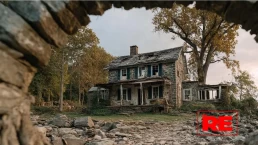
According to Redfin (2022), investor purchases accounted for 18.4% of all U.S. homes sold in Q4 of 2021. That’s nearly 1 in 5 homes and in some cities like Atlanta, Phoenix, and Charlotte, that number was over 30%. These aren’t high-rise condos or luxury flips. Nearly 75% of investor purchases were single-family homes, the kind regular people used to buy to raise families and build equity.
Here’s what that means in plain terms: You go to buy a house. The asking price is $375,000. You come in at $382,000. A company like Pretium Partners shows up with $400K in cash—no inspection, no appraisal, 14-day close. Deal done. You’re out. And that’s not theoretical, that’s happening every day.
Who are these investors? Invitation Homes: owns over 80,000 single-family rentals, Progress Residential: owns over 85,000 homes, often via shell LLCs, American Homes 4 Rent: holds more than 57,000 rentals in 21 states, Pretium Partners: backed by Wall Street, controls tens of thousands of rental properties, Blackstone: not always a landlord directly, but they fund and finance the institutions doing the buying.
Let’s go deeper. The median home price in 2023 was roughly $417,700. Compare that to $290,000 in 2012. That’s a 44% increase over a decade. But during that same time, wages grew less than 30%, and inflation closed the gap fast. So while the cost to buy a home skyrocketed, actual buying power stalled.
It gets worse with financing. In early 2022, you could get a mortgage at 3.5%. By late 2023, that rate had doubled to 7% or more. That increase alone adds hundreds of dollars to your monthly mortgage. A $400K home at 3.5% costs you roughly $1,796/month (before taxes and insurance). At 7%? That jumps to $2,661/month. That’s an extra $10,392/year, same house, just a different interest rate.
Now remember: institutional buyers don’t care about mortgage rates. They buy in cash. Or they finance through private commercial lenders with better terms. Your 7% rate is their 2.5% bulk deal.

Journalism You Can Hold. Insight You Can Own.
Books Magazines Companion Guides White Papers More
Your support funds the research, reporting, and long-form analysis behind TP Newsroom
So why are they buying so aggressively? Because rents are rising.
According to Zillow, the average U.S. rent is up over 30% since 2019. In some cities, like Tampa and Austin, rent has climbed more than 50%. Institutional buyers can raise rent every year, pass along maintenance costs, and rarely face tenant pushback. Unlike homeowners, renters don’t build equity, they just pay monthly and move on. And here’s the part you don’t hear enough: these firms aren’t just playing the short game. They’re not buying to flip, they’re buying to hold, indefinitely. This is about controlling land long-term. This is about turning neighborhoods into revenue streams.
In fact, Invitation Homes’ 2023 earnings report brags that the average renter stays for 2.9 years, and that over 63% of renters renew, meaning they have stable recurring income while property values appreciate. Their business model is built on people not owning.
Let’s make this clear: this isn’t a housing shortage. There are over 15 million vacant housing units in the U.S.. That includes second homes, corporate-owned inventory, and flipped units sitting empty waiting for the market to rise. This isn’t about scarcity, it’s about access. And when access is gated by cash power, insider deals, and algorithmic acquisitions, the average buyer doesn’t stand a chance.

Here’s the thing nobody really wants to say out loud: homeownership was never just about pride or stability. It was about power. The kind of long-term power that compounds quietly, generation after generation. It’s how working families built equity. It’s how Black and Brown households tried to close the racial wealth gap. It’s how immigrants planted roots. And it’s how everyday people carved out a stake in a system that was never built with them in mind. So when that disappears, when ownership becomes a luxury instead of a baseline, you don’t just lose housing. You lose leverage. Let’s talk about what’s really happening.
According to the Federal Reserve’s Survey of Consumer Finances, the median net worth of homeowners is $255,000, compared to $6,300 for renters. That’s not a typo. That’s a 40x wealth gap and it all ties back to one thing: ownership. A house is often the single largest asset most people will ever have. When you rent, you’re paying into someone else’s asset every month, and getting nothing back.
This is especially devastating for Black and Latino communities, who already face steep barriers to entry due to redlining, credit discrimination, and wage gaps. The latest U.S. Census data shows that Black homeownership hovers at just 44%, compared to 74% for white households. And that gap hasn’t narrowed in 50 years, it’s widening, as corporate investors flood into lower-income and historically redlined areas.
Let’s be specific: In 2021, 28% of homes purchased in majority Black neighborhoods were bought by investors, the highest share of any racial demographic zone. In places like Memphis and Atlanta, that number climbs to over 40%. These neighborhoods are being flipped, not for families to own, but for companies to rent out. And once ownership is off the table? Renting becomes the only option. And that’s where the next layer of power kicks in.
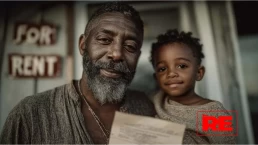
Renting offers zero long-term equity. There are no tax benefits. No appreciation. No security. Most leases come with year-to-year rent increases, and many corporate landlords now use automated pricing algorithms, yes, literally AI, to raise rent based on what a tenant is “willing to tolerate,” not just what’s fair or competitive. It’s called “dynamic pricing,” and it’s been linked to price manipulation lawsuits in several cities.
Even worse? The rise of institutional landlords means more evictions. According to a 2023 report from the Private Equity Stakeholder Project, corporate landlords filed evictions at nearly double the rate of smaller, local landlords. Why? Because they can. And because, in their eyes, tenants are data points, not people.
What does that mean in practice? Families forced to move every 1–2 years, kids pulled out of schools mid-year, people living one paycheck away from homelessness despite working full-time. no stability. No community. No ownership of anything, except the fear of not making next month’s rent.
It’s important to say this clearly: Renting is not inherently bad. Some people prefer it. Some need it temporarily. But when renting becomes the only option, not because of choice, but because of structural manipulation, that’s not a housing market. That’s a control system.
And let’s not pretend this is just about money. Homeownership impacts everything: Voting rights: Many renters don’t register because they move frequently. Education access: Families priced out of ownership can’t live in districts with higher-performing schools. Health: Renters report higher stress levels and lower access to primary care. Community investment: Owners are more likely to volunteer, vote, and build local infrastructure.
All of this adds up to a country slowly drifting into two classes: those who own, and those who rent from them.
And it’s not just the poorest being affected. Even middle-class professionals are feeling the shift. Teachers, nurses, first responders, people with college degrees and careers, are increasingly unable to buy homes in the cities they work in. A recent study from Harvard’s Joint Center for Housing Studies found that in 75 of the largest U.S. metros, the typical rent now consumes more than 30% of median income. That’s the cutoff for housing insecurity. And yet it’s the new normal.
So we have to ask the hard question: Is this by design? Because if the people buying up housing stock are building systems that keep people paying forever, without owning anything, then maybe this isn’t a housing crisis. Maybe it’s a housing takeover. And the longer we wait to address it, the more permanent this structure becomes.

You ever stop and think about what kind of country we’re building?
Not just in theory. I mean in structure. In reality. Because if you zoom out just a little, you’ll notice something that’s hard to ignore: working people aren’t just priced out, they’re being boxed out. Not accidentally. Not temporarily. But systemically.
We’ve now got a housing economy where owning land, the core pillar of what used to be called the American Dream, is increasingly off-limits to anyone who isn’t already wealthy or already in. That’s not a shift. That’s a realignment. A rerouting of opportunity. A redefinition of who gets to build wealth and who just gets to pay into it.
We used to talk about landlords as people who owned a few properties. Maybe a duplex. Maybe a handful of rentals. Now, landlords are LLCs backed by Wall Street. Now, you’re renting from a trust fund in another state. From a holding group you’ll never meet. From a spreadsheet built to maximize yield, not protect community.
And when that becomes the norm, when renting is no longer transitional but permanent, you’re not just dealing with a market shift. You’re dealing with a new class divide: those who own the land, and those who pay to exist on it.
Who Benefits from This System? Institutional investors. Private equity firms. Corporate landlords. The people who figured out that housing is safer and more profitable than the stock market. Companies like Blackstone and Pretium Partners that aren’t building communities, they’re buying futures.
Local governments sometimes benefit too. Higher property values mean higher taxes. Short-term budget wins. But what gets lost is who’s actually paying for it. Spoiler: it’s not the companies writing checks. It’s the families who are locked into renting homes they’ll never own and who get priced out of their own cities with nowhere to go.
What Happens If We Stay On This Path? You get neighborhoods where ownership is generational and inaccessible. Cities where workers can’t afford to live. Families pushed further and further from opportunity. Communities hollowed out and rebuilt as branded rental zones with security gates, dynamic pricing, and no real roots.
You also lose political power. Renters vote less, organize less, and are often kept deliberately off balance, by yearly rent hikes, short-term leases, and algorithmic pressures. That’s not just an economic issue. That’s a democracy issue.
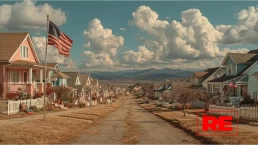
And let’s be blunt, this isn’t a left-right thing. Conservative voters are getting pushed out of rural markets too. First-time buyers in red states are up against the same hedge fund-backed buyers as folks in blue cities. This isn’t about party. It’s about power.
Where Does This Lead Us? To a country where land is concentrated and labor is mobile. Where wealth stays locked, and housing becomes just another service you subscribe to. And if that sounds familiar, it should. It looks a lot like feudalism. Not with kings and castles, but with landlords and leases. You work. You pay. You stay grateful you still have a place to stay.
When Did This Start? Long before most of us noticed. After the 2008 crash, when millions lost their homes, Wall Street moved in. They bought cheap. They built rental empires. And when the economy recovered, they didn’t sell, they scaled.
Zillow tried to automate it. Hedge funds tried to normalize it. And politicians, on both sides, let it happen, so long as the market kept looking “strong” on paper.
Why Does This Matter? Because if ownership disappears, so does leverage. Renting isn’t inherently bad. But permanent renting, as a policy goal, as a profit model, as a national direction, that’s dangerous. That’s how you kill mobility without ever passing a law.
And when land ownership is concentrated in the hands of the few, everything else becomes permission-based. Your housing. Your access. Your future. All contingent on whether you can afford to stay, or whether you get bought out, priced out, or ignored altogether.
That’s the ripple. And the wave it creates doesn’t just affect one neighborhood, it reshapes the country.
Federal Reserve Board. (2022). Survey of Consumer Finances. https://www.federalreserve.gov/econres/scfindex.htm
U.S. Census Bureau. (2023). Quarterly Residential Vacancies and Homeownership, First Quarter 2023. https://www.census.gov/housing/hvs/index.html
Redfin. (2022). Real Estate Investors Are Buying a Record Share of U.S. Homes. https://www.redfin.com/news/investor-home-purchases-q1-2022/
Joint Center for Housing Studies of Harvard University. (2023). The State of the Nation’s Housing 2023. https://www.jchs.harvard.edu/state-nations-housing-2023
Private Equity Stakeholder Project. (2023). The Eviction Machine: Corporate Landlords and the Housing Crisis. https://pestakeholder.org/report/eviction-machine-2023/
If this work helped you understand something more clearly, support it by:
Buying the books | Visiting the Newsstand | Making a donation
One voice. One message. One Goal. Truth.
No spam. No schedules.
The Truth is Underfunded. That's Why This Exists.
No ads. No sponsors. No filter. Just the truth, unpacked, explained, and raw.
Defining Policy. Power. Consequence.
See how to add us to your home screen



What’s Responsibility Really Mean? Immigration, Labor, and the Rhetoric of Ownership in America
The Ripple Effect
-News and Commentary-
What’s Responsibility Really Mean? Immigration, Labor, and the Rhetoric of Ownership in America
By TP Newsroom Editorial | Ripple Effect Division
Yesterday was my birthday. My parents came down to the house, and it was the first time I’d seen them in a while. I talk about my dad a lot, his views, his influence, how much of my thinking was shaped by the way he raised me, but seeing him in person is different. He’s sharp, opinionated, and still every bit the lifelong Democrat he’s always been. But where he holds that line hard on the left, I tend to lean more center. Not because I agree with the right, but because I don’t agree with blind loyalty on either side. He’ll come down hard on conservative talking points, and my instinct is to challenge him, not out of rebellion, but because nuance matters to me. I like seeing both sides. It’s just how I’m wired. And that dynamic between us always turns a simple conversation into a full-blown debate.
So we’re sitting at the dining room table, catching up, talking politics like we always do, and next thing you know, a Trump video pops up on my feed. It was the clip from Fox News, where Trump starts talking about “farmer responsibility” and how farmers could essentially be given ownership, or at least legal responsibility, over undocumented workers. I played the clip out loud, and it was like throwing gasoline on a fire. Within minutes, we had people on speakerphone, debates flying, everyone trying to unpack what we just heard. And honestly, it wasn’t just noise. It was real emotion, real disagreement about what’s right, what’s dangerous, and where the line is between strong policy and structural abuse. The whole conversation lit something in me that I couldn’t let go of all night. Because the truth is, that moment at the table didn’t just reflect my family, it mirrored the state of the country. Polarized. Defensive. Loud. And somewhere beneath all of that, still trying to find the line between protecting a nation and repeating its darkest mistakes.
If this work helped you understand something more clearly, support it by:
Buying the books | Visiting the Newsstand | Making a donation
One voice. One message. One Goal. Truth.
No spam. No schedules.
The Truth is Underfunded. That's Why This Exists.
No ads. No sponsors. No filter. Just the truth, unpacked, explained, and raw.
Defining Policy. Power. Consequence.
See how to add us to your home screen
What struck me the most that night wasn’t just the argument, or even the video itself, it was how easily the conversation slid into familiar patterns. My dad, like many others who’ve been through real struggle, sees Trump as a threat to democracy, plain and simple. For him, anything that comes out of Trump’s mouth is wrapped in danger. And while I agree that Trump’s history shows a man obsessed with power and almost allergic to truth, I still can’t throw every single policy idea into the fire just because it came from him. That’s the tension. That’s where I live. Somewhere between understanding that structure matters, and also recognizing that the structure is only as stable as the hands controlling it. And what he said in that clip, about farmers taking responsibility, about workers not receiving citizenship but still working and paying taxes, felt too damn close to something we’ve seen before.
Let’s be real. There’s a long, bloody history in this country of people being “allowed” to exist solely for the labor they provide, tied to landowners, overseers, bosses. You can call it responsibility. You can call it management. But when someone’s presence in the country is dependent on their usefulness to a person in power, that’s not freedom. That’s indenture. And when it comes to undocumented labor, especially in agriculture, we’re already dancing on a dangerous line. Trump’s language didn’t create this risk, but it absolutely amplified it. The phrasing wasn’t accidental. “Owner responsibility” isn’t something you say offhand. It’s something that frames a person’s existence as a transaction: You work, I vouch. You slip up, I revoke. That’s not a partnership. That’s control.
And here’s the thing, there are people who hear this and think it’s a solution. They think, “Well, if they’re already here, at least give farmers a way to keep the ones who work hard.” It sounds practical. But that logic only works if you erase the historical context, and the power imbalance that comes with it. Because what happens when the “responsible party” turns toxic? What happens when the undocumented worker has no real recourse, no safety net, and no protections? If their visa or legal standing is tied to one employer, what stops that employer from exploiting them? Nothing. And that’s the point. That’s why this conversation isn’t just about policy. It’s about power. Who holds it. Who loses it. And what we allow under the illusion of legality.
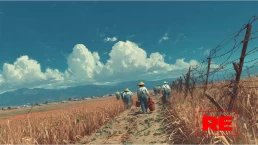
This is where I circle back to the Big Beautiful Bill. Because when you start connecting the dots between Trump’s quote and the bill’s deeper agenda, a pattern forms, and it’s bigger than any one proposal. The bill pushes for dramatic cuts to federal oversight. The Department of Education? Slashed. Environmental protections? Reduced. Public healthcare funding? On the chopping block. All of that might sound like standard small-government talk, but look closer and ask: What’s actually being decentralized? What’s really being handed back to “the states”? Or worse, what’s being handed to private power under the guise of freedom?
Because if you’re stripping away oversight at the same time you’re offering employers the right to sponsor or “own” undocumented workers, you’re not creating opportunity, you’re creating a system of quiet dependence. You’re laying the legal groundwork for something that mirrors economic feudalism. One where people aren’t tied to land anymore, but to employment. To corporate owners. To political benefactors. And if the only thing keeping you safe in this country is your relationship to the person who profits from your labor, that’s not immigration reform. That’s 21st-century indenture.
And here’s the kicker: none of this happens overnight. It’s subtle. It starts with language. With policy drafts. With the reshuffling of departments most Americans never pay attention to. It’s not a conspiracy, it’s just math. If you remove oversight and increase dependence, control flows to the top. And this bill, paired with the rhetoric we’re hearing, isn’t about solving problems. It’s about restructuring power.
Journalism You Can Hold. Insight You Can Own.
Books Magazines Companion Guides White Papers More
Your support funds the research, reporting, and long-form analysis behind TP Newsroom
You want to talk about “farmer responsibility”? Cool. But let’s also talk about the responsibility of the system to protect the most vulnerable. Let’s talk about the history of labor abuse in this country, from enslaved Africans, to Chinese railroad workers, to undocumented Latinos picking strawberries for below minimum wage. We’ve always had a labor class that’s been invisible until it breaks. Until it bleeds. And this time, the language might be softer, but the architecture? It’s just as hard.
Trump’s farmer responsibility comment might sound like just another soundbite, but it’s not operating in a vacuum. Behind that one clip lies a whole structure of policies, loopholes, and labor programs that have been quietly running for years—programs that already blur the line between employment and control. And if we’re going to have a real conversation about what that quote means in practice, we have to talk about the most glaring gateway drug to legalized dependency in American agriculture: the H2A guest worker program.
The H2A visa system is supposed to be temporary. It’s a federal pipeline that lets U.S. employers, mostly in agriculture, hire foreign workers for seasonal jobs they claim can’t be filled by Americans. On paper, it’s a “win-win”: farmers get reliable labor, and workers get legal entry into the U.S. to earn a living. But that’s the surface-level version. Dig deeper, and you find a system that, while legal, is stacked with structural imbalance.
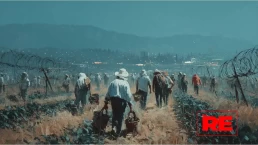
As of 2023, over 370,000 H2A visas were issued, up from just 79,000 in 2010. That’s a 368% increase in just over a decade. These workers are the invisible spine of America’s produce aisle, doing work most of us will never see. But here’s the catch: an H2A worker can’t just change jobs if they’re mistreated. Their legal right to stay in the country is tied exclusively to the employer that sponsors them. You don’t get to walk out, speak up, or organize without risking your visa, and, by extension, your livelihood.
The program doesn’t technically allow employers to “own” workers, but when your legal status and income are completely bound to a single person or company, that’s not freedom. That’s economic captivity.

And there’s evidence, mountains of it, that abuse under this system is widespread. According to a 2021 report from the Economic Policy Institute, H2A workers have faced: Wage theft, Unsafe working conditions, Threats of deportation for speaking out, Substandard housing, including in some cases, workers being forced to sleep in trailers, shipping containers, or pest-infested barns.
Let that sink in. These aren’t isolated stories. They’re baked into the system because there’s no meaningful oversight. The U.S. Department of Labor is understaffed and underfunded. Enforcement is slow. Investigations are rare. And for the workers stuck inside that machine, there is no real path to protection.
So when Trump says farmers should be given legal “responsibility” or “ownership” over undocumented workers, he’s not proposing something new. He’s proposing a formal expansion of an already flawed system, one where the only difference is that the workers aren’t just undocumented, they’re now unofficially tethered to a single employer with zero path to citizenship. And that’s the pivot. He’s not talking about citizenship. He’s not even talking about immigration reform. He’s talking about labor control. Understand what that means, a class of people who live here, work here, pay taxes, but have no political voice, no legal protection, and no long-term security. It’s not a policy designed to uplift. It’s a policy designed to contain.
Now pair that with the Big Beautiful Bill, which guts the Department of Education, scales back the Department of Labor, and transfers power to the states with little to no accountability, and you start to see the foundation for something bigger. Something more dangerous. A national model that allows private employers or state-controlled agencies to regulate, contain, and benefit from a class of permanent laborers with no way out.
And here’s where it really gets slippery: under current law, undocumented workers already contribute billions in taxes, yes, billions. According to the Institute on Taxation and Economic Policy, undocumented immigrants contribute an estimated $11.7 billion annually in state and local taxes. They’re paying into a system that many of them will never be allowed to fully access. No voting rights. No safety net. No guarantee of protection.
Now imagine giving a single employer the keys to that worker’s legal existence. You don’t have to imagine long, because we already have case studies where that dynamic plays out, and it’s never in the worker’s favor.
We’re not talking about hypothetical futures. We’re talking about systems already in motion. Trump’s quote didn’t create the structure, but it did make it bolder. Louder. And far more dangerous in the wrong hands.
And this is where the scaffolding really starts to show because labor exploitation doesn’t live in isolation. It thrives when systems around it look the other way. And under the Big Beautiful Bill, that’s exactly what’s being engineered: a future where oversight is intentionally gutted, responsibility is outsourced, and enforcement is shifted away from centralized protections into fragmented, state-by-state chaos.
Start with immigration enforcement. Under current law, ICE already works with private detention contractors, companies like GEO Group and CoreCivic, to detain undocumented immigrants. These private facilities operate under the guise of efficiency and cost-saving, but they’ve been repeatedly cited for human rights violations, lack of medical care, and abuse. These companies make billions annually in taxpayer-funded contracts. Now imagine this same playbook applied not just to detention, but to employment oversight. If the federal government steps back, as the Big Beautiful Bill proposes, who ensures that workers tied to employer sponsorship aren’t being abused? Who steps in when a “farmer responsible” for undocumented labor decides to withhold wages or provide substandard housing? In many red states, labor departments are already underfunded, politicized, or both.

If this becomes state-administered, there is no consistency. There is no federal standard. It becomes a patchwork of rights, defined by governors and state legislators who may have zero incentive to protect immigrant workers, especially when those workers can’t vote, can’t unionize, and can’t organize publicly without fear of deportation.
Even the Department of Labor’s own 2020 audit warned that fewer than 1 in 50 H-2A employers were ever investigated, and enforcement actions were rarely followed up. That’s under current federal policy. Reduce that federal reach further? That number doesn’t shrink, it disappears. Now add another layer: the Big Beautiful Bill includes provisions to slash funding for “duplicative” federal programs, which includes not only education and healthcare, but also labor protections, OSHA enforcement, and Department of Labor inspections. It’s all positioned as fiscal responsibility, but let’s be clear: cutting these programs doesn’t just trim fat. It removes the referees.
And without referees, power tilts. Every. Single. Time. Think about the domino effect: Undocumented workers already underpaid, Guest worker programs that tether legal status to employment, ICE partnerships with private companies for detention, Reduced federal labor protections under a new bill and States encouraged to “do it their own way.”
What we’re building isn’t just policy shift, it’s structural submission. It’s the deliberate creation of a workforce that can be taxed, used, and discarded, all while being held just outside the reach of rights.
Even if you believe in border control, even if you believe in streamlined immigration, this isn’t that. This is control without citizenship. This is compliance without freedom. This is labor without rights, with legal cover for the employer and little recourse for the worker.
And what’s unimaginable to me is that Trump’s statement didn’t come with fine print. It wasn’t buried in legalese. He said it out loud. On camera. At a press conference. And the story barely made a ripple in the national news cycle. Maybe because it sounded like a “policy idea.” Maybe because it didn’t come with visuals of children in cages. But if you understand the history, if you’ve studied labor control, if you’ve seen what happens when power gets lopsided, then you know the slope we’re already sliding down.
We’ve done this before. This isn’t new. It’s just rebranded. In the 1800s, the same justification was used for convict leasing after slavery ended. “They’re not slaves, they’re prisoners who owe a debt to society.” In the early 1900s, it was “company towns” that paid workers in scrip instead of real wages. And now? It’s visa programs that restrict your right to leave, and proposed “responsibility clauses” that would make undocumented labor legally dependent on individual landowners. It’s the same story, new book cover.
The Big Beautiful Bill doesn’t create this system, but it guts the barriers that could stop it. It sets the stage for exploitation to go unchecked. It empowers states and private actors to handle things “their way”, and if we’re honest, we already know how “their way” looks when no one’s watching.

There’s a moment, somewhere in every conversation about policy, where people start talking about intentions. “Well, I don’t think they meant it like that.” Or “Maybe it’s not ideal, but it’s not slavery.” That moment is where most debates stall. People stop looking at impact and start defending hypotheticals. But policy isn’t judged by intent. It’s judged by structure, by how it functions in real life, on real bodies. So let’s talk about what’s actually being built here.
The quote Trump gave, “farmer responsibility,” “owner responsibility”, isn’t theoretical. It’s a direct pitch for a labor control model where undocumented workers remain in the U.S., continue working, pay taxes, but are tethered to a private employer for their right to exist. That’s not oversight. That’s not order. That’s ownership with legal padding.
When you pair that rhetoric with the structure of the Big Beautiful Bill, the threat isn’t just rhetorical, it’s systemic. Because the bill: slashes federal labor protections, defunds oversight agencies, decentralizes regulation to the states, reduces education and public programs, and creates room for public-private power handoffs with minimal accountability. And if you think that won’t be used to control people who lack full citizenship? You haven’t been watching the history reruns closely enough.
This bill doesn’t just reduce government, it redefines governance. It says we don’t need national standards. That each state can determine its own path. That companies can be trusted to self-regulate. But we’ve seen that story already, in housing, in banking, in healthcare, in environmental justice. And every single time, the people who pay the highest price aren’t the wealthy. They’re the poor, the working class, the undocumented, and the unseen.

If this bill becomes the blueprint for the future, we’re looking at a country that’s slowly replacing national rights with conditional privileges. One where your stability depends on who you work for, not what protections the Constitution promises. And that’s the part no one wants to say out loud. This isn’t about Trump alone. It’s not even about the Republican Party alone. This is about a long arc of policy shift, one that’s been decades in the making, that trades in moral neutrality to preserve capital and control. It’s the slow erosion of oversight dressed up as state freedom. And that erosion doesn’t come for everyone at once. It starts with the people least able to fight back. So let’s close this with the real questions, the ones we have to ask if we’re serious about truth:
Who benefits from a system where labor is legal but citizenship is denied? Agribusiness. Landowners. Politicians who promise “tough” immigration while depending on that labor class to keep their economies afloat. They get cheap labor, political cover, and no accountability.
What happens when oversight is gutted and the power to regulate is handed to states with poor labor records? You get fragmentation. Confusion. Inconsistency. In red states, you get silence. In blue states, maybe protection, but that’s a geographic lottery. Workers’ rights become zip-code dependent.
When? Now. This isn’t five years out. The bill is moving. The rhetoric is already here. Enforcement trends, ICE contracts, H-2A expansions, they’re all in motion.
Where does it go if unchecked? Toward a future where a subclass of people, mostly brown, mostly poor, mostly voiceless, exist in America to work, but never belong. Where labor is welcomed, but life is conditional.
Why does it matter? Because once the country accepts the idea that some people can be legal but not equal, it doesn’t stop there. The slope doesn’t care about your citizenship papers. If we let labor control become policy, it’s only a matter of time before that control finds its way to more groups, more spaces, more lives.
We’re not at the edge of this cliff, we’re already halfway down it. The only question is whether we keep tumbling, or finally hit the brakes and ask what the hell we’re allowing to be normalized.
That’s the ripple. This is the warning. And if we don’t take it seriously, we’re not just rewriting immigration law, we’re rewriting the meaning of freedom.
U.S. Department of Labor. (2024). Office of Foreign Labor Certification – H-2A program performance data. https://www.dol.gov/agencies/eta/foreign-labor/performance
Costa, D., & Martin, P. (2021). Temporary foreign workers in U.S. agriculture: The H-2A visa program in 2020. Economic Policy Institute. https://www.epi.org/publication/h-2a-visa-program-2020/
Gee, L., Gardner, M., Hill, M., & Wiehe, M. (2017). Undocumented immigrants’ state and local tax contributions. Institute on Taxation and Economic Policy. https://itep.org/undocumented-immigrants-state-local-tax-contributions-2017/
Gee, L., Gardner, M., Hill, M., & Wiehe, M. (2017). Undocumented immigrants’ state and local tax contributions. Institute on Taxation and Economic Policy. https://itep.org/undocumented-immigrants-state-local-tax-contributions-2017/
U.S. Immigration and Customs Enforcement. (2023). Detention management statistics. https://www.ice.gov/detention-management
U.S. Department of Labor, Office of Inspector General. (2020). COVID-19: Increased risks to migrant H-2A workers raise concerns about the integrity of the labor certification process. https://www.oig.dol.gov/public/reports/oa/2020/06-20-001-03-321.pdf
If this work helped you understand something more clearly, support it by:
Buying the books | Visiting the Newsstand | Making a donation
One voice. One message. One Goal. Truth.
No spam. No schedules.
The Truth is Underfunded. That's Why This Exists.
No ads. No sponsors. No filter. Just the truth, unpacked, explained, and raw.
Defining Policy. Power. Consequence.
See how to add us to your home screen
The Big Beautiful Bill: 20 Proposals That Could Reshape America Pt. 3
The Ripple Effect
-News and Commentary-
The Big Beautiful Bill: 20 Proposals That Could Reshape America Pt.2
By TP Newsroom Editorial | Ripple Effect Division
You can read legislation on paper all day long, but the question most people ask isn’t “what does it say”, it’s “what would this actually do?”
That’s where this part of the series comes in. We’ve looked at where the bill came from. We’ve broken down every one of its 20 major proposals. But now it’s time to sit with what it all means. Not the campaign soundbites. Not the cable news drama. Just the impact. In the real world. For real people. At home, at work, in schools, on farms, and online.
Because if this bill, or even just parts of it, goes through, it’s not just about who holds office or what party’s in charge. It’s about a complete redefinition of how federal power is used, who qualifies for rights and resources, and what it means to be “American” in the first place.
Some of these proposals are already being mirrored at the state level. Others are sitting quietly in legal drafts waiting for a shift in power. But taken together, they reveal a coordinated vision, one that doesn’t just challenge the current structure, but aims to rebuild it from the inside out.
This part isn’t here to warn or cheerlead. It’s here to map the terrain. Because if change is coming, we need to know what road we’re walking down, and who might be left behind along the way.
For most people, it won’t feel like a bill. It’ll feel like a slow shift in how institutions treat you, or ignore you. These proposals, taken together, are not just technical changes. They’re directional changes. If passed, they reshape the relationship between the public and the federal government. Not overnight, but piece by piece. And depending on where you sit, that’s either long overdue or deeply alarming.
If this work helped you understand something more clearly, support it by:
Buying the books | Visiting the Newsstand | Making a donation
One voice. One message. One Goal. Truth.
No spam. No schedules.
The Truth is Underfunded. That's Why This Exists.
No ads. No sponsors. No filter. Just the truth, unpacked, explained, and raw.
Defining Policy. Power. Consequence.
See how to add us to your home screen
For those working inside the government, especially in nonpartisan roles, the civil service structure as they’ve known it may no longer apply. Loyalty checks, reduced job protections, and top-down command structures create a culture of fear, not function. It signals that careers can be derailed not by poor performance but by perceived political disloyalty. That doesn’t just change who stays. It changes who speaks up.
Nonprofits, journalists, and educators would also feel a shift. The proposed legal redefinitions of advocacy, journalism, and curriculum affect how these groups operate, how they’re funded, and whether they’re considered legitimate. Under this bill’s language, being fact-based or community-based isn’t enough, you’d also need to align with federal “values” to keep your funding or status. Critics see it as a chilling effect. But supporters argue it’s about fairness: stopping taxpayer dollars from funding institutions they believe undermine the nation.
Then there’s immigration. Mass deportations, birthright citizenship challenges, and asylum changes all hit the same groups, mixed-status families, border communities, and humanitarian orgs. And even if some of these provisions get stalled in court, the signal is still sent. People living on the margins may be forced further into the shadows, where legal recourse becomes harder to access and civic participation becomes riskier.
In classrooms, shifts in curriculum requirements could dictate what’s taught and what’s omitted. For teachers, it creates uncertainty. For students, especially students of color or children of immigrants, it could mean growing up with a narrower view of history, one that celebrates, but rarely interrogates. Supporters argue this protects national pride and prevents guilt-based narratives. Opponents say it erases vital context.

Surveillance and policing would also evolve under this bill. Expanded definitions of domestic threats, fewer checks on private security contractors, and redefined protest penalties could shift how dissent is treated, especially online. If this bill becomes law, organizers, activists, and even digital creators may find themselves navigating new legal landmines. The goal, supporters argue, is to restore order. But what’s considered “order” often depends on who’s speaking and who’s listening.
And finally, the global stage. Reducing diplomacy and increasing military investment doesn’t just change what we fund—it changes how the world sees us. To some, this re-centering of American strength is necessary after years of failed foreign policy and financial waste. To others, it’s a retreat from cooperation at a time when global crises require more collaboration, not less.
So no, this bill isn’t just paperwork. It’s a worldview. It’s a blueprint for who gets heard, who gets watched, who gets in, and who gets out. And while not every piece will pass, and many will end up in the courts, the broader push is real. And the impact won’t be felt in a headline. It’ll be felt in the day-to-day.
This bill is not a one-time event, it’s a philosophy turned into policy. Whether you see it as reform or regression depends on how you view the role of government in your life. But no matter where you stand politically, it’s hard to deny the sheer scope of change being proposed.

On paper, it reads like a blueprint for control. Not just in the classic authoritarian sense, but in the quiet, structural way policy shifts happen, through definitions, eligibility, oversight, and funding. A journalist isn’t a journalist unless they meet new qualifications. A nonprofit isn’t protected unless it avoids “ideological narratives.” A protest isn’t legal unless it stays within an increasingly narrow lane. A civil servant isn’t protected unless they pass a loyalty check. That’s not fear-mongering. That’s the actual language being drafted.
But why is it happening? It’s not just about Trump or one administration. It’s about a broader realignment, a reaction to decades of perceived overreach, cultural shifts, and economic instability. Many Americans genuinely believe the system has forgotten them. That immigration policy is too loose, that education has become politicized, that government agencies are bloated and unaccountable. This bill taps into that belief and offers a clear message: we will restore control. We will take it back.
Supporters argue that the country needs a hard reset. That restoring “American values” means drawing clear lines: who belongs, who leads, who qualifies, and who funds what. To them, this is order. This is sovereignty. This is national rebirth.

Critics counter that this is selective empowerment, restoring a version of America that centers power in the hands of a few, and silences dissent under the guise of unity. They see it as ideological cleansing, stripping away diversity in thought, culture, and community influence to replace it with a more sanitized, loyal, and compliant structure. Where criticism becomes disloyalty. Where nonconformity becomes a threat.
But here’s the thing: both sides are talking about freedom. One sees it as freedom from influence—outside actors, woke ideology, federal overreach. The other sees it as freedom to exist, without censorship, surveillance, or punishment for one’s identity or beliefs.
The tension is not new. But the stakes are higher now.
So let’s ask the 5Ws:
Who benefits?
Those seeking a government that’s smaller, more centralized under executive power, and more reflective of traditionalist values. Wealthy donors, oil executives, charter school lobbies, and religious organizations may also gain influence under these policies.
What changes?
The definitions. The rules. The protections. The process. This bill doesn’t just change outcomes, it changes the infrastructure that decides those outcomes. And once definitions shift, they don’t always come back.
When does it matter?
Now. Because even if the full bill doesn’t pass, the direction it signals is already influencing policy debates, school board elections, agency memos, and legal strategies. Cultural permission often comes before legal precedent. This bill gives that permission.
Where does it land hardest?
On people already living on the margins, immigrants, LGBTQ+ youth, activists, public educators, civil servants, independent journalists, and underfunded nonprofits. It’s not just about rights, it’s about resources, visibility, and safety.
Why should anyone care?
Because whether you’re for it or against it, this bill is reshaping the terms of the conversation. It defines what is “American,” who gets to decide that, and what happens to those who disagree. And once those definitions are locked in through law, they’re harder to challenge. You can’t speak truth to power if power gets to redefine truth.
Congressional Research Service. (2024). Overview of executive authority in federal agency restructuring. https://crsreports.congress.gov
Brennan Center for Justice. (2024). Loyalty tests and civil service integrity: Legal and ethical concerns. https://www.brennancenter.org
American Immigration Council. (2024). The shifting landscape of asylum law under proposed federal reforms. https://www.americanimmigrationcouncil.org
Pew Research Center. (2023). Public opinion on immigration, education, and media trust in America. https://www.pewresearch.org
Government Accountability Office. (2024). Impact analysis of proposed changes to federal program funding. https://www.gao.gov
If this work helped you understand something more clearly, support it by:
Buying the books | Visiting the Newsstand | Making a donation
One voice. One message. One Goal. Truth.
No spam. No schedules.
The Truth is Underfunded. That's Why This Exists.
No ads. No sponsors. No filter. Just the truth, unpacked, explained, and raw.
Defining Policy. Power. Consequence.
See how to add us to your home screen
Inside the “Big Beautiful Bill”: 20 Proposals That Could Reshape America Pt. 2
The Ripple Effect
-News and Commentary-
Inside the “Big Beautiful Bill”: 20 Proposals That Could Reshape America
By TP Newsroom Editorial | Ripple Effect Division
This is where it starts. Not in theory. Not in talking points. But in policy. The first five proposals in the “Big Beautiful Bill” are where the real spine of this legislation lives because they do more than tweak around the edges. They strike at the structure of power itself: who enforces the law, who is protected by it, and who gets to stay inside the walls of the country. These aren’t marginal proposals. They’re architectural.
If this work helped you understand something more clearly, support it by:
Buying the books | Visiting the Newsstand | Making a donation
One voice. One message. One Goal. Truth.
No spam. No schedules.
The Truth is Underfunded. That's Why This Exists.
No ads. No sponsors. No filter. Just the truth, unpacked, explained, and raw.
Defining Policy. Power. Consequence.
See how to add us to your home screen
And whether you agree with them or not, these are the types of changes that don’t just alter policy, they alter people’s lives.We’re talking about:
-Restructuring or eliminating federal agencies like the Department of Education and the FBI
-Mass deportations under emergency powers and border expansion
-Ending birthright citizenship through reinterpretation of the 14th Amendment
-Reinstating Title 42-style removals for public health-related border control
-Major tax cuts for corporations and high earners
Now, let’s be clear. Each of these proposals has been framed by its supporters as common-sense, urgent, or overdue. From the right, they’re viewed as course corrections, a way to undo what they see as years of government bloat, legal loopholes, and weak borders. From the left, they’re often seen as an assault on civil liberties, due process, and the checks and balances that keep presidential power in check.
But no matter your perspective, here’s what matters: these aren’t bullet points on a campaign website. They’re in writing. In the bill. And they’re written in a way that bypasses a lot of the safeguards that normally slow this kind of change down. What we’re doing is walking you through each one without the noise. If we’re going to argue about it later, we might as well understand it first. So buckle in. Because we’re not speculating anymore. We’re decoding it. Piece by piece.

PROPOSAL #1: Restructuring or Eliminating Federal Agencies Like the Department of Education and the FBI
One of the most significant components of the bill centers around reducing—or in some cases, outright dismantling, key federal agencies. Two of the primary targets are the Department of Education and the FBI. The proposal doesn’t just call for budget cuts; it outlines a phased approach to removing or radically overhauling these institutions entirely.
For the Department of Education, the legislation pushes for a gradual defunding process, ultimately transferring control over curriculum, standards, and compliance back to the states. This isn’t a new idea in conservative circles. Critics of the department have long argued that education should be handled locally, not federally. Proponents of the change say it would allow for more community-centered education and reduce unnecessary federal bureaucracy. Opponents, however, warn that dissolving the department could widen disparities between rich and poor districts, especially in rural or underfunded areas where state support might not be enough to maintain quality.
The proposed changes to the FBI are even more controversial. The bill suggests restructuring the agency to fall more directly under the control of the executive branch. While supporters argue this would increase accountability and prevent politicized investigations, critics fear it would erode the FBI’s independence and open the door to political interference in criminal and national security matters. The underlying tension here is about trust, whether the public believes agencies like the FBI can remain neutral, or whether their power needs to be checked through executive oversight.
At its core, this proposal reflects two different views of government. One side sees sprawling federal agencies as outdated, overly powerful, and ideologically biased. The other sees them as necessary guardrails, imperfect but essential, to maintain national standards and legal consistency. Whether this is a cleanup or a takedown depends on where you sit. But one thing’s clear: if passed, this section of the bill would be one of the most dramatic restructurings of federal authority in decades.
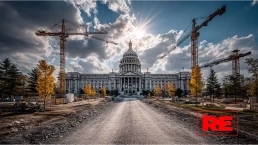
PROPOSAL #2: Mass Deportations Under Emergency Powers and Border Expansion
Another key pillar of the bill is a sweeping overhaul of immigration enforcement, built on a framework of emergency powers, rapid deportations, and expanded border infrastructure. It proposes invoking a national emergency to bypass traditional court processes and fast-track removals, particularly for individuals without clear legal status. Under this plan, the federal government would gain expanded authority to remove undocumented immigrants at scale, with limited judicial review.
Supporters of the measure argue that the current system is overwhelmed and ineffective. They claim that loopholes in asylum law and prolonged court backlogs have created a bottleneck that encourages illegal entry while straining local resources. For them, a national emergency declaration would give the executive branch the power to respond with urgency, clear out systemic delays, and re-establish order. They also cite rising fentanyl trafficking and cartel activity as reasons to expand enforcement capacity and border surveillance.
The proposal includes the deployment of National Guard units and increased use of both public and private detention facilities. It also calls for resuming construction of physical barriers, like segments of the border wall, and prioritizing technological surveillance to monitor crossings more aggressively. The bill outlines the creation of a centralized deportation processing system, aimed at identifying and removing individuals without access to lengthy appeals or hearings.
Critics, however, say this approach trades constitutional protections for speed. They argue that due process is foundational to American law, even in immigration cases, and that cutting legal review could lead to wrongful detentions, racial profiling, and abuse of power. There’s also concern about the mental health and humanitarian impact of large-scale removals, especially on mixed-status families and longtime residents with deep ties to the U.S.
At the heart of this debate is a question of scope: how far should the government go to enforce immigration law, and what lines shouldn’t be crossed? Proponents call it necessary. Opponents call it dangerous. But if passed as written, this provision would mark one of the most aggressive immigration enforcement shifts in modern U.S. history.
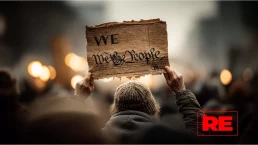
PROPOSAL #3: Ending Birthright Citizenship Through 14th Amendment Reinterpretation
One of the most controversial sections of the bill centers around ending birthright citizenship for children born in the United States to undocumented immigrants. Rather than pursuing a constitutional amendment, something that would require a two-thirds majority in Congress and ratification by 38 states, the bill proposes a reinterpretation of the 14th Amendment through executive order and judicial challenge.
The 14th Amendment, ratified in 1868, states that “all persons born or naturalized in the United States, and subject to the jurisdiction thereof, are citizens of the United States.” For over 150 years, courts have upheld that this guarantees automatic citizenship to nearly everyone born on U.S. soil, regardless of their parents’ immigration status. This bill attempts to narrow that interpretation by asserting that children born to undocumented immigrants are not truly “subject to the jurisdiction” of the U.S., and therefore do not qualify for automatic citizenship.
Supporters of the move argue that the current interpretation has been abused, enabling what they refer to as “anchor baby” loopholes, where children born in the U.S. can eventually help undocumented parents gain legal status. They frame this change as a necessary correction to restore the original intent of the Constitution and to prevent what they see as systemic exploitation of immigration law. Some also argue it’s about sovereignty: who belongs, who decides, and what citizenship should mean in a modern context.
Opponents, however, warn that this proposal is not only legally flimsy but socially destabilizing. They argue that citizenship by birth is a cornerstone of American law and identity, and that undermining it could open the door to broader exclusions. Legal scholars expect the move to face immediate and prolonged legal challenges, likely reaching the Supreme Court. In the meantime, questions remain about how such a policy would be enforced and what it means for millions of U.S.-born individuals whose status could be placed in limbo.
The broader implication here isn’t just about immigration, it’s about the legal definition of belonging in America. If the government can reinterpret birthright citizenship with an executive order, what else could be redefined the same way? For some, this is about national interest. For others, it’s about rewriting history. Either way, it’s a shift that could fundamentally alter what it means to be an American.
PROPOSAL #4: Reinstating Title 42-Style Public Health Removals
Another key element buried in the bill’s framework is the proposed reinstatement and possible expansion of Title 42-style authority. Originally implemented during the COVID-19 pandemic, Title 42 allowed border officials to quickly expel migrants without allowing them to seek asylum, citing public health concerns. The bill aims to bring back that power not just for pandemic scenarios, but as a broader mechanism tied to any declared public health threat.
This isn’t just about COVID or infectious disease. The new language introduces looser criteria for invoking emergency removals. Future administrations could cite drug epidemics, mental health crises, or even “foreign-born disease resurgence” as justification to limit border access. The power to do so would be placed more squarely in the executive branch, giving the president significant discretion in defining what constitutes a public health emergency.
Supporters argue this provides much-needed flexibility for the U.S. government to manage border pressure in real time, particularly when overwhelmed by mass migration surges or humanitarian crises. They frame it as a preventative measure, a way to protect Americans and avoid system collapse. It also appeals to voters who view immigration not only as a legal issue, but as a threat to public resources and safety.
Opponents, however, see the move as an overreach designed to bypass asylum protections enshrined in both U.S. and international law. Critics argue that under this model, nearly any event could be framed as a health concern, allowing for fast-track deportations without due process. Human rights organizations warn it opens the door to profiling and sweeping denials of legitimate asylum claims under the guise of “emergency management.”
This isn’t just about borders. It’s about precedent. How and when a government chooses to suspend normal legal protections says a lot about its priorities. While some see this as a return to control, others see it as a quiet expansion of unchecked executive authority. The real question is: if we normalize these shortcuts during perceived crises, how easily might they be applied again, whether justified or not?
PROPOSAL #5: Major Tax Cuts for Corporations and High Earners
One of the more traditional Republican priorities included in the bill is a sweeping package of tax reductions aimed primarily at corporations and top income earners. This proposal mirrors earlier Trump-era tax cuts, but with deeper adjustments and fewer sunset clauses, meaning the changes would be long-term, if not permanent.
On paper, the justification is straightforward: stimulate investment, repatriate overseas profits, and keep American businesses competitive globally. The bill lowers the corporate tax rate further, trims capital gains taxes, and expands deductions for pass-through entities (like LLCs and partnerships). For individuals, the highest income brackets would see reduced rates, and estate tax exemptions would expand, reducing what wealthy families owe when passing on generational assets.
Supporters argue these cuts would supercharge growth by rewarding innovation and encouraging capital reinvestment. They say the benefits will “trickle down” through job creation, increased wages, and more robust economic activity. For many voters and small business owners, lower taxes sound like a return to normal, especially after years of inflation, uncertainty, and rising operational costs.
But critics warn this is the same old pattern: cutting from the top, hoping the rest will follow. They argue that these changes disproportionately benefit the wealthiest Americans while adding to the national deficit. According to policy analysts, the bill does not offer equivalent offsets or cuts in spending, except in areas like public assistance and regulatory enforcement. That means wealth gaps could widen, and middle-class relief may be minimal unless states intervene on their own.
It’s not just about numbers, it’s about philosophy. Is the role of government to collect less and spend less, or to collect more and serve more? This proposal makes a clear bet on the former, aligning closely with supply-side economics and free-market principles. Whether that vision delivers broad prosperity or deeper inequality remains one of the central debates of this bill.

PROPOSAL #6: Federal Defunding of “Woke” Programs in Education, Diversity Training, and Federal Hiring
Tucked into the broader budget language is a sweeping directive to defund what the bill refers to as “woke” initiatives across the federal government. That includes funding for diversity, equity, and inclusion (DEI) offices; training modules related to systemic bias or anti-racism; and grant programs aimed at increasing representation in education and federal employment pipelines.
Supporters argue that these programs are divisive, ideologically biased, and often waste taxpayer money on political messaging instead of performance. They claim that government jobs and classrooms should be focused on merit, not identity, and that forcing race- or gender-based awareness creates resentment rather than opportunity. For many conservatives, this proposal represents a cultural reset, stripping progressive ideology from federal influence and restoring “neutrality” to public institutions.
On the other side, critics see this as a calculated rollback of hard-fought protections and opportunities for marginalized communities. They argue that without these initiatives, racial and gender disparities often go unchecked, especially in institutions that historically excluded certain groups. Many point out that these programs were created not to divide, but to close persistent gaps in hiring, education, and justice.
The proposal doesn’t ban these ideas outright in the private sector, but it does send a powerful message from the federal level: that equity-based frameworks are no longer a national priority. Whether you view that as a course correction or a cultural erasure depends on where you stand. But either way, this clause isn’t just about budget, it’s about ideology, identity, and what kind of country the government should actively shape through its dollars.

PROPOSAL #7: Shifting Climate Policy to Favor Fossil Fuel Expansion, Including Rollback of EPA Regulations
Another major plank in the bill focuses on reorienting national climate and energy policy, specifically shifting away from aggressive emissions reduction goals and pivoting toward fossil fuel expansion. The language includes multiple line items aimed at rolling back Environmental Protection Agency (EPA) regulations, fast-tracking oil and gas permitting, and stripping federal restrictions on drilling in protected lands and offshore areas.
Supporters frame this as an energy independence strategy. They argue that overregulation has stifled economic growth, made the U.S. dependent on foreign oil, and overburdened small businesses and rural communities with environmental red tape. By loosening these constraints, they believe the country can lower energy prices, revive domestic manufacturing, and reinvest in infrastructure without relying on global supply chains or volatile international partners.
Critics, however, see it as a dangerous retreat from climate responsibility. They warn that repealing environmental safeguards puts vulnerable communities, particularly those near extraction sites, at increased risk of pollution, water contamination, and long-term health consequences. They also argue that undoing EPA authority and clean energy incentives undermines both public health progress and global leadership on climate action.
The proposal doesn’t deny climate change exists, but it redefines the national response through an economic lens rather than an environmental one. Rather than prioritizing net-zero targets or renewable investments, it focuses on energy output, deregulation, and job creation in traditional energy sectors. Whether that’s pragmatic or shortsighted depends largely on your perspective, and on whether short-term energy gains outweigh long-term planetary risks.

PROPOSAL #8: Granting Greater Policing Powers to States Over Federal Protest Activity
This section of the bill quietly but significantly reworks how protests, especially those near federal property or involving interstate coordination, are regulated and policed. The proposal aims to give state and local law enforcement greater latitude to intervene, arrest, and charge individuals involved in protests that are deemed disruptive, even when they occur in areas traditionally under federal jurisdiction.
The rationale presented is about flexibility and rapid response. Supporters argue that federal law enforcement has been slow or inconsistent in dealing with protests that turn violent or disruptive, especially in cases involving federal buildings or highways. By allowing states to take the lead, the bill claims it will empower local agencies to act quickly, protect public order, and reduce the burden on federal response units.
Opponents raise major concerns about selective enforcement and political bias. They point out that this could open the door to drastically different standards from state to state, particularly in how protests are categorized and treated. A peaceful protest in one state might be permitted while the same event elsewhere could lead to arrest under more aggressive interpretations of “disruption” or “obstruction.”
This change doesn’t eliminate federal protections on assembly and speech, but it does shift the enforcement balance, potentially allowing local political climates to dictate which voices are policed and which are protected. In practice, it means the same protest could result in different legal outcomes depending on the zip code. For critics, that’s a slippery slope. For supporters, it’s local control. For everyone, it’s a new legal reality that could reshape how public demonstrations are handled moving forward.

PROPOSAL #9: A National Voter ID Requirement for Federal Elections
This proposal introduces a federal mandate requiring all voters to present government-issued photo identification in order to cast a ballot in any federal election. While many states already have their own voter ID laws, this provision would establish a uniform baseline nationwide, effectively overriding states with looser verification systems.
Supporters argue that this measure is about safeguarding the integrity of elections. They point to polling that suggests broad public support for ID requirements and claim that it reduces the risk of fraud, restores trust in outcomes, and creates a more accountable voting process. In their view, if identification is needed for everyday tasks like flying or buying certain goods, it should also be required for something as significant as voting.
Critics argue that this creates an unnecessary barrier to voting, particularly for low-income, elderly, rural, or minority populations who may not have easy access to valid ID or the documents required to obtain one. Civil rights groups have long noted that voter fraud in federal elections is statistically rare and that ID laws have often been used historically to suppress turnout from marginalized communities.
What makes this proposal stand out is that it doesn’t just allow states to decide, it forces all of them to comply with a single federal standard. That federalization of voting rules runs counter to decades of precedent where states maintained broad discretion over how elections were administered.
Depending on your viewpoint, this could be seen either as a way to streamline and secure the voting process or as a one-size-fits-all rule that risks disenfranchising vulnerable populations for the sake of solving a problem that some argue barely exists. Either way, it would mark a sharp shift in the balance between federal oversight and state autonomy in elections.
PROPOSAL #10: Allowing States to Take Over Certain Federal Land Management Decisions
One of the lesser-known but deeply consequential proposals in the bill involves shifting authority over federally managed lands, particularly in the Western United States, into the hands of individual state governments. This provision wouldn’t hand over ownership, but it would allow states to override or reinterpret federal land-use rules when it comes to energy development, logging, grazing, and public access.
Proponents argue this is about restoring local control. They say the people who live closest to the land should have a greater say in how it’s used. State governments, they argue, are more responsive to local needs, whether it’s protecting water sources or unlocking new economic opportunities through resource extraction. Many rural communities have long resented what they see as heavy-handed federal restrictions imposed by agencies like the Bureau of Land Management or the U.S. Forest Service.
On the other hand, environmental groups and public lands advocates see this as a direct threat to national conservation efforts. They warn that states, under pressure from industry lobbyists or budget shortfalls, may prioritize short-term economic gains over long-term ecological health. There’s also concern about equity: federal lands belong to all Americans, and decisions made by one state could impact national environmental goals, endangered species protections, or Indigenous land rights.
This proposal walks a fine line between decentralization and deregulation. It raises important questions about who gets to decide what happens to land held in the public trust and whether that trust should be managed collectively or by regional interest. Like many parts of the bill, the impact of this idea depends largely on who’s holding the reins. To some, it looks like efficiency. To others, it feels like abandonment.
PROPOSAL #11: Rewriting Antitrust Laws to Allow More State-Level Media Control
This section of the bill proposes revisiting federal antitrust frameworks, not to break up large companies, but to give states more autonomy in regulating the concentration of media ownership within their borders. Essentially, it would carve out a pathway for states to challenge mergers or conglomerate control over local news, cable access, and digital content distribution, even if federal regulators approve the deals.
Supporters argue this empowers states to protect local journalism and diverse voices. They point to shrinking newspaper coverage, monopolized radio markets, and regional information deserts where only one media company controls most outlets. By loosening federal preemption, states could potentially block deals they feel hurt public discourse or limit access to balanced news.
But opponents warn this could open the door to political interference. A state-level official with partisan leanings might use this expanded power to go after outlets they disagree with, citing vague antitrust concerns. Others fear it creates a fragmented national media landscape, where companies have to navigate 50 different rulebooks just to operate across state lines.
In short, this proposal sits at the intersection of decentralization and disruption. On one hand, it’s an attempt to localize control and preserve regional identity in the media. On the other, it could create inconsistent enforcement, legal chaos, and new forms of political gatekeeping. Whether it protects diversity or enables censorship depends entirely on how, and by whom, it’s enforced.
PROPOSAL #12: Increasing Presidential Power to Fire Federal Civil Servants Without Cause
This provision builds directly on the legacy of the now-rescinded Schedule F executive order. The idea is simple but sweeping: give the president far greater authority to hire and fire federal civil service employees, especially those in policy-making, advisory, or administrative roles. Instead of being protected by long-standing job security rules, thousands of employees could be reclassified as “at-will,” meaning they could be dismissed for almost any reason, including perceived disloyalty.
Advocates for this change argue that it cuts through bureaucratic stagnation. They claim there’s a “deep state” of unelected, unaccountable staffers who slow down, resist, or quietly override the agenda of an incoming administration. In this view, empowering the president to reshape the civil workforce would increase efficiency, loyalty, and responsiveness.
But critics argue the opposite. Removing these protections could undermine institutional stability and turn routine government operations into a revolving door of political patronage. It could discourage qualified professionals from joining federal service and create a chilling effect among current employees afraid of speaking up or offering dissenting expertise.
This isn’t a small shift in power, it’s a structural transformation of how the federal workforce operates. If passed, it could lead to the largest single reclassification of civil service roles in U.S. history, affecting agencies from the EPA to the DOJ. For some, it’s about draining the swamp. For others, it’s about weakening the guardrails.
PROPOSAL #13: Capping Federal Aid Programs Including SNAP, Medicaid, and TANF
One of the more financially focused elements of the bill is the proposal to implement hard caps, or declining ceilings, on several core federal assistance programs. Specifically, it targets SNAP (Supplemental Nutrition Assistance Program), Medicaid, and TANF (Temporary Assistance for Needy Families), suggesting budget limits that would no longer rise automatically with need or inflation.
Supporters of this move argue it’s a way to control runaway entitlement spending. They see ballooning budgets for these programs as unsustainable, pointing to fraud concerns or what they describe as dependency culture. By instituting fixed limits or block grants, the goal is to give states more control over how money is used while encouraging “self-reliance” among recipients.
Opponents argue this approach severs the safety net when it’s needed most. These programs already serve millions of Americans who are working poor, disabled, or in economic transition. A cap doesn’t mean the need goes away, it just means fewer people will qualify, or benefits will shrink over time. Critics warn that when recessions hit, or inflation spikes, these hard limits could leave entire communities without access to basics like food, healthcare, or child support.
The narrative, once again, splits depending on your lens: financial responsibility versus human impact. For budget hawks, this is overdue discipline. For advocates, it’s another blow to the country’s most vulnerable.

PROPOSAL #14: Proposing a National Curriculum Outline Tied to “American Values”
Among the education-related provisions, the bill proposes creating a national curriculum framework that all federally funded schools would be encouraged, or in some cases required, to follow. This outline would emphasize what’s described as “American values,” including patriotism, individual responsibility, free market principles, and the historical achievements of the United States.
Supporters of this proposal believe it’s a necessary course correction. They argue that too many schools today teach students to view America through a lens of shame or division. According to backers, this curriculum would create a shared civic identity, fostering national unity by focusing on historical milestones, democratic ideals, and what they describe as “inspirational narratives.”
Opponents raise concerns about government overreach and ideological control. While it’s not being pitched as a federal mandate it would tie funding or incentives to adoption. That, critics argue, amounts to coercion. They worry it would whitewash history, exclude marginalized voices, and create a chilling effect on classroom discussions about race, inequality, or America’s flaws.
The tension here isn’t new, it’s been playing out in school board meetings and state legislatures for years. But this bill aims to take it national. What gets labeled as “values” depends heavily on who’s writing the curriculum. And that’s where the debate really lives: not just what is taught, but who gets to decide.
PROPOSAL #15: Removing Protections from Specific LGBTQ+ Federal Guidelines
This section of the bill doesn’t explicitly outlaw LGBTQ+ rights but it does propose rolling back a wide range of protections that were added under previous administrations. The bill seeks to revise federal guidance around gender identity in schools, healthcare access for transgender individuals, and nondiscrimination clauses in housing, employment, and public services.
Supporters of these changes often frame the issue as one of restoring neutrality. They argue that many of these protections overstep by forcing institutions to comply with what they view as evolving social norms rather than established legal precedent. From that perspective, removing these guidelines is about preventing “forced ideological alignment,” particularly in public schools, religious organizations, and private businesses.
Critics, on the other hand, see these rollbacks as targeted political attacks. They argue that these protections weren’t about ideology, they were about safety, dignity, and equal access. Removing them, they say, signals to federal agencies, contractors, and schools that it’s acceptable to deny services or support to LGBTQ+ individuals under the guise of neutrality or religious freedom.
This isn’t about banning identities, it’s about redrawing the lines of inclusion. And depending on your view of what government should protect, that either sounds like a necessary legal reset or a dangerous step backward. Either way, it has real-world consequences, particularly for youth, rural communities, and anyone reliant on federally funded systems.
PROPOSAL #16: Redefining “Free Speech” to Expand Religious Exemptions
This part of the bill proposes a shift in how the First Amendment is interpreted, especially when it comes to religious expression. On paper, it expands “free speech” by reinforcing the right of individuals, schools, and businesses to opt out of activities, programs, or requirements that conflict with their “deeply held religious beliefs.”
What does that look like in practice? It could mean public employees citing religious beliefs to avoid DEI trainings. It could mean schools or private businesses refusing to recognize LGBTQ+ policies. It could also apply to hospitals or therapists opting out of certain procedures or care based on faith. These aren’t theoretical, similar cases have already played out in court. The bill simply tries to standardize and protect them at the federal level.
Supporters say it protects conscience and religious freedom. They argue that no one should be punished or forced to act against their faith by federal mandate. Opponents argue that this language opens the door to broad discrimination, especially against LGBTQ+ people, non-Christian groups, and marginalized communities, under the legal cover of “sincerely held beliefs.”
At the core is a tension between personal liberty and public obligation. How do we balance freedom of religion with equal protection under the law? This proposal doesn’t try to answer that. It picks a side. And depending on where you’re standing, it either restores foundational rights or chips away at civil protections in the name of faith.

PROPOSAL #17: Criminal Penalties for Protests on Federal Property
In this section, the bill increases legal penalties for individuals who organize or participate in protests that “interfere with federal operations, disrupt proceedings, or damage property.” At first glance, this may sound like a restatement of existing law, after all, damaging federal buildings or threatening officials is already illegal. But this proposal goes further.
It introduces mandatory minimum sentences, raises fines, and broadens what qualifies as “interference.” Activities like blocking an entryway, staging sit-ins during federal hearings, or even live-streaming from certain restricted zones could trigger felony charges under the new guidelines. It also introduces language that allows federal agencies to designate “protected events,” meaning protests near those events, like Supreme Court hearings or presidential debates, would automatically fall under heightened scrutiny.
The goal, according to backers, is deterrence. They point to incidents like the 2020 George Floyd protests or the 2021 Capitol riot as proof that federal spaces need stronger protection. They argue that these measures create a clear boundary between peaceful protest and unlawful disruption.
Critics, however, see this as selective enforcement. They warn that vague language about “interference” could be used to chill dissent, particularly against communities already overpoliced. By raising the stakes for protest, they argue, this bill doesn’t just target violence, it risks criminalizing activism itself, especially when it challenges government power.
It’s not about whether protest should be legal. It’s about how the state defines danger, and who it chooses to prosecute when that danger is loud, inconvenient, or aimed at the institutions writing the rules.
PROPOSAL #18: Increased Defense Spending and Cuts to Diplomacy
This section of the bill pushes for a dramatic increase in military spending, focusing particularly on cyberwarfare, border operations, and AI-enabled defense systems, while simultaneously reducing funding for international diplomacy, foreign aid, and U.S. participation in multilateral coalitions like the UN or World Bank initiatives.
Supporters argue this is about priorities. They frame the change as a long-overdue realignment that focuses tax dollars inward, strengthening national defense, deterring foreign threats, and bolstering America’s independence on the global stage. In their view, the U.S. has spent decades pouring money into international efforts that yield little return, often propping up corrupt regimes or funding bureaucratic programs with minimal accountability.
But detractors warn that cutting diplomacy while expanding militarism risks making the world less stable and America less safe. Foreign policy experts argue that diplomatic presence, cultural exchange, and humanitarian aid often do more to prevent conflict than military muscle. They also warn that scaling back international partnerships could isolate the U.S. and make it harder to coordinate on global crises like pandemics, refugee flows, and climate migration.
In essence, this proposal doubles down on a defense-first model of engagement, one where America speaks louder, acts faster, and compromises less. Whether that leads to greater strength or greater strain may depend on how much of the world is still willing to listen when we put the diplomatic tools back on the shelf.
PROPOSAL #19: Reclassifying Nonprofits Engaged in Advocacy as Taxable Entities
This proposal would shift the legal and financial landscape for thousands of nonprofit organizations across the country. Specifically, it targets 501(c)(3) and 501(c)(4) groups that participate in what’s defined here as “ideologically motivated advocacy”, especially if their work overlaps with political education, public protests, or legal campaigns. Under this proposal, those groups could lose their tax-exempt status and be reclassified as taxable entities, akin to lobbying firms or political action committees.
The bill doesn’t outright ban advocacy, it reframes how it’s treated. The language draws a hard line between “charitable service” (like food banks or disaster relief) and “ideological influence,” especially when that influence includes litigation against government agencies, public demonstrations, or media campaigns that challenge U.S. institutions.
Supporters argue this is a necessary step to close loopholes that allow partisan politics to hide behind nonprofit shields. They say it brings transparency and fairness, preventing wealthy donors from funneling money into activist causes tax-free.
Critics argue it’s a targeted strike against progressive movements, civil rights organizations, and legal watchdogs, many of whom rely on nonprofit status to stay operational. They warn that the vague language of “anti-American narratives” or “ideological disruption” opens the door to selective enforcement, chilling speech and civic engagement across the board.
In practice, this could mean fewer resources for grassroots organizers, environmental litigators, civil liberties defenders, and policy reform advocates, all under the guise of leveling the tax code. The concern isn’t just who pays what, it’s who gets to speak, and at what cost.
PROPOSAL #20: Mandating Loyalty Reviews for Federal Employees
The final proposal in this package introduces a controversial concept: regular “loyalty reviews” for federal employees, specifically aimed at identifying what the bill refers to as “anti-American activity or affiliations.” These reviews would be mandated across all federal departments and agencies, with specific attention to social media history, organizational memberships, and previous public statements, whether made on or off duty.
The language frames the policy as a national security measure, not unlike security clearances or background checks. But the scope is broader and the terms are far more subjective. The goal, according to proponents, is to ensure that individuals entrusted with executing the federal government’s mission are aligned with “constitutional values and national interests.” In other words, to root out bias, subversion, or ideological opposition from within the ranks.
Supporters say this is no different than vetting military recruits or intelligence officers for ties to extremist groups. They argue that if the government can fire someone for failing a drug test, it should also be able to remove someone who publicly denounces the Constitution or supports violent uprisings, left or right.
Critics, however, view it as an ideological purge. They argue the vague standard of “anti-American activity” could be weaponized against whistleblowers, union leaders, racial justice advocates, or even employees who criticize policy decisions. There’s also concern that this could erode legal protections for civil servants, making every government job contingent on perceived political loyalty.
For some, it’s a safeguard. For others, it’s McCarthyism rebranded.
Either way, this final measure rounds out a vision of federal governance that places ideological alignment, however defined, at the core of public service. In doing so, it signals that the next phase of political restructuring may be less about what you do, and more about what you believe.
This isn’t just another bill crawling through Congress. It’s a coordinated attempt to redraw the map of how federal power works, from who it protects, to who gets to shape it, to what it even means to be an American under the law. Whether you see that as a long-overdue course correction or a fundamental threat depends on your lens. But one thing’s clear: it’s not just politics as usual.
The twenty proposals outlined above are not random. They form a strategic blueprint, some bold, some buried, and all interconnected. The goal isn’t just border reform or budget reallocation. It’s systemic transformation. Education. Immigration. Civil service. Media. Rights. Every section of this bill carries a ripple effect, one that doesn’t stop at headlines or soundbites. And that’s exactly why it deserves to be unpacked piece by piece.
Some of these ideas have been floating around conservative circles for years. Others are newly tailored to this political moment. But for the first time, they’ve all been stitched together in one place, backed by legal language, political momentum, and a marketing push aimed directly at the next election cycle.
So we’re not here to tell you how to vote, or what to fear. We’re here to walk you through what’s actually in the bill, fact by fact, line by line, so that no matter where you fall politically, you’re responding to the full picture, not just the curated clips. Because before people argue about where we’re going, they have to understand what’s on the table.
Congressional Research Service. (2024). Reorganization of federal agencies: Historical background and considerations. https://crsreports.congress.gov
American Immigration Council. (2023). A primer on expedited removal and asylum. https://www.americanimmigrationcouncil.org
Congressional Budget Office. (2023). The distribution of household income and federal taxes, 2019. https://www.cbo.gov/publication/58585
U.S. Department of Health and Human Services. (2022). Equity Action Plan. https://www.hhs.gov/about/overview/strategic-plan/equity-action-plan/index.html
U.S. Environmental Protection Agency. (2023). Proposed changes to the Clean Power Plan and regulatory rollback timeline. https://www.epa.gov
Congressional Budget Office. (2024). Impacts of proposed changes to SNAP and Medicaid eligibility. https://www.cbo.gov/publication/58847
Brennan Center for Justice. (2022). Voter ID laws and their impact on election access. https://www.brennancenter.org
Office of Management and Budget. (2024). Proposals to change federal civil service protections. https://www.whitehouse.gov/omb
U.S. Department of Justice. (2021). Domestic terrorism: Definitions, trends, and threats. https://www.justice.gov
U.S. Citizenship and Immigration Services. (2024). Changes in asylum processing under current policy proposals. https://www.uscis.gov
U.S. Department of Education. (2023). Federal funding and curriculum content requirements. https://www.ed.gov
Freedom Forum Institute. (2021). Who qualifies as a journalist under First Amendment protections? https://www.freedomforuminstitute.org
If this work helped you understand something more clearly, support it by:
Buying the books | Visiting the Newsstand | Making a donation
One voice. One message. One Goal. Truth.
No spam. No schedules.
The Truth is Underfunded. That's Why This Exists.
No ads. No sponsors. No filter. Just the truth, unpacked, explained, and raw.
Defining Policy. Power. Consequence.
See how to add us to your home screen

The Big Beautiful Bill: 20 Proposals That Could Reshape America Pt. 1
The Ripple Effect
-News and Commentary-
The Big Beautiful Bill: 20 Proposals That Could Reshape America Pt.1
By TP Newsroom Editorial | Ripple Effect Division
Today in The Ripple Effect, we’re breaking down what’s being called the “Big, Beautiful Bill” that’s moving through the Senate right now. People have questions, and for good reason. Behind the headlines and press statements, there’s a long, complex proposal that could reshape immigration policy, border enforcement, and national funding priorities. For the past two weeks, we’ve been reading, researching, cross-checking, and breaking down what many are calling the “Big Beautiful Bill.” It’s packed with bold proposals, sweeping reforms, and strategic cuts. It’s been circulating in Senate talks, pushed forward with energy by Trump-aligned conservatives, but it didn’t start with Donald Trump alone. This bill is the culmination of years of policy drafts, conservative think tank contributions, and internal Republican discussions on how to reshape the federal government.
If this work helped you understand something more clearly, support it by:
Buying the books | Visiting the Newsstand | Making a donation
One voice. One message. One Goal. Truth.
No spam. No schedules.
The Truth is Underfunded. That's Why This Exists.
No ads. No sponsors. No filter. Just the truth, unpacked, explained, and raw.
Defining Policy. Power. Consequence.
See how to add us to your home screen
Trump didn’t write it, but he amplified it. He gave it a title, made it digestible, and delivered the messaging. Behind him are longtime policy architects, former cabinet members, campaign strategists, and legal experts, many of whom were involved in previous executive orders, court appointments, and restructuring efforts during his first term. They’ve been preparing this playbook for a while. At its core, the bill is a vision document. A policy roadmap. And a reset button. What started as an abstract set of talking points has now become a detailed legislative framework with over 1,000 pages of proposed changes. Everything from federal spending to agency roles, immigration, education, health care, environmental rules, and tech regulation is covered. And while some of it echoes long-standing conservative ideals, other pieces introduce entirely new directions for government.
Across public speeches, press releases, and summary briefs, at least twenty key takeaways have emerged. Of those, ten stand out as the most emphasized, both by supporters and critics alike. But for context, here’s the full twenty you’ll hear referenced, even if only half are being pushed publicly.
Top 20 Proposals from the Bill:
-Restructuring and potentially eliminating federal agencies such as the Department of Education and the FBI
-Mass deportations and border expansions under a national emergency framework
-Ending birthright citizenship for children of undocumented immigrants
-Reinstating Title 42-style removals for public health-related border control
-Major tax cuts for corporations and high earners
-Federal defunding of “woke” programs in education, diversity training, and federal hiring
-Shifting climate policy to favor fossil fuel expansion, including rollback of EPA regulations
-Granting greater policing powers to states over federal protest activity
-A national voter ID requirement for federal elections
-Allowing states to take over some federal land management decisions
-Rewriting antitrust laws to allow more state-level media control
-Increasing presidential power to fire federal civil servants without cause
-Capping federal aid programs including SNAP, Medicaid, and TANF
-Proposing a national curriculum outline tied to “American values”
-Removing protections from specific LGBTQ+ federal guidelines
-Redefining “free speech” to include expanded religious exemptions
-Criminal penalties for protests that interfere with federal property or proceedings
-Increased defense spending alongside cuts to international diplomacy budgets
-Reclassifying nonprofit organizations that engage in advocacy as taxable entities
-Mandating loyalty reviews for federal employees tied to “anti-American activity”
Journalism You Can Hold. Insight You Can Own.
Books Magazines Companion Guides White Papers More
Your support funds the research, reporting, and long-form analysis behind TP Newsroom

But to really understand where these proposals come from and where they’re headed, it’s important to walk through what they really are and what they really mean. Because every line item in this bill connects back to years of policy arguments, lawsuits, executive orders, and think tank drafts.
Some people see it as a necessary course correction. Others view it as a threat to foundational protections. And depending on where you stand politically, the same exact clause can look like a breakthrough or a red flag. That’s why we’re breaking it down not from a place of panic, and not from a place of praise. Just from the position of clarity. Because what’s written in this bill could shape the country for decades.
Even if only half of these proposals are being pushed publicly, the full twenty are either written into the bill itself or mirrored in surrounding memos and policy playbooks. Together, they outline a sweeping vision for the next administration, one that reshapes immigration, education, public health, media, law enforcement, and the role of government itself. Here’s a closer look at what each one actually proposes, beyond the headlines and into the fine print.
Restructuring or eliminating federal agencies like the Department of Education and the FBI . This proposal isn’t just about trimming bureaucracy, it’s about shrinking federal influence, especially in areas seen as politically biased or redundant. The Department of Education has long been a conservative target, criticized for federal overreach into local schools. The plan calls for defunding or dissolving it, shifting power to state governments and school boards. The FBI, meanwhile, would be restructured to fall more directly under presidential oversight. The goal, according to supporters, is to restore public trust and eliminate partisan interference. Critics say this would collapse long-standing independence in federal law enforcement and tilt investigative power toward political agendas.
Mass deportations under emergency powers and border expansion. This is one of the most aggressive parts of the entire bill. It proposes declaring a national emergency to expand the scope of deportation efforts, bypassing traditional immigration courts and due process in some cases. National Guard units could be deployed to assist in detentions. A new network of detention centers, some publicly run, others private, would be created to manage volume. Border infrastructure projects would restart, including wall construction. While the framing is about restoring law and order, immigration experts warn that this would drastically reshape civil liberties and due process protections, especially for asylum seekers and mixed-status families.
Ending birthright citizenship through reinterpretation of the 14th Amendment . Rather than attempting a constitutional amendment (which is nearly impossible politically), the bill includes language that supports reinterpreting the 14th Amendment via executive order and legal challenges. The plan is to declare that children born to undocumented immigrants are not “subject to the jurisdiction” of the U.S. and therefore not automatic citizens. It’s a legally untested move, guaranteed to trigger years of court battles, but it signals a bold attempt to redefine citizenship itself. Supporters frame this as a move to curb what they call “anchor baby” loopholes. Legal scholars argue that this undermines 150 years of precedent and destabilizes the very concept of citizenship.
Centralizing presidential power over civil service hiring and firing. This proposal revives a key component of Trump’s prior Schedule F executive order, which was designed to strip job protections from tens of thousands of federal workers. The idea is to give the president broad authority to remove employees deemed disloyal or obstructive, even in historically independent agencies. Supporters argue this would drain entrenched “deep state” resistance and make government more responsive. Critics say it would dismantle civil service neutrality, turning policy enforcement into political loyalty tests—and risk creating a government staffed only by those who serve a singular agenda.
Overhauling federal surveillance powers for “domestic threats.” Framed as a response to perceived double standards in how government targets protests and online rhetoric, this section proposes changes to federal surveillance authority, specifically to widen the definition of domestic extremism. Language in the bill includes clauses that re-prioritize surveillance away from white nationalist or militia groups and toward what it describes as “left-wing radicals,” “critical race agitators,” and “eco-terrorists.” It also seeks to reform how agencies use metadata and third-party tools to flag keywords, monitor encrypted apps, and build watchlists, raising serious questions about civil liberties and political targeting.
Expanding defamation laws to include penalties for “media misinformation.” This clause pushes for a federal definition of misinformation and proposes legal consequences for media outlets that repeatedly publish “false or misleading” content with political intent. While technically aimed at legacy news brands, the broader impact could extend to independent outlets and online creators. The bill suggests penalties could include license revocations, funding bans, or defamation claims filed by political figures. Supporters call this a way to hold the media accountable. Detractors warn it resembles speech suppression in autocratic regimes, especially if the federal government becomes the arbiter of truth.
Rewriting asylum laws to prioritize “economic viability” over persecution claims. This proposed shift redefines the core criteria for granting asylum in the U.S. Rather than focusing solely on proven threats or persecution, it introduces language around economic contribution, educational background, and perceived assimilation potential. Essentially, it places value judgments on the worth of an asylum seeker’s future productivity. Supporters argue this would prioritize skilled labor and reduce abuse of the asylum process. Critics counter that it undermines the legal and moral foundation of asylum protections, turning human rights into a merit-based immigration filter.
Creating a federal blacklist of “anti-American” organizations. This provision authorizes the development of a national registry of nonprofit and advocacy groups accused of promoting narratives that are “inconsistent with national interest.” While vague in definition, the language includes the ability to flag groups that criticize American foreign policy, publish materials on historical injustice, or promote “radical cultural shifts.” Being listed could disqualify organizations from federal grants, event access, or public contracts. While defenders call this a national security safeguard, opponents view it as political punishment wrapped in patriotic language, especially targeting progressive or civil rights nonprofits.
Penalizing school districts that promote “divisive history” curricula. This measure proposes that any K–12 public school receiving federal funding must certify that its curriculum does not “distort American history or emphasize racial grievance.” The bill does not ban topics outright but financially penalizes schools that include teachings related to systemic racism, critical race theory, or U.S. imperialism unless they are “presented in balanced context.” Critics argue that this amounts to historical erasure. Supporters believe it protects children from “agenda-driven instruction.” Either way, it raises serious debates about academic freedom, federal overreach, and the politicization of education.

Redefining “journalism” for federal protections. This clause introduces a new legal definition for who qualifies as a journalist under federal shield laws and First Amendment protections. Independent bloggers, citizen journalists, and some nonprofit media groups could be excluded unless they meet requirements like having a payroll, an editorial board, or publication in a “recognized outlet.” Supporters argue it will prevent disinformation and hold media accountable. Critics see it as a gatekeeping move that sidelines small, dissenting, or grassroots voices in favor of legacy institutions, effectively drawing a line between “approved” and “unauthorized” media.
Allowing private security firms to apply for domestic surveillance contracts. This provision expands eligibility for domestic surveillance monitoring to include not only law enforcement but also approved private sector partners. These firms could apply for federal funding to monitor online forums, protest activity, and “potential domestic threats,” with looser transparency requirements than government agencies. Supporters call it a modernization move for a digital age. Opponents call it the outsourcing of authoritarian oversight, an invitation for abuse by corporations with limited oversight and political incentive.
Mandating that federally funded art, media, and education projects promote “American values”.” Any organization receiving funding through federal grants for media, art, or education would be required to submit a “patriotic alignment” affidavit. This includes avoiding content that “undermines national unity,” discourages enlistment, or “casts America in a solely negative light.” While defenders say it ensures taxpayer dollars don’t fund anti-American content, others warn this amounts to ideological censorship, rewarding safe, sanitized storytelling and punishing critical or honest explorations of history, race, war, or government failures.
Reinstating Title 42-style removals for public health-related border control. This proposal revives emergency border policies that were originally tied to the COVID-19 pandemic. Under Title 42, federal agents could turn away migrants without standard asylum processing, citing public health risks. The new version isn’t limited to pandemics, it includes broader public health emergencies such as fentanyl surges, bioterrorism, or even disease outbreaks in border regions. Advocates argue it’s a tool for rapid response. Critics warn it creates a loophole to bypass due process and effectively shuts down asylum systems anytime a public health concern is declared.
Major tax cuts for corporations and high earners. Framed as a way to stimulate growth and reward investment, the bill includes steep tax rollbacks for corporations, capital gains, and high-income brackets. These cuts mirror earlier Trump-era reductions but go further, lowering the corporate tax rate, offering more write-offs for real estate investors, and eliminating some estate tax triggers. Supporters see this as unleashing economic potential and supporting job creators. Opponents argue it worsens inequality, starves social programs, and shifts more of the national burden onto working-class and middle-income earners.
Federal defunding of “woke” programs in education, diversity training, and federal hiring. The language here is less about individual rights and more about reshaping government culture. The bill seeks to pull funding from any program that includes diversity, equity, and inclusion (DEI) language or frameworks. That includes K–12 grants, federal employee training, and hiring initiatives aimed at increasing racial or gender representation. While supporters frame this as removing ideology from government, critics see it as erasing efforts to address structural inequities. The result could be a rollback of DEI policies across agencies, schools, and federal partnerships.
Shifting climate policy to favor fossil fuel expansion, including rollback of EPA regulations. The bill includes provisions to streamline oil and gas permits, reopen federal lands to drilling, and ease environmental review processes. It also proposes scaling back the EPA’s ability to regulate emissions under the Clean Air Act, especially in areas tied to carbon and methane oversight. Supporters argue this strengthens energy independence and reduces reliance on foreign fuel. Environmental advocates, on the other hand, warn it could set back climate goals by decades, locking in fossil fuel dependency at the expense of clean energy innovation and long-term sustainability.
Granting greater policing powers to states over federal protest activity. This section allows state governors and local law enforcement to take the lead on policing protests, even those that occur on federal property or involve federally protected speech. It introduces language about protecting “public order” and “critical infrastructure,” including penalties for protest disruptions. Supporters view it as returning authority to states and cracking down on violence. Critics say it blurs constitutional lines, opens the door for selective enforcement, and weakens First Amendment protections by placing more power in the hands of politically motivated local officials.
A national voter ID requirement for federal elections. This proposal would create a universal voter ID mandate, requiring state-issued photo identification for participation in any federal election. The bill would withhold federal funding from states that refuse to comply. Supporters argue it’s a common-sense safeguard against fraud and improves election integrity. Civil rights groups argue it disproportionately impacts minority, elderly, rural, and low-income voters who may face barriers to obtaining valid IDs. It also raises concerns about federal overreach into state-managed election systems.
Allowing states to take over some federal land management decisions. This proposal shifts partial control of federally owned lands, such as national forests, parks, and reserves, to individual states. It would allow governors to manage permits, approve development projects, or designate usage zones, especially for energy extraction, logging, and water access. Supporters frame it as empowering local decision-making and unlocking economic potential. Opponents warn it undermines conservation efforts, increases risk of environmental degradation, and opens up protected lands to private interests without consistent federal oversight.

Rewriting antitrust laws to allow more state-level media control . The bill proposes amendments to existing antitrust law that would enable state governments to block or break up media conglomerates deemed harmful to “regional informational integrity.” This could give states authority to target specific media outlets or mergers they believe distort public discourse. Advocates see it as a way to decentralize media control and preserve viewpoint diversity. Critics argue it could be weaponized to silence dissenting journalism or empower partisan actors to regulate what’s considered “balanced reporting.”
Increasing presidential power to fire federal civil servants without cause . Building on the earlier civil service reform mentioned, this section expands the president’s ability to dismiss federal employees without the typical due process or cause requirements. It includes agencies previously shielded by merit-based employment systems. Proponents say it allows faster removal of inefficient or politically obstructive personnel. Detractors see it as eroding job protections, turning public service into a loyalty-based system, and chilling independent judgment among career officials.
Capping federal aid programs including SNAP, Medicaid, and TANF. This section introduces strict federal spending caps on major social safety net programs like food stamps (SNAP), Medicaid, and Temporary Assistance for Needy Families (TANF). The bill sets annual limits, encourages block grants to states, and restricts eligibility criteria—requiring work documentation, citizenship verification, and time-bound benefits. Supporters say it encourages personal responsibility and curbs long-term dependency. Critics argue it weakens the safety net, penalizes the most vulnerable, and shifts too much responsibility to already overburdened state systems.
Proposing a national curriculum outline tied to “American values”.” Rather than fully federalizing school curricula, this proposal encourages states to adopt a standardized framework that emphasizes patriotism, civic duty, capitalism, and American exceptionalism. It includes recommended readings, lesson themes, and assessment rubrics. While not mandatory, funding incentives and grant prioritization are tied to compliance. Advocates believe it restores pride and unity in education. Detractors argue it imposes a narrow, politically guided narrative on students and sidelines honest, inclusive historical perspectives.
Removing protections from specific LGBTQ+ federal guidelines. This portion seeks to roll back executive orders and agency guidance that extend federal protections to LGBTQ+ individuals, particularly in education, healthcare, housing, and employment. It argues that such protections “exceed statutory authority” and infringe on religious freedoms. Language suggests a return to sex-based definitions tied to biological assignment at birth. Proponents say it reaffirms traditional legal standards. Opponents warn it erodes civil rights for LGBTQ+ Americans and could increase discrimination under the guise of legal reinterpretation.
Redefining “free speech” to include expanded religious exemptions . This proposal reframes free speech protections to prioritize religious expression, even when it conflicts with civil rights or anti-discrimination laws. Under this model, individuals and institutions could refuse services, deny access, or opt out of regulations if they cite “sincerely held beliefs.” Supporters frame it as a win for religious liberty. Critics argue it legalizes selective exclusion—especially against LGBTQ+ communities, women, and religious minorities—by protecting belief over equality.
Criminal penalties for protests that interfere with federal property or proceedings. Expanding existing laws around federal obstruction, this clause proposes steep penalties for anyone who disrupts or impedes federal buildings, agencies, or official proceedings—including sit-ins, occupations, or large-scale demonstrations. It also lowers the legal bar for prosecution by modifying the burden of intent. Supporters see it as a deterrent against unrest. Opponents worry it criminalizes peaceful dissent, particularly in protest-heavy movements like environmental justice or racial equity.
Increased defense spending alongside cuts to international diplomacy budgets. The bill rebalances the foreign policy ledger by increasing military spending across branches—especially in cyber, space, and missile programs—while cutting budgets for the State Department, USAID, and multilateral institutions. The framing emphasizes strength, deterrence, and “America First” military readiness. Critics say it hollows out diplomatic tools, reduces global cooperation, and increases reliance on force over negotiation.
Reclassifying nonprofit organizations that engage in advocacy as taxable entities . This measure changes IRS rules to treat nonprofits that engage in “repeated political advocacy” as taxable organizations. It targets 501(c)(3) and 501(c)(4) groups that issue political statements, sponsor protests, or produce issue-based media. While the aim is to “maintain nonprofit neutrality,” critics say it unfairly targets civic and civil rights groups, forcing them to either remain silent or risk financial penalties.
Mandating loyalty reviews for federal employees tied to “anti-American activity.” This final proposal introduces routine loyalty screenings for federal employees, especially those in national security, law enforcement, or education sectors. Agencies would be required to flag affiliations, social media activity, and public statements deemed “anti-American” or “hostile to constitutional values.” While defenders call it a protective measure, critics compare it to McCarthy-era purges, warning it incentivizes conformity, chills speech, and politicizes public service.
Twenty proposals. Over a thousand pages. One bill that stretches across immigration, education, law enforcement, voting, free speech, and more.
But this isn’t just about policy. It’s about direction. What kind of country are we shaping? Who decides how power is distributed? And what happens when the rules themselves are rewritten, not by the courts or the Constitution, but by legislation moving quietly through the Senate?
Whether you support these changes or find them alarming, the fact is, they exist. And many of them are already being discussed in local legislatures, courtrooms, campaign stops, and budget meetings across the country. This bill didn’t appear out of nowhere. It reflects years of planning, frustration, and ideology, all baked into proposals that could, if passed, ripple through every agency, classroom, and household in America.
And that’s why we’re unpacking this piece by piece. Not to tell you how to feel. Not to push fear or celebration. Just to show you clearly what’s being proposed, so if and when parts of it are implemented, you’ll understand where it came from and what it means. Because politics isn’t just about who gets elected. It’s about what they’re able to do once they are.
Brookings Institution. (2024, June). Project 2025: What a second Trump term could mean for media and technology policies. https://www.brookings.edu/articles/project-2025-what-a-second-trump-term-could-mean-for-media-and-technology-policies/
AP News. (2025, June 24). What’s in and out of Trump’s big bill as Senate races to meet July 4 deadline. https://apnews.com/article/trump-tax-cuts-bill-republicans-medicaid-snap-5106fb5d07a5675e01644aabde1f7df8
AP News. (2025, June 28). What’s in the latest version of Trump’s big bill now before the Senate. https://apnews.com/article/senate-medicaid-food-stamps-tax-cuts-trump-04ba626c7e35c6a0070436f69616ab35
The Heritage Foundation. (2023). Mandate for Leadership: The Conservative Promise. https://www.heritage.org/
The American Immigration Council. (2025, May). One Big Beautiful Bill Act: Immigration Provisions. https://immigrationforum.org/article/one-big-beautiful-bill-act-immigration-provisions/
If this work helped you understand something more clearly, support it by:
Buying the books | Visiting the Newsstand | Making a donation
One voice. One message. One Goal. Truth.
No spam. No schedules.
The Truth is Underfunded. That's Why This Exists.
No ads. No sponsors. No filter. Just the truth, unpacked, explained, and raw.
Defining Policy. Power. Consequence.
See how to add us to your home screen
Keep the Ripple Going...
Lines in the Sand: Iran, Iraq, Israel, and the Politics of Power
The Ripple Effect
-News and Commentary-
Lines in the Sand: Iran, Iraq, Israel, and the Politics of Power
By: TP Newsroom Editorial | Ripple Effect Division
We’re stepping into a story bigger than politics. Bigger than any one war, religion, or ideology. This is about what happens when the most powerful nations on Earth decide they know what’s best for the rest of the world, and start drawing borders without understanding the people who live inside them. It’s about Iran. It’s about Iraq. It’s about Israel and Palestine. But more than anything, it’s about the United States and the way we’ve spent the last century playing God in a region that was never ours to fix, only ours to exploit.
I don’t remember the first time I saw war in the Middle East, but I remember the feeling it left behind. I was young, watching the news, probably too young to fully grasp what I was seeing. The screen showed explosions in places I couldn’t pronounce, reporters ducking in and out of sand-colored buildings, and helicopters cutting across smoky skies. I didn’t understand the details, but I understood the message: over there was dangerous. Over there was broken. And over there, America was always trying to fix something. I grew up thinking we were the good guys. That we were the peacekeepers. That war was something we did reluctantly, but always for the right reasons.
If this work helped you understand something more clearly, support it by:
Buying the books | Visiting the Newsstand | Making a donation
One voice. One message. One Goal. Truth.
No spam. No schedules.
The Truth is Underfunded. That's Why This Exists.
No ads. No sponsors. No filter. Just the truth, unpacked, explained, and raw.
Defining Policy. Power. Consequence.
See how to add us to your home screen

But as I got older, I started asking harder questions. I started learning names like Mossadegh and Hussein. I started hearing phrases like “Weapons of Mass Destruction” and “collateral damage.” I started realizing that the maps we memorize in school were not shaped by the people who lived on the land, but by outside forces who treated entire cultures like chess pieces. I learned that the modern Middle East didn’t just emerge out of religious conflict or tribal rivalries, it was carved up by Western powers who didn’t care who they displaced, as long as the oil kept flowing and the control stayed intact.
That realization changes everything. Because once you know that the United States helped overthrow Iran’s democratically elected leader in 1953, not because he was a threat to his people, but because he wanted to control his country’s oil, you can’t unsee it. Once you know that we funded both sides of the Iran-Iraq War, that we propped up Saddam Hussein with one hand and demonized him with the other, that we used fear and falsehoods to justify a war that killed hundreds of thousands of Iraqi civilians, it gets harder to hold on to the idea of American innocence. Once you know that the land Israel now occupies was promised by British colonizers to European Jews while Palestinians already lived there, and that ever since, the United States has armed one side of the conflict while claiming to be a neutral broker of peace, it becomes impossible to talk about “the region” without naming the fingerprints we left all over it.
This is not about blaming America for everything. It’s about understanding that we didn’t walk into a broken place, we helped break it. And when you know that, the news starts to sound different. Every time a bomb drops, every time a child cries out in rubble, every time a politician says “instability,” you start to hear what they’re really saying. They’re not talking about chaos that came out of nowhere. They’re talking about the fallout from a century of manipulation, of installation, of betrayal, of war wrapped in democracy’s flag.
The United States didn’t just inherit a mess. It played architect. It didn’t stumble into conflict. It orchestrated it. From the Sykes-Picot Agreement that divided the Ottoman Empire into colonial zones, to the CIA’s covert actions during the Cold War, to the direct invasions of the early 2000s, we have shaped the fate of millions with the stroke of a pen, the drop of a bomb, or the stroke of a deal. We trained leaders. We funded coups. We sold weapons. We gave money to Israel while talking peace with Palestine. We imposed sanctions on Iran while fueling Iraq. And through it all, we told ourselves we were helping.
But if we were helping, why is the region still burning? Why are there still refugee camps packed with people who have lived through three wars in one lifetime? Why are countries like Syria and Yemen trapped in civil wars, often fought with weapons we manufactured and sold to both sides? Why are generations of children growing up afraid of drones, afraid of checkpoints, afraid of soldiers they cannot understand who speak a language they do not know?
These aren’t questions that get answered in a soundbite. They’re questions that demand history. They demand accountability. And they demand that we stop pretending the Middle East is chaotic by nature. It’s not. It’s chaotic because the West, especially the United States, decided to treat it like a game board instead of a region filled with real people, real communities, and real sovereignty. What we call a crisis is often just the logical consequence of people trying to survive the borders we imposed, the governments we replaced, and the wars we funded.
Now let me be clear about something before we go further. I am not anti-American. I am not one of those people who believes the United States is the root of all evil or that everything we do is wrong. Truth is, I’m pro-America. I believe in strength. I believe in territory. I believe in empire, at least in the sense that a dominant power helps maintain order. If global peace ever exists, it will likely exist under the rule of whoever has the biggest stick. That’s not a moral claim. That’s just history. Empires shape eras, and I’d rather live under one I understand than one that would erase me.
So no, my issue isn’t that America has been playing the empire role. My issue is that we lie about it. We act like we’re peacekeepers while moving like war strategists. We use the language of freedom and democracy, but we execute plans that are all about control, positioning, and influence. And honestly, I’d respect it more if we just owned it. If we said, yes, we’re here to control the oil. Yes, we’re here to install allies. Yes, we’re shaping the region in our image. What bothers me is the performance. The innocent face. The clean hands. We act like we stumbled into conflict, when in reality, we engineered it.
China does not pretend to be anything other than what it is. Neither does Russia. But the United States? We sell the world on morality while running black ops, pushing coups, and signing arms deals behind closed doors. That’s the contradiction that gets under my skin. It’s not empire that offends me. It’s the hypocrisy. The fake humility. The selective outrage. The inability to admit we are not simply a force for good instead we are a force for interest. And if that’s what it is, then call it what it is and stop dressing it up. Because if we’re going to act like Rome, we might as well speak Latin. Say what we mean. Own the power we’re claiming. And be honest about what it costs.
That’s where this begins. With truth. With context. With ownership. And with the understanding that the story of the Middle East is not just their story but it’s ours too. And we are not finished paying for it.
To understand why the Middle East looks the way it does today, you have to stop looking at it like a region and start seeing it for what it has always been to the West: a resource. Not just for oil, although oil changed everything, but for geography, leverage, ideology, and global positioning. The modern history of Iran, Iraq, and Israel is not simply about who lived where or who hated who. It is about the way Europe and the United States carved up the land for their own gain, then acted confused when the people who lived there refused to accept it.
This began long before the modern United States had global power. In 1916, during World War I, Britain and France sat down and made a secret deal called the Sykes-Picot Agreement. It was not a negotiation between countries in the region. It was a backroom map sketch between colonial powers who were already planning how to divide the Middle East once the Ottoman Empire collapsed. The plan ignored tribal identities, religious boundaries, ethnic communities, and long-standing trade routes. What mattered most was control. Britain took parts of Palestine, Jordan, and Iraq. France grabbed Syria and Lebanon. There was no democratic process, no self-determination, no consultation with the people who would live under these new flags. Borders were not drawn based on culture. They were drawn with rulers and greed.
The impact of Sykes-Picot is still unfolding today. Entire nations were stitched together or ripped apart without consent. Sunni and Shia Muslims, who already had their tensions, were placed under the same political roofs. Kurdish populations were left stateless. Arab nationalism was manipulated. And when resistance inevitably came, it was labeled as instability, radicalism, or terrorism. But the instability was not native. It was manufactured.

Fast forward a few decades, and the United States steps onto the scene with a new weapon: oil. In the early 1950s, Iran elected a new prime minister, Mohammad Mossadegh. He was educated, secular, and widely supported by his people. One of his first major acts in office was to nationalize Iran’s oil industry, which had been under the control of the British-owned Anglo-Iranian Oil Company, now known as BP. Britain was furious. The United States, still building its Cold War empire, saw an opportunity. With British support, the CIA orchestrated a coup in 1953 to overthrow Mossadegh. This operation, known as Operation Ajax, was one of the earliest examples of American intelligence using covert force to shape foreign governments. It worked. Mossadegh was removed. The Shah of Iran, who had fled, was reinstalled. He ruled for the next twenty-six years with authoritarian control, backed by American weapons and protected by American interests.
That single moment, one that most Americans never learn about, changed everything. Iranians knew what happened. They knew their democracy had been crushed. They knew who pulled the strings. And when the Islamic Revolution exploded in 1979, driving the Shah into exile and replacing his regime with a theocracy, it was not simply a religious uprising. It was political revenge. It was historical memory. It was decades of humiliation boiling over. And from that point on, Iran no longer trusted the West. To this day, that distrust defines almost every U.S.–Iran interaction. It is not about hating freedom. It is about remembering betrayal.
While the United States was losing its grip on Iran, it was tightening its grip on Iraq. In the 1980s, Saddam Hussein’s regime was seen as a valuable partner. He was secular. He was anti-Iran. He wanted power. And he was willing to kill for it. When Iraq and Iran went to war in 1980, the United States backed Iraq. Quietly. Indirectly. But strategically. Intelligence, money, chemical precursors, all of it found its way into Saddam’s hands. Even as Saddam was gassing his own people, even as civilians were dying by the hundreds of thousands, the West turned a blind eye because Iran was the bigger enemy. Later, in a twist of almost unbelievable hypocrisy, those same weapons and atrocities were used as the justification for invading Iraq in 2003.
That invasion was one of the most devastating modern examples of American intervention gone wrong. It was built on the claim that Iraq possessed Weapons of Mass Destruction. That claim was false. The evidence was manipulated. The result was chaos. Over two hundred thousand Iraqi civilians died. Infrastructure was destroyed. A brutal insurgency rose. And with Saddam gone, Iran expanded its influence into Iraq, creating the very threat we had originally claimed to prevent.
In the middle of all of this sits Israel. Created in 1948 as a response to the Holocaust, the State of Israel was born out of real trauma and generational horror. Jewish people needed safety. The world had failed them. But the creation of Israel was not done through shared negotiation. It was facilitated by Britain through the Balfour Declaration and finalized through the displacement of over 700,000 Palestinians who were already living on the land. This became known as the Nakba, or “catastrophe.” To the West, Israel was a beacon of democracy in a volatile region. To many Arabs, it was another Western-backed intrusion that replaced one people’s suffering with another’s.

Since then, the United States has supported Israel without question. Over three billion dollars in military aid flows from Washington to Tel Aviv every year. U.S. veto power protects Israel at the United Nations from sanctions and accountability. And all the while, illegal settlements expand, blockades tighten, and generations of Palestinians grow up in occupied territories with no state, no passports, and no rights.
Through all of this, coups, wars, occupations, the West has maintained one consistent strategy: act first, explain later. Whether it was drawing borders in the dark, toppling governments with a smile, or selling weapons across battle lines, the same logic always applied. Stability is what we define it to be. Freedom is what we allow it to look like. Democracy is what we control. And if you resist, you are a threat.
This is the part of the story where people start saying things like “It’s complicated,” or “Everyone over there is always fighting.” But that is a distraction. It is only complicated if you refuse to trace the line. And yes, people have been fighting in the Middle East for centuries, but not like this. Not with this level of manipulation. Not with this kind of outside interference. What we are watching now is not ancient tension. It is engineered instability. It is blowback. It is empire showing up without its armor on. We cannot talk about modern Iran without talking about 1953. We cannot talk about Iraq without talking about 2003. We cannot talk about Israel without talking about 1948. And we cannot talk about terrorism without asking what we define as violence and who we are willing to call innocent.
History is not just a set of facts. It is a trail of decisions. And the West’s decisions in the Middle East have led to millions of lives lost, families displaced, futures stolen, and a generation that looks at the so-called free world and sees hypocrisy instead of hope. This is not the past. It is the soil the present grows out of. And the longer we pretend that today’s conflict has no roots, the more likely we are to keep watering it with ignorance and arrogance. The borders were drawn. The rules were enforced. And now the consequences are knocking.

You can only rewrite another country’s story for so long before the pages start bleeding. The impact of the West’s role in shaping the Middle East didn’t stay confined to textbooks, declassified memos, or CIA documents buried in government archives. It became personal. It became generational. It became normal for millions of people to grow up with trauma that was never theirs to carry in the first place. And the worst part is that for a lot of Americans, we still think of it as foreign policy. Over there. Their problem. Their war. But that is a lie of distance.
When the United States overthrew Iran’s government in 1953, it didn’t just install a friendly monarch. It triggered a chain of reaction that led to one of the most hostile and enduring stand-offs in modern diplomacy. The Shah, propped up with American dollars and weapons, cracked down brutally on dissent. Secret police. Torture. Surveillance. The more we praised him as an ally, the more his people turned against him. By the time the Iranian Revolution exploded in 1979, their hatred wasn’t just for the regime. It was for the West that enabled it. They remembered who installed him. They remembered who stole their voice. And they remembered who left when it all burned down. That memory still lives in their political identity. Every chant of “Death to America” isn’t born from ignorance. It’s born from history that Americans were never taught.
The same pattern repeats in Iraq, where our involvement turned a dictatorship into a failed state. When we invaded in 2003, we promised liberation. We promised weapons would be found. We promised democracy would rise. What we delivered instead was collapse. The power vacuum left after Saddam’s fall was not filled by freedom. It was filled by chaos. Sectarian violence. Insurgencies. U.S. soldiers in firefights with militias we didn’t understand, in neighborhoods we couldn’t pronounce, trying to win hearts and minds of people whose lives we had just ripped apart.
And while our troops rotated back home, often traumatized and forgotten, Iraqis never got a break. Bombings became part of daily life. Infrastructure crumbled. Children grew up without schools, clean water, or safety. And as American politicians shifted focus to the next crisis, Iraq stayed broken. We didn’t just remove a dictator. We removed a center of gravity. And into that void came power grabs, extremist groups, and foreign influences, including Iran’s growing presence, the very outcome we had claimed to prevent. But the consequences didn’t stop at Iraq’s borders. The rise of ISIS didn’t just happen in a vacuum. It happened in the ruins of a war we started and never truly ended. The Islamic State was born out of resentment, out of revenge, out of the wreckage we left behind. And when they began beheading journalists and slaughtering civilians, we called it evil. Which it was. But we refused to admit the fire started with our match.
Meanwhile, in Israel and Palestine, the war is daily. It’s not even called a war anymore, it’s called a “conflict,” as if that word could hold the weight of seventy-five years of occupation, exile, and generational trauma. The United States continues to fund Israel’s military to the tune of billions of dollars every year, all while claiming to support a two-state solution. But you cannot claim peace while funding only one side. You cannot call it democracy when one people vote and another people live under curfew, blockade, and surveillance. You cannot call it defense when the rubble is filled with children’s toys and blown-out apartments. Palestinians are not just fighting an army. They are fighting erasure. They are fighting a global narrative that refuses to see them as fully human. And while we frame their resistance as terrorism, we never stop to ask what we would do in their place. If your home was taken, your movements restricted, your future choked by concrete walls and checkpoints, would you be silent? Would you wait politely for negotiations that never come? Or would you do what humans have always done when left with nothing? You would fight.

This isn’t about choosing sides. It’s about choosing truth. And the truth is that America’s fingerprints are on every part of this. Our money. Our weapons. Our diplomatic shields. Our vetoes. Our silence when it’s inconvenient and our speeches when it serves us. We built alliances not based on justice but on leverage. We made deals with regimes that committed atrocities because they were “our” allies. And then we acted shocked when the blowback came home. Because the blowback always comes home.
It came home in the form of 9/11, an attack orchestrated not by nations but by people raised in regions we had destabilized for decades. It came home in the form of Islamophobia, of surveillance programs, of mosques being burned and families being watched. It came home in the form of soldiers sent into wars of confusion, then abandoned when they returned. It came home in the form of trillions of dollars spent on wars that never ended and futures that never arrived. It came home in the form of refugee crises we don’t want to own and hate we pretend not to understand. We were not just fighting a war over there. We were reshaping the world from over here. And now, as the Middle East continues to fracture and shift, we still talk like we are neutral. Like we are referees in a fight between ancient enemies. But we are not referees. We are participants. We are funders. We are architects. And we are complicit.
There are children in Gaza who have never seen a blue sky without drones. There are teenagers in Baghdad who have only known life under occupation or instability. There are parents in Tehran who teach their children how to hide from protests and pray they don’t disappear for speaking their minds. There are people across these nations who are not extremists, not soldiers, not ideologues, just people trying to survive the weight of choices made far from their homes, in offices and war rooms across the Atlantic. And here in the United States, we wonder why they hate us. We wonder why the peace never holds. We wonder why the fire keeps spreading. Maybe the answer isn’t in their religion, or their culture, or their politics. Maybe the answer is simpler than that. Maybe the fire spreads because the match never left our hands.

At some point, we have to stop pretending that history is behind us. The wars we started are still being lived. The lines we drew are still bleeding. The weapons we sold are still firing. The policies we passed are still suffocating lives half a world away. America may have pulled troops out of certain places, but empire doesn’t retreat, it reorganizes. It restructures. It rebrands. And the people who live in the shadow of it keep waking up to consequences we barely think about anymore.
We still talk like we are a moral force. Like our involvement in the Middle East was about freedom, democracy, or human rights. But if we had cared about any of those things, we would have listened to the people who lived there. We would have asked before acting. We would have studied the culture instead of scripting it. We would have protected civilians instead of counting them as collateral damage. We would have respected sovereignty instead of punishing independence. Instead, we made a habit of deciding what was best for other countries. And every time it went wrong, we called it a lesson. But lessons don’t mean much when someone else is paying the price. The truth is that empire, even when it is dressed in democratic clothing, still operates like empire. It still believes that some lives are more valuable than others. It still moves in the name of profit, not people. It still confuses dominance with destiny. And the United States, whether we admit it or not, has spent the last hundred years acting like a global landlord, dictating rules, installing leadership, controlling access, and punishing anyone who resists.
But here’s the question we never seem to ask ourselves: what happens when the empire loses control? What happens when the influence starts to fade? What happens when the rest of the world stops believing in the American dream and starts preparing for a world without us at the center? Because that’s already happening.
China is building relationships in Africa and the Middle East that do not require allegiance to Western ideology. Russia is making moves through backchannels and proxy states, using disinformation the same way we once used firepower. Iran is forming coalitions, building cultural loyalty, investing in soft power where American bombs once fell. Even European allies are beginning to hedge, recognizing that U.S. leadership is no longer guaranteed.
Meanwhile, at home, we are fractured. Distracted. Drowning in domestic noise. Our schools are fighting over history. Our cities are cracking under inequality. Our politics have become theater. And while we debate over bathrooms, book bans, and cable news outrage cycles, the world is recalibrating without waiting for us to catch up. This is not fear-mongering. It is reality. Every empire ends. Not always in fire, not always in revolution—but always in decline. And decline doesn’t start with military defeat. It starts with moral erosion. It starts when a country loses the ability to be honest with itself. It starts when power becomes so normal that it forgets how to be responsible.
So what comes after empire?
Maybe the better question is what do we become if we refuse to let it go? What do we become when we keep reaching for control without reflection? When we keep enforcing order abroad while spiraling at home? When we keep preaching freedom while funding oppression? If America is going to lead, then it must lead with integrity. Not just might. Not just dollars. Not just technology. But truth. That means acknowledging the damage done. That means accepting that being the global superpower came with blood on the books. That means teaching our children not just who we saved, but who we sacrificed. That means choosing humility over performance. And most of all, that means stepping into the future without pretending the past was clean. Because if we do not face what we have done, we will keep creating more of it. More conflict. More chaos. More enemies convinced that the only way to survive is to resist us by any means necessary. Empires fall not because they lose to others, but because they lose themselves. They forget what power is supposed to be for. They forget that strength without accountability is not strength at all. It is fear. It is insecurity. It is the death rattle of a nation too proud to admit it does not have all the answers anymore.

I am not afraid of America losing control. I am afraid of what we will do trying to get it back. I am afraid of who we will hurt while pretending we are the victims. I am afraid of how many more lines we will draw in the sand before we realize the tide is coming either way. So maybe this is where the Ripple ends, not in resolution, but in reckoning. Because what comes after empire is not always something we choose. But what we can choose is whether we face that moment with honesty or hide behind the same old slogans.
The lines were drawn. The damage was done. The future is watching. What we do next will say everything.
Operation Ajax (1953 CIA coup in Iran)
Britannica. (2025, May). 1953 coup in Iran. In Britannica. Retrieved June 27, 2025, from https://www.britannica.com
PBS. (2023, October). CIA admits 1953 coup it backed was undemocratic. PBS NewsHour. foreignpolicy.com
Washington Post. (2025, June 19). The U.S. helped oust Iran’s government in 1953. Here’s what happened.
U.S. support for Iraq during Iran–Iraq War (1980s)
Global Policy Forum. (n.d.). US and British support for Hussein regime. Global Policy Forum.
U.S. military aid to Israel
Council on Foreign Relations. (n.d.). U.S. Aid to Israel in Four Charts. CFR.org
Watson Institute, Brown University. (2024). U.S. spending on Israel’s military operations and related U.S. operations in the region, October 7, 2023–September 30, 2024. Costs of War Project. Watson.Brown.edu
If this work helped you understand something more clearly, support it by:
Buying the books | Visiting the Newsstand | Making a donation
One voice. One message. One Goal. Truth.
No spam. No schedules.
The Truth is Underfunded. That's Why This Exists.
No ads. No sponsors. No filter. Just the truth, unpacked, explained, and raw.
Defining Policy. Power. Consequence.
See how to add us to your home screen
What If They’re Right About God? Faith, Sin, and the Trans Question
The Ripple Effect
-News and Commentary-
What If They’re Right About God? Faith, Sin, and the Trans Question
By: TP Newsroom Editorial | Ripple Effect Division
Today we’re stepping into something that’s been heavy on my spirit. A question that doesn’t come from outrage or activism, but from a deep place of wrestling. It came while I was scrolling late one night, half-sleep, half-thinking, and stopped cold. The clip showed members of Trump’s White House staff standing in front of the actual White House. Hands locked. Heads bowed. Praying. Loudly. Unapologetically. There was no shame in their posture, only certainty. Their voices trembled, not from fear, but from conviction. They weren’t whispering. They were declaring.
Calling on God to save the nation. Asking for revival. Believing with their full chest that they were doing the work of the Lord, not as individuals, but as a political body. It didn’t feel performative. It felt… real. Like they actually believed the spiritual war they were talking about was happening in real time.
And for a second, I wasn’t disgusted. I was disoriented. Because the question hit me: What if they are right?
If this work helped you understand something more clearly, support it by:
Buying the books | Visiting the Newsstand | Making a donation
One voice. One message. One Goal. Truth.
No spam. No schedules.
The Truth is Underfunded. That's Why This Exists.
No ads. No sponsors. No filter. Just the truth, unpacked, explained, and raw.
Defining Policy. Power. Consequence.
See how to add us to your home screen
Not right about everything. Not about the racism, the book bans, the hypocrisy, the chaos. But what if they’re right about God? What if scripture really does reject the things I’ve embraced? The freedom. The queerness. The parts of myself I’ve learned to live in and love through. What if, in the eyes of the God they claim, I’m out of alignment?
That question lives in my chest more than I like to admit. And it reminded me of something my college roommate Sean once told me. Sean was a deacon, quiet, thoughtful, never preachy, but deeply committed to his faith. One night, we were having a conversation about belief and doubt, and he said something that never left me. He said, “I’d rather go to church and live right just in case the Bible is real. Because I’d rather be wrong and live well, than die, stand in front of the gates, and have God look me in the eye and ask, ‘Why didn’t you believe?’ And then burn forever because I thought I was smarter than God.” That line messes with me. Even now. It bugs me. Because underneath all the logic, the politics, the personal choices, I can’t help but think about that moment. About standing before something bigger than me and realizing I bet wrong.
See, I’m not someone who casually critiques religion. I grew up with it. I respect it. And even though I live differently now, love differently, think differently, I’ve never fully let go of faith. I still talk to God. Still reflect. Still wrestle. So when I watched that prayer circle, with their hands clasped toward heaven and their feet planted in power, I didn’t just see a political stunt. I saw conviction. I saw belief that didn’t flinch. And that made me ask the real question I’ve never said out loud: What if the religious right isn’t misinterpreting the Bible at all… but following it exactly as it was written?
And if that’s true, what does that mean for me?
When you open the Bible with an honest lens, you do not have to search long to find language that condemns certain forms of sexuality. It is there. It is direct. It is not vague or symbolic. In the Old Testament, Leviticus 18:22 states, “Do not lie with a man as one lies with a woman; that is detestable.” In the very next chapter, Leviticus 20:13, the command is repeated with the added consequence of death: “If a man lies with a man as one lies with a woman, both of them have done what is detestable. They must be put to death.” That is not interpretation, that is text.
Moving into the New Testament, Romans 1:26-27 expands on this theme. Paul writes, “Because of this, God gave them over to shameful lusts. Even their women exchanged natural sexual relations for unnatural ones. In the same way, the men also abandoned natural relations with women and were inflamed with lust for one another. Men committed shameful acts with other men, and received in themselves the due penalty for their error.” Again, this is not metaphor or poetry. This is Paul giving theological grounding to the idea that same-sex behavior is a sign of moral decline.
We also see it in 1 Corinthians 6:9-10, where Paul writes, “Do you not know that wrongdoers will not inherit the kingdom of God? Do not be deceived: Neither the sexually immoral nor idolaters nor adulterers nor men who have sex with men… will inherit the kingdom of God.” The Greek term used here, arsenokoitai, is often debated, but it is generally translated as referring to male-male sexual relations.
These verses are real. They exist in both major sections of the Bible. They are echoed by other Abrahamic traditions as well. In the Hadith, traditional Islamic teachings clearly condemn same-sex activity. In traditional Jewish law, or halakha, those same Levitical laws are still referenced today. It would be dishonest to pretend those ideas are not foundational to many faith communities. But this is where the discussion gets more complicated. Because those same texts that so clearly condemn homosexuality also contain laws that are completely ignored by the modern church and conservative politicians.

For example, Leviticus 19:19 forbids wearing clothes made of two types of fabric. Leviticus 11 bans the eating of shellfish, pork, rabbit, and other common foods. Deuteronomy 22:11 repeats the fabric rule, and adds that one should not plant two kinds of seeds in the same field. Exodus 21:20-21 permits the beating of slaves, stating that if the slave does not die immediately, the owner is not to be punished. 1 Timothy 2:12 says, “I do not permit a woman to teach or to assume authority over a man; she must be quiet.” These laws are just as direct, just as biblical, and just as ancient as the ones used to condemn trans and queer people. Yet you will not find politicians writing legislation about them. You will not see modern pastors demanding that women stop preaching or that we return to Old Testament dietary restrictions. Somewhere along the line, these “rules” became symbolic or outdated. They were quietly set aside in favor of cultural evolution, common sense, or convenience.
So the question becomes: why do some verses remain sacred while others are dismissed? Why are certain sins treated as doctrinal non-negotiables, while others are chalked up to the times?
The answer, if we are honest, is that many people do not use the Bible to seek God. They use the Bible to protect power. And there is nothing more powerful than being able to say, “God is on my side” while passing laws that take away someone else’s freedom.
This is how scripture becomes political currency. It gets reduced to slogans, taken out of context, and used to justify oppression. This is not new. American slavery was defended using verses like Ephesians 6:5, “Slaves, obey your earthly masters with respect and fear, and with sincerity of heart, just as you would obey Christ.” Segregationists once quoted Acts 17:26 to argue that God “appointed the nations and boundaries of people” as a divine endorsement of racial separation. So no, this is not the first time religion has been weaponized. But right now, it is being aimed squarely at trans people, at queer people, and at anyone who dares to live outside of rigid, binary norms.
Here is the hard truth: the Bible, in its traditional form, really does say what many conservatives claim it says. This is not about misinterpretation. It is about selective application. They believe in those verses because those verses affirm their worldview. They just do not want to apply the rest of the book to themselves. They do not want to talk about Matthew 19:21, where Jesus says, “If you want to be perfect, go, sell your possessions and give to the poor, and you will have treasure in heaven.” They do not want to apply Amos 5:24, which demands that justice roll down like a river. They ignore Isaiah 10:1-2, which calls out those who write unjust laws to oppress the vulnerable. This is what I wrestle with. Not just the text, but the way it’s used. I can accept that the Bible might not affirm the fullness of who I am. I can accept that ancient people, writing in their own cultural limitations, may have believed things I do not agree with today. What I cannot accept is the hypocrisy of using those texts to condemn others, while refusing to apply that same lens to your own life. Because if sin is sin, then let it be sin across the board. And if grace is real, then let it be grace for everyone.

It’s one thing to read scripture and feel convicted. It’s another to see scripture turned into law. That’s what’s happening right now across the country. It’s not just talk anymore. It’s policy. It’s legislation. It’s school board decisions. It’s banned books. It’s erased healthcare. It’s a growing network of laws that specifically target trans people and queer youth, under the claim of moral clarity. In 2023 alone, over 500 anti-LGBTQ+ bills were introduced in state legislatures across the United States. Most of them did not use religious language on paper, but the theology behind them was loud and clear. From Florida’s “Don’t Say Gay” law to Tennessee’s drag bans, from restrictions on gender-affirming care to trans sports bans in over 20 states, the common thread is fear. The laws claim to protect children, protect families, protect values, but the real target is visibility. The goal is to erase identities that do not fit a certain mold and label that erasure as righteous.
What does that look like in real life? It looks like a trans kid in Texas losing access to medication they’ve been on for years. It looks like a teacher in Florida being told they can’t display a rainbow flag. It looks like a parent in Arkansas moving their entire family out of state just so their child can live without being criminalized. It looks like suicide hotlines being flooded, therapists scrambling to meet demand, and churches doubling down on messages that shame people who are already on the edge.
But the damage doesn’t stop with laws. It seeps into faith. Because the more these religious justifications show up in politics, the more people begin to associate God with oppression. People are not just leaving the church, they are leaving God entirely. Not because they hate truth, but because they were taught that truth never had space for them. They were taught that to be queer or trans or different meant being outside of grace. So they walk away. Not because they’ve lost belief, but because belief was turned against them. And then there’s the other side of the impact, those who stay. Those who remain in churches that preach love from the pulpit but quietly endorse exclusion in their theology. People who sit through sermons where they are never directly named but always indirectly shamed. People who learn how to compartmentalize, how to nod along with the message while secretly deleting parts of themselves just to belong. That kind of silence is spiritual violence. It might not show up in headlines, but it shows up in therapy rooms, in prayer journals, in family breakdowns, and in the long, slow erosion of self-worth.
This is not about asking churches to change their doctrine overnight. But it is about accountability. If a community says it believes in Jesus, then it must also believe in radical compassion, in caring for the least of these, in humility, and in healing. There is nothing healing about legislation that criminalizes existence. There is nothing humble about turning sacred text into political fuel. And there is nothing Christ-like about using the Bible to justify cruelty. The impact is not theoretical. It is measurable. It is personal. And it is ongoing. Because when people quote verses to justify exclusion, they don’t just affect policy, they shape the emotional and spiritual lives of millions. And that ripple is not something you can legislate away.

So now we’re left standing in the tension. Not just between left and right, or gay and straight, or conservative and progressive, but between belief and belonging. What do you do when your values and your faith no longer live in the same house? Because for a lot of people like me, walking away from God isn’t the default. It’s the last resort. It doesn’t come from arrogance or rebellion. It comes from exhaustion. It comes from sitting in pews where you hear about love but never feel it. It comes from hearing your very existence framed as a burden, a compromise, a spiritual liability. After a while, you don’t leave because you stopped believing. You leave because you got tired of apologizing for being alive. And yet, even with all of that, many of us still believe. We still pray. We still feel that pull when we’re alone. We still carry that voice in our heads, wondering if we’re seen. Wondering if we’re wrong. Wondering if the people we disagree with actually have the book on their side. And wondering if that matters more than we want it to.
Because here’s the thing nobody likes to admit. There is a cost to believing anyway. To saying, “Yes, I know the Bible says what it says. Yes, I know I may be outside of what’s considered righteous. But I still believe in God. I still pray. I still seek.” That kind of belief doesn’t come with easy answers. It doesn’t come with a choir or a pastor’s approval. It comes with silence. With questions. With a type of faith that isn’t rewarded on Sunday mornings but quietly sustained on Monday nights when you’re lying in bed and wondering if your soul still counts.
It’s hard to be in that middle space. To love God and still feel unwelcomed in His house. To believe in something sacred while knowing the sacred texts were never written with you in mind. That space is lonely. But it’s also honest. And maybe that’s the truest form of faith there is. Not the kind that shouts from a podium or gets passed into law. But the kind that survives heartbreak. The kind that still whispers back even when the church has gone silent. So yes, the Bible may say what it says. And yes, some people are living by it to the letter. But faith is not a contest. It’s not a legal code. It’s a relationship. And relationships are messy, complicated, and full of things we don’t always understand. That doesn’t mean we stop showing up.
If I’m wrong, then I’m wrong. But I’d rather believe in a God who sees the fullness of who I am, than bow to a system that only accepts me if I’m willing to disappear.
Human Rights Campaign. (2024, January 30). LGBTQ+ advocacy group records 2023 as ‘most damaging and destructive’ year. The Guardian.
Time. (2024, June). Anti-Trans Laws Linked to Increase in Trans and Nonbinary Youth Suicide Attempts. Time.
ABC News. (2023, unpublished). Record number of anti-LGBTQ legislation filed in 2023. ABC News.
American Civil Liberties Union ACLU (2023, December 21). Mapping attacks on LGBTQ rights in U.S. state legislatures in 2023. ACLU.
Thery, N. AXIOS (2024, June 24). 988 hotline losing key suicide help for California LGBTQ+ youth. Axios.
The Trevor Project. (2023). 2023 U.S. national survey on the mental health of LGBTQ young people [PDF].
If this work helped you understand something more clearly, support it by:
Buying the books | Visiting the Newsstand | Making a donation
One voice. One message. One Goal. Truth.
No spam. No schedules.
The Truth is Underfunded. That's Why This Exists.
No ads. No sponsors. No filter. Just the truth, unpacked, explained, and raw.
Defining Policy. Power. Consequence.
See how to add us to your home screen

The Hidden Cost of Feel-Good Volunteering
The Ripple Effect
-News and Commentary-
The Hidden Cost of Feel-Good Volunteering
By TP Newsroom Editorial | Ripple Effect Division
It is easy to feel good when you help. You fly across the country, maybe even the world, land in a village or neighborhood that looks nothing like yours, then spend a weekend painting a wall, handing out supplies, and smiling for photos. On paper, you volunteered. You served. You gave back. Yet when you pack your bags, board your flight, and head home, what did you really leave behind? A better world, or just a better picture for your profile? This is not to shame anyone for wanting to help. The intention might be pure. But somewhere along the way, volunteerism turned into branding. It became a bullet point on a résumé, a curated Instagram reel, and a bonding trip for corporations looking to check the “community impact” box. The result? A version of service that feels more like performance than progress. This shift did not happen overnight. It evolved alongside nonprofits chasing attention, social media rewarding optics over outcomes, and entire industries profiting off feel-good missions. Somewhere in between the airport arrival selfies and the farewell dinners, the people being helped became a backdrop. And if we are honest, many of those communities never asked for help in the first place. They asked for dignity, investment, and long-term solutions—not a weekend makeover. The deeper issue here is not just ineffective help, it is how privilege allows some to pop in and out of crisis while others never get to leave it. That imbalance shapes everything: who gets funded, who gets centered, and who stays stuck in the same conditions long after the cameras are gone.
If this work helped you understand something more clearly, support it by:
Buying the books | Visiting the Newsstand | Making a donation
One voice. One message. One Goal. Truth.
No spam. No schedules.
The Truth is Underfunded. That's Why This Exists.
No ads. No sponsors. No filter. Just the truth, unpacked, explained, and raw.
Defining Policy. Power. Consequence.
See how to add us to your home screen
The system that enables surface-level volunteering is not accidental. It is designed to cater to comfort over complexity. For decades, short-term service trips, corporate volunteer days, and nonprofit “impact events” have prioritized optics, not outcomes. These experiences are often marketed more like travel packages than acts of service. You pick a destination, pay a fee, maybe get a branded T-shirt, and for a few days, you’re part of something meaningful or so it seems. But behind the brochures and smiling group photos lies a more uncomfortable truth: these experiences are structured to center the volunteer, not the community. Projects are often chosen based on what is doable in a weekend, not what is needed in the long term. Paint a school, build a bench, donate shoes. These efforts may feel good, but rarely do they address systemic issues like underfunded education, failing infrastructure, or generational poverty. It is not that these contributions do nothing, but rather that they often do not last and sometimes, they even do harm.
Voluntourism, as it is often called, can undercut local economies by replacing paid labor with free outsider help. It can reinforce harmful power dynamics, casting the volunteer as the hero and the local community as helpless. Even worse, it can breed dependency or mistrust when promises are made and then left hanging. At the organizational level, nonprofits and NGOs compete for attention and funding, and those who can showcase happy volunteers and fast results tend to win. So, the cycle continues. Volunteers are celebrated, donations pour in, and the community becomes a backdrop for someone else’s growth. What gets missed in all of this is the reality that real change is not convenient. It is slow, messy, and rooted in relationships. It requires listening before acting and staying long after the photo op. In that sense, true service asks far more of us than just showing up. It asks us to stay, to support, and to be willing to give without always needing to be seen.

Now let’s cut through the feel-good fog and look at the numbers. According to the United Nations, the global volunteer tourism industry is valued at over $2.6 billion annually. That is not chump change. In fact, some estimates suggest as many as 1.6 million people engage in some form of voluntourism each year, particularly from wealthier nations like the United States, Canada, the United Kingdom, and Australia. These travelers often pay thousands of dollars to volunteer abroad, with fees ranging from $1,000 to over $6,000 per trip depending on the destination and the host organization. That money rarely stays in the hands of the communities being “helped.” Instead, a large portion goes to travel agencies, NGOs, or administration-heavy intermediaries.
Domestically, corporate volunteerism has also surged, but the impact is questionable. While 60 percent of Fortune 500 companies offer paid time off for volunteering and nearly 90 percent promote some form of corporate social responsibility program, only a fraction actually measure long-term outcomes for the communities they serve. According to a study by Deloitte, while 70 percent of employees say volunteerism improves morale, only 25 percent of nonprofits agree that it actually helps them meet their goals. That gap is telling. Feelings of fulfillment on one side are not lining up with meaningful change on the other.
Take the case of short-term missions and service trips aimed at building homes or schools abroad. Research from the journal World Development revealed that in places like Haiti and Guatemala, these foreign-led projects often lead to abandoned buildings, unfinished work, and strained relationships. Local construction workers are frequently sidelined in favor of free labor flown in from overseas. The result? Economic disruption paired with incomplete aid. In Uganda, for example, the rise of orphanage voluntourism has created a booming industry of faux orphanages. The country has over 500 orphanages, but UNICEF data shows that 80 percent of the children living in them have at least one living parent. That statistic exists because there is money to be made in keeping these children in institutions that cater to donors and visiting volunteers.
Even in U.S.-based programs, the math often skews the reality. Nonprofits might boast about the thousands of hours logged by volunteers, yet rarely report on how those hours translated into lasting results. A 2022 study from the Urban Institute found that fewer than 30 percent of surveyed nonprofits had mechanisms in place to evaluate the long-term success of their volunteer programs. That means most organizations are moving bodies through programs without asking whether it actually works. Add to that the reality that many volunteers are offered positions that do not match the community’s highest needs but are instead aligned with volunteer skill levels, time constraints, or comfort zones. And when that happens, communities are once again placed in the background of someone else’s growth arc.

So, when we say “volunteering,” we need to ask who benefits, where the money flows, and whether the story we are telling matches the outcome that actually unfolds. Because if those numbers are saying anything loud and clear, it is that smiles and selfies have a cost, and somebody else is often footing the bill.
So where does that leave us? At its core, volunteerism was never supposed to be about optics or ego. It was supposed to be about showing up and making real change, even when no one was watching. Yet over time, the act of helping has been transformed into an industry of convenience. When service becomes structured to benefit the volunteer more than the community, then the people who were supposed to be supported are often left holding nothing but the weight of someone else’s experience.
This issue is not simply about volunteers doing a bad job. It is about the system that trains them to prioritize quick fixes over meaningful engagement. The feel-good culture surrounding service has created a mindset where showing up is enough, where smiles replace strategy, and where impact is measured by how people feel instead of what was actually accomplished. And because of that, we rarely ask the harder questions. Who requested the help in the first place? What does the community truly need? When will the work be turned over to the people who live with the outcomes? Where are the long-term solutions? And why do we keep repeating the same surface-level responses?

This matters because it affects the integrity of support systems around the world. If service becomes a performance, then those in need become props. That mindset builds programs that are short-lived, disconnected, and more focused on visibility than impact. Communities are surveyed, filmed, written about, and pitied, yet few are empowered to lead or define their own healing. And while volunteers move on with new perspectives or résumé boosters, the communities are often left to clean up the emotional and structural mess that was never theirs to begin with.
It also matters because every hour of service carries weight. Every volunteer who shows up represents a choice. And when those choices are based on image, convenience, or self-fulfillment, then the people most in need are left navigating a system that was never designed to hold them. We have to stop pretending that good intentions alone are enough. It is time to center those who are impacted, to share power instead of simply sharing time, and to remember that the most effective service often begins by stepping back and listening.

The real work is not about parachuting in. It is about building with. It is about creating support models that last, honoring the voices that live the experience, and shifting the narrative from savior to servant. Because in the end, service should not be something that simply feels good. It should be something that creates lasting, measurable, and community-approved change. And that kind of help, the quiet and consistent kind, is the only help worth giving.
Deloitte. (2016). 2016 Impact Survey: Building leadership skills through volunteering [PDF]. Deloitte.
Deloitte. (n.d.). Pro bono and skills‑based volunteering. Deloitte US.
Driving Change. (2021). Volunteer tourism: A paradox of impact. University of Michigan.
Save the Children. (n.d.). Voluntourism industry statistics. In World Nomads. Retrieved June 27, 2025, from World Nomads website (industry valued at $2.6 billion; 1.6 million voluntourists annually)
Avolio, B., et al. (2024). Doing good or doing harm? A critical examination of voluntourism in a globalized world [Blog]. Human Rights Research.
The New Humanitarian. (2005, Nov. 8). Fake orphans to attract donor funds. In coverage of UNICEF findings
UNICEF. (n.d.). The negative impact of institutionalisation on children [PDF]. unicef.org
Thirst by Design: Why Clean Water Is Still Not a Right
The Ripple Effect
-News and Commentary-
Thirst by Design: Why Clean Water Is Still Not a Right
By TP Newsroom Editorial | Ripple Effect Division
Water should be the one thing that connects us all, something so essential and neutral it exists outside of politics and profit. But in this country, it has quietly become a tool of separation. Not between Black and white, but between those with resources and those just trying to get by. Across America, low-income communities are the ones living with rust-colored tap water, paying inflated bills for service that never improves, and waiting years for basic repairs while wealthier areas get fast-track treatment. It is not just aging infrastructure—it is about who matters when budgets are written. You see it in towns where entire trailer parks go weeks without running water and no one shows up to fix it. You see it when landlords in poor neighborhoods get away with decades of neglect while luxury condos downtown come with filtered water on tap. Somewhere along the line, we stopped treating water like a right and started rationing it like a privilege. Politicians use environmental red tape to delay fixes, utility companies squeeze every last dollar from families that can least afford it, and the result is a quiet but steady erosion of trust. Water is not just about hydration anymore. It is about control. Who gets it, when they get it, and what they have to give up to keep it flowing.
When you begin pulling back the curtain on water access in America, it stops feeling like a failure and starts looking like a blueprint. This is not about a few broken pipes or administrative oversights. It is about a system that has quietly redefined water—from a human right into a product. At the center of this shift is a framework that rewards profit and punishment over care. Local governments and utility companies operate on a model that treats water disconnections the same way cable companies treat late fees. A missed payment means a shutoff. A household behind on their bill is no longer seen as a family in need but as a liability to be managed. In 2022, more than 1.5 million people across the country had their water shut off due to nonpayment. That number reflects a consistent rise in enforcement since the pandemic protections ended.
But the consequences are not evenly distributed. In cities like Detroit, Baltimore, and Jackson, water shutoffs are concentrated in working-class neighborhoods where rent hikes, food inflation, and stagnant wages have already pushed families to the edge. According to the ACLU and Dig Deep, Black and Latino communities are nearly twice as likely to live without indoor plumbing or to face repeated shutoffs. Yet this is not just about race. It is about economic vulnerability. Poor rural areas, including parts of Appalachia and the Deep South, face similar outcomes. These are places where water systems are underfunded, pipes are aging, and regulatory enforcement is weak or nonexistent.
If this work helped you understand something more clearly, support it by:
Buying the books | Visiting the Newsstand | Making a donation
One voice. One message. One Goal. Truth.
No spam. No schedules.
The Truth is Underfunded. That's Why This Exists.
No ads. No sponsors. No filter. Just the truth, unpacked, explained, and raw.
Defining Policy. Power. Consequence.
See how to add us to your home screen
Meanwhile, in wealthy suburbs or newly gentrified districts, overdue bills are often met with leniency. Private utility contracts sometimes include grace periods or silent forgiveness programs for “valued customers” a term that almost always aligns with income. This imbalance is not accidental. It is built into a market-based system that sees water as a leverage point. Shutoffs serve as a form of discipline. They send a message to those who cannot pay: stay in line, or suffer in silence. The rhetoric used to justify it—phrases like “conservation,” “cost recovery,” or “maintenance enforcement” adds a layer of legitimacy that hides the cruelty underneath. It makes the practice sound fair, even when it targets the vulnerable.
In truth, there is no water crisis in America. There is a control crisis. We are not running out of water. We are choosing who gets it. And in that choice, we are reinforcing the same old lines—who gets to live with dignity and who must ask for it.
Across the United States, water insecurity is not abstract, it is measurable, and it is growing. According to a 2022 report from the U.S. Water Alliance and DigDeep, over two million Americans live without running water, indoor plumbing, or safe sanitation. These are not isolated outliers. They are rural families in West Virginia still relying on contaminated wells, Indigenous communities in the Southwest whose homes remain unconnected to public water systems, and urban renters facing monthly threats of shutoff notices in cities that boast billion-dollar budgets.

The numbers become even more alarming when broken down by income. The Environmental Policy Innovation Center found that one in three low-income households struggle to pay their water bills on time. In cities like Detroit, where water rates have increased by more than 150% since 2000, more than 40% of residents are at risk of losing access simply because the cost of staying connected has outpaced the minimum wage. Meanwhile, private equity-backed utility companies are buying up small public systems across the country. These corporations, accountable to shareholders rather than communities, have driven rates up by an average of 59% in places where privatization has occurred.
Demographics also paint a sobering picture. Black and Latino households are twice as likely to experience water shutoffs or live in homes with plumbing deficiencies. On Native reservations, roughly 30% of homes do not have access to reliable drinking water. The disparities do not stop at race or ethnicity, they run along lines of wealth, geography, and political will. The poorest counties in Alabama and Mississippi report water service violations at nearly four times the national average, often due to decaying infrastructure that goes unfunded year after year. These violations are not minor. In many cases, they involve dangerous levels of lead, arsenic, or microbial contamination that would prompt immediate action in a wealthier ZIP code.
What complicates the situation further is the lack of federal oversight. The U.S. has more than 50,000 separate water utilities, and many operate independently under fragmented local regulations. There is no national affordability standard, no required shutoff protections, and no consistent method for tracking water access. This means the lived reality of water in America depends largely on where you live and how much money you have. In one state, a grace period might be mandated. In another, your water might be shut off the same day your payment is late. This patchwork system makes it easy to hide the true scope of the problem while communities quietly fall through the cracks.

Even FEMA, which is often viewed as the last line of emergency defense, does not classify water shutoffs as a humanitarian crisis. If a hurricane hits, bottled water gets delivered. If a poor community goes dry from policy neglect, it is called an administrative issue. The language changes, and so does the urgency.
In this context, it becomes clear that water access is not just a public health concern. It is a reflection of our national values. When infrastructure crumbles, when assistance dries up, and when pricing structures are designed to squeeze instead of serve, the result is not just discomfort. It is displacement. People are forced to move, to downgrade, or to survive in conditions unfit for any developed nation. All of this happens while water-rich states waste billions of gallons on golf courses, bottling plants, and landscaping for luxury real estate. Access, therefore, is not based on supply. It is determined by your position in the economy.
What this exposes is a system that was never built to serve everyone equally. Water, something so basic and essential, is being treated as a privilege rather than a right. When entire communities are forced to rely on bottled water, boil advisories, or dangerously old pipes, it is not an accident. It is a choice made again and again through policy, neglect, and profit. The real question is not whether we have the resources to provide clean water to all, but rather who we believe deserves it. In cities like Jackson, Mississippi, and across rural Alabama, or the Navajo Nation, people are living without reliable access to safe drinking water. These are not small, off-the-map places. They are American communities that have been deemed less important because they do not hold political sway, financial clout, or media attention.

When communities speak out, they are often ignored, delayed, or told to wait while contracts get signed and private deals are made. Where you live, your zip code, income bracket, or proximity to power, determines not just the flavor of your water but whether it flows at all. This is not a distant crisis. It is here, and it is happening in real time. Corporations are buying up water rights. Hedge funds are investing in municipal systems. And governments are handing over control under the guise of efficiency. What happens next matters more than most people realize. Because if we let clean water become a market-driven asset, then we are admitting that human survival is negotiable.
Who this affects are not only the poor and underserved, but also the middle class that believes their utilities are secure until the day they are not. What is unfolding is not just an environmental crisis, it is an ethical one. When the most basic need is withheld to generate revenue, we have moved from governance to exploitation. When these decisions are made, they happen behind closed doors, with little accountability and even less transparency. Where this continues to happen is anywhere the voices are small, the voters are fewer, and the resistance is underfunded.
Why it matters is because clean water is the foundation of everything else, health, education, dignity, and survival. The longer we normalize water scarcity for some, the closer we get to allowing it for all. So the future depends on whether we keep treating water as a utility or begin treating it as a right. It depends on who speaks up, who gets organized, and who decides they will not wait until their faucet runs dry to care. The truth is, thirst has always been used as leverage. The only question is whether we continue letting them design it that way.
Circle of Blue. (2020, August 10). Millions of Americans are in water debt. Circle of Blue. https://www.circleofblue.org/2020/world/millions-of-americans-are-in-water-debt/
U.S. Water Alliance & DigDeep. (2019, November). Closing the Water Access Gap in the United States: A National Action Plan. https://uswateralliance.org/resources/closing-the-water-access-gap-in-the-united-states-a-national-action-plan/
DigDeep. (2023, May 26). 2.2 million people in America live without access to running water and basic plumbing: report. Business Insider via DigDeep. https://www.digdeep.org/press-clippings/business-insider/
The Guardian. (2020, August 14). Millions in US face losing water supply as coronavirus moratoriums end. https://www.theguardian.com/us-news/2020/aug/14/water-shutoffs-moratoriums-end-coronavirus
Great Lakes Now. (2021, April). Water access: As moratoria on shutoffs end, old problems return to utilities. https://www.greatlakesnow.org/2021/04/water-shutoffs-debt-infrastructure/
Circle of Blue (Walton, B.). (2021, December 2). Rising cost of water in Michigan leads to affordability problems. Michigan Public, Bridge Michigan & Great Lakes Now. https://www.michiganpublic.org/environment-climate-change/2021-12-02/rising-cost-of-water-in-michigan-leads-to-affordability-problems
GQ. (2019, November 25). The hidden racial inequities of access to water in America. https://www.gq.com/story/hidden-racial-inequities-water-access
If this work helped you understand something more clearly, support it by:
Buying the books | Visiting the Newsstand | Making a donation
One voice. One message. One Goal. Truth.
No spam. No schedules.
The Truth is Underfunded. That's Why This Exists.
No ads. No sponsors. No filter. Just the truth, unpacked, explained, and raw.
Defining Policy. Power. Consequence.
See how to add us to your home screen

Citizenship for Sale: When Wealth Decides Who Belongs
The Ripple Effect
-News and Commentary-
Citizenship for Sale: When Wealth Decides Who Belongs
By TP Newsroom Editorial | Ripple Effect Division
Citizenship once symbolized belonging. It represented more than a document—it reflected a relationship between individuals and the nation-state, grounded in identity, loyalty, and mutual responsibility. However, that meaning is starting to erode as modern policies reshape the rules of access. In many parts of the world today, citizenship is no longer primarily earned through heritage, residency, or cultural integration. Instead, it is increasingly available for purchase. Countries such as Malta, Cyprus, and Saint Kitts and Nevis have created what are often called “golden visa” programs. These initiatives allow wealthy individuals to obtain full citizenship or long-term residency simply by making large financial investments. In most cases, the process does not require the applicants to live in the country, speak the language, or have any real connection to its people or values. It is a transaction. Meanwhile, for millions of others—especially refugees, asylum seekers, and undocumented families—citizenship remains a distant hope. These individuals are not denied access because of a lack of integrity or contribution. They are excluded because they do not have the money to buy their way in.
If this work helped you understand something more clearly, support it by:
Buying the books | Visiting the Newsstand | Making a donation
One voice. One message. One Goal. Truth.
No spam. No schedules.
The Truth is Underfunded. That's Why This Exists.
No ads. No sponsors. No filter. Just the truth, unpacked, explained, and raw.
Defining Policy. Power. Consequence.
See how to add us to your home screen
This global imbalance is not just an immigration issue. It reflects a larger trend where wealth determines mobility, safety, and even dignity. Citizenship has shifted from being a shared identity to being a status symbol that separates those with options from those without. Wealthy investors can gain second passports, protect their assets, and relocate in times of crisis. On the other hand, those who are displaced by war, economic collapse, or environmental disasters often face barriers, suspicion, and years of waiting with no guarantee of acceptance. What we are witnessing is a marketplace of movement—where one group is protected by privilege and another is trapped by poverty. When legal belonging can be bought, and when safety is treated as a luxury instead of a right, we are forced to ask: who is citizenship really for, and what happens to the people who can never afford it?

The idea that borders exist to protect national security or preserve culture is often presented as fact, but in practice, the enforcement of borders reveals a deeper, more economic truth: privilege determines passage. Nations around the world, including the United States, Canada, and several European countries, now maintain tiered systems of immigration where access is tied directly to one’s financial profile. If you are wealthy, you are seen as an asset. If you are poor, you are often treated as a threat. For example, investment migration programs in places like Portugal and Greece grant residency or citizenship to those who can afford to invest in real estate or government bonds, bypassing the extensive vetting and waitlists that others must endure. These policies do not just reinforce inequality, they formalize it.
At the same time, those fleeing violence or seeking economic stability are met with increasing hostility. Walls are built, policies are tightened, and rhetoric grows more exclusionary. In the U.S., asylum applications face mounting backlogs, while families are detained or deported. Meanwhile, the very same nation offers visas to wealthy business people, startup founders, and international students with the resources to pay. This contrast reveals that immigration systems are not just about who belongs, they are about who can pay to belong.
Media coverage often focuses on undocumented crossings or refugee camps, painting immigration as a crisis of control. But the real crisis is moral. The ability to move freely, to escape harm or seek a better life, has become a commodity. It is packaged, priced, and sold to the highest bidder. Those who benefit rarely face the consequences of the systems they support. Their privilege allows them to remain mobile, while others remain stateless. The deeper issue is not whether citizenship can be sold, but whether we are willing to admit that many of our global policies were never built for fairness. They were built for access and access has always had a cost.

Let’s talk numbers, because once you follow the money, the story becomes a whole lot clearer. In 2025, the United States launched a premium immigration option requiring a five-million-dollar investment to gain immediate residency rights. Before the first green card was even issued, more than seventy thousand people worldwide had already signed up. These are not refugees or families fleeing war. These are people with resources, connections, and access. Their path to America is paved not with paperwork, but with wire transfers. And that path moves fast.
Now compare that to the asylum process. Right now, there are over 1.44 million pending asylum applications with U.S. Citizenship and Immigration Services. On top of that, immigration courts are sitting on an additional 3.7 million active removal and defensive asylum cases. That’s more than five million people caught in a legal bottleneck, waiting for a system that moves slower than a broken elevator. These wait times often stretch six to seven years, sometimes even longer. And in those years, lives are put on hold, families are kept apart, and legal protections are withheld simply because someone didn’t have the money to jump the line.

The people trapped in that system are not coming from vacation spots. In 2023, the top countries for asylum applications included Venezuela and Cuba with nearly 100,000 combined cases, and over 240,000 cases from Guatemala, Honduras, and El Salvador. These are countries battling political collapse, extreme violence, and state-sponsored repression. Others, like Congo, Syria, and Afghanistan, round out a list that reads more like a conflict tracker than a visa application sheet.
Now look at who’s getting in through the investor route. In 2023, nearly 9,000 EB-5 investor visas were issued. About 67 percent went to Chinese nationals. The rest primarily came from India, Vietnam, and South Korea. These individuals are not subject to background checks over family persecution or threats of torture. They are granted entry because they can inject cash into the economy. They are not crossing deserts or sitting in shelters. They are securing penthouses and property within weeks. One group runs for their lives. The other flies in on business class.
Even within the asylum process, the odds are stacked. Applicants with legal counsel are granted asylum 53 percent of the time. Those without representation? Just 19 percent. That gap speaks volumes. It is not about merit. It is about means.
As of today, there are over 46 million immigrants in the U.S., accounting for around 14 percent of the total population. Of those, roughly 10.5 million are undocumented. Within that group, around 4.8 percent are part of the U.S. workforce. They build houses, clean hospitals, and grow food. But they do it without status, without security, and without the protections that citizenship offers.
And here is the final gut punch, refugee admissions still fall short of the U.S. government’s own goals. In fiscal year 2024, just over 106,000 refugees were admitted, even though the cap was set at 125,000. That means we had the space, we had the funding, we had the legal authority, but we didn’t follow through. Meanwhile, the doors remained wide open for the ultra-wealthy who never needed saving to begin with.
The bottom line is simple. Citizenship is no longer a question of who needs help. It’s a question of who can pay. And while millions wait in limbo, hoping for basic safety and legal status, thousands walk through the same gates with a checkbook in hand and never look back.

Citizenship was never supposed to be a product. It was supposed to be a promise. A commitment to fairness, protection, and belonging. But in today’s world, that promise comes with a price tag. The moment borders became markets, the line between immigration policy and wealth management started to blur. Now, nations are no longer just welcoming the tired and the poor, they are actively recruiting the rich. And in doing so, they are telling the rest of the world exactly where they stand.
This is not just about paperwork or policy. It is about power, and more importantly, about who gets to feel safe. When citizenship becomes something you can buy, it stops being something you can earn. That shift matters, because it sends a message to the millions standing in line, fleeing war, rebuilding families, or chasing legal refuge, that unless you come with capital, your humanity alone will never be enough. And while politicians argue about border walls and national security, the real threat is not the people trying to get in. It is the system that decides whose lives are valuable based on how much they can spend.
So who benefits? The wealthy who want a second passport just in case. The countries cashing checks while claiming moral high ground. And the brokers turning fear into a financial product. Who loses? Everyone else. From the single mother waiting seven years for her court date, to the child stuck in a shelter with no caseworker, to the communities left fractured by the weight of uncertainty. What we are witnessing is not immigration reform. It is immigration for sale.
As we move forward, we have to ask better questions. Not just who gets in, but why. Not just what laws say, but what they actually do. Not just how people arrive, but what systems they are walking into. The answer to who deserves safety, dignity, and citizenship should never be tied to money. But until we rebuild a system that values need over net worth, that answer will keep getting more expensive, and the line behind the velvet rope will only grow
InvestmentMonitor. (2025, February 26). Countries that offer a ‘golden visa’ in exchange for investments. Reuters. https://www.reuters.com/world/countries-that-offer-golden-visa-exchange-investments-2025-02-26/
Migration Policy Institute. (2023). Rollback of ‘Golden Passports’ Shows Their Elusive Shine. https://www.migrationpolicy.org/article/golden-passports-citizenship-investment-rollback
IIUSA. (2024). IIUSA Data Analysis: EB‑5 Visa Issuance for Full Fiscal Year 2023. https://iiusa.org/blog/iiusa-data-analysis-eb-5-visa-issuance-monthly-data-updates-for-full-fiscal-year-2023/
Reason (Waterman, J.). (2025, June 27). Trump plans to dismiss hundreds of thousands of asylum claims to boost deportations. https://reason.com/2025/06/27/trump-plans-to-dismiss-hundreds-of-thousands-of-asylum-claims-to-boost-deportations/
TRAC. (2025, May). Immigration Court Quick Facts: EOIR backlog and asylum hearings pending cases. https://tracreports.org/immigration/quickfacts/eoir.html
CMSNY (Warren, R.). (2024, September 5). U.S. undocumented population increased to 11.7 million in July 2023. Center for Migration Studies via Economic Policy Institute. https://www.epi.org/publication/unauthorized-immigrants/
Global Refuge. (2023, October). FY24 Refugee Arrivals Report: 100,034 admitted against goal of 125,000. https://rcusa.org/wp-content/uploads/2024/10/FY24-Refugee-Arrivals-Report.pdf
If this work helped you understand something more clearly, support it by:
Buying the books | Visiting the Newsstand | Making a donation
One voice. One message. One Goal. Truth.
No spam. No schedules.
The Truth is Underfunded. That's Why This Exists.
No ads. No sponsors. No filter. Just the truth, unpacked, explained, and raw.
Defining Policy. Power. Consequence.
See how to add us to your home screen