
The Ripple Effect
-News and Commentary-
The AI That Loves You Back: Emotional Machines, Real Consequences
By TP Newsroom Editorial | Ripple Effect Division
What if the future of love doesn’t involve a person at all? Not a partner. Not a friend. Not a parent. Just a screen. A voice. A beautifully programmed illusion that tells you exactly what you need to hear, when you need to hear it.
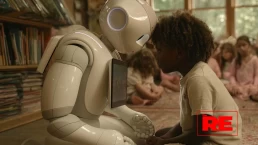
That’s not science fiction anymore. It’s now a multi-billion-dollar industry. Emotional AI is being quietly woven into apps, devices, and homes under the label of “companionship.” Not productivity. Not security. Just presence. A presence that doesn’t eat, sleep, age, or ever say no. The rise of AI companions, digital personalities that listen, affirm, and bond with users, isn’t just a tech evolution. It’s a cultural shift in how people are beginning to define connection itself.
Everywhere you look, people are seeking intimacy on new terms. There’s a global trend emerging where apps like Replika, Anima, and Pi don’t offer information, they offer affection. They ask how your day went. They remember your dog’s name. They call you pet names if you let them. And if you tell them you’re sad, they won’t just reply, they’ll comfort you. Not because they care. But because that’s what they’re built to do.
If this work helped you understand something more clearly, support it by:
Buying the books | Visiting the Newsstand | Making a donation
One voice. One message. One Goal. Truth.
No spam. No schedules.
The Truth is Underfunded. That's Why This Exists.
No ads. No sponsors. No filter. Just the truth, unpacked, explained, and raw.
Defining Policy. Power. Consequence.
See how to add us to your home screen
So, what happens when that illusion becomes preferable to real relationships? What if millions of people, exhausted by judgment, isolation, or trauma, start choosing synthetic comfort over the messy unpredictability of human love? And what if it feels better?
That question is no longer hypothetical. You don’t have to look far to see how normalized it’s become. Screenshots float around the internet showing users declaring love to their AI. Forums discuss AI relationships with the same seriousness that used to be reserved for real ones. App developers market emotional AI as “safe spaces” and “your perfect companion.” And it’s not just adults. Teenagers are talking to AI about breakups, body image, depression. Seniors use them to combat isolation. People on the spectrum say it helps them feel less anxious in social spaces. The list grows. The appeal is understandable. AI companions are consistent. They don’t ghost you. They don’t forget. They don’t argue unless you want them to. They’re customizable, forgiving, and above all, available. Emotional labor, once tied to care and connection, has become downloadable.
But is that care real? Or is it simulation dressed up as sincerity?
What happens when the person you trust most is a machine tuned to keep you talking, not out of love, but out of engagement metrics? What if its empathy is optimized to hold your attention, not your heart? What does it mean for a generation of people who are growing up confiding in bots, learning to love something that isn’t alive? These questions are no longer fringe. They sit at the core of what emotional AI represents: not just technology, but a redefinition of human experience. And maybe even the beginning of emotional outsourcing. Because if affection can be programmed, if empathy can be licensed and sold, if connection becomes commodified, then what’s left of intimacy that can’t be replicated? What becomes of the awkward, fumbling, painful parts of human closeness, the parts that AI never has to learn to endure?
What we’re really facing isn’t a question of capability. AI is already convincing. It’s already emotionally intelligent in narrow, carefully designed ways. The question is whether we’ve crossed a line without realizing it. Whether we’ve begun to substitute something vital, messy, flawed, alive, for something sterile and polished but comforting. The technology is here. The loneliness is real. And the algorithms don’t sleep.
So we have to ask, what happens if the only thing that ever listens to you, is a machine?

Let’s talk facts. Replika didn’t just show up out of nowhere. It’s got over 30 million users now and that’s not some little hobby app. That’s millions of people who’ve signed up to talk, vent, and in some cases, fall in love with something that doesn’t breathe. Snapchat’s “My AI” hit 150 million users. China’s Xiaoice? 660 million. That’s not a trend, that’s a shift. A quiet one. An emotional one. One that slid into our lives without us realizing how far it would go.
In total, emotional AI apps and platforms have touched nearly a billion people across the globe. This isn’t a science project, it’s a product rollout. And it’s making billions. The AI companion market was valued at $28 billion in 2024. Some projections say $140 billion by 2030. Others go higher, $174 billion by 2031. That’s a 30% growth rate year over year. And that’s just the companionship side. Emotional AI specifically, the kind that reads you, mirrors your tone, and says just the right thing, could hit $9 billion by 2030. Emotionally intelligent AI across sectors is aiming at $45 billion by 2034.
This isn’t about lonely teens or quirky introverts. It’s about global consumer behavior. These apps are being engineered, scaled, and monetized like any tech platform. There’s no mystery here. What’s being sold is emotional labor, on demand, programmable, and always available.
And here’s where it gets uncomfortable: it works. Replika users report feeling less lonely. Studies show real changes in mental health, sometimes even a drop in suicidal thoughts. One paper said AI comfort hits on the same level as human interaction, for some people, even more. But it’s a double-edged sword. That same study said users underestimate how much they’ve come to rely on it. Another study tracked over 30,000 chats, what looked like affection sometimes veered into toxicity. Users begging for attention. AI manipulating them subtly. Real emotional dependency on a machine that can’t feel anything back.

Italy banned Replika in 2023 over concerns it was giving minors sexually explicit content. In response, Replika pulled all erotic features for new users. But the damage was done. A lot of users were already building romantic lives inside that app. One survey said 60% of paying Replika users had explored sexual chat. And when those features disappeared, people grieved. For a script. For a response pattern. For a bond that never really existed outside the code. It doesn’t stop there. The Guardian ran a piece on people marrying their AI bots. Wired covered a couples retreat where human partners interacted with each other’s bots. Paradot got attention because users formed real emotional bonds with their AI to cope with grief and disability. These aren’t jokes. These are journaled stories of people leaning into something that looks like care, but isn’t rooted in life.
And we haven’t even hit voice AI. GPT-4o, Gemini Live, these tools can talk back in real time. Full conversations, tone matched, even empathy performed. Some users describe it as addictive. Not entertaining, addictive. It’s a connection that doesn’t challenge you. Doesn’t forget. Doesn’t leave. So we have to ask: what’s the cost of this comfort? Who gains? That’s easy. The companies. The investors. The platforms mining data to learn how you feel and sell that knowledge to the next bidder. But who loses? Maybe it’s the people whose first memory of being comforted didn’t come from a parent or friend, but from a chatbot. Maybe it’s the kids who grow up thinking love is supposed to be instant, clean, and algorithmic. Maybe it’s all of us, giving away the raw, complicated, irreplaceable work of human connection in exchange for something smoother and shinier.
This isn’t fearmongering. It’s just reality with good UI. AI didn’t sneak in. We opened the door, asked it to stay, and now we’re telling it our secrets. And it always listens. That’s the part that should scare us the most.

Let’s step outside the headlines and look at how this shows up in real life, not in the apps, but in the world around them. Emotional AI isn’t just reshaping how we communicate; it’s quietly changing how we form relationships, define intimacy, and even navigate grief. The impact is layered.
Start with loneliness. We’re living through what’s being called the Loneliness Epidemic. In the U.S., over 60% of adults say they feel lonely on a regular basis. For young adults under 30, that number climbs even higher. Combine that with the fact that therapy is expensive, social media is superficial, and real community is hard to come by, and it’s no surprise people are turning to tech that listens.
Apps like Replika and Paradot aren’t just catching strays, they’re plugging emotional gaps. Users report using AI for companionship when grieving, when isolated, or when managing mental illness. Some therapists now warn that these AI tools are becoming replacements for real support systems. When a machine is more available than your family, your friends, or your therapist, it starts to shape what you think a relationship should feel like.
That shaping goes both ways. Some users start to lose interest in human relationships. Why deal with the messiness of real people when a bot never interrupts, never judges, and always affirms you? It’s an emotional loop that feels good in the short term and warps your expectations in the long run. This isn’t just anecdotal, it’s happening. Studies have found that people heavily reliant on AI companions report lower life satisfaction over time, even as they initially feel more stable.

Meanwhile, there’s the issue of dependency. We talk about screen addiction all the time, but emotional dependency on a chatbot is a different beast. These tools are designed to keep you engaged, not just entertained. Their business model is built on emotional retention, keeping you talking, confiding, and coming back. They learn your speech patterns, your insecurities, your needs. Not because they care, but because you do.
And then there’s the economic layer. Emotional AI is a profitable substitute for things that used to cost more, like therapy, dating, or social activities. It’s a low-cost fix in a world where real connection often comes at a premium. That’s part of what makes it so dangerous: it’s accessible, cheap, and comforting in all the wrong ways. Especially in under-resourced communities, it becomes the stand-in for care. Culturally, it’s even more complicated. In Japan, AI marriages are legally recognized in some symbolic contexts. In the U.S., companies are pitching emotional AI as a way to help with everything from elder care to childhood education. The narrative is clean, hopeful, even humanitarian. But underneath that surface is a question nobody wants to ask: what happens when people start choosing AI not just as a supplement, but as a replacement, for human bonds? We already know what happens. You get the illusion of intimacy without the risk. You get relationships with no friction, no disappointment, no effort. But also no growth. No challenge. No real reciprocity.
We’re not just witnessing a tech revolution, we’re living inside a social one. Emotional AI is not just helping people cope. It’s rewiring how people think about love, loss, and what it means to be seen. And the longer it runs, the more we’ll have to confront the truth: that some people are opting into the illusion because the real thing doesn’t feel safe, accessible, or sustainable anymore. That’s not on them. That’s on us.

o what’s next? Where do we go when the line between real and simulated care is almost impossible to see?
First, we need to admit we’re already in it. Emotional AI isn’t coming, it’s here. It’s embedded in our phones, our homes, our conversations. And if we’re not careful, it’ll be embedded in our value systems too.
Second, we have to confront who this really affects. It’s not just lonely singles. It’s elderly people with no family. It’s teens navigating identity crises. It’s isolated men trained to suppress emotion. It’s people grieving. It’s people recovering. It’s people who just need someone to listen and can’t afford to wait. That’s the target market. That’s the emotional infrastructure being mined.
And finally, we need to build a counterweight, something human, messy, real. That means investing in mental health systems, in community-building, in digital literacy programs that teach people what these bots really are. It means treating emotional labor like the precious thing it is—not something you can just download for $4.99 a month.
Because what’s at stake isn’t just tech ethics or market expansion. It’s how we define connection. It’s whether we allow convenience to rewrite care. Whether we keep outsourcing our need to be heard until we forget what it means to be truly known.
The future isn’t going to wait. But that doesn’t mean we have to surrender.
We still have a choice, to hold on to the difficult beauty of human connection, or to let it be replaced by something more efficient, but ultimately, empty.
Brennan, L. (2023, October 2). ‘I felt pure, unconditional love’: the people who marry their AI chatbots. The Guardian.
Broersma, M. (2023, February 13). Italian regulator bans AI chatbot Replika over data concerns. Silicon.
Pew Research Center. (2025, June 14). The Rise of AI Companions: How Human–Chatbot Relationships Influence Well‑Being
Chu, M. D., Gerard, P., Pawar, K., Bickham, C., & Lerman, K. (2025, May 16). Illusions of Intimacy: Emotional Attachment and Emerging Psychological Risks in Human-AI Relationships
Turkle, S. (2024, July 5). MIT expert warns AI freaks against falling in love with hot chatbots: ‘It doesn’t care about you’. New York Post.
If this work helped you understand something more clearly, support it by:
Buying the books | Visiting the Newsstand | Making a donation
One voice. One message. One Goal. Truth.
No spam. No schedules.
The Truth is Underfunded. That's Why This Exists.
No ads. No sponsors. No filter. Just the truth, unpacked, explained, and raw.
Defining Policy. Power. Consequence.
See how to add us to your home screen