The Ripple Effect
-News and Commentary-
When Distance Collapsed: What Minneapolis Changed in the American Mind
By TP Newsroom Editorial | Ripple Effect Division
Before anyone called it a turning point, before it became something that could be framed or debated in hindsight, there was simply a feeling that the air had changed. It did not happen overnight. It was gradual, and because it was gradual, it was easy to ignore. You could still go to work, still run errands, still argue about sports or gas prices. Daily life did not stop. But in the background of that normalcy, something else was settling in. A tone. A posture. A sense that power was being exercised differently, or at least spoken about differently.
When Trump returned to office, reactions split along predictable lines, but what interested me was not the split itself. The country has been divided for years. What mattered was how governance began to feel. The rhetoric coming out of Washington leaned heavily into strength, into enforcement, into the idea that order required visible authority. ICE operations were described with language that signaled expansion rather than moderation, and that shift in language matters because language shapes expectation. When officials talk about surges and crackdowns, they are not simply describing activity. They are setting a tone for how power will be perceived.
At the same time, the Supreme Court’s 6 to 3 majority remained intact, and over time it had reinforced executive authority in ways that supporters saw as constitutional correction and critics saw as concentration. Either way, the effect was similar. For many Americans, that alignment read as stability. For others, it read as consolidation. The difference between those interpretations depended largely on whether you trusted the direction of the authority being strengthened.
But even with those shifts, most people experienced it as something happening out there. Immigration enforcement still felt like an issue connected to the border or to specific neighborhoods in specific cities. Police overreach, federal sweeps, detention facilities, these were stories that circulated on screens. You could have opinions about them. You could argue about them. But they did not necessarily intrude on your own sense of security. They were debated in abstract terms: law and order versus civil rights, sovereignty versus compassion, enforcement versus overreach. Abstraction allows a kind of emotional distance; it turns lived experience into policy discussion.
That distance, which we rarely talk about directly, is one of the quiet stabilizers in a democracy. As long as the majority of people do not feel personally threatened by state power, they can tolerate aggressive language around it. They may not agree with it, but they can place it in the category of political disagreement rather than personal risk. They can watch a heated exchange on television and then change the channel. They can tell themselves that whatever is happening is happening somewhere else.
Over time, though, the language itself began to narrow that distance. Phrases about enemies within, about rooting out threats, about restoring control were not unusual in American politics, but they were delivered with less cushioning than in previous cycles. The emphasis was on decisiveness. Supporters interpreted that as leadership. Critics heard warning. Moderates often heard both and struggled to reconcile them. The result was not immediate upheaval. It was a steady rise in tension that people felt but could not easily describe without sounding alarmist.
And I am not interested in alarmist language. Saying that fascism had arrived does not help anyone think clearly. It forces people into defensive positions. What felt more accurate was simpler. The temperature was rising. Conversations felt sharper. Disagreement felt less like debate and more like accusation. Institutions were discussed not as imperfect guardians but as obstacles or tools, depending on who was speaking. The center of gravity in political discourse had shifted toward power as something to be asserted rather than balanced.
Still, insulation remained intact for many Americans. If you lived far from heavy enforcement zones, you could see immigration raids as part of a broader strategy without imagining agents on your street. If you did not belong to communities historically subjected to aggressive policing, you could process stories of overreach as tragic but isolated. Insulation does not mean indifference; it means the absence of immediate vulnerability. And that absence shapes how much urgency people bring to an issue.
There is also a psychological component that often goes unspoken. When state power primarily impacts groups that have long been categorized as different, whether by race, class, or immigration status, the broader public can file those impacts under existing narratives. Some see enforcement as necessary because they associate those groups with disorder. Others see injustice but assume it is a continuation of historical patterns rather than a sign of expanding reach. In both cases, the events remain contained within a mental framework that does not require reevaluating one’s own safety.
That containment was beginning to strain, but it had not yet broken. You could sense discomfort among people who were not traditionally vocal about politics. They were not marching. They were not posting constantly. But they were listening differently. The tone of authority felt closer, even if the actions still felt distant. That subtle shift is difficult to measure, but you can see it in how quickly rumors spread, in how cautiously people discuss federal policy in mixed company, in how often the phrase “this feels different” appears without a clear explanation of why.
Meanwhile, supporters of the administration argued that what critics described as overreach was simply governance with clarity. They pointed out that enforcement had always existed, that executive power had always fluctuated, that the Supreme Court had long shaped federal authority. In that sense, nothing was new. The disagreement was not about the existence of power; it was about the tone and trajectory of it. Was this correction, or was this escalation? Was this stability, or was this consolidation? Those questions circulated without consensus.
The broader public, however, did not initially react with mass mobilization. The reaction was more subdued, almost watchful. People paid attention. They argued online. They voted in local elections with these issues in mind. But for many, the line between policy and personal life remained intact. Enforcement was something to evaluate, not something to fear.
That distinction is critical. When authority feels theoretical, it can be debated. When it feels proximate, it is experienced. And before any specific event forced that transition, the country was living in the theoretical phase. Power was visible, yes. Strong language was visible. Institutional alignment was visible. But the average person could still tell themselves that whatever changes were unfolding were changes within the system, not changes that would reach into their own neighborhood.
In practice, that meant tension coexisted with routine. People could sense that something in the political atmosphere had hardened, yet daily life offered enough normalcy to dampen urgency. Markets still opened. Schools still operated. The rhythms of ordinary existence continued. It is difficult to mobilize a population when their lived experience has not yet shifted, even if their perception of national tone has.
Looking back, that is the space the country occupied before the break. Not asleep, not unaware, but insulated. Aware enough to argue, insulated enough to remain abstract. The temperature was rising, and people felt it in different ways, but it had not yet crossed the threshold where perception turns into shared vulnerability. That threshold, when it comes, rarely announces itself in advance. It simply changes how events are processed, and once that processing changes, the conversation changes with it.
If this work helped you understand something more clearly, support it by:
Buying the books | Visiting the Newsstand | Making a donation
One voice. One message. One Goal. Truth.
No spam. No schedules.
The Truth is Underfunded. That's Why This Exists.
No ads. No sponsors. No filter. Just the truth, unpacked, explained, and raw.
Defining Policy. Power. Consequence.
See how to add us to your home screen
When the shootings happened in Minneapolis, the immediate reaction was grief and anger, which is what you would expect when anyone dies at the hands of federal agents. There were protests, statements from officials, social media reactions, and the usual cycle of breaking news coverage. But what made these deaths different was not simply the fact that they occurred during an immigration enforcement push. It was the way they disrupted the insulation that had allowed much of the country to treat enforcement as something distant.
For years, immigration enforcement and federal sweeps had lived inside categories. They were framed as border issues, as urban issues, as problems connected to undocumented populations or communities already associated with political conflict. Even when mistakes happened, even when citizens were caught in the machinery, those incidents were often processed as tragic anomalies rather than signals of a broader shift. The national conversation tended to circle back to policy arguments rather than vulnerability. Law and order versus civil liberties. Security versus overreach. It remained theoretical for many.
The deaths of Renée Good and Alex Pretti did not fit comfortably into that existing framework. Both were citizens. Both were white. Both were professionals with lives that resembled the everyday profile of people who had not previously imagined themselves inside the reach of aggressive immigration enforcement. That detail does not make their deaths more tragic than others. It makes them harder to categorize. And categorization is how societies protect themselves emotionally.
When harm falls on people who have long been positioned as different or other, it is easier for the majority to interpret that harm through preexisting narratives. It is easier to say there must have been context, there must have been circumstances, there must have been some reason that explains the escalation. When harm crosses demographic lines that have historically insulated the majority from that kind of scrutiny, the rationalizations begin to strain. This is not a new dynamic.
There is a scene in A Time to Kill that people still reference decades later. In that courtroom, the defense attorney asks jurors to imagine that the child who had been brutalized was white instead of Black. The power of the moment is not about manipulating emotion. It is about forcing identification. The exercise collapses distance. It requires the jurors to move from abstract sympathy to personal imagination.
What happened in Minneapolis operated in a similar psychological space. When federal agents use lethal force during an enforcement surge, many Americans can process that information through political alignment. They either trust the agents or they question them, but the event remains part of a broader policy debate. When the victims resemble people who had previously felt insulated from that enforcement posture, the debate shifts. It becomes less about ideology and more about unpredictability. The shift is subtle but significant.
It is one thing to argue that strong enforcement is necessary because it targets people you believe are breaking the law. It is another to confront the reality that enforcement machinery does not always stay neatly within the lines drawn in campaign speeches. Once citizens who fit the majority profile are killed during those operations, the question is no longer only whether enforcement is justified. The question becomes how far that enforcement can reach and how reliably it distinguishes between threat and bystander. That question introduces vulnerability into the conversation. And vulnerability alters tone.
In the days following the shootings, you could see that alteration in real time. Protesters were not framed exclusively as activists from historically marginalized communities. They included neighbors who had never attended a march before. Local officials who might have once hesitated to challenge federal operations spoke with more urgency. Media coverage shifted from policy discussion to personal narrative. Stories about Good’s family, about Pretti’s work as a nurse, about the ordinariness of their routines before the encounters with federal agents began circulating widely. Ordinariness matters because it invites identification.
When the public sees itself reflected in victims, the insulation between policy and personal life thins. It does not disappear entirely. Political loyalty remains powerful. Some commentators immediately defended the agents and urged patience for investigations. Others called the shootings evidence of systemic abuse. But the emotional register broadened. The conversation was no longer contained within familiar partisan lanes.
It is important to approach this carefully. The argument is not that white lives provoke more empathy than Black or brown lives. That claim oversimplifies a much more complex pattern. Communities of color have long protested state violence and demanded accountability, often without broad national alignment. The pattern that deserves examination is not about moral worth. It is about perceived proximity.
For many Americans who had previously treated immigration enforcement as an issue that affected other communities, these deaths disrupted that mental boundary. The idea that federal agents operating under an enforcement surge could fatally shoot citizens who looked like neighbors, coworkers, or family members forced a recalibration. It introduced uncertainty where there had been distance. Uncertainty is difficult for political systems to absorb quietly.
As video circulated and details emerged, the narrative could not easily be confined to the usual talking points. The fact that both victims were white complicated attempts to dismiss the protests as identity politics. It also complicated attempts to frame criticism of enforcement as purely partisan. The events felt less like a niche controversy and more like a question about the reach of state power itself.
That shift does not happen automatically. It requires repetition, visibility, and credibility. The footage from Minneapolis, the statements from witnesses, the medical examiner’s reports, and the rapid spread of coverage across mainstream outlets contributed to a shared awareness that something significant had occurred. Even people who remained supportive of strong enforcement had to grapple with the possibility that the machinery of that enforcement was not as contained as they had assumed. And that is where the insulation cracked.
Not because the country suddenly discovered injustice. Not because racism disappeared. But because the emotional calculus changed. The deaths could not be neatly filed under the category of someone else’s problem. They required Americans who had felt buffered to imagine themselves inside the perimeter of federal authority.
Once that imagination takes hold, the conversation changes. It becomes less about abstract principles and more about guardrails. It becomes less about political loyalty and more about limits. Even if only temporarily, the public begins to ask how power is exercised, how mistakes are addressed, and how accountability functions when federal agents are involved.
The system did not transform overnight. Laws did not instantly shift. But the illusion of distance, which had allowed many to treat aggressive rhetoric as theoretical, weakened. That weakening is what made Minneapolis more than a local tragedy. It became a psychological breach in a country that had been living comfortably with compartmentalized tension. And once distance collapses, even partially, the tone of national conversation rarely returns to what it was before.

After Minneapolis, the reaction did not unfold in one clean direction. It moved in layers, and those layers tell you more than the headlines did. There were protests, yes, but there were also town halls, closed-door meetings, cautious statements from officials who had previously avoided direct confrontation with federal enforcement. What shifted was not simply volume; it was who was speaking and how they were speaking.
In the weeks before the shootings, criticism of aggressive enforcement had largely been framed as a familiar ideological divide. Progressive leaders warned about overreach. Conservative leaders defended the necessity of forceful action. Moderates often stayed quiet, calculating political risk in a climate that rewarded certainty more than nuance. After the deaths, that calculation became harder to maintain. Local officials in Minneapolis, including those who had not been especially vocal on immigration policy, began asking pointed questions about operational protocols and coordination. Governors and mayors who once defaulted to deference toward federal agencies adopted a more cautious tone, not because their party alignment had changed, but because their constituents were asking different questions.
Media coverage followed a similar pattern. Early reports focused on the basic facts, as they always do, but over time the framing broadened. Instead of treating the shootings as isolated incidents within a law enforcement surge, outlets began examining how federal operations were structured, how information was shared with local authorities, and what mechanisms existed for independent review. Even commentators who generally favored strong enforcement found themselves emphasizing the need for transparency. That rhetorical shift matters because media tone influences how the public interprets risk. When coverage moves from defensive to investigative, readers sense that the issue has crossed a threshold.
Quiet voters, the kind who rarely attend rallies or post political statements online, also began to surface in the conversation. You could see it in local interviews, in letters to the editor, in small community meetings that received little national attention but signaled something else. People who had not previously felt compelled to speak about immigration enforcement started asking how decisions were made and whether the lines between federal and local authority were clearly drawn. They were not suddenly aligning with a different political party; they were reacting to a sense that something once distant had become unpredictable.
Predictability is one of the unspoken pillars of legitimacy. Citizens can tolerate strong government if they believe its actions are bounded and consistent. They may disagree with policy, but they assume that rules apply in recognizable ways. When enforcement actions appear erratic or overly broad, that assumption weakens. In Minneapolis, the debate turned less on whether immigration laws should be enforced and more on how enforcement was being carried out. That distinction seems subtle, but in practice it reorients the conversation from ideology to structure.
You could also observe tension inside conservative circles, although it was not always loud. Some supporters of the administration remained firm, arguing that tragic outcomes do not invalidate broader policy goals and that investigations would clarify what happened. Others, however, expressed unease about the optics and the potential for federal authority to appear unrestrained. This was not open rebellion; it was discomfort, and discomfort within a governing coalition can be more consequential than external criticism because it suggests recalibration.
Recalibration does not mean reversal. It means adjustment in tone, in messaging, sometimes in practice. Statements from federal officials began to emphasize training, coordination, and review processes. There were references to internal investigations and to cooperation with local authorities. The language became more measured, which often signals recognition that public trust requires reinforcement. Whether those measures would lead to substantive change remained uncertain, but the rhetorical shift indicated that the events in Minneapolis had altered the environment in which enforcement was being defended.
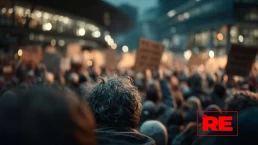
Meanwhile, protests expanded beyond traditional activist networks. Demonstrations in other cities drew participants who described themselves as politically independent or previously disengaged. They were not necessarily calling for the abolition of federal agencies; many were asking for clearer limits and stronger oversight. The slogans on signs varied, but the underlying message was consistent: people wanted assurance that power had boundaries.
That desire for boundaries is not inherently partisan. It is a recurring theme in American political life, one that surfaces whenever authority feels concentrated. In earlier periods, similar concerns emerged around surveillance programs, around counterterrorism measures, around policing tactics. The details differ, but the pattern is recognizable. When citizens sense that tools designed for specific purposes are expanding beyond their intended scope, they begin to scrutinize the architecture of power rather than just the policy outcomes.
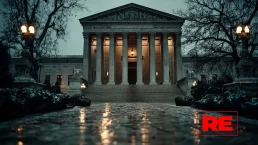
In the weeks following the shootings, conversations about the Supreme Court also took on a different texture. Previously, debates about the Court’s 6 to 3 majority focused on long-term ideological direction, on constitutional interpretation, on federalism. After Minneapolis, some commentators began asking how judicial deference to executive authority might interact with on-the-ground enforcement decisions. The Court had not ruled on these specific incidents, but the broader question of how much latitude the executive branch should have became less abstract. When real-world events raise concerns about overreach, theoretical discussions about separation of powers acquire sharper edges.
Still, it would be misleading to suggest that the country reached consensus. Polarization did not vanish. Social media remained divided. Some commentators accused critics of exploiting tragedy to undermine enforcement. Others accused defenders of ignoring systemic problems. But beneath that familiar surface conflict, something else was happening. The range of voices engaging the issue widened, and that widening indicated that the insulation had not simply cracked; it had exposed uncertainty in places that had previously felt secure.
The system did not collapse. Federal agencies did not dissolve. Elections did not immediately swing in response to the shootings. What shifted was subtler and therefore harder to quantify. The illusion that enforcement existed safely within clearly defined boundaries weakened, and once that illusion weakens, public confidence depends less on rhetoric and more on demonstrated accountability. Political leaders who once relied on strength as their primary message began pairing that strength with reassurances about oversight. Even if those reassurances were strategic, they signaled awareness that the ground had moved.
Whether that movement represents a lasting change or a temporary adjustment remains open. Political memory can be short, and crises often fade as new events command attention. Yet moments like Minneapolis leave impressions that linger beneath the surface. They alter how future enforcement actions will be received, how quickly skepticism will arise, how readily citizens will accept official narratives without question.
In that sense, the shift was not about immediate transformation. It was about recalibration of trust. And recalibration rarely announces itself dramatically; it unfolds in the cautious tone of a mayor’s press conference, in the careful phrasing of a governor’s statement, in the uneasy defense offered by a supporter who suddenly feels compelled to add the phrase “if mistakes were made.” Those are small signals, but together they reveal that something fundamental has been reconsidered, even if only partially.
The events in Minneapolis did not rewrite the Constitution or overturn policy overnight. What they did was challenge the assumption that aggressive enforcement could remain politically insulated. Once that assumption was tested, every subsequent action would be measured against a different baseline, one shaped not only by ideology but by the memory of proximity.

If you step back from the immediate headlines and the partisan reactions, what remains is a harder question that does not resolve cleanly. Moments like Minneapolis force a country to examine itself, but they do not dictate what the examination will produce. They can lead to reform. They can lead to retrenchment. They can harden loyalties just as easily as they soften them. The direction depends on whether the shift is rooted in empathy or in fear, and sometimes the two are intertwined in ways people do not want to admit.
There is a tendency in American history to look for singular turning points. We talk about watershed moments as if they arrive fully formed, changing the moral trajectory of the country in one stroke. In reality, those moments are often understood clearly only in retrospect. At the time, they are confusing, contested, and emotionally uneven. The murder of Emmett Till did not instantly produce civil rights legislation; it exposed brutality in a way that became impossible to deny for people who had previously avoided looking directly at it. The power of that event lay not in novelty but in visibility. It forced confrontation with a reality that many preferred to keep distant.
The parallel here is not about scale or equivalence. It is about the psychological mechanism. When violence or overreach remains confined within communities that the majority perceives as separate, the majority can maintain a buffer. When that violence crosses perceived boundaries, the buffer weakens. The question is what replaces it. Does empathy expand in a durable way, leading to broader demands for accountability and restraint? Or does vulnerability simply redirect concern inward, prompting people to protect themselves without necessarily engaging the deeper structural issues that have long affected others?
Those possibilities are not mutually exclusive. A person can feel genuine empathy and still act from self-interest. A community can demand reform because it fears exposure, even if it has not previously supported similar reforms for others. That complexity does not invalidate the shift; it complicates its interpretation. Democracies often move forward through imperfect motivations. The origin of change does not always align with the narrative later told about it.
What is clear is that insulation has been disturbed. The assumption that aggressive federal enforcement can operate at a distance from the everyday lives of the majority is harder to sustain after Minneapolis. Even if investigations ultimately clarify the circumstances of each shooting, the memory of proximity will linger. People who once processed enforcement stories as abstract will recall that citizens like them were involved. That recollection reshapes future reactions, sometimes subtly, sometimes decisively.
There is also the institutional dimension to consider. Public trust in federal agencies depends not only on outcomes but on process. When lethal force is used, especially during politically charged operations, transparency becomes central. If the public perceives that information is withheld or accountability is delayed, skepticism deepens. If investigations are thorough and clearly communicated, trust can be partially restored. The durability of this moment will hinge on how institutions respond over time, not just on the immediate shock of the events.
At the political level, leaders will continue to interpret Minneapolis through their preferred frameworks. Some will argue that isolated mistakes should not undermine necessary enforcement. Others will insist that the incidents reveal systemic flaws. Voters will sort themselves along familiar lines, but within those lines there may be greater sensitivity to the boundaries of power. Candidates who once relied solely on promises of strength may feel compelled to articulate how that strength is constrained. That shift in emphasis, even if modest, reflects an altered emotional landscape.
The deeper question, however, is whether this represents moral awakening or recalibrated self-protection. It is tempting to declare that the country has rediscovered its conscience, but history cautions against such certainty. Empathy that emerges from identification can broaden concern, yet it can also narrow focus to one’s own vulnerability. The challenge for any democracy is whether it can translate moments of proximity into principles that apply consistently, rather than selectively.
Consistency requires difficult reflection. It means acknowledging that communities of color have raised alarms about state violence for decades, often without widespread alignment. It means asking whether the new discomfort felt by previously insulated groups will extend to those long-standing grievances. If proximity leads to broader solidarity, the shift could mark a meaningful step toward balanced oversight of power. If it remains confined to protecting those who now feel exposed, the change may prove shallow.
None of this resolves neatly. Democracies are messy, and progress rarely follows a straight line. What Minneapolis has done is introduce doubt into assumptions that once felt stable. Doubt about how far enforcement reaches. Doubt about whether rhetoric and practice are aligned. Doubt about whether institutions can manage concentrated authority without overstepping. Doubt can be destabilizing, but it can also be generative. It forces conversation that complacency avoids.
Over time, the intensity of this moment will fade, as all news cycles do. Other issues will compete for attention. Yet beneath the surface, the memory of proximity will remain part of the political consciousness. It will inform how future enforcement actions are interpreted, how quickly skepticism surfaces, how insistently citizens demand clarity. Whether that leads to structural reform or simply to more cautious messaging from those in power will depend on sustained engagement rather than immediate reaction.
In the end, the story is not about the disappearance of division or the triumph of one political camp over another. It is about insulation and what happens when it weakens. Democracies rely on a shared understanding that power, while necessary, is bounded and accountable. When that understanding is challenged, even indirectly, citizens reassess their relationship to the state. They ask new questions, or old questions with sharper urgency.
Minneapolis did not resolve those questions. It posed them more widely. And perhaps that is the most honest way to frame this moment. Not as a clean moral breakthrough, not as a descent into authoritarian certainty, but as a shift in perception that has unsettled comfortable distances. What the country does with that unsettled space will determine whether this was a brief disturbance or the beginning of a more sustained examination of how power operates and whom it protects.
When you strip away the politics and the noise, what remains is a country wrestling with perception. Not perception in the shallow sense of branding or spin, but perception in the deeper sense of how people understand their relationship to power. That relationship is rarely examined until something forces it into view. Most citizens do not wake up thinking about federal authority. They think about work, family, obligations, and the small decisions that shape their immediate world. Power operates in the background, often unnoticed, and that invisibility is part of what allows a democracy to function without constant anxiety.
But invisibility depends on predictability. It depends on the belief that enforcement mechanisms, however aggressive in rhetoric, will operate within boundaries that protect ordinary life. When that belief is unsettled, even temporarily, it changes how people listen to speeches, how they interpret policy announcements, how they weigh promises of strength against assurances of restraint.
The events in Minneapolis did not invent concern about state overreach. Communities across the country have voiced those concerns for generations. What changed was the audience. People who had previously viewed those concerns as part of someone else’s struggle were now confronted with a version of the same fear. Not because their lives had been directly altered in every case, but because the possibility of alteration felt more plausible.
That plausibility matters more than ideology. It reaches into households that are not politically active and introduces a new calculation. If enforcement can misfire here, what does that mean about oversight? If rhetoric emphasizes dominance, how is accountability maintained? These are not radical questions. They are foundational ones, and they resurface whenever concentrated authority appears to exceed its intended scope.
There is a risk in overstating the moment. Democracies do not pivot on single events as cleanly as we sometimes wish. Structural change requires sustained attention, and sustained attention is difficult in a media environment that constantly accelerates toward the next crisis. The memory of Minneapolis may fade from front pages, and political actors may recalibrate their messaging just enough to stabilize the narrative. That possibility does not negate the shift in perception; it simply acknowledges that perception alone does not guarantee reform.
At the same time, there is also a risk in understating what happened. When insulation weakens, it rarely restores itself in the same way. Once citizens have imagined themselves within the reach of aggressive enforcement, that imagination cannot be entirely reversed. Even if they return to supporting strong policies, they do so with a slightly altered awareness. That awareness can translate into more pointed demands for clarity and review, even among those who continue to favor tough rhetoric.
The larger issue, then, is not whether the country has become more moral overnight. It is whether empathy that begins with identification can extend beyond identification. If people now understand vulnerability because it touched someone who resembles them, can that understanding expand to include those who have lived with that vulnerability for years? Or will concern narrow once the immediate shock dissipates?
History suggests both outcomes are possible. Moments of shared vulnerability have sometimes broadened coalitions for reform, while in other instances they have produced defensive politics that seek only to secure one’s own perimeter. The direction depends on leadership, on media framing, and on whether civic institutions encourage inclusive reflection rather than zero-sum interpretation.
For now, the most honest assessment is that the emotional calculus has shifted. The country is not unified, and polarization has not disappeared. Yet the debate about enforcement and executive authority is no longer confined to abstract camps. It carries an undercurrent of lived possibility that did not feel as immediate before. That undercurrent changes the tone of discussion, even if it does not immediately change outcomes.
In the long run, the health of a democracy rests on how it balances power with restraint. Strong authority can coexist with civil liberty, but only when oversight is credible and boundaries are clear. Minneapolis has forced that balance back into public conversation. Whether that conversation deepens into structural evaluation or recedes into familiar partisan lines will determine the lasting significance of this moment.
What is certain is that insulation is no longer intact in the way it once was. People who once debated enforcement as a distant policy now understand it as something that can intersect unpredictably with ordinary life. That realization does not dictate a political conclusion. It simply reshapes the starting point of the discussion.
And in a democracy, where perception influences legitimacy as much as law, a reshaped starting point can matter as much as any statute.
If this work helped you understand something more clearly, support it by:
Buying the books | Visiting the Newsstand | Making a donation
One voice. One message. One Goal. Truth.
No spam. No schedules.
The Truth is Underfunded. That's Why This Exists.
No ads. No sponsors. No filter. Just the truth, unpacked, explained, and raw.
Defining Policy. Power. Consequence.
See how to add us to your home screen