The Ripple Effect
-News and Commentary-
The Shadow Workforce: Why Millions Need a Second Job to Stay Steady
By TP Newsroom Editorial | Ripple Effect Division
Download The Shadow Workforce POLICY BRIEF PDF by clicking here
Some people hear “side hustle” and think it means ambition. They think it means extra. They picture someone trying to get ahead. What they don’t picture is a grown man with a full career, a mortgage, two kids, and a badge from one of the largest logistics companies in the world. They don’t picture someone doing everything right and still sitting at the kitchen table on a Saturday night asking himself whether the numbers will stretch far enough to give his kids something beyond the loop of work and home.
For years I made one hundred thirty thousand dollars at UPS. That was salary, not overtime. Management. Investigations. Training. Real responsibility. And even with all of that, the math of being a single dad still pushed me into weekend hustle mode. Saturdays and Sundays weren’t passion projects or entrepreneurial dreams. They were the bridge that kept my family from living a life where everything was routine and nothing had room to breathe. The gig paid for the little things that make childhood feel like childhood. A trip. A dinner. A day out. Not luxury. Just life.
A lot of people feel that same squeeze but nobody wants to say it out loud. They think they’re the only ones running on fumes. They think they messed up somewhere. They think the problem is personal. It isn’t. The truth is millions of people are living in a version of that same loop. One job covers the basics. The second job covers the gaps. The side income keeps the whole thing from collapsing.
That’s the real shadow workforce. People with full time careers who still feel like they need a backup plan to stay afloat. People who do Uber or DoorDash or subcontracting or weekend shoots or freelance shifts because the cost of everything keeps drifting away from the wages that are supposed to meet it. People who don’t want to hustle but do it anyway because the alternative is watching their kids grow up inside a budget that never stretches.
When you work a gig on top of a career, you start to learn something uncomfortable. Stability isn’t what we were told it was. Stability used to mean one job carried the weight. Stability used to mean you could plan long term. These days, stability feels like something you assemble out of scraps. Your main job gives you the structure. The gig gives you the slack. Without the slack, you’re tight every month. Without the structure, you’re scrambling. Most people are holding both at the same time.
And this isn’t hustle culture. That stuff died the moment groceries shot up, rent spiked, and insurance started costing more than some people’s car notes. This isn’t about wanting more. This is about trying not to fall behind. This is about a workforce that was told the American Dream still lives on a forty hour week, only to discover the dream quietly moved into the fifty and sixty hour range without the pay following it.
People don’t talk about this because it sounds like defeat. It isn’t defeat. It’s adaptation. It’s survival. It’s a reflection of how far the numbers have drifted from what life actually costs.
If that feels familiar, that’s because it is. Millions are living it. Millions are adjusting. Millions are keeping families afloat by stacking hours on top of hours because the country decided to raise the price of everything except the value of a paycheck.
This is the world the shadow workforce grew out of. A world where one job is respectable and two jobs are normal. A world where being responsible still requires backup. A world where the math no longer adds up without the gig in the corner propping up the rest.
If this work helped you understand something more clearly, support it by:
Buying the books | Visiting the Newsstand | Making a donation
One voice. One message. One Goal. Truth.
No spam. No schedules.
The Truth is Underfunded. That's Why This Exists.
No ads. No sponsors. No filter. Just the truth, unpacked, explained, and raw.
Defining Policy. Power. Consequence.
See how to add us to your home screen
Here is what sits underneath the feeling. The gig economy didn’t explode because people suddenly wanted to be entrepreneurs. It exploded because the cost of living sprinted ahead of wages and never looked back. The Bureau of Labor Statistics says nearly forty percent of American workers now have some form of side income. That number jumps even higher for single parents, renters, and people living in cities where the price of groceries alone feels like a tax. These aren’t dream chasers. These are people filling gaps.
Look at wages. Adjusted for inflation, the average American paycheck has barely moved in twenty years. Housing costs have doubled in many regions. Childcare costs have nearly tripled. Food prices climbed more in three years than they used to rise in ten. Insurance, utilities, transportation, all of it climbed at a pace that outpaced raises. A thirty dollar grocery item in 2019 is forty five today. Nobody budgeted for that. Nobody planned for that. The math shifted and people had to shift with it.
That is how gig work became normal. It wasn’t because people stopped wanting steady jobs. It was because steady jobs stopped covering steady life. Millions of workers stepped into part time delivery, rideshare apps, contract projects, weekend shifts, anything that produced a separate stream of cash that could handle the stuff the main job no longer absorbed. It became routine to finish a forty or fifty hour week and still open another app to squeeze out a few more dollars.
And here is the part people in boardrooms still don’t understand. Gig workers aren’t fringe. They are woven directly into the core of the economy. DoorDash has more drivers than UPS has employees. Uber has more active U.S. drivers than Delta has staff. Amazon Flex, Instacart, Shipt, TaskRabbit, all of them together pull in millions of people who already have jobs and still need hours on the side. This is not a subculture. This is the new middle.
When people say the gig economy is flexible they usually mean flexible for the companies, not for the workers. No benefits. No paid leave. No protections. No stability. Just a platform that pays you when it feels like it and changes the rules whenever it wants. But people still sign up because the alternative is letting life fall behind. Flexibility becomes a selling point when the system gives you no other route.
The shadow workforce didn’t appear out of nowhere. It grew because the country kept squeezing people without raising the floor. It grew because families got tired of telling kids they couldn’t afford simple things. It grew because even responsible adults with solid careers were running out of room. And once millions of workers started relying on gigs to close the gap, the gig economy stopped being a supplement and became a requirement.

There is another layer that matters just as much as wages and costs. It is the erosion of margin. Older generations had one thing working in their favor. Their paychecks might not have been huge, but the gap between income and essential expenses left room. Room for savings. Room for repairs. Room for emergencies. Room for a weekend away. That margin is gone for most workers, even many who make what used to be considered strong salaries.
You see it everywhere. People with solid jobs are one medical bill away from debt. A car repair that used to be an inconvenience is now a crisis. Rent renewals come with increases that feel like penalties. Families who used to keep a cushion now keep a calculator. That is the quiet part of the story. The margin that once carried people through the year is so thin that the smallest shift throws the whole budget off balance.
When margin disappears, the hustle turns from optional to necessary. It is not about ambition. It is about stability. It is about avoiding the downward slide that starts slow and becomes hard to stop. People work weekends because their margin is already spoken for. They work nights because that is when the bills make their presence known. They take shifts nobody sees because that is how you keep from drowning in slow motion.
The corporations at the top understand this better than they admit. The entire gig economy is built on workers needing that second stream. Platforms know people will show up because they have to. They know most drivers, shoppers, cleaners, couriers, and freelancers already worked a full week before they ever opened the app. They know desperation creates availability. And they built their model around that predictable squeeze.
The real shift is psychological. People no longer trust one job to carry them. Even workers who earn well keep a side stream because they do not trust the system to stay steady. Layoffs hit without warning. Companies restructure without notice. Prices rise without explanation. And in that environment, having only one source of income feels reckless. That is the part nobody says out loud. The shadow workforce is powered by fear of instability as much as it is powered by economics.
And yet, when you talk to the people living it, they do not frame it as fear. They frame it as responsibility. They frame it as protecting their families. They frame it as doing what grown people do when life keeps shifting. The shadow workforce is not a badge of honor and it is not a failure. It is a reflection of the country people were handed. A country where effort alone is not enough. A country where discipline does not guarantee security. A country where the safety net shrank while the cost of everything climbed.
That is the landscape. That is the pressure. That is the system that made the shadow workforce the new quiet normal.

You can always tell when something shifts in a country by watching how ordinary people adjust. The shadow workforce is the adjustment you only notice when you slow down and pay attention. It shows up in the way parents drag themselves out late at night to make a little extra. It shows up in the delivery drivers who already worked a full day before turning on the app. It shows up in the freelancers who answer emails at midnight because the project money fills the gap their salary refuses to cover.
You see it in families most of all. The impact isn’t abstract. It lands in the small decisions that add up over time. Parents who skip activities because gas is too high. Workers who delay doctor visits because the copay hits harder than it used to. Older adults who pick up gig shifts to help their grown kids afford life. Even teenagers feel it when they realize the adults around them are working more but seem to have less room to breathe.
It changes neighborhoods too. When people work two jobs, you lose the casual connections that make communities feel alive. Fewer people volunteer. Fewer attend meetings. Fewer show up to local events. Social fabric thins because people are stretched. The quiet spaces where trust is built get replaced with exhaustion. Not neglect. Exhaustion. People who want to be engaged end up fighting their own schedules.
The shadow workforce changes how people see themselves. It blurs the old idea of success. For a long time, success meant stability. It meant you steadied your life, paid your bills, raised your kids, and had enough left for a little breathing room. That picture doesn’t match reality anymore. Even the people doing everything right are carrying a constant hum of pressure they never shake.
The emotional strain builds in the background. It is the feeling of being responsible every single day without ever feeling secure. It is the feeling of being grateful you can provide while being frustrated that providing requires this much effort. It is the tension of knowing you aren’t failing but still feeling like you’re running behind.
And here is the deeper impact. When millions of people rely on gigs just to level out, it becomes easy for the country to mistake overwork for resilience. Leaders point to the hustle and call it grit. Companies call it flexibility. Commentators call it a changing economy. What they never call it is unsustainable. They never call it a sign that something under the surface is cracking.
The shadow workforce keeps the country functioning. It keeps food delivered. Packages sorted. Houses cleaned. Rides available. Projects finished. But it does something else too. It hides the real cost of instability. It hides how many people are carrying two loads at once. It hides how many workers are living inside a system that takes their extra effort for granted.
That is the impact. A country that runs on the invisible push of people who would love to slow down but cannot risk it. A workforce holding together a life that costs more than one paycheck can carry. A quiet, never ending second shift that millions have accepted without ever agreeing to it.

The numbers make the picture clearer than anything else. The country is running on the backs of people who already have full time jobs but still need another stream just to stay steady. The Bureau of Labor Statistics reports that more than eight million Americans hold more than one job. That is about five percent of the entire workforce. It sounds small until you realize those are only the workers who tell the government they have multiple jobs. It does not capture the people who do gigs on platforms that do not count them as employees. It does not capture freelancers. It does not capture casual cash work. It only captures the tiny slice that shows up in payroll data.
When you widen the lens, the scale changes. Researchers tracking gig platforms estimate that more than seventy million Americans participate in gig work in some form. That is about thirty six percent of the entire workforce. Not people chasing passion. Not people looking for fun money. People who are filling the gap between a paycheck and the real cost of living. That number includes drivers, delivery workers, cleaners, freelancers, caregivers, tradespeople, and anyone who patches their income with side work because the main job no longer covers the full load.
The government itself confirms the trend. Nonemployer gig based businesses brought in more than one hundred fifty billion dollars in receipts last year. That is people running solo just to keep their budgets from breaking. The shadow workforce is not a fringe group. It is a giant block of the country doing the work that used to be optional but has quietly become required.
Most people do not realize how fast this shift happened. In the last five years, living costs outpaced wages in almost every major category. Groceries climbed more than twenty percent. Rent rose by double digits in most regions. Insurance costs pushed families into monthly budgets that feel permanent and tight. Wages did not move with the same speed. That is how the gap opened. That is why the shadow workforce grew into something you can feel in every city.
So the question becomes simple. If the country now relies on tens of millions of people to carry second jobs, what does that say about the strength of the first job. And what does it say about the promises people were raised on. Because the numbers do not lie. The system leans on overwork to cover its own cracks. And the people picking up that weight often have no real choice in the matter.
There is another truth inside the numbers that people do not like to acknowledge. The country keeps calling gig work a choice, but the data shows something different. Surveys this year found that nearly forty percent of American workers rely on secondary income to cover basic expenses. Not extras. Not upgrades. Essentials. That means the majority of people using gig platforms are not padding their lifestyle. They are stabilizing it. They are keeping the budget from breaking.
When you look deeper, you start to see how heavy the load is for families that already work full time. Savings rates are at some of the lowest levels in modern history. Half the country has less than twenty five thousand dollars saved for retirement. That is not a lifestyle issue. That is the outcome of a system where every dollar has a job before it ever hits the bank. When people have to take gig work to cover groceries, there is nothing left to store away for the future.
Debt reflects the same strain. Household credit card debt passed one trillion dollars. Not because people are irresponsible, but because margins disappeared. A car repair goes on a card. A dental bill goes on a card. A school activity goes on a card. And once the balance climbs, the interest becomes its own quiet tax. People pay and pay and barely move the needle. The gig income slows the bleeding but rarely eliminates it. That is the part nobody talks about. People are working more hours than ever but are not gaining ground.
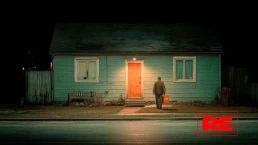
The pressure shows up mentally too. When a person spends their days working and their nights filling gaps, life becomes a cycle instead of a progression. They stop thinking in seasons. They start thinking in pay periods. They start planning around shifts instead of goals. They stop trusting the idea that effort guarantees stability. And when millions of people feel that way at the same time, it becomes a national mood, even if nobody names it.
This is why the shadow workforce matters. It reveals a tension between the story the country tells and the reality people live. Leaders still talk about the power of upward mobility. They talk about hard work leading to security. But hard work now comes with a second shift, and even that does not guarantee breathing room.
The numbers make something clear. The shadow workforce is not a sign of resilience. It is a sign of strain. It is the outcome of a system that shifted the burden from institutions to individuals. It is the proof that stability has become something people have to build themselves piece by piece. And while that looks admirable from a distance, it takes a toll that cannot be ignored forever.
The shadow workforce is not a trend. It is not a phase. It is the lived reality of a country where the math stopped matching the message. People are doing everything they were told would lead to stability. They get up. They put in the hours. They grind through the week. And when the paycheck falls short, they piece together whatever they can to close the distance. It is not dramatic. It is not heroic. It is simply what life has become for millions.
What makes it hard to talk about is the way it all feels so normal now. The second shifts. The weekend runs. The nights spent earning instead of resting. It is easy to tell yourself this is what responsible adults do. It is harder to admit that the only reason it feels normal is because the system expects people to absorb what it no longer covers. And most people do. Quietly. Consistently. Without anyone seeing the weight they are carrying.
If there is a truth hiding under all of this, it is the fact that people have far less room than they used to. Less room to plan. Less room to breathe. Less room to fall without falling far. The shadow workforce is not made up of people trying to get ahead. It is made up of people trying not to slide backward. People who want to keep their families steady without feeling like they are one unexpected cost away from losing balance.
You do not see their names on the news. You see them in motion. You see them in the parking lots at odd hours. You see them on the roads when most people are sleeping. You see them hustling between responsibilities because the alternative is uncertainty. They are the reason so many families stay afloat. They are the reason the economy keeps its shape. They hold the line even when the line keeps moving.
Nothing about this is failure. It is the opposite. It is proof that people are doing their part in a system that often forgets to do its own. And the more you look at it, the clearer it becomes. The shadow workforce is not a weakness. It is a warning. A quiet signal that the country is asking too much of the people who already give it everything.
That is the truth sitting underneath the noise. A nation carried by workers who do not stop, not because they want to be everywhere at once, but because they do not want their families to feel the cost of what the country no longer carries.
One story. One truth. One ripple at a time.
Economic Policy Institute. (2025, September 3). The productivity–pay gap. Economic Policy Institute. https://www.epi.org/productivity-pay-gap
Federal Reserve Bank of New York. (2023, August). Quarterly report on household debt and credit: 2023 Q2. Federal Reserve Bank of New York. https://www.newyorkfed.org/microeconomics/hhdc
Rossman, T. (2025, July 9). Survey: One in four American adults have a side hustle. Bankrate. https://www.bankrate.com/loans/small-business/side-hustles-survey/
U.S. Bureau of Labor Statistics. (2025). Table A-36. Multiple jobholders by age, sex, race, and Hispanic or Latino ethnicity [Data table]. In The employment situation — October 2025. U.S. Department of Labor. https://www.bls.gov/web/empsit/cpseea36.htm
Board of Governors of the Federal Reserve System. (2025, May). Report on the economic well-being of U.S. households in 2024. Board of Governors of the Federal Reserve System. https://www.federalreserve.gov/publications/2025-economic-well-being-of-us-households-in-2024.htm
Board of Governors of the Federal Reserve System. (2025, May). Report on the economic well-being of U.S. households in 2024: Employment and gig work. Board of Governors of the Federal Reserve System. https://www.federalreserve.gov/publications/2025-economic-well-being-of-us-households-in-2024-employment-and-gig-work.htm
Bengali, L., & Hannon, S. (2024, April 1). How do periods of inflation and recession affect real earnings? FRBSF Economic Letter, 2024-08. Federal Reserve Bank of San Francisco. https://www.frbsf.org/research-and-insights/publications/economic-letter/2024/04/how-do-periods-of-inflation-recession-affect-real-earnings/
Ozimek, A., & Economic Innovation Group. (2024, June). The American worker: Toward a new consensus. Economic Innovation Group. https://eig.org/the-american-worker-project/
If you want, I can do a second, tighter “minimum 5” version pulling just the strongest ones for the final PDF / white paper page.
If this work helped you understand something more clearly, support it by:
Buying the books | Visiting the Newsstand | Making a donation
One voice. One message. One Goal. Truth.
No spam. No schedules.
The Truth is Underfunded. That's Why This Exists.
No ads. No sponsors. No filter. Just the truth, unpacked, explained, and raw.
Defining Policy. Power. Consequence.
See how to add us to your home screen