
The Ripple Effect
-News and Commentary-
Tesla, China, and the Grid: Who Controls the Future of Clean Energy?
By TP Newsroom Editorial | Ripple Effect Division
Today in The Ripple Effect, we are discussing who really owns the future and what happens when clean energy stops being clean and starts being controlled.
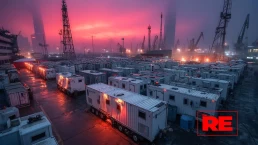
In early 2025, Tesla quietly opened a new factory in Shanghai. Not a car plant, but something far more strategic: a Megapack facility, designed to produce grid-scale energy storage batteries. These are not for Teslas on the road. These batteries are built to stabilize power grids, to store solar and wind energy, and to supply entire cities during peak demand. This is the kind of infrastructure that makes clean energy reliable, scalable, and profitable. And Tesla is building it, not in Texas or California, but in China.
The factory sits in the Lingang Special Zone in Shanghai, backed by a nearly $600 million investment from both Tesla and local Chinese entities. Its output is massive, ten thousand Megapacks per year, roughly forty gigawatt-hours of storage capacity annually. Production has already begun, and shipments are going out across the globe. While most Americans were still debating solar tax credits and domestic energy bills, Tesla and China had already made a deal that could reshape who controls the next generation of global energy infrastructure.
If this work helped you understand something more clearly, support it by:
Buying the books | Visiting the Newsstand | Making a donation
One voice. One message. One Goal. Truth.
No spam. No schedules.
The Truth is Underfunded. That's Why This Exists.
No ads. No sponsors. No filter. Just the truth, unpacked, explained, and raw.
Defining Policy. Power. Consequence.
See how to add us to your home screen
This is more than a factory. It is a statement. Whoever controls the batteries will control the future of energy. Renewable power depends on storage. You can only harvest sunlight when the sun is up. You can only use wind when it blows. Without high-capacity batteries, clean energy is limited. With them, the game changes. But if those batteries are made and shipped from China, then the power America thinks it is building may still run through someone else’s hands.
On the surface, this looks like innovation. In reality, it represents a strategic shift in global influence. Tesla is not just exporting technology. It is importing dependency. As the U.S. tries to secure its energy independence through wind, solar, and decarbonization, it may be tying its grid to supply chains that stretch back to factories it does not control, in countries it cannot pressure.
To be fair, Tesla has Megapack facilities in the United States as well. The Lathrop plant in California has similar capacity, and a new one is under construction in Brookshire, Texas. That facility is projected to create up to 1,500 jobs by 2029. The Inflation Reduction Act has also triggered dozens of clean energy investments across the country, including battery plants, EV facilities, and wind farms. On paper, the U.S. is fighting to catch up. But in practice, the pace is not competitive.
Permitting delays, labor shortages, and state-level disputes continue to drag timelines. Projects that should take eighteen months are taking three years or more. Community opposition, regulatory complexity, and political in-fighting slow the rollout of nearly every major infrastructure project. Meanwhile, Tesla’s Shanghai plant went from concept to operation in less than a year and a half. That is not an accident. That is what happens when centralized planning, low-cost labor, and government alignment all push in the same direction. China moves fast because it can.
And that speed has consequences. As of now, Tesla’s energy division is growing faster than its EV sales. In 2024 alone, Tesla brought in over $10 billion from energy storage which is an increase of more than 150 percent year-over-year. Investors are watching that shift closely. It suggests that Tesla may be slowly repositioning itself, not just as a car company, but as a global power supplier. And if the company is building its highest-capacity storage systems overseas, then the benefits of that shift, financial, strategic, and political, may not flow back into American communities at all.
There is a broader issue here that goes beyond Tesla or even batteries. The clean energy transition was sold to Americans as a reset. A chance to build new industries, to revitalize manufacturing, to create jobs for the next generation, especially in places devastated by the loss of coal and steel. But that promise only works if the infrastructure is actually built at home. If factories, labor, and supply chains are outsourced again, then the transition risks repeating the same mistakes of the last four decades. The mistake where globalization moved profits up the ladder and moved jobs out of reach.
Right now, the most critical energy components in the world, lithium batteries, rare earth elements, solar panel components, are still overwhelmingly made in Asia, with China dominating nearly every sector. Tesla’s Shanghai facility does not exist in isolation. It connects to a network of Chinese battery cell manufacturers like CATL, which controls about 40 percent of the global battery cell market. It plugs into a logistics ecosystem optimized for Chinese exports. It is built on government incentives that rival and often exceed what the U.S. offers through the Inflation Reduction Act.
The geopolitical risk is real. If diplomatic relations with China deteriorate, if new tariffs or export controls emerge, or if military tensions rise, the energy security of entire nations could be compromised. This is not fearmongering. It is strategic reality. If a nation does not control its energy sources, it does not control its future.
At the same time, the U.S. has its own challenges to address. Domestic battery plants are breaking ground, but the talent pipeline remains thin. The Department of Energy is attempting to build a battery workforce through new training programs, but the scale is not matching the urgency. Many of the jobs in clean energy require technical expertise; electricians, coders, engineers. Without rapid investment in workforce development, the U.S. may have factories but not enough workers to staff them.

The Brookshire, Texas facility offers a glimpse of what’s possible. With proper funding and local support, it can become a regional anchor for energy resilience. But it also reveals how much further the U.S. has to go. Even if the factory hits full capacity by 2029, that is still years behind China’s current production rate. And while the pay may be strong as some roles are offering six-figure salaries, it is unclear whether that success can scale across the country fast enough to meet demand.
There is also the political question. The same forces that pushed the Inflation Reduction Act into law are now facing backlash. Proposed Republican legislation aims to reduce clean energy tax incentives and cut federal support for battery development. If those bills pass, many of the planned domestic investments could stall or evaporate. That would leave the U.S. with neither the capacity nor the leverage to shape the global energy transition on its own terms.
The Megapack factory in Shanghai is a glimpse of what happens when ambition is backed by infrastructure. China understood the stakes early and acted with clarity. The U.S., despite its resources, continues to move cautiously. The result is a growing imbalance in who builds, who supplies, and who profits from clean energy technologies.
At its core, this is not a story about Tesla. It is a story about power. Not electricity, but strategic influence. Who owns the systems that will run the future? Who decides where the batteries are made? Who hires the workers, trains the engineers, exports the technology, and shapes the markets?
If the U.S. does not move quickly, it may find itself dependent on the very nations it hoped to compete with. Clean energy cannot be sustainable if the workforce is outsourced, the components are imported, and the leverage belongs to someone else. This transition is not just about lowering emissions. It is about controlling the infrastructure that supports every modern economy on Earth.

The American energy transition was never just about going green. It was also a matter of national security, rebuilding resilience, hardening infrastructure, and untangling decades of dependency on foreign oil. For years, that goal centered around fossil fuels and energy independence. Now, in a world driven by batteries, data, and digital infrastructure, the security equation has changed. What the United States once feared from OPEC, it now risks facing from China.
Grid-scale battery storage is the quiet engine behind that new power structure. It may not grab headlines like solar panels or wind farms, but batteries are what make those technologies work at scale. Without batteries, renewable power is inconsistent and fragile. With them, energy becomes controllable which means storable, portable, and dispatchable. That is what gives batteries their strategic value, and why controlling battery production is more than just an economic advantage. It is a geopolitical weapon.
Today, China controls over 40 percent of the world’s battery-cell market. The largest player in that space is CATL, a Chinese company that produces lithium iron phosphate cells used in everything from electric vehicles to industrial energy storage units like Tesla’s Megapack. Even as Tesla expands U.S. manufacturing, many of its cells are still sourced from Chinese facilities. The cathodes, anodes, and electrolytes that form the guts of modern batteries flow through a supply chain that runs directly through Chinese ports.
That reliance is not simply a business decision. It is a vulnerability. The U.S. government is beginning to acknowledge that reality, but the response has been reactive rather than proactive. In early 2025, the Biden administration placed new restrictions on Chinese battery imports tied to national defense concerns. The Department of Commerce moved to investigate potential links between CATL and the Chinese military. Simultaneously, members of Congress introduced legislation aimed at tightening security reviews of foreign-owned battery suppliers operating in or exporting to the United States.
Journalism You Can Hold. Insight You Can Own.
Books Magazines Companion Guides White Papers More
Your support funds the research, reporting, and long-form analysis behind TP Newsroom
For Tesla, this creates a delicate balance. The company’s growth in energy storage depends on Chinese partnerships, but its political survival increasingly depends on American trust. If sanctions escalate or tariffs return, Tesla may be forced to choose between lower costs and regulatory safety. The broader energy industry may face similar dilemmas. As China cements its lead in production, American firms risk falling behind, unless they either align with Chinese suppliers or build parallel domestic systems fast enough to compete.
That is not a simple tradeoff. The U.S. has been ramping up battery investments since the passage of the Inflation Reduction Act in 2022. Billions of dollars have gone into building new factories across states like Georgia, Michigan, Nevada, and Kentucky. Yet even with those commitments, the scale is not yet sufficient. Most of the new plants will not reach full production capacity until 2026 or later. And many still depend on imported raw materials; lithium from Chile, graphite from Mozambique, cobalt from the Democratic Republic of Congo which is often processed in Chinese refineries.
This layered dependency creates a strategic bottleneck. Even if the U.S. builds the factories, it cannot yet secure the raw inputs or refine them at scale. That leaves America vulnerable to supply shocks, trade restrictions, or diplomatic retaliation. In short, it builds a clean energy system on a fragile foundation.
The risks extend beyond economics. Grid security is already becoming a national priority. In 2024, more than two dozen U.S. substations were targeted in physical attacks, prompting concerns about the vulnerability of critical infrastructure. While those incidents were domestic, they highlighted how exposed the grid truly is. As batteries become more integral to energy stability, the question becomes: what happens if those batteries or their software can be compromised?
Many grid-scale battery systems are connected to the internet, monitored remotely, and updated through cloud infrastructure. If those systems are sourced or manufactured in foreign-controlled environments, there is a real concern that malware, firmware backdoors, or operational sabotage could be introduced without detection. The potential for cyber interference grows as grid systems become more digitized.
This is not a hypothetical risk. In 2020, the SolarWinds cyberattack exposed how deeply foreign actors could infiltrate American IT networks through seemingly routine software updates. If that same level of vulnerability exists in energy infrastructure, the consequences would be far more severe. Entire cities could lose power. Critical facilities like hospitals, water treatment plants, and emergency services could be shut down remotely. That kind of threat turns energy storage into both a physical and digital battlefield.
National security experts have begun calling for a stricter classification of energy technologies. Some argue that large-scale battery systems, like Megapacks, should be treated as strategic assets, just like satellites, defense equipment, or semiconductors. That would mean tighter export controls, government oversight, and requirements for domestic sourcing of both materials and labor. Others warn that such restrictions could stifle innovation or push companies to offshore even faster. It is a difficult balance to strike.
Meanwhile, China continues to play the long game. Its Belt and Road Initiative has already extended Chinese-built energy infrastructure across Africa, Latin America, and Southeast Asia. Many of those projects include solar farms, wind turbines, and grid-scale batteries. In some countries, Chinese firms not only supply the equipment but also own and operate parts of the local grid. That kind of influence is not easily undone. It creates decades-long dependencies, wrapped in the language of development and clean energy but functioning as leverage.
If a country relies on a Chinese-built battery plant to stabilize its grid, what happens during a diplomatic dispute? What if maintenance teams are pulled? What if software updates are delayed? What if supply shipments are quietly rerouted to friendlier markets? These are not dramatic possibilities. They are the slow, calculated pressures that reshape alliances, trade agreements, and global norms.
The United States is not without leverage. Its innovation economy is still unmatched in many areas. It leads in patents, in advanced materials research, in startup capital, and in grid resilience modeling. But without a full supply chain under domestic control, those advantages remain incomplete. Ideas do not power cities. Batteries do.
This is where public perception often lags behind reality. Many Americans still think of clean energy as a technical problem, one that can be solved through better engineering, smarter apps, or lower costs. But energy is never just technical. It is political. It is cultural. It is strategic. Who gets to flip the switch matters just as much as how the power is generated.
And right now, the U.S. cannot flip that switch alone. It is in a race to build the future while still leaning on the infrastructure of its competitors. That is not a sustainable position. It invites pressure, disruption, and eventual dependence. The question is not whether the U.S. can afford to invest more in clean energy. The real question is whether it can afford not to.
The consequences of getting this wrong will not be immediate. They will unfold slowly, through delayed shipments, increased costs, regulatory confusion, and strategic hesitation. They will appear in headlines about outages, in quiet reshuffling of supply agreements, in last-minute government bailouts of stalled factory projects. And by the time they are fully felt, the opportunity to course-correct may have already passed.
The future of energy will be stored in batteries. But those batteries must also store something else: trust. Security. Sovereignty. If the U.S. wants to control its own grid, it needs to control the conditions under which that grid is built. Otherwise, the promise of clean energy may come with strings attached.
Clean energy was sold as a promise. New jobs. Better pay. A just transition. A second chance for the regions, workers, and industries America had long abandoned. From the Midwest to the Deep South, from the rusting factory towns to the forgotten mining counties, the message was clear: if we’re going to build a new economy, it’s going to be built here.
But so far, that vision has been uneven and for many, it’s felt like déjà vu. The kind of déjà vu that echoes steel mills shutting down in the ‘80s. That hollowing-out sensation that comes when headlines celebrate billions in investment, but nobody in your ZIP code is getting a call back. The truth is, while the battery boom is real, the workforce transformation is not yet living up to the rhetoric. We are building factories faster than we’re building people to work in them. The supply chain is scaling. The training pipeline isn’t. And for every success story posted on LinkedIn, there are thousands of former mechanics, HVAC techs, coal workers, and truckers sitting at home wondering how they’re supposed to become energy specialists without money, time, or access.
Start with the numbers. The Brookshire, Texas Megapack plant, the one Tesla is building to mirror its Shanghai facility, is expected to bring in 375 jobs in its first year, ramping up to 1,500 by 2029. That’s real impact for the local economy. Wages are projected to range from $80,000 to $150,000, depending on role and experience. For workers in Waller County, that’s life-changing money. But even that success comes with a long shadow.
Most of the plant’s early hires will likely be engineers, electricians, and logistics professionals. The skills required for large-scale battery production aren’t learned overnight, and they aren’t cheap to acquire. Local schools and technical programs are scrambling to align their curriculum, but federal and state partnerships haven’t been fast enough to close the gap. It’s not just about building factories. It’s about building people.
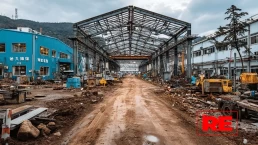
Meanwhile, Tesla’s plant in Shanghai came online ahead of schedule. It took fewer than 18 months from groundbreaking to shipment. That speed was made possible not just by centralized government support but by an abundant, ready labor force, workers trained in precision manufacturing, battery assembly, and industrial electronics. Wages are lower, but the skills are deep. That’s part of why the U.S. is falling behind. We are trying to win a race that someone else trained for decades ago. At the federal level, the Department of Energy has launched the Battery Workforce Initiative to address this exact problem. It aims to create new apprenticeship pipelines, develop national certification programs, and coordinate with employers to ensure graduates are actually employable in real-world environments. But these programs are still in their infancy. Most of them were funded post-2022, and only a fraction of their first cohorts have graduated. In short, help is coming, but not fast enough.
Then there’s the geographical divide. The bulk of new battery investments are not going to the communities that need them most. While rural towns and deindustrialized cities were promised a seat at the table, the reality is more complicated. Tax incentives, land availability, utility access, and political leverage often steer these projects toward suburban or semi-urban areas with existing infrastructure. That leaves entire counties, especially in Appalachia, the Midwest, and parts of the South, stuck watching this new economy take shape from the outside.
Even where job creation does happen, the numbers rarely match the hype. A plant may announce 1,000 jobs, but only a few hundred may be direct hires. The rest are temporary construction roles, subcontractor gigs, or support positions that disappear after the ribbon-cutting. Meanwhile, training programs can take six to twelve months, and many workers cannot afford to wait that long without a paycheck. The math doesn’t add up for someone already living paycheck to paycheck.
There’s also the issue of upward mobility. For workers who do make it into the clean energy economy, advancement is not always guaranteed. Unionization efforts are uneven. Benefits packages vary widely. Some companies embrace local labor agreements and community benefit contracts. Others rely on third-party staffing firms and flexible hiring to avoid long-term commitments. In an industry that prides itself on building the future, the treatment of human capital often feels like a relic from the past.
And this isn’t just a blue-collar issue. Engineers, planners, and even mid-level managers are often forced to chase the next project, the next subsidy, the next state with better incentives. The battery industry is mobile, opportunistic, and heavily influenced by policy shifts. That creates instability not just for individuals but for entire communities trying to build around these new jobs. When funding dries up or regulations change, entire plants can stall. That’s already happened in several solar and wind projects across the country. Batteries are not immune.
For communities of color, the barriers are even steeper. Many Black and Latino workers live in areas that lack access to the technical training programs tied to clean energy investments. Transportation, childcare, housing, and digital access all play a role in whether someone can even consider a career pivot. And while the federal government has pushed for equity-based hiring in IRA-funded projects, enforcement is patchy at best. Without sustained outreach, many of the people who need these opportunities most will never even know they exist.
We also need to talk about mental framing. For generations, certain jobs carried a sense of pride and identity, jobs that built things, fixed things, powered homes, or paved roads. When those jobs disappeared, it wasn’t just income that vanished. It was purpose. Dignity. Belonging. Clean energy jobs have the potential to restore that, but only if they are accessible, respected, and built with human beings in mind. Otherwise, we risk repeating the same cycle we’ve seen in the past: new economy, same exclusion.
The phrase “just transition” has been used a lot by politicians and CEOs. But for the transition to be just, it has to be tangible. It has to feel real to someone who worked thirty years in diesel repair, or spent two decades climbing poles for the utility company. It has to offer more than a certification class or an Instagram story. It has to pay. It has to last. It has to build a pathway for the people who’ve been holding up the country’s infrastructure without ever being seen as part of its future.
Some states are getting it right. In Kentucky, a Canadian solar company is partnering with community colleges to retrain former coal workers for battery production. In Michigan, union-backed apprenticeship programs are bridging the gap between high school and high-tech. These programs are working, but they are still the exception, not the rule.
The workforce behind clean energy is not just a technical concern. It’s an emotional one. A cultural one. A national one. The green future cannot be built without the people who live here now. If America wants to lead the energy revolution, it has to do more than fund factories. It has to invest in the people who will keep the lights on, wire the circuits, install the systems, and repair the failures when something goes wrong. And that’s the real risk. Not that the transition is too expensive. But that it will happen without us.

The American energy transition is no longer a vision. It is happening now, in real time, at scale, and often out of view. But for all the talk of clean power and climate solutions, one truth keeps resurfacing: this revolution is not just about energy. It is about control. It is about who gets to decide how the future runs, who benefits from the shift, and who gets left watching it unfold from the margins.
Tesla’s Megapack facility in Shanghai is not just another factory. It is a pivot point. A symbolic and structural shift in how global energy will be distributed, stored, and governed. It reveals a broader pattern that stretches across every corner of the clean energy supply chain, from cobalt mines in Congo, to assembly lines in Shenzhen, to classrooms in Kentucky. The system we are building may be cleaner, but it is not necessarily fairer, safer, or more sovereign.
As we’ve seen, China’s dominance in battery manufacturing is not an accident. It is the product of two decades of investment, planning, and quiet accumulation of leverage. From rare earth processing to cathode development, China built a full-stack energy empire while the U.S. was still debating whether climate change was real. Now, as America scrambles to regain control of its grid, it finds itself having to buy the very components it needs to “win” from the very country it wants to outpace.
This is not a partisan observation. It is structural. Republicans, Democrats, environmentalists, and energy hawks alike all find themselves facing the same uncomfortable reality: the U.S. cannot build an independent, secure, and equitable energy system if it continues to depend on foreign governments, especially geopolitical rivals, for the infrastructure that makes it work.
National security experts are sounding the alarm. Strategic planners are rethinking what counts as a threat. In past decades, the energy conversation centered around oil, pipelines, and foreign wars. Now it centers around lithium, data centers, firmware, and batteries. A single disruption to a Megapack supply line could cripple grid storage for months. A software vulnerability introduced at the manufacturing level could compromise entire cities. These are not theoretical risks, they are known weaknesses. And as more grid systems rely on large-scale battery storage, those weaknesses will become harder to ignore.

The workforce dimension only adds to the complexity. For all the money flowing into new battery plants, the U.S. has not yet built a clear or consistent pipeline of labor to support them. We are not training fast enough, paying fairly enough, or planning far enough ahead. That’s not a short-term issue. It’s a generational one. Without a strong workforce that reflects the country’s needs and demographics, we may end up with infrastructure we cannot maintain or worse, that we have to outsource again just to operate.
This is where the long view matters. Because despite the current trajectory, the outcome is not fixed. We are still early in this shift. America still has options. But those options require clarity, urgency, and a willingness to treat energy infrastructure not as a private convenience, but as a public necessity, something that must be protected, governed, and invested in at every level. So here are the five questions that still remain, at the core of all of this. The Five Ws. Not for school. For survival.
Who controls the grid? Right now, the answer is mixed. Tesla builds the tools. China supplies the guts. The U.S. subsidizes the shift. And millions of people plug in without asking who owns the socket. But that balance is shifting. As China deepens its lead in energy storage, the definition of “ownership” becomes more complicated. You may own your solar panels. Your state may fund the project. But if the batteries come from Shanghai, if the firmware runs through Chinese servers, and if the replacement parts have to be ordered across the Pacific, how sovereign is your system, really? Control is not just about who builds the plant. It’s about who can shut it off. Who can delay updates. Who can flood the market with cheap products and pull them back when it suits their goals. In that context, ownership is not a legal title. It is a power dynamic. And right now, that dynamic favors Beijing.
What happens if we fall behind? This is not just a race for profits. It is a race for infrastructure. If the U.S. cannot match China’s production speed and material access, it risks falling permanently behind in the industries that will define the next century: grid tech, AI infrastructure, electric logistics, and autonomous systems. And falling behind is not just about losing prestige. It is about dependency. If other countries start buying Chinese batteries at scale and the U.S. cannot compete on price, quality, or availability, then American companies and utilities may have no choice but to buy foreign tech. That creates long-term exposure, not just to economic shifts, but to diplomatic ones. Imagine a future where the U.S. grid relies on components that cannot be sourced during a geopolitical standoff. Imagine energy prices being manipulated because domestic alternatives don’t exist. This is not science fiction. This is what dependency looks like
When will we see the cracks? Some cracks are already visible. Delayed battery shipments. Permit holdups. Projects stalled midstream. Labor shortages. Communities promised jobs that never materialize. The early warning signs are not dramatic, they are bureaucratic. But they are growing. By 2026 or 2027, many of the factories launched under the Inflation Reduction Act will be expected to deliver. If they don’t meet deadlines, or if they operate at partial capacity due to workforce gaps, the political backlash could be severe. Public support for clean energy has always been conditional, tied to jobs, access, and fairness. If those conditions aren’t met, we may see support evaporate just as the transition reaches a critical phase. Those cracks may not be televised. But they will show up in the data. Rising costs. Missed targets. Uneven rollout. They will also show up in the quiet frustrations of workers, mayors, utility boards, and rural counties who thought they were part of the plan.
Where do we go from here? The answer begins with clarity. The U.S. must decide what kind of energy future it wants and whether it is willing to pay the upfront cost of building it at home. That means sustained investment in domestic manufacturing, raw material processing, workforce training, and R&D. It also means clearer industrial policy, aligning federal funds, trade protections, and long-term planning around strategic sectors. The country needs a national energy industrial strategy. One that stretches beyond the next election cycle. One that does not just measure success by emissions dropped or megawatts installed, but by resilience built, supply secured, and lives improved. Because the best technology in the world is meaningless if it cannot be maintained by the people who depend on it. That shift also requires cultural honesty. We need to acknowledge that automation, offshoring, and centralized power have created systems that leave too many Americans out. Clean energy cannot follow the same path. It has to mean something different. It has to reach farther. That starts by investing in people, not just production.
Why does it matter, beyond the grid? Because this story is not just about electricity. It’s about sovereignty. About dignity. About what kind of country we become in the process of building what’s next. The energy grid is the nervous system of modern civilization. Every home, school, hospital, and industry depends on it. The batteries we build or fail to build, will shape whether that system is resilient, equitable, and secure, or brittle, divided, and vulnerable to manipulation. And deeper still, this story is about who gets to feel like the future includes them. For decades, the promise of progress has been a moving target, always arriving, never quite landing. If clean energy becomes just another wave that lifts the few and leaves the rest paddling for shore, we will have missed the point entirely. The grid is the story. But it is also the metaphor. For connection. For care. For how everything ties together, or comes apart.
Reuters. (2025, February 11). Tesla’s Shanghai megapack battery plant launches production, Xinhua says. Reuters.
Reuters. (2025, June 20). Tesla, Shanghai sign $557 million energy storage station deal, Yicai reports. Reuters. https://www.reuters.com/business/autos-transportation/tesla-shanghai-sign-557-million-energy-storage-station-deal-yicai-reports-2025-06-20/ Reuters
Reuters. (2024, December 31). Tesla’s Shanghai energy storage gigafactory begins trial production. Reuters. https://www.reuters.com/technology/teslas-shanghai-energy-storage-gigafactory-begins-trial-production-2024-12-31/ Reuters
Reuters. (2023, December 22). Tesla moves forward with a plan to build an energy‑storage battery factory in China. Associated Press via AP News. https://apnews.com/article/306b4f6678c6827080a7bf49d55d12ee AP News
Business Insider. (2024, October 25). Tesla’s energy‑storage business was the highlight of its blowout earnings, and Elon Musk says it’s ‘growing like wildfire.’ Business Insider. https://www.businessinsider.com/teslas-biggest-growth-business-q3-energy-storage-batteries-2024-10 businessinsider.com
If this work helped you understand something more clearly, support it by:
Buying the books | Visiting the Newsstand | Making a donation
One voice. One message. One Goal. Truth.
No spam. No schedules.
The Truth is Underfunded. That's Why This Exists.
No ads. No sponsors. No filter. Just the truth, unpacked, explained, and raw.
Defining Policy. Power. Consequence.
See how to add us to your home screen