

The Ripple Effect
-News and Commentary-
Power Lines and Power Lies: What Clean Energy Promises Say About a Crumbling Empire
By TP Newsroom Editorial | Ripple Effect Division
The other day, I was driving through my small town in West Virginia, one-lane roads, heavy morning traffic, everybody either headed to work or trying to get out of the way of people headed to work. I’ve been here three years, and just recently, they widened one of the main arteries through downtown. One lane turned into four. And like magic, the daily congestion eased. It wasn’t a massive federal overhaul. It wasn’t even a glamorous project. But that small piece of infrastructure? Changed everything. Locals finally stopped complaining. The change was simple, but it worked. Now scale that up. That’s the real conversation happening in America. We’re talking clean energy, but the foundation it stands on is infrastructure: roads, wires, grids, ports, tunnels. All the unsexy, rusting bones that keep the country running. And right now? They’re creaking. So what’s the Big Beautiful Bill trying to do about it?
If this work helped you understand something more clearly, support it by:
Buying the books | Visiting the Newsstand | Making a donation
One voice. One message. One Goal. Truth.
No spam. No schedules.
The Truth is Underfunded. That's Why This Exists.
No ads. No sponsors. No filter. Just the truth, unpacked, explained, and raw.
Defining Policy. Power. Consequence.
See how to add us to your home screen
Let’s talk Title VI, Section 60101 and beyond . It’s calling for billions in grants toward clean energy development, but not just the kind of “green” headlines you’re used to. It expands nuclear energy support, adds funding for “carbon capture,” and even puts a focus on new licensing for hydropower. On paper, that sounds good. But can we actually deliver? That’s the question.
A single nuclear power plant can generate enough electricity to power about 750,000 homes. Coal? A little less, depending on the plant and efficiency. Wind? Well, now we’re talking a whole different scale. You’d need roughly 1,500 wind turbines, each over 200 feet tall just to match one nuclear facility’s output. And wind isn’t constant. That’s the catch.
Solar isn’t far behind, requiring massive land usage. And battery storage? Still years from being where it needs to be to make renewables stable. According to Department of Energy data, the average time to build a nuclear plant is 6–12 years, assuming no delays. Wind farms can take 2–6 years from planning to production. And if you’re thinking about transmission lines, sit down, those can take up to 10 years to plan, approve, and build. We’re already behind. Meanwhile, China is building and scaling both green and dirty power sources like it’s an Olympic event. They built over 100 gigawatts of solar capacity in 2023 alone, more than the entire U.S. grid expansion combined. And they don’t wait around for votes to pass.
That’s what makes this bill so frustrating. Section 60511 wants to allocate resources to speed up permit approvals for clean energy and reduce environmental review times, but we’re still swimming through red tape while other nations break records. Even with bipartisan support, our political structure makes real-time implementation nearly impossible. That’s the uncomfortable truth nobody wants to say.
And don’t get it confused, this isn’t about choosing one energy over another. It’s about acknowledging the hard math of megawatts and timelines. The grid isn’t ready for full electrification. Our roads aren’t prepared for all-EV traffic. Our ports are falling behind global standards. And yet, we want to call ourselves a “superpower.” Well, here’s the thing about superpowers, they rise, peak, and decline. And infrastructure has always been the quiet backbone of that story. The Roman Empire didn’t fall because of foreign enemies. It fell because its roads broke down, its aqueducts dried up, and the core of what made it efficient, the infrastructure, was neglected. America’s on that timeline right now.
So before we talk about green energy “goals,” maybe we should talk about the bridges that are literally falling apart beneath our feet. Or the fact that over 70% of the nation’s transmission lines are over 25 years old. If the grid fails, it doesn’t matter if your car runs on solar. The Big Beautiful Bill is a start. But it’s not the miracle. And clean energy? It’s not a Band-Aid, it’s surgery. The question is: are we willing to go under the knife?
On July 4, 2025, President Trump signed the One Big Beautiful Bill, a sweeping $3.3 trillion+ tax and spending package that immediately shifted the American story. It locks in permanent tax cuts , especially for high earners and rolls back clean energy incentives. At the same time, it slashes Medicaid, housing, SNAP, and certain green program funding .
Here’s the hard truth: the CBO projects the deficit will balloon by $2.4–3.4 trillion over the next decade. That’s a staggering every-dollar-now, price-deferred-later equation. And this matters, not just because of interest costs, but because it forces a choice: Do we continue to invest, or do we default on the future? The bill boasts the largest middle-class tax cut in history. But it also vastly expands tax breaks for top earners and businesses, slashes safety nets for the poor, and weakens incentives for clean energy production. Meanwhile, promises of clean energy infrastructure and hydrogen hubs hang in the background, but they come tied to conditional grants, lean on private investment, and lack direct funding to train people to build them.
That’s where higher education comes in. To electrify our grid, launch factory modernization, or manage EV, wind, solar, and hydrogen systems, we need engineers, technicians, and data scientists. We need PhDs in chemistry, software experts in AI-and-grid management, and skilled tradespeople to install and maintain lines. But the climate around education is toxic. The same bill adds taxes to university endowments of even small colleges . Student aid and vocational programs? Largely untouched by any future-focused investment. Worse, conservatives have been attacking “woke” colleges, undermining trust in the whole academic pipeline.
Journalism You Can Hold. Insight You Can Own.
Books Magazines Companion Guides White Papers More
Your support funds the research, reporting, and long-form analysis behind TP Newsroom
Without strong universities, America can’t train a new generation of energy specialists. The DOE warns that, right now, we don’t have enough qualified workers to meet projected energy infrastructure needs, we train fewer STEM grads domestically than we once did . For years, we’ve relied on foreign-born talent H 1B holders, international students, immigrant scholars. But the bill simultaneously doubles down on immigration restrictions and border spending.
So here we are: cutting benefits and education funding, expanding deficits, dismantling clean energy incentives, and slamming the door on skilled immigrants while naming the bill “beautiful.” It’s not ironic. It’s arithmetic. Without cash for training, funding to retain students, and openness to global talent, we’re building a green vision skyscraper on a sand foundation. And once interest comes due on the deficit, you don’t get a refund, you get a collapse.
This isn’t about ideology. It’s about readiness. This isn’t about politics. It’s about practicality. Because deficits can’t power a nation. Degrees and skilled hands can. If we don’t invest in those, now, we’ll be left with beautiful rhetoric on empty highways
America has never lacked ambition. From landing on the moon to laying down the Interstate Highway System, our legacy was built on bold bets and follow-through. So when the Big Beautiful Bill passed, there was something familiar in its language, talk of transformation, of national revival, of new energy and new jobs. It felt like a throwback to the kind of country that builds big and dreams bigger. But ambition without preparation? That’s where things get tricky.
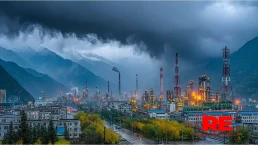
This isn’t a rant against clean energy, it’s an honest look at what it takes to get there. The bill lays out massive investment in hydrogen hubs, expanded nuclear, and power grid upgrades. On paper, it’s a roadmap. In practice, it’s more like a blueprint missing half the workforce.
The challenge isn’t whether clean energy is possible, it’s whether the systems we rely on are ready for the weight of it. The average U.S. power transformer is over 40 years old. Ports are backlogged. Roads are crumbling. And the talent pool needed to install, maintain, and innovate these systems? Shrinking. At the same time, we’re watching a cultural shift that complicates things even more. Higher education is being labeled “woke.” Immigration, the very thing that helped us build Silicon Valley, NASA, and the biotech industry, is under political fire. And while we debate what books kids can read, China continues to mint engineers by the millions and build infrastructure at record pace.
But let’s not lose the plot here. This bill, like any piece of policy, isn’t magic. It’s a start. It’s a signal that, at the very least, we’re still trying to think ahead. Trying to invest in something beyond just the next election cycle. That deserves acknowledgment.
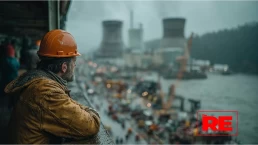
The bigger question, though, is whether we still understand what power actually means. Not military muscle. Not party-line victories. But durable, functional systems that hold when the world shakes. Because the truth is, the grid doesn’t care who’s in office. Neither do the bridges or the rail lines or the pipes underground. They work when they’re built right, and fall apart when they’re not maintained.
So no, this isn’t about left or right. It’s about reality. Do we want to lead? Or do we want to argue? Do we want to build? Or do we want to brand? The Big Beautiful Bill opens a door. But walking through it will take more than funding. It’ll take patience. Long-term thinking. Trust in science. Respect for expertise. And, maybe most of all, a return to the idea that building something better isn’t just government’s job, it’s all of ours. Empires don’t fall because they stop dreaming. They fall when they stop showing up to do the work. And America? We’ve still got time. But not forever.
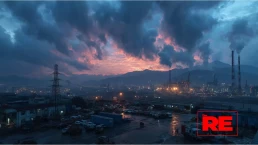
Who’s affected? All of us. Whether you’re in a city apartment trying to charge your EV, a farmer relying on stable energy to run irrigation systems, or a parent in a small town like mine who just wants roads that don’t break the axle every other winter, we’re all living inside this system. Clean energy and infrastructure aren’t abstract policy debates. They shape the price of your groceries, your commute, your job security, and your kids’ future.
What’s changing?
The Big Beautiful Bill passed, so this isn’t theoretical anymore. Billions are now being redirected into clean energy, faster permitting, nuclear licensing, hydropower infrastructure, and hydrogen development. On paper, it’s ambitious. In practice, the rollout depends on training the workforce, upgrading a fragile grid, and replacing aging physical infrastructure, all while battling political narratives that undercut science, education, and immigration.
When does this matter? Right now. Not in ten years. The deadlines for major climate benchmarks, power shortages, and industrial competitiveness are already knocking. Grid failures in Texas, blackouts in California, and collapsing bridges aren’t future problems, they’re now problems. So while the funding may be long-term, the urgency isn’t.
Where’s the real fight? Not in D.C., in the culture. In every town hall where people argue that schools are too “woke” to teach engineering. In every local election where zoning boards delay powerline expansions. In every dinner table conversation where we shrug and say, “That’s just how it is.” The battle isn’t just in Congress—it’s in the mindset of whether we want to move forward or hold on to the past because it’s familiar.
Why does it matter?
Because superpowers don’t collapse from one big mistake. They crumble from slow erosion—underfunded schools, aging roads, political gridlock, disinformation. Clean energy isn’t just about going green. It’s about whether we still believe in doing hard things together. Whether we’re willing to fix what’s broken before it fails. Whether we trust that knowledge, innovation, and sweat still matter more than soundbites.
Congressional Budget Office. (2024, March 22). Estimated budgetary effects of H.R. 1, the “Big Beautiful Bill” as reported by the House Committee on Energy and Commerce. https://www.cbo.gov/publication/59762
U.S. Department of Energy. (2023). Electricity generation capacity and construction timelines. https://www.energy.gov/
International Energy Agency. (2024). World Energy Investment 2024. https://www.iea.org/reports/world-energy-investment-2024
American Society of Civil Engineers. (2021). 2021 Report Card for America’s Infrastructure. https://infrastructurereportcard.org
U.S. Energy Information Administration. (2024). Frequently asked questions (FAQs) about electricity. https://www.eia.gov/tools/faqs/faq.php?id=427&t=3
U.S. Department of Transportation. (2023). Rebuilding American Infrastructure with Sustainability and Equity (RAISE). https://www.transportation.gov/RAISEgrants
If this work helped you understand something more clearly, support it by:
Buying the books | Visiting the Newsstand | Making a donation
One voice. One message. One Goal. Truth.
No spam. No schedules.
The Truth is Underfunded. That's Why This Exists.
No ads. No sponsors. No filter. Just the truth, unpacked, explained, and raw.
Defining Policy. Power. Consequence.
See how to add us to your home screen