

The Ripple Effect
-News and Commentary-
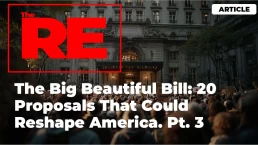
The Big Beautiful Bill: 20 Proposals That Could Reshape America Pt.2
By TP Newsroom Editorial | Ripple Effect Division
You can read legislation on paper all day long, but the question most people ask isn’t “what does it say”, it’s “what would this actually do?”
That’s where this part of the series comes in. We’ve looked at where the bill came from. We’ve broken down every one of its 20 major proposals. But now it’s time to sit with what it all means. Not the campaign soundbites. Not the cable news drama. Just the impact. In the real world. For real people. At home, at work, in schools, on farms, and online.
Because if this bill, or even just parts of it, goes through, it’s not just about who holds office or what party’s in charge. It’s about a complete redefinition of how federal power is used, who qualifies for rights and resources, and what it means to be “American” in the first place.
Some of these proposals are already being mirrored at the state level. Others are sitting quietly in legal drafts waiting for a shift in power. But taken together, they reveal a coordinated vision, one that doesn’t just challenge the current structure, but aims to rebuild it from the inside out.
This part isn’t here to warn or cheerlead. It’s here to map the terrain. Because if change is coming, we need to know what road we’re walking down, and who might be left behind along the way.
For most people, it won’t feel like a bill. It’ll feel like a slow shift in how institutions treat you, or ignore you. These proposals, taken together, are not just technical changes. They’re directional changes. If passed, they reshape the relationship between the public and the federal government. Not overnight, but piece by piece. And depending on where you sit, that’s either long overdue or deeply alarming.
If this work helped you understand something more clearly, support it by:
Buying the books | Visiting the Newsstand | Making a donation
One voice. One message. One Goal. Truth.
No spam. No schedules.
The Truth is Underfunded. That's Why This Exists.
No ads. No sponsors. No filter. Just the truth, unpacked, explained, and raw.
Defining Policy. Power. Consequence.
See how to add us to your home screen
For those working inside the government, especially in nonpartisan roles, the civil service structure as they’ve known it may no longer apply. Loyalty checks, reduced job protections, and top-down command structures create a culture of fear, not function. It signals that careers can be derailed not by poor performance but by perceived political disloyalty. That doesn’t just change who stays. It changes who speaks up.
Nonprofits, journalists, and educators would also feel a shift. The proposed legal redefinitions of advocacy, journalism, and curriculum affect how these groups operate, how they’re funded, and whether they’re considered legitimate. Under this bill’s language, being fact-based or community-based isn’t enough, you’d also need to align with federal “values” to keep your funding or status. Critics see it as a chilling effect. But supporters argue it’s about fairness: stopping taxpayer dollars from funding institutions they believe undermine the nation.
Then there’s immigration. Mass deportations, birthright citizenship challenges, and asylum changes all hit the same groups, mixed-status families, border communities, and humanitarian orgs. And even if some of these provisions get stalled in court, the signal is still sent. People living on the margins may be forced further into the shadows, where legal recourse becomes harder to access and civic participation becomes riskier.
In classrooms, shifts in curriculum requirements could dictate what’s taught and what’s omitted. For teachers, it creates uncertainty. For students, especially students of color or children of immigrants, it could mean growing up with a narrower view of history, one that celebrates, but rarely interrogates. Supporters argue this protects national pride and prevents guilt-based narratives. Opponents say it erases vital context.

Surveillance and policing would also evolve under this bill. Expanded definitions of domestic threats, fewer checks on private security contractors, and redefined protest penalties could shift how dissent is treated, especially online. If this bill becomes law, organizers, activists, and even digital creators may find themselves navigating new legal landmines. The goal, supporters argue, is to restore order. But what’s considered “order” often depends on who’s speaking and who’s listening.
And finally, the global stage. Reducing diplomacy and increasing military investment doesn’t just change what we fund—it changes how the world sees us. To some, this re-centering of American strength is necessary after years of failed foreign policy and financial waste. To others, it’s a retreat from cooperation at a time when global crises require more collaboration, not less.
So no, this bill isn’t just paperwork. It’s a worldview. It’s a blueprint for who gets heard, who gets watched, who gets in, and who gets out. And while not every piece will pass, and many will end up in the courts, the broader push is real. And the impact won’t be felt in a headline. It’ll be felt in the day-to-day.
This bill is not a one-time event, it’s a philosophy turned into policy. Whether you see it as reform or regression depends on how you view the role of government in your life. But no matter where you stand politically, it’s hard to deny the sheer scope of change being proposed.

On paper, it reads like a blueprint for control. Not just in the classic authoritarian sense, but in the quiet, structural way policy shifts happen, through definitions, eligibility, oversight, and funding. A journalist isn’t a journalist unless they meet new qualifications. A nonprofit isn’t protected unless it avoids “ideological narratives.” A protest isn’t legal unless it stays within an increasingly narrow lane. A civil servant isn’t protected unless they pass a loyalty check. That’s not fear-mongering. That’s the actual language being drafted.
But why is it happening? It’s not just about Trump or one administration. It’s about a broader realignment, a reaction to decades of perceived overreach, cultural shifts, and economic instability. Many Americans genuinely believe the system has forgotten them. That immigration policy is too loose, that education has become politicized, that government agencies are bloated and unaccountable. This bill taps into that belief and offers a clear message: we will restore control. We will take it back.
Supporters argue that the country needs a hard reset. That restoring “American values” means drawing clear lines: who belongs, who leads, who qualifies, and who funds what. To them, this is order. This is sovereignty. This is national rebirth.

Critics counter that this is selective empowerment, restoring a version of America that centers power in the hands of a few, and silences dissent under the guise of unity. They see it as ideological cleansing, stripping away diversity in thought, culture, and community influence to replace it with a more sanitized, loyal, and compliant structure. Where criticism becomes disloyalty. Where nonconformity becomes a threat.
But here’s the thing: both sides are talking about freedom. One sees it as freedom from influence—outside actors, woke ideology, federal overreach. The other sees it as freedom to exist, without censorship, surveillance, or punishment for one’s identity or beliefs.
The tension is not new. But the stakes are higher now.
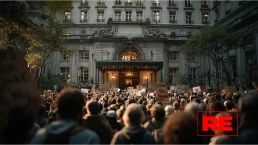
So let’s ask the 5Ws:
Who benefits?
Those seeking a government that’s smaller, more centralized under executive power, and more reflective of traditionalist values. Wealthy donors, oil executives, charter school lobbies, and religious organizations may also gain influence under these policies.
What changes?
The definitions. The rules. The protections. The process. This bill doesn’t just change outcomes, it changes the infrastructure that decides those outcomes. And once definitions shift, they don’t always come back.
When does it matter?
Now. Because even if the full bill doesn’t pass, the direction it signals is already influencing policy debates, school board elections, agency memos, and legal strategies. Cultural permission often comes before legal precedent. This bill gives that permission.
Where does it land hardest?
On people already living on the margins, immigrants, LGBTQ+ youth, activists, public educators, civil servants, independent journalists, and underfunded nonprofits. It’s not just about rights, it’s about resources, visibility, and safety.
Why should anyone care?
Because whether you’re for it or against it, this bill is reshaping the terms of the conversation. It defines what is “American,” who gets to decide that, and what happens to those who disagree. And once those definitions are locked in through law, they’re harder to challenge. You can’t speak truth to power if power gets to redefine truth.
Congressional Research Service. (2024). Overview of executive authority in federal agency restructuring. https://crsreports.congress.gov
Brennan Center for Justice. (2024). Loyalty tests and civil service integrity: Legal and ethical concerns. https://www.brennancenter.org
American Immigration Council. (2024). The shifting landscape of asylum law under proposed federal reforms. https://www.americanimmigrationcouncil.org
Pew Research Center. (2023). Public opinion on immigration, education, and media trust in America. https://www.pewresearch.org
Government Accountability Office. (2024). Impact analysis of proposed changes to federal program funding. https://www.gao.gov
If this work helped you understand something more clearly, support it by:
Buying the books | Visiting the Newsstand | Making a donation
One voice. One message. One Goal. Truth.
No spam. No schedules.
The Truth is Underfunded. That's Why This Exists.
No ads. No sponsors. No filter. Just the truth, unpacked, explained, and raw.
Defining Policy. Power. Consequence.
See how to add us to your home screen