The Ripple Effect
-News and Commentary-
Inside the “Big Beautiful Bill”: 20 Proposals That Could Reshape America
By TP Newsroom Editorial | Ripple Effect Division
This is where it starts. Not in theory. Not in talking points. But in policy. The first five proposals in the “Big Beautiful Bill” are where the real spine of this legislation lives because they do more than tweak around the edges. They strike at the structure of power itself: who enforces the law, who is protected by it, and who gets to stay inside the walls of the country. These aren’t marginal proposals. They’re architectural.
If this work helped you understand something more clearly, support it by:
Buying the books | Visiting the Newsstand | Making a donation
One voice. One message. One Goal. Truth.
No spam. No schedules.
The Truth is Underfunded. That's Why This Exists.
No ads. No sponsors. No filter. Just the truth, unpacked, explained, and raw.
Defining Policy. Power. Consequence.
See how to add us to your home screen
And whether you agree with them or not, these are the types of changes that don’t just alter policy, they alter people’s lives.We’re talking about:
-Restructuring or eliminating federal agencies like the Department of Education and the FBI
-Mass deportations under emergency powers and border expansion
-Ending birthright citizenship through reinterpretation of the 14th Amendment
-Reinstating Title 42-style removals for public health-related border control
-Major tax cuts for corporations and high earners
Now, let’s be clear. Each of these proposals has been framed by its supporters as common-sense, urgent, or overdue. From the right, they’re viewed as course corrections, a way to undo what they see as years of government bloat, legal loopholes, and weak borders. From the left, they’re often seen as an assault on civil liberties, due process, and the checks and balances that keep presidential power in check.
But no matter your perspective, here’s what matters: these aren’t bullet points on a campaign website. They’re in writing. In the bill. And they’re written in a way that bypasses a lot of the safeguards that normally slow this kind of change down. What we’re doing is walking you through each one without the noise. If we’re going to argue about it later, we might as well understand it first. So buckle in. Because we’re not speculating anymore. We’re decoding it. Piece by piece.

PROPOSAL #1: Restructuring or Eliminating Federal Agencies Like the Department of Education and the FBI
One of the most significant components of the bill centers around reducing—or in some cases, outright dismantling, key federal agencies. Two of the primary targets are the Department of Education and the FBI. The proposal doesn’t just call for budget cuts; it outlines a phased approach to removing or radically overhauling these institutions entirely.
For the Department of Education, the legislation pushes for a gradual defunding process, ultimately transferring control over curriculum, standards, and compliance back to the states. This isn’t a new idea in conservative circles. Critics of the department have long argued that education should be handled locally, not federally. Proponents of the change say it would allow for more community-centered education and reduce unnecessary federal bureaucracy. Opponents, however, warn that dissolving the department could widen disparities between rich and poor districts, especially in rural or underfunded areas where state support might not be enough to maintain quality.
The proposed changes to the FBI are even more controversial. The bill suggests restructuring the agency to fall more directly under the control of the executive branch. While supporters argue this would increase accountability and prevent politicized investigations, critics fear it would erode the FBI’s independence and open the door to political interference in criminal and national security matters. The underlying tension here is about trust, whether the public believes agencies like the FBI can remain neutral, or whether their power needs to be checked through executive oversight.
At its core, this proposal reflects two different views of government. One side sees sprawling federal agencies as outdated, overly powerful, and ideologically biased. The other sees them as necessary guardrails, imperfect but essential, to maintain national standards and legal consistency. Whether this is a cleanup or a takedown depends on where you sit. But one thing’s clear: if passed, this section of the bill would be one of the most dramatic restructurings of federal authority in decades.
PROPOSAL #2: Mass Deportations Under Emergency Powers and Border Expansion
Another key pillar of the bill is a sweeping overhaul of immigration enforcement, built on a framework of emergency powers, rapid deportations, and expanded border infrastructure. It proposes invoking a national emergency to bypass traditional court processes and fast-track removals, particularly for individuals without clear legal status. Under this plan, the federal government would gain expanded authority to remove undocumented immigrants at scale, with limited judicial review.
Supporters of the measure argue that the current system is overwhelmed and ineffective. They claim that loopholes in asylum law and prolonged court backlogs have created a bottleneck that encourages illegal entry while straining local resources. For them, a national emergency declaration would give the executive branch the power to respond with urgency, clear out systemic delays, and re-establish order. They also cite rising fentanyl trafficking and cartel activity as reasons to expand enforcement capacity and border surveillance.
The proposal includes the deployment of National Guard units and increased use of both public and private detention facilities. It also calls for resuming construction of physical barriers, like segments of the border wall, and prioritizing technological surveillance to monitor crossings more aggressively. The bill outlines the creation of a centralized deportation processing system, aimed at identifying and removing individuals without access to lengthy appeals or hearings.
Critics, however, say this approach trades constitutional protections for speed. They argue that due process is foundational to American law, even in immigration cases, and that cutting legal review could lead to wrongful detentions, racial profiling, and abuse of power. There’s also concern about the mental health and humanitarian impact of large-scale removals, especially on mixed-status families and longtime residents with deep ties to the U.S.
At the heart of this debate is a question of scope: how far should the government go to enforce immigration law, and what lines shouldn’t be crossed? Proponents call it necessary. Opponents call it dangerous. But if passed as written, this provision would mark one of the most aggressive immigration enforcement shifts in modern U.S. history.
PROPOSAL #3: Ending Birthright Citizenship Through 14th Amendment Reinterpretation
One of the most controversial sections of the bill centers around ending birthright citizenship for children born in the United States to undocumented immigrants. Rather than pursuing a constitutional amendment, something that would require a two-thirds majority in Congress and ratification by 38 states, the bill proposes a reinterpretation of the 14th Amendment through executive order and judicial challenge.
The 14th Amendment, ratified in 1868, states that “all persons born or naturalized in the United States, and subject to the jurisdiction thereof, are citizens of the United States.” For over 150 years, courts have upheld that this guarantees automatic citizenship to nearly everyone born on U.S. soil, regardless of their parents’ immigration status. This bill attempts to narrow that interpretation by asserting that children born to undocumented immigrants are not truly “subject to the jurisdiction” of the U.S., and therefore do not qualify for automatic citizenship.
Supporters of the move argue that the current interpretation has been abused, enabling what they refer to as “anchor baby” loopholes, where children born in the U.S. can eventually help undocumented parents gain legal status. They frame this change as a necessary correction to restore the original intent of the Constitution and to prevent what they see as systemic exploitation of immigration law. Some also argue it’s about sovereignty: who belongs, who decides, and what citizenship should mean in a modern context.
Opponents, however, warn that this proposal is not only legally flimsy but socially destabilizing. They argue that citizenship by birth is a cornerstone of American law and identity, and that undermining it could open the door to broader exclusions. Legal scholars expect the move to face immediate and prolonged legal challenges, likely reaching the Supreme Court. In the meantime, questions remain about how such a policy would be enforced and what it means for millions of U.S.-born individuals whose status could be placed in limbo.
The broader implication here isn’t just about immigration, it’s about the legal definition of belonging in America. If the government can reinterpret birthright citizenship with an executive order, what else could be redefined the same way? For some, this is about national interest. For others, it’s about rewriting history. Either way, it’s a shift that could fundamentally alter what it means to be an American.

PROPOSAL #4: Reinstating Title 42-Style Public Health Removals
Another key element buried in the bill’s framework is the proposed reinstatement and possible expansion of Title 42-style authority. Originally implemented during the COVID-19 pandemic, Title 42 allowed border officials to quickly expel migrants without allowing them to seek asylum, citing public health concerns. The bill aims to bring back that power not just for pandemic scenarios, but as a broader mechanism tied to any declared public health threat.
This isn’t just about COVID or infectious disease. The new language introduces looser criteria for invoking emergency removals. Future administrations could cite drug epidemics, mental health crises, or even “foreign-born disease resurgence” as justification to limit border access. The power to do so would be placed more squarely in the executive branch, giving the president significant discretion in defining what constitutes a public health emergency.
Supporters argue this provides much-needed flexibility for the U.S. government to manage border pressure in real time, particularly when overwhelmed by mass migration surges or humanitarian crises. They frame it as a preventative measure, a way to protect Americans and avoid system collapse. It also appeals to voters who view immigration not only as a legal issue, but as a threat to public resources and safety.
Opponents, however, see the move as an overreach designed to bypass asylum protections enshrined in both U.S. and international law. Critics argue that under this model, nearly any event could be framed as a health concern, allowing for fast-track deportations without due process. Human rights organizations warn it opens the door to profiling and sweeping denials of legitimate asylum claims under the guise of “emergency management.”
This isn’t just about borders. It’s about precedent. How and when a government chooses to suspend normal legal protections says a lot about its priorities. While some see this as a return to control, others see it as a quiet expansion of unchecked executive authority. The real question is: if we normalize these shortcuts during perceived crises, how easily might they be applied again, whether justified or not?
PROPOSAL #5: Major Tax Cuts for Corporations and High Earners
One of the more traditional Republican priorities included in the bill is a sweeping package of tax reductions aimed primarily at corporations and top income earners. This proposal mirrors earlier Trump-era tax cuts, but with deeper adjustments and fewer sunset clauses, meaning the changes would be long-term, if not permanent.
On paper, the justification is straightforward: stimulate investment, repatriate overseas profits, and keep American businesses competitive globally. The bill lowers the corporate tax rate further, trims capital gains taxes, and expands deductions for pass-through entities (like LLCs and partnerships). For individuals, the highest income brackets would see reduced rates, and estate tax exemptions would expand, reducing what wealthy families owe when passing on generational assets.
Supporters argue these cuts would supercharge growth by rewarding innovation and encouraging capital reinvestment. They say the benefits will “trickle down” through job creation, increased wages, and more robust economic activity. For many voters and small business owners, lower taxes sound like a return to normal, especially after years of inflation, uncertainty, and rising operational costs.
But critics warn this is the same old pattern: cutting from the top, hoping the rest will follow. They argue that these changes disproportionately benefit the wealthiest Americans while adding to the national deficit. According to policy analysts, the bill does not offer equivalent offsets or cuts in spending, except in areas like public assistance and regulatory enforcement. That means wealth gaps could widen, and middle-class relief may be minimal unless states intervene on their own.
It’s not just about numbers, it’s about philosophy. Is the role of government to collect less and spend less, or to collect more and serve more? This proposal makes a clear bet on the former, aligning closely with supply-side economics and free-market principles. Whether that vision delivers broad prosperity or deeper inequality remains one of the central debates of this bill.

PROPOSAL #6: Federal Defunding of “Woke” Programs in Education, Diversity Training, and Federal Hiring
Tucked into the broader budget language is a sweeping directive to defund what the bill refers to as “woke” initiatives across the federal government. That includes funding for diversity, equity, and inclusion (DEI) offices; training modules related to systemic bias or anti-racism; and grant programs aimed at increasing representation in education and federal employment pipelines.
Supporters argue that these programs are divisive, ideologically biased, and often waste taxpayer money on political messaging instead of performance. They claim that government jobs and classrooms should be focused on merit, not identity, and that forcing race- or gender-based awareness creates resentment rather than opportunity. For many conservatives, this proposal represents a cultural reset, stripping progressive ideology from federal influence and restoring “neutrality” to public institutions.
On the other side, critics see this as a calculated rollback of hard-fought protections and opportunities for marginalized communities. They argue that without these initiatives, racial and gender disparities often go unchecked, especially in institutions that historically excluded certain groups. Many point out that these programs were created not to divide, but to close persistent gaps in hiring, education, and justice.
The proposal doesn’t ban these ideas outright in the private sector, but it does send a powerful message from the federal level: that equity-based frameworks are no longer a national priority. Whether you view that as a course correction or a cultural erasure depends on where you stand. But either way, this clause isn’t just about budget, it’s about ideology, identity, and what kind of country the government should actively shape through its dollars.

PROPOSAL #7: Shifting Climate Policy to Favor Fossil Fuel Expansion, Including Rollback of EPA Regulations
Another major plank in the bill focuses on reorienting national climate and energy policy, specifically shifting away from aggressive emissions reduction goals and pivoting toward fossil fuel expansion. The language includes multiple line items aimed at rolling back Environmental Protection Agency (EPA) regulations, fast-tracking oil and gas permitting, and stripping federal restrictions on drilling in protected lands and offshore areas.
Supporters frame this as an energy independence strategy. They argue that overregulation has stifled economic growth, made the U.S. dependent on foreign oil, and overburdened small businesses and rural communities with environmental red tape. By loosening these constraints, they believe the country can lower energy prices, revive domestic manufacturing, and reinvest in infrastructure without relying on global supply chains or volatile international partners.
Critics, however, see it as a dangerous retreat from climate responsibility. They warn that repealing environmental safeguards puts vulnerable communities, particularly those near extraction sites, at increased risk of pollution, water contamination, and long-term health consequences. They also argue that undoing EPA authority and clean energy incentives undermines both public health progress and global leadership on climate action.
The proposal doesn’t deny climate change exists, but it redefines the national response through an economic lens rather than an environmental one. Rather than prioritizing net-zero targets or renewable investments, it focuses on energy output, deregulation, and job creation in traditional energy sectors. Whether that’s pragmatic or shortsighted depends largely on your perspective, and on whether short-term energy gains outweigh long-term planetary risks.

PROPOSAL #8: Granting Greater Policing Powers to States Over Federal Protest Activity
This section of the bill quietly but significantly reworks how protests, especially those near federal property or involving interstate coordination, are regulated and policed. The proposal aims to give state and local law enforcement greater latitude to intervene, arrest, and charge individuals involved in protests that are deemed disruptive, even when they occur in areas traditionally under federal jurisdiction.
The rationale presented is about flexibility and rapid response. Supporters argue that federal law enforcement has been slow or inconsistent in dealing with protests that turn violent or disruptive, especially in cases involving federal buildings or highways. By allowing states to take the lead, the bill claims it will empower local agencies to act quickly, protect public order, and reduce the burden on federal response units.
Opponents raise major concerns about selective enforcement and political bias. They point out that this could open the door to drastically different standards from state to state, particularly in how protests are categorized and treated. A peaceful protest in one state might be permitted while the same event elsewhere could lead to arrest under more aggressive interpretations of “disruption” or “obstruction.”
This change doesn’t eliminate federal protections on assembly and speech, but it does shift the enforcement balance, potentially allowing local political climates to dictate which voices are policed and which are protected. In practice, it means the same protest could result in different legal outcomes depending on the zip code. For critics, that’s a slippery slope. For supporters, it’s local control. For everyone, it’s a new legal reality that could reshape how public demonstrations are handled moving forward.

PROPOSAL #9: A National Voter ID Requirement for Federal Elections
This proposal introduces a federal mandate requiring all voters to present government-issued photo identification in order to cast a ballot in any federal election. While many states already have their own voter ID laws, this provision would establish a uniform baseline nationwide, effectively overriding states with looser verification systems.
Supporters argue that this measure is about safeguarding the integrity of elections. They point to polling that suggests broad public support for ID requirements and claim that it reduces the risk of fraud, restores trust in outcomes, and creates a more accountable voting process. In their view, if identification is needed for everyday tasks like flying or buying certain goods, it should also be required for something as significant as voting.
Critics argue that this creates an unnecessary barrier to voting, particularly for low-income, elderly, rural, or minority populations who may not have easy access to valid ID or the documents required to obtain one. Civil rights groups have long noted that voter fraud in federal elections is statistically rare and that ID laws have often been used historically to suppress turnout from marginalized communities.
What makes this proposal stand out is that it doesn’t just allow states to decide, it forces all of them to comply with a single federal standard. That federalization of voting rules runs counter to decades of precedent where states maintained broad discretion over how elections were administered.
Depending on your viewpoint, this could be seen either as a way to streamline and secure the voting process or as a one-size-fits-all rule that risks disenfranchising vulnerable populations for the sake of solving a problem that some argue barely exists. Either way, it would mark a sharp shift in the balance between federal oversight and state autonomy in elections.
PROPOSAL #10: Allowing States to Take Over Certain Federal Land Management Decisions
One of the lesser-known but deeply consequential proposals in the bill involves shifting authority over federally managed lands, particularly in the Western United States, into the hands of individual state governments. This provision wouldn’t hand over ownership, but it would allow states to override or reinterpret federal land-use rules when it comes to energy development, logging, grazing, and public access.
Proponents argue this is about restoring local control. They say the people who live closest to the land should have a greater say in how it’s used. State governments, they argue, are more responsive to local needs, whether it’s protecting water sources or unlocking new economic opportunities through resource extraction. Many rural communities have long resented what they see as heavy-handed federal restrictions imposed by agencies like the Bureau of Land Management or the U.S. Forest Service.
On the other hand, environmental groups and public lands advocates see this as a direct threat to national conservation efforts. They warn that states, under pressure from industry lobbyists or budget shortfalls, may prioritize short-term economic gains over long-term ecological health. There’s also concern about equity: federal lands belong to all Americans, and decisions made by one state could impact national environmental goals, endangered species protections, or Indigenous land rights.
This proposal walks a fine line between decentralization and deregulation. It raises important questions about who gets to decide what happens to land held in the public trust and whether that trust should be managed collectively or by regional interest. Like many parts of the bill, the impact of this idea depends largely on who’s holding the reins. To some, it looks like efficiency. To others, it feels like abandonment.
PROPOSAL #11: Rewriting Antitrust Laws to Allow More State-Level Media Control
This section of the bill proposes revisiting federal antitrust frameworks, not to break up large companies, but to give states more autonomy in regulating the concentration of media ownership within their borders. Essentially, it would carve out a pathway for states to challenge mergers or conglomerate control over local news, cable access, and digital content distribution, even if federal regulators approve the deals.
Supporters argue this empowers states to protect local journalism and diverse voices. They point to shrinking newspaper coverage, monopolized radio markets, and regional information deserts where only one media company controls most outlets. By loosening federal preemption, states could potentially block deals they feel hurt public discourse or limit access to balanced news.
But opponents warn this could open the door to political interference. A state-level official with partisan leanings might use this expanded power to go after outlets they disagree with, citing vague antitrust concerns. Others fear it creates a fragmented national media landscape, where companies have to navigate 50 different rulebooks just to operate across state lines.
In short, this proposal sits at the intersection of decentralization and disruption. On one hand, it’s an attempt to localize control and preserve regional identity in the media. On the other, it could create inconsistent enforcement, legal chaos, and new forms of political gatekeeping. Whether it protects diversity or enables censorship depends entirely on how, and by whom, it’s enforced.
PROPOSAL #12: Increasing Presidential Power to Fire Federal Civil Servants Without Cause
This provision builds directly on the legacy of the now-rescinded Schedule F executive order. The idea is simple but sweeping: give the president far greater authority to hire and fire federal civil service employees, especially those in policy-making, advisory, or administrative roles. Instead of being protected by long-standing job security rules, thousands of employees could be reclassified as “at-will,” meaning they could be dismissed for almost any reason, including perceived disloyalty.
Advocates for this change argue that it cuts through bureaucratic stagnation. They claim there’s a “deep state” of unelected, unaccountable staffers who slow down, resist, or quietly override the agenda of an incoming administration. In this view, empowering the president to reshape the civil workforce would increase efficiency, loyalty, and responsiveness.
But critics argue the opposite. Removing these protections could undermine institutional stability and turn routine government operations into a revolving door of political patronage. It could discourage qualified professionals from joining federal service and create a chilling effect among current employees afraid of speaking up or offering dissenting expertise.
This isn’t a small shift in power, it’s a structural transformation of how the federal workforce operates. If passed, it could lead to the largest single reclassification of civil service roles in U.S. history, affecting agencies from the EPA to the DOJ. For some, it’s about draining the swamp. For others, it’s about weakening the guardrails.
PROPOSAL #13: Capping Federal Aid Programs Including SNAP, Medicaid, and TANF
One of the more financially focused elements of the bill is the proposal to implement hard caps, or declining ceilings, on several core federal assistance programs. Specifically, it targets SNAP (Supplemental Nutrition Assistance Program), Medicaid, and TANF (Temporary Assistance for Needy Families), suggesting budget limits that would no longer rise automatically with need or inflation.
Supporters of this move argue it’s a way to control runaway entitlement spending. They see ballooning budgets for these programs as unsustainable, pointing to fraud concerns or what they describe as dependency culture. By instituting fixed limits or block grants, the goal is to give states more control over how money is used while encouraging “self-reliance” among recipients.
Opponents argue this approach severs the safety net when it’s needed most. These programs already serve millions of Americans who are working poor, disabled, or in economic transition. A cap doesn’t mean the need goes away, it just means fewer people will qualify, or benefits will shrink over time. Critics warn that when recessions hit, or inflation spikes, these hard limits could leave entire communities without access to basics like food, healthcare, or child support.
The narrative, once again, splits depending on your lens: financial responsibility versus human impact. For budget hawks, this is overdue discipline. For advocates, it’s another blow to the country’s most vulnerable.

PROPOSAL #14: Proposing a National Curriculum Outline Tied to “American Values”
Among the education-related provisions, the bill proposes creating a national curriculum framework that all federally funded schools would be encouraged, or in some cases required, to follow. This outline would emphasize what’s described as “American values,” including patriotism, individual responsibility, free market principles, and the historical achievements of the United States.
Supporters of this proposal believe it’s a necessary course correction. They argue that too many schools today teach students to view America through a lens of shame or division. According to backers, this curriculum would create a shared civic identity, fostering national unity by focusing on historical milestones, democratic ideals, and what they describe as “inspirational narratives.”
Opponents raise concerns about government overreach and ideological control. While it’s not being pitched as a federal mandate it would tie funding or incentives to adoption. That, critics argue, amounts to coercion. They worry it would whitewash history, exclude marginalized voices, and create a chilling effect on classroom discussions about race, inequality, or America’s flaws.
The tension here isn’t new, it’s been playing out in school board meetings and state legislatures for years. But this bill aims to take it national. What gets labeled as “values” depends heavily on who’s writing the curriculum. And that’s where the debate really lives: not just what is taught, but who gets to decide.
PROPOSAL #15: Removing Protections from Specific LGBTQ+ Federal Guidelines
This section of the bill doesn’t explicitly outlaw LGBTQ+ rights but it does propose rolling back a wide range of protections that were added under previous administrations. The bill seeks to revise federal guidance around gender identity in schools, healthcare access for transgender individuals, and nondiscrimination clauses in housing, employment, and public services.
Supporters of these changes often frame the issue as one of restoring neutrality. They argue that many of these protections overstep by forcing institutions to comply with what they view as evolving social norms rather than established legal precedent. From that perspective, removing these guidelines is about preventing “forced ideological alignment,” particularly in public schools, religious organizations, and private businesses.
Critics, on the other hand, see these rollbacks as targeted political attacks. They argue that these protections weren’t about ideology, they were about safety, dignity, and equal access. Removing them, they say, signals to federal agencies, contractors, and schools that it’s acceptable to deny services or support to LGBTQ+ individuals under the guise of neutrality or religious freedom.
This isn’t about banning identities, it’s about redrawing the lines of inclusion. And depending on your view of what government should protect, that either sounds like a necessary legal reset or a dangerous step backward. Either way, it has real-world consequences, particularly for youth, rural communities, and anyone reliant on federally funded systems.
PROPOSAL #16: Redefining “Free Speech” to Expand Religious Exemptions
This part of the bill proposes a shift in how the First Amendment is interpreted, especially when it comes to religious expression. On paper, it expands “free speech” by reinforcing the right of individuals, schools, and businesses to opt out of activities, programs, or requirements that conflict with their “deeply held religious beliefs.”
What does that look like in practice? It could mean public employees citing religious beliefs to avoid DEI trainings. It could mean schools or private businesses refusing to recognize LGBTQ+ policies. It could also apply to hospitals or therapists opting out of certain procedures or care based on faith. These aren’t theoretical, similar cases have already played out in court. The bill simply tries to standardize and protect them at the federal level.
Supporters say it protects conscience and religious freedom. They argue that no one should be punished or forced to act against their faith by federal mandate. Opponents argue that this language opens the door to broad discrimination, especially against LGBTQ+ people, non-Christian groups, and marginalized communities, under the legal cover of “sincerely held beliefs.”
At the core is a tension between personal liberty and public obligation. How do we balance freedom of religion with equal protection under the law? This proposal doesn’t try to answer that. It picks a side. And depending on where you’re standing, it either restores foundational rights or chips away at civil protections in the name of faith.

PROPOSAL #17: Criminal Penalties for Protests on Federal Property
In this section, the bill increases legal penalties for individuals who organize or participate in protests that “interfere with federal operations, disrupt proceedings, or damage property.” At first glance, this may sound like a restatement of existing law, after all, damaging federal buildings or threatening officials is already illegal. But this proposal goes further.
It introduces mandatory minimum sentences, raises fines, and broadens what qualifies as “interference.” Activities like blocking an entryway, staging sit-ins during federal hearings, or even live-streaming from certain restricted zones could trigger felony charges under the new guidelines. It also introduces language that allows federal agencies to designate “protected events,” meaning protests near those events, like Supreme Court hearings or presidential debates, would automatically fall under heightened scrutiny.
The goal, according to backers, is deterrence. They point to incidents like the 2020 George Floyd protests or the 2021 Capitol riot as proof that federal spaces need stronger protection. They argue that these measures create a clear boundary between peaceful protest and unlawful disruption.
Critics, however, see this as selective enforcement. They warn that vague language about “interference” could be used to chill dissent, particularly against communities already overpoliced. By raising the stakes for protest, they argue, this bill doesn’t just target violence, it risks criminalizing activism itself, especially when it challenges government power.
It’s not about whether protest should be legal. It’s about how the state defines danger, and who it chooses to prosecute when that danger is loud, inconvenient, or aimed at the institutions writing the rules.
PROPOSAL #18: Increased Defense Spending and Cuts to Diplomacy
This section of the bill pushes for a dramatic increase in military spending, focusing particularly on cyberwarfare, border operations, and AI-enabled defense systems, while simultaneously reducing funding for international diplomacy, foreign aid, and U.S. participation in multilateral coalitions like the UN or World Bank initiatives.
Supporters argue this is about priorities. They frame the change as a long-overdue realignment that focuses tax dollars inward, strengthening national defense, deterring foreign threats, and bolstering America’s independence on the global stage. In their view, the U.S. has spent decades pouring money into international efforts that yield little return, often propping up corrupt regimes or funding bureaucratic programs with minimal accountability.
But detractors warn that cutting diplomacy while expanding militarism risks making the world less stable and America less safe. Foreign policy experts argue that diplomatic presence, cultural exchange, and humanitarian aid often do more to prevent conflict than military muscle. They also warn that scaling back international partnerships could isolate the U.S. and make it harder to coordinate on global crises like pandemics, refugee flows, and climate migration.
In essence, this proposal doubles down on a defense-first model of engagement, one where America speaks louder, acts faster, and compromises less. Whether that leads to greater strength or greater strain may depend on how much of the world is still willing to listen when we put the diplomatic tools back on the shelf.
PROPOSAL #19: Reclassifying Nonprofits Engaged in Advocacy as Taxable Entities
This proposal would shift the legal and financial landscape for thousands of nonprofit organizations across the country. Specifically, it targets 501(c)(3) and 501(c)(4) groups that participate in what’s defined here as “ideologically motivated advocacy”, especially if their work overlaps with political education, public protests, or legal campaigns. Under this proposal, those groups could lose their tax-exempt status and be reclassified as taxable entities, akin to lobbying firms or political action committees.
The bill doesn’t outright ban advocacy, it reframes how it’s treated. The language draws a hard line between “charitable service” (like food banks or disaster relief) and “ideological influence,” especially when that influence includes litigation against government agencies, public demonstrations, or media campaigns that challenge U.S. institutions.
Supporters argue this is a necessary step to close loopholes that allow partisan politics to hide behind nonprofit shields. They say it brings transparency and fairness, preventing wealthy donors from funneling money into activist causes tax-free.
Critics argue it’s a targeted strike against progressive movements, civil rights organizations, and legal watchdogs, many of whom rely on nonprofit status to stay operational. They warn that the vague language of “anti-American narratives” or “ideological disruption” opens the door to selective enforcement, chilling speech and civic engagement across the board.
In practice, this could mean fewer resources for grassroots organizers, environmental litigators, civil liberties defenders, and policy reform advocates, all under the guise of leveling the tax code. The concern isn’t just who pays what, it’s who gets to speak, and at what cost.
PROPOSAL #20: Mandating Loyalty Reviews for Federal Employees
The final proposal in this package introduces a controversial concept: regular “loyalty reviews” for federal employees, specifically aimed at identifying what the bill refers to as “anti-American activity or affiliations.” These reviews would be mandated across all federal departments and agencies, with specific attention to social media history, organizational memberships, and previous public statements, whether made on or off duty.
The language frames the policy as a national security measure, not unlike security clearances or background checks. But the scope is broader and the terms are far more subjective. The goal, according to proponents, is to ensure that individuals entrusted with executing the federal government’s mission are aligned with “constitutional values and national interests.” In other words, to root out bias, subversion, or ideological opposition from within the ranks.
Supporters say this is no different than vetting military recruits or intelligence officers for ties to extremist groups. They argue that if the government can fire someone for failing a drug test, it should also be able to remove someone who publicly denounces the Constitution or supports violent uprisings, left or right.
Critics, however, view it as an ideological purge. They argue the vague standard of “anti-American activity” could be weaponized against whistleblowers, union leaders, racial justice advocates, or even employees who criticize policy decisions. There’s also concern that this could erode legal protections for civil servants, making every government job contingent on perceived political loyalty.
For some, it’s a safeguard. For others, it’s McCarthyism rebranded.
Either way, this final measure rounds out a vision of federal governance that places ideological alignment, however defined, at the core of public service. In doing so, it signals that the next phase of political restructuring may be less about what you do, and more about what you believe.
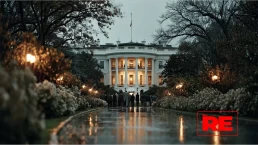
This isn’t just another bill crawling through Congress. It’s a coordinated attempt to redraw the map of how federal power works, from who it protects, to who gets to shape it, to what it even means to be an American under the law. Whether you see that as a long-overdue course correction or a fundamental threat depends on your lens. But one thing’s clear: it’s not just politics as usual.
The twenty proposals outlined above are not random. They form a strategic blueprint, some bold, some buried, and all interconnected. The goal isn’t just border reform or budget reallocation. It’s systemic transformation. Education. Immigration. Civil service. Media. Rights. Every section of this bill carries a ripple effect, one that doesn’t stop at headlines or soundbites. And that’s exactly why it deserves to be unpacked piece by piece.
Some of these ideas have been floating around conservative circles for years. Others are newly tailored to this political moment. But for the first time, they’ve all been stitched together in one place, backed by legal language, political momentum, and a marketing push aimed directly at the next election cycle.
So we’re not here to tell you how to vote, or what to fear. We’re here to walk you through what’s actually in the bill, fact by fact, line by line, so that no matter where you fall politically, you’re responding to the full picture, not just the curated clips. Because before people argue about where we’re going, they have to understand what’s on the table.
Congressional Research Service. (2024). Reorganization of federal agencies: Historical background and considerations. https://crsreports.congress.gov
American Immigration Council. (2023). A primer on expedited removal and asylum. https://www.americanimmigrationcouncil.org
Congressional Budget Office. (2023). The distribution of household income and federal taxes, 2019. https://www.cbo.gov/publication/58585
U.S. Department of Health and Human Services. (2022). Equity Action Plan. https://www.hhs.gov/about/overview/strategic-plan/equity-action-plan/index.html
U.S. Environmental Protection Agency. (2023). Proposed changes to the Clean Power Plan and regulatory rollback timeline. https://www.epa.gov
Congressional Budget Office. (2024). Impacts of proposed changes to SNAP and Medicaid eligibility. https://www.cbo.gov/publication/58847
Brennan Center for Justice. (2022). Voter ID laws and their impact on election access. https://www.brennancenter.org
Office of Management and Budget. (2024). Proposals to change federal civil service protections. https://www.whitehouse.gov/omb
U.S. Department of Justice. (2021). Domestic terrorism: Definitions, trends, and threats. https://www.justice.gov
U.S. Citizenship and Immigration Services. (2024). Changes in asylum processing under current policy proposals. https://www.uscis.gov
U.S. Department of Education. (2023). Federal funding and curriculum content requirements. https://www.ed.gov
Freedom Forum Institute. (2021). Who qualifies as a journalist under First Amendment protections? https://www.freedomforuminstitute.org
If this work helped you understand something more clearly, support it by:
Buying the books | Visiting the Newsstand | Making a donation
One voice. One message. One Goal. Truth.
No spam. No schedules.
The Truth is Underfunded. That's Why This Exists.
No ads. No sponsors. No filter. Just the truth, unpacked, explained, and raw.
Defining Policy. Power. Consequence.
See how to add us to your home screen