
The Ripple Effect
-News and Commentary-
The Big Beautiful Bill: 20 Proposals That Could Reshape America Pt.1
By TP Newsroom Editorial | Ripple Effect Division
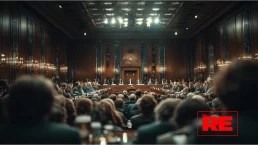
Today in The Ripple Effect, we’re breaking down what’s being called the “Big, Beautiful Bill” that’s moving through the Senate right now. People have questions, and for good reason. Behind the headlines and press statements, there’s a long, complex proposal that could reshape immigration policy, border enforcement, and national funding priorities. For the past two weeks, we’ve been reading, researching, cross-checking, and breaking down what many are calling the “Big Beautiful Bill.” It’s packed with bold proposals, sweeping reforms, and strategic cuts. It’s been circulating in Senate talks, pushed forward with energy by Trump-aligned conservatives, but it didn’t start with Donald Trump alone. This bill is the culmination of years of policy drafts, conservative think tank contributions, and internal Republican discussions on how to reshape the federal government.
If this work helped you understand something more clearly, support it by:
Buying the books | Visiting the Newsstand | Making a donation
One voice. One message. One Goal. Truth.
No spam. No schedules.
The Truth is Underfunded. That's Why This Exists.
No ads. No sponsors. No filter. Just the truth, unpacked, explained, and raw.
Defining Policy. Power. Consequence.
See how to add us to your home screen
Trump didn’t write it, but he amplified it. He gave it a title, made it digestible, and delivered the messaging. Behind him are longtime policy architects, former cabinet members, campaign strategists, and legal experts, many of whom were involved in previous executive orders, court appointments, and restructuring efforts during his first term. They’ve been preparing this playbook for a while. At its core, the bill is a vision document. A policy roadmap. And a reset button. What started as an abstract set of talking points has now become a detailed legislative framework with over 1,000 pages of proposed changes. Everything from federal spending to agency roles, immigration, education, health care, environmental rules, and tech regulation is covered. And while some of it echoes long-standing conservative ideals, other pieces introduce entirely new directions for government.
Across public speeches, press releases, and summary briefs, at least twenty key takeaways have emerged. Of those, ten stand out as the most emphasized, both by supporters and critics alike. But for context, here’s the full twenty you’ll hear referenced, even if only half are being pushed publicly.

Top 20 Proposals from the Bill:
-Restructuring and potentially eliminating federal agencies such as the Department of Education and the FBI
-Mass deportations and border expansions under a national emergency framework
-Ending birthright citizenship for children of undocumented immigrants
-Reinstating Title 42-style removals for public health-related border control
-Major tax cuts for corporations and high earners
-Federal defunding of “woke” programs in education, diversity training, and federal hiring
-Shifting climate policy to favor fossil fuel expansion, including rollback of EPA regulations
-Granting greater policing powers to states over federal protest activity
-A national voter ID requirement for federal elections
-Allowing states to take over some federal land management decisions
-Rewriting antitrust laws to allow more state-level media control
-Increasing presidential power to fire federal civil servants without cause
-Capping federal aid programs including SNAP, Medicaid, and TANF
-Proposing a national curriculum outline tied to “American values”
-Removing protections from specific LGBTQ+ federal guidelines
-Redefining “free speech” to include expanded religious exemptions
-Criminal penalties for protests that interfere with federal property or proceedings
-Increased defense spending alongside cuts to international diplomacy budgets
-Reclassifying nonprofit organizations that engage in advocacy as taxable entities
-Mandating loyalty reviews for federal employees tied to “anti-American activity”
Journalism You Can Hold. Insight You Can Own.
Books Magazines Companion Guides White Papers More
Your support funds the research, reporting, and long-form analysis behind TP Newsroom

But to really understand where these proposals come from and where they’re headed, it’s important to walk through what they really are and what they really mean. Because every line item in this bill connects back to years of policy arguments, lawsuits, executive orders, and think tank drafts.
Some people see it as a necessary course correction. Others view it as a threat to foundational protections. And depending on where you stand politically, the same exact clause can look like a breakthrough or a red flag. That’s why we’re breaking it down not from a place of panic, and not from a place of praise. Just from the position of clarity. Because what’s written in this bill could shape the country for decades.
Even if only half of these proposals are being pushed publicly, the full twenty are either written into the bill itself or mirrored in surrounding memos and policy playbooks. Together, they outline a sweeping vision for the next administration, one that reshapes immigration, education, public health, media, law enforcement, and the role of government itself. Here’s a closer look at what each one actually proposes, beyond the headlines and into the fine print.
Restructuring or eliminating federal agencies like the Department of Education and the FBI . This proposal isn’t just about trimming bureaucracy, it’s about shrinking federal influence, especially in areas seen as politically biased or redundant. The Department of Education has long been a conservative target, criticized for federal overreach into local schools. The plan calls for defunding or dissolving it, shifting power to state governments and school boards. The FBI, meanwhile, would be restructured to fall more directly under presidential oversight. The goal, according to supporters, is to restore public trust and eliminate partisan interference. Critics say this would collapse long-standing independence in federal law enforcement and tilt investigative power toward political agendas.
Mass deportations under emergency powers and border expansion. This is one of the most aggressive parts of the entire bill. It proposes declaring a national emergency to expand the scope of deportation efforts, bypassing traditional immigration courts and due process in some cases. National Guard units could be deployed to assist in detentions. A new network of detention centers, some publicly run, others private, would be created to manage volume. Border infrastructure projects would restart, including wall construction. While the framing is about restoring law and order, immigration experts warn that this would drastically reshape civil liberties and due process protections, especially for asylum seekers and mixed-status families.
Ending birthright citizenship through reinterpretation of the 14th Amendment . Rather than attempting a constitutional amendment (which is nearly impossible politically), the bill includes language that supports reinterpreting the 14th Amendment via executive order and legal challenges. The plan is to declare that children born to undocumented immigrants are not “subject to the jurisdiction” of the U.S. and therefore not automatic citizens. It’s a legally untested move, guaranteed to trigger years of court battles, but it signals a bold attempt to redefine citizenship itself. Supporters frame this as a move to curb what they call “anchor baby” loopholes. Legal scholars argue that this undermines 150 years of precedent and destabilizes the very concept of citizenship.

Centralizing presidential power over civil service hiring and firing. This proposal revives a key component of Trump’s prior Schedule F executive order, which was designed to strip job protections from tens of thousands of federal workers. The idea is to give the president broad authority to remove employees deemed disloyal or obstructive, even in historically independent agencies. Supporters argue this would drain entrenched “deep state” resistance and make government more responsive. Critics say it would dismantle civil service neutrality, turning policy enforcement into political loyalty tests—and risk creating a government staffed only by those who serve a singular agenda.
Overhauling federal surveillance powers for “domestic threats.” Framed as a response to perceived double standards in how government targets protests and online rhetoric, this section proposes changes to federal surveillance authority, specifically to widen the definition of domestic extremism. Language in the bill includes clauses that re-prioritize surveillance away from white nationalist or militia groups and toward what it describes as “left-wing radicals,” “critical race agitators,” and “eco-terrorists.” It also seeks to reform how agencies use metadata and third-party tools to flag keywords, monitor encrypted apps, and build watchlists, raising serious questions about civil liberties and political targeting.
Expanding defamation laws to include penalties for “media misinformation.” This clause pushes for a federal definition of misinformation and proposes legal consequences for media outlets that repeatedly publish “false or misleading” content with political intent. While technically aimed at legacy news brands, the broader impact could extend to independent outlets and online creators. The bill suggests penalties could include license revocations, funding bans, or defamation claims filed by political figures. Supporters call this a way to hold the media accountable. Detractors warn it resembles speech suppression in autocratic regimes, especially if the federal government becomes the arbiter of truth.
Rewriting asylum laws to prioritize “economic viability” over persecution claims. This proposed shift redefines the core criteria for granting asylum in the U.S. Rather than focusing solely on proven threats or persecution, it introduces language around economic contribution, educational background, and perceived assimilation potential. Essentially, it places value judgments on the worth of an asylum seeker’s future productivity. Supporters argue this would prioritize skilled labor and reduce abuse of the asylum process. Critics counter that it undermines the legal and moral foundation of asylum protections, turning human rights into a merit-based immigration filter.
Creating a federal blacklist of “anti-American” organizations. This provision authorizes the development of a national registry of nonprofit and advocacy groups accused of promoting narratives that are “inconsistent with national interest.” While vague in definition, the language includes the ability to flag groups that criticize American foreign policy, publish materials on historical injustice, or promote “radical cultural shifts.” Being listed could disqualify organizations from federal grants, event access, or public contracts. While defenders call this a national security safeguard, opponents view it as political punishment wrapped in patriotic language, especially targeting progressive or civil rights nonprofits.
Penalizing school districts that promote “divisive history” curricula. This measure proposes that any K–12 public school receiving federal funding must certify that its curriculum does not “distort American history or emphasize racial grievance.” The bill does not ban topics outright but financially penalizes schools that include teachings related to systemic racism, critical race theory, or U.S. imperialism unless they are “presented in balanced context.” Critics argue that this amounts to historical erasure. Supporters believe it protects children from “agenda-driven instruction.” Either way, it raises serious debates about academic freedom, federal overreach, and the politicization of education.

Redefining “journalism” for federal protections. This clause introduces a new legal definition for who qualifies as a journalist under federal shield laws and First Amendment protections. Independent bloggers, citizen journalists, and some nonprofit media groups could be excluded unless they meet requirements like having a payroll, an editorial board, or publication in a “recognized outlet.” Supporters argue it will prevent disinformation and hold media accountable. Critics see it as a gatekeeping move that sidelines small, dissenting, or grassroots voices in favor of legacy institutions, effectively drawing a line between “approved” and “unauthorized” media.
Allowing private security firms to apply for domestic surveillance contracts. This provision expands eligibility for domestic surveillance monitoring to include not only law enforcement but also approved private sector partners. These firms could apply for federal funding to monitor online forums, protest activity, and “potential domestic threats,” with looser transparency requirements than government agencies. Supporters call it a modernization move for a digital age. Opponents call it the outsourcing of authoritarian oversight, an invitation for abuse by corporations with limited oversight and political incentive.
Mandating that federally funded art, media, and education projects promote “American values”.” Any organization receiving funding through federal grants for media, art, or education would be required to submit a “patriotic alignment” affidavit. This includes avoiding content that “undermines national unity,” discourages enlistment, or “casts America in a solely negative light.” While defenders say it ensures taxpayer dollars don’t fund anti-American content, others warn this amounts to ideological censorship, rewarding safe, sanitized storytelling and punishing critical or honest explorations of history, race, war, or government failures.
Reinstating Title 42-style removals for public health-related border control. This proposal revives emergency border policies that were originally tied to the COVID-19 pandemic. Under Title 42, federal agents could turn away migrants without standard asylum processing, citing public health risks. The new version isn’t limited to pandemics, it includes broader public health emergencies such as fentanyl surges, bioterrorism, or even disease outbreaks in border regions. Advocates argue it’s a tool for rapid response. Critics warn it creates a loophole to bypass due process and effectively shuts down asylum systems anytime a public health concern is declared.
Major tax cuts for corporations and high earners. Framed as a way to stimulate growth and reward investment, the bill includes steep tax rollbacks for corporations, capital gains, and high-income brackets. These cuts mirror earlier Trump-era reductions but go further, lowering the corporate tax rate, offering more write-offs for real estate investors, and eliminating some estate tax triggers. Supporters see this as unleashing economic potential and supporting job creators. Opponents argue it worsens inequality, starves social programs, and shifts more of the national burden onto working-class and middle-income earners.

Federal defunding of “woke” programs in education, diversity training, and federal hiring. The language here is less about individual rights and more about reshaping government culture. The bill seeks to pull funding from any program that includes diversity, equity, and inclusion (DEI) language or frameworks. That includes K–12 grants, federal employee training, and hiring initiatives aimed at increasing racial or gender representation. While supporters frame this as removing ideology from government, critics see it as erasing efforts to address structural inequities. The result could be a rollback of DEI policies across agencies, schools, and federal partnerships.
Shifting climate policy to favor fossil fuel expansion, including rollback of EPA regulations. The bill includes provisions to streamline oil and gas permits, reopen federal lands to drilling, and ease environmental review processes. It also proposes scaling back the EPA’s ability to regulate emissions under the Clean Air Act, especially in areas tied to carbon and methane oversight. Supporters argue this strengthens energy independence and reduces reliance on foreign fuel. Environmental advocates, on the other hand, warn it could set back climate goals by decades, locking in fossil fuel dependency at the expense of clean energy innovation and long-term sustainability.
Granting greater policing powers to states over federal protest activity. This section allows state governors and local law enforcement to take the lead on policing protests, even those that occur on federal property or involve federally protected speech. It introduces language about protecting “public order” and “critical infrastructure,” including penalties for protest disruptions. Supporters view it as returning authority to states and cracking down on violence. Critics say it blurs constitutional lines, opens the door for selective enforcement, and weakens First Amendment protections by placing more power in the hands of politically motivated local officials.
A national voter ID requirement for federal elections. This proposal would create a universal voter ID mandate, requiring state-issued photo identification for participation in any federal election. The bill would withhold federal funding from states that refuse to comply. Supporters argue it’s a common-sense safeguard against fraud and improves election integrity. Civil rights groups argue it disproportionately impacts minority, elderly, rural, and low-income voters who may face barriers to obtaining valid IDs. It also raises concerns about federal overreach into state-managed election systems.
Allowing states to take over some federal land management decisions. This proposal shifts partial control of federally owned lands, such as national forests, parks, and reserves, to individual states. It would allow governors to manage permits, approve development projects, or designate usage zones, especially for energy extraction, logging, and water access. Supporters frame it as empowering local decision-making and unlocking economic potential. Opponents warn it undermines conservation efforts, increases risk of environmental degradation, and opens up protected lands to private interests without consistent federal oversight.

Rewriting antitrust laws to allow more state-level media control . The bill proposes amendments to existing antitrust law that would enable state governments to block or break up media conglomerates deemed harmful to “regional informational integrity.” This could give states authority to target specific media outlets or mergers they believe distort public discourse. Advocates see it as a way to decentralize media control and preserve viewpoint diversity. Critics argue it could be weaponized to silence dissenting journalism or empower partisan actors to regulate what’s considered “balanced reporting.”
Increasing presidential power to fire federal civil servants without cause . Building on the earlier civil service reform mentioned, this section expands the president’s ability to dismiss federal employees without the typical due process or cause requirements. It includes agencies previously shielded by merit-based employment systems. Proponents say it allows faster removal of inefficient or politically obstructive personnel. Detractors see it as eroding job protections, turning public service into a loyalty-based system, and chilling independent judgment among career officials.
Capping federal aid programs including SNAP, Medicaid, and TANF. This section introduces strict federal spending caps on major social safety net programs like food stamps (SNAP), Medicaid, and Temporary Assistance for Needy Families (TANF). The bill sets annual limits, encourages block grants to states, and restricts eligibility criteria—requiring work documentation, citizenship verification, and time-bound benefits. Supporters say it encourages personal responsibility and curbs long-term dependency. Critics argue it weakens the safety net, penalizes the most vulnerable, and shifts too much responsibility to already overburdened state systems.
Proposing a national curriculum outline tied to “American values”.” Rather than fully federalizing school curricula, this proposal encourages states to adopt a standardized framework that emphasizes patriotism, civic duty, capitalism, and American exceptionalism. It includes recommended readings, lesson themes, and assessment rubrics. While not mandatory, funding incentives and grant prioritization are tied to compliance. Advocates believe it restores pride and unity in education. Detractors argue it imposes a narrow, politically guided narrative on students and sidelines honest, inclusive historical perspectives.
Removing protections from specific LGBTQ+ federal guidelines. This portion seeks to roll back executive orders and agency guidance that extend federal protections to LGBTQ+ individuals, particularly in education, healthcare, housing, and employment. It argues that such protections “exceed statutory authority” and infringe on religious freedoms. Language suggests a return to sex-based definitions tied to biological assignment at birth. Proponents say it reaffirms traditional legal standards. Opponents warn it erodes civil rights for LGBTQ+ Americans and could increase discrimination under the guise of legal reinterpretation.
Redefining “free speech” to include expanded religious exemptions . This proposal reframes free speech protections to prioritize religious expression, even when it conflicts with civil rights or anti-discrimination laws. Under this model, individuals and institutions could refuse services, deny access, or opt out of regulations if they cite “sincerely held beliefs.” Supporters frame it as a win for religious liberty. Critics argue it legalizes selective exclusion—especially against LGBTQ+ communities, women, and religious minorities—by protecting belief over equality.
Criminal penalties for protests that interfere with federal property or proceedings. Expanding existing laws around federal obstruction, this clause proposes steep penalties for anyone who disrupts or impedes federal buildings, agencies, or official proceedings—including sit-ins, occupations, or large-scale demonstrations. It also lowers the legal bar for prosecution by modifying the burden of intent. Supporters see it as a deterrent against unrest. Opponents worry it criminalizes peaceful dissent, particularly in protest-heavy movements like environmental justice or racial equity.
Increased defense spending alongside cuts to international diplomacy budgets. The bill rebalances the foreign policy ledger by increasing military spending across branches—especially in cyber, space, and missile programs—while cutting budgets for the State Department, USAID, and multilateral institutions. The framing emphasizes strength, deterrence, and “America First” military readiness. Critics say it hollows out diplomatic tools, reduces global cooperation, and increases reliance on force over negotiation.
Reclassifying nonprofit organizations that engage in advocacy as taxable entities . This measure changes IRS rules to treat nonprofits that engage in “repeated political advocacy” as taxable organizations. It targets 501(c)(3) and 501(c)(4) groups that issue political statements, sponsor protests, or produce issue-based media. While the aim is to “maintain nonprofit neutrality,” critics say it unfairly targets civic and civil rights groups, forcing them to either remain silent or risk financial penalties.
Mandating loyalty reviews for federal employees tied to “anti-American activity.” This final proposal introduces routine loyalty screenings for federal employees, especially those in national security, law enforcement, or education sectors. Agencies would be required to flag affiliations, social media activity, and public statements deemed “anti-American” or “hostile to constitutional values.” While defenders call it a protective measure, critics compare it to McCarthy-era purges, warning it incentivizes conformity, chills speech, and politicizes public service.

Twenty proposals. Over a thousand pages. One bill that stretches across immigration, education, law enforcement, voting, free speech, and more.
But this isn’t just about policy. It’s about direction. What kind of country are we shaping? Who decides how power is distributed? And what happens when the rules themselves are rewritten, not by the courts or the Constitution, but by legislation moving quietly through the Senate?
Whether you support these changes or find them alarming, the fact is, they exist. And many of them are already being discussed in local legislatures, courtrooms, campaign stops, and budget meetings across the country. This bill didn’t appear out of nowhere. It reflects years of planning, frustration, and ideology, all baked into proposals that could, if passed, ripple through every agency, classroom, and household in America.
And that’s why we’re unpacking this piece by piece. Not to tell you how to feel. Not to push fear or celebration. Just to show you clearly what’s being proposed, so if and when parts of it are implemented, you’ll understand where it came from and what it means. Because politics isn’t just about who gets elected. It’s about what they’re able to do once they are.
Brookings Institution. (2024, June). Project 2025: What a second Trump term could mean for media and technology policies. https://www.brookings.edu/articles/project-2025-what-a-second-trump-term-could-mean-for-media-and-technology-policies/
AP News. (2025, June 24). What’s in and out of Trump’s big bill as Senate races to meet July 4 deadline. https://apnews.com/article/trump-tax-cuts-bill-republicans-medicaid-snap-5106fb5d07a5675e01644aabde1f7df8
AP News. (2025, June 28). What’s in the latest version of Trump’s big bill now before the Senate. https://apnews.com/article/senate-medicaid-food-stamps-tax-cuts-trump-04ba626c7e35c6a0070436f69616ab35
The Heritage Foundation. (2023). Mandate for Leadership: The Conservative Promise. https://www.heritage.org/
The American Immigration Council. (2025, May). One Big Beautiful Bill Act: Immigration Provisions. https://immigrationforum.org/article/one-big-beautiful-bill-act-immigration-provisions/
If this work helped you understand something more clearly, support it by:
Buying the books | Visiting the Newsstand | Making a donation
One voice. One message. One Goal. Truth.
No spam. No schedules.
The Truth is Underfunded. That's Why This Exists.
No ads. No sponsors. No filter. Just the truth, unpacked, explained, and raw.
Defining Policy. Power. Consequence.
See how to add us to your home screen