

The Ripple Effect
-News and Commentary-
What If They’re Right About God? Faith, Sin, and the Trans Question
By: TP Newsroom Editorial | Ripple Effect Division
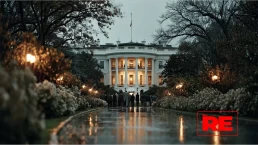
Today we’re stepping into something that’s been heavy on my spirit. A question that doesn’t come from outrage or activism, but from a deep place of wrestling. It came while I was scrolling late one night, half-sleep, half-thinking, and stopped cold. The clip showed members of Trump’s White House staff standing in front of the actual White House. Hands locked. Heads bowed. Praying. Loudly. Unapologetically. There was no shame in their posture, only certainty. Their voices trembled, not from fear, but from conviction. They weren’t whispering. They were declaring.
Calling on God to save the nation. Asking for revival. Believing with their full chest that they were doing the work of the Lord, not as individuals, but as a political body. It didn’t feel performative. It felt… real. Like they actually believed the spiritual war they were talking about was happening in real time.
And for a second, I wasn’t disgusted. I was disoriented. Because the question hit me: What if they are right?
If this work helped you understand something more clearly, support it by:
Buying the books | Visiting the Newsstand | Making a donation
One voice. One message. One Goal. Truth.
No spam. No schedules.
The Truth is Underfunded. That's Why This Exists.
No ads. No sponsors. No filter. Just the truth, unpacked, explained, and raw.
Defining Policy. Power. Consequence.
See how to add us to your home screen
Not right about everything. Not about the racism, the book bans, the hypocrisy, the chaos. But what if they’re right about God? What if scripture really does reject the things I’ve embraced? The freedom. The queerness. The parts of myself I’ve learned to live in and love through. What if, in the eyes of the God they claim, I’m out of alignment?
That question lives in my chest more than I like to admit. And it reminded me of something my college roommate Sean once told me. Sean was a deacon, quiet, thoughtful, never preachy, but deeply committed to his faith. One night, we were having a conversation about belief and doubt, and he said something that never left me. He said, “I’d rather go to church and live right just in case the Bible is real. Because I’d rather be wrong and live well, than die, stand in front of the gates, and have God look me in the eye and ask, ‘Why didn’t you believe?’ And then burn forever because I thought I was smarter than God.” That line messes with me. Even now. It bugs me. Because underneath all the logic, the politics, the personal choices, I can’t help but think about that moment. About standing before something bigger than me and realizing I bet wrong.
See, I’m not someone who casually critiques religion. I grew up with it. I respect it. And even though I live differently now, love differently, think differently, I’ve never fully let go of faith. I still talk to God. Still reflect. Still wrestle. So when I watched that prayer circle, with their hands clasped toward heaven and their feet planted in power, I didn’t just see a political stunt. I saw conviction. I saw belief that didn’t flinch. And that made me ask the real question I’ve never said out loud: What if the religious right isn’t misinterpreting the Bible at all… but following it exactly as it was written?
And if that’s true, what does that mean for me?
When you open the Bible with an honest lens, you do not have to search long to find language that condemns certain forms of sexuality. It is there. It is direct. It is not vague or symbolic. In the Old Testament, Leviticus 18:22 states, “Do not lie with a man as one lies with a woman; that is detestable.” In the very next chapter, Leviticus 20:13, the command is repeated with the added consequence of death: “If a man lies with a man as one lies with a woman, both of them have done what is detestable. They must be put to death.” That is not interpretation, that is text.
Moving into the New Testament, Romans 1:26-27 expands on this theme. Paul writes, “Because of this, God gave them over to shameful lusts. Even their women exchanged natural sexual relations for unnatural ones. In the same way, the men also abandoned natural relations with women and were inflamed with lust for one another. Men committed shameful acts with other men, and received in themselves the due penalty for their error.” Again, this is not metaphor or poetry. This is Paul giving theological grounding to the idea that same-sex behavior is a sign of moral decline.
We also see it in 1 Corinthians 6:9-10, where Paul writes, “Do you not know that wrongdoers will not inherit the kingdom of God? Do not be deceived: Neither the sexually immoral nor idolaters nor adulterers nor men who have sex with men… will inherit the kingdom of God.” The Greek term used here, arsenokoitai, is often debated, but it is generally translated as referring to male-male sexual relations.
These verses are real. They exist in both major sections of the Bible. They are echoed by other Abrahamic traditions as well. In the Hadith, traditional Islamic teachings clearly condemn same-sex activity. In traditional Jewish law, or halakha, those same Levitical laws are still referenced today. It would be dishonest to pretend those ideas are not foundational to many faith communities. But this is where the discussion gets more complicated. Because those same texts that so clearly condemn homosexuality also contain laws that are completely ignored by the modern church and conservative politicians.

For example, Leviticus 19:19 forbids wearing clothes made of two types of fabric. Leviticus 11 bans the eating of shellfish, pork, rabbit, and other common foods. Deuteronomy 22:11 repeats the fabric rule, and adds that one should not plant two kinds of seeds in the same field. Exodus 21:20-21 permits the beating of slaves, stating that if the slave does not die immediately, the owner is not to be punished. 1 Timothy 2:12 says, “I do not permit a woman to teach or to assume authority over a man; she must be quiet.” These laws are just as direct, just as biblical, and just as ancient as the ones used to condemn trans and queer people. Yet you will not find politicians writing legislation about them. You will not see modern pastors demanding that women stop preaching or that we return to Old Testament dietary restrictions. Somewhere along the line, these “rules” became symbolic or outdated. They were quietly set aside in favor of cultural evolution, common sense, or convenience.
So the question becomes: why do some verses remain sacred while others are dismissed? Why are certain sins treated as doctrinal non-negotiables, while others are chalked up to the times?
The answer, if we are honest, is that many people do not use the Bible to seek God. They use the Bible to protect power. And there is nothing more powerful than being able to say, “God is on my side” while passing laws that take away someone else’s freedom.
This is how scripture becomes political currency. It gets reduced to slogans, taken out of context, and used to justify oppression. This is not new. American slavery was defended using verses like Ephesians 6:5, “Slaves, obey your earthly masters with respect and fear, and with sincerity of heart, just as you would obey Christ.” Segregationists once quoted Acts 17:26 to argue that God “appointed the nations and boundaries of people” as a divine endorsement of racial separation. So no, this is not the first time religion has been weaponized. But right now, it is being aimed squarely at trans people, at queer people, and at anyone who dares to live outside of rigid, binary norms.
Here is the hard truth: the Bible, in its traditional form, really does say what many conservatives claim it says. This is not about misinterpretation. It is about selective application. They believe in those verses because those verses affirm their worldview. They just do not want to apply the rest of the book to themselves. They do not want to talk about Matthew 19:21, where Jesus says, “If you want to be perfect, go, sell your possessions and give to the poor, and you will have treasure in heaven.” They do not want to apply Amos 5:24, which demands that justice roll down like a river. They ignore Isaiah 10:1-2, which calls out those who write unjust laws to oppress the vulnerable. This is what I wrestle with. Not just the text, but the way it’s used. I can accept that the Bible might not affirm the fullness of who I am. I can accept that ancient people, writing in their own cultural limitations, may have believed things I do not agree with today. What I cannot accept is the hypocrisy of using those texts to condemn others, while refusing to apply that same lens to your own life. Because if sin is sin, then let it be sin across the board. And if grace is real, then let it be grace for everyone.
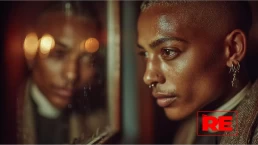
It’s one thing to read scripture and feel convicted. It’s another to see scripture turned into law. That’s what’s happening right now across the country. It’s not just talk anymore. It’s policy. It’s legislation. It’s school board decisions. It’s banned books. It’s erased healthcare. It’s a growing network of laws that specifically target trans people and queer youth, under the claim of moral clarity. In 2023 alone, over 500 anti-LGBTQ+ bills were introduced in state legislatures across the United States. Most of them did not use religious language on paper, but the theology behind them was loud and clear. From Florida’s “Don’t Say Gay” law to Tennessee’s drag bans, from restrictions on gender-affirming care to trans sports bans in over 20 states, the common thread is fear. The laws claim to protect children, protect families, protect values, but the real target is visibility. The goal is to erase identities that do not fit a certain mold and label that erasure as righteous.
What does that look like in real life? It looks like a trans kid in Texas losing access to medication they’ve been on for years. It looks like a teacher in Florida being told they can’t display a rainbow flag. It looks like a parent in Arkansas moving their entire family out of state just so their child can live without being criminalized. It looks like suicide hotlines being flooded, therapists scrambling to meet demand, and churches doubling down on messages that shame people who are already on the edge.
But the damage doesn’t stop with laws. It seeps into faith. Because the more these religious justifications show up in politics, the more people begin to associate God with oppression. People are not just leaving the church, they are leaving God entirely. Not because they hate truth, but because they were taught that truth never had space for them. They were taught that to be queer or trans or different meant being outside of grace. So they walk away. Not because they’ve lost belief, but because belief was turned against them. And then there’s the other side of the impact, those who stay. Those who remain in churches that preach love from the pulpit but quietly endorse exclusion in their theology. People who sit through sermons where they are never directly named but always indirectly shamed. People who learn how to compartmentalize, how to nod along with the message while secretly deleting parts of themselves just to belong. That kind of silence is spiritual violence. It might not show up in headlines, but it shows up in therapy rooms, in prayer journals, in family breakdowns, and in the long, slow erosion of self-worth.
This is not about asking churches to change their doctrine overnight. But it is about accountability. If a community says it believes in Jesus, then it must also believe in radical compassion, in caring for the least of these, in humility, and in healing. There is nothing healing about legislation that criminalizes existence. There is nothing humble about turning sacred text into political fuel. And there is nothing Christ-like about using the Bible to justify cruelty. The impact is not theoretical. It is measurable. It is personal. And it is ongoing. Because when people quote verses to justify exclusion, they don’t just affect policy, they shape the emotional and spiritual lives of millions. And that ripple is not something you can legislate away.
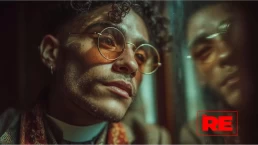
So now we’re left standing in the tension. Not just between left and right, or gay and straight, or conservative and progressive, but between belief and belonging. What do you do when your values and your faith no longer live in the same house? Because for a lot of people like me, walking away from God isn’t the default. It’s the last resort. It doesn’t come from arrogance or rebellion. It comes from exhaustion. It comes from sitting in pews where you hear about love but never feel it. It comes from hearing your very existence framed as a burden, a compromise, a spiritual liability. After a while, you don’t leave because you stopped believing. You leave because you got tired of apologizing for being alive. And yet, even with all of that, many of us still believe. We still pray. We still feel that pull when we’re alone. We still carry that voice in our heads, wondering if we’re seen. Wondering if we’re wrong. Wondering if the people we disagree with actually have the book on their side. And wondering if that matters more than we want it to.
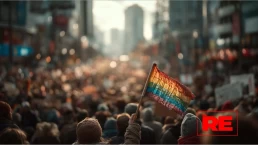
Because here’s the thing nobody likes to admit. There is a cost to believing anyway. To saying, “Yes, I know the Bible says what it says. Yes, I know I may be outside of what’s considered righteous. But I still believe in God. I still pray. I still seek.” That kind of belief doesn’t come with easy answers. It doesn’t come with a choir or a pastor’s approval. It comes with silence. With questions. With a type of faith that isn’t rewarded on Sunday mornings but quietly sustained on Monday nights when you’re lying in bed and wondering if your soul still counts.
It’s hard to be in that middle space. To love God and still feel unwelcomed in His house. To believe in something sacred while knowing the sacred texts were never written with you in mind. That space is lonely. But it’s also honest. And maybe that’s the truest form of faith there is. Not the kind that shouts from a podium or gets passed into law. But the kind that survives heartbreak. The kind that still whispers back even when the church has gone silent. So yes, the Bible may say what it says. And yes, some people are living by it to the letter. But faith is not a contest. It’s not a legal code. It’s a relationship. And relationships are messy, complicated, and full of things we don’t always understand. That doesn’t mean we stop showing up.
If I’m wrong, then I’m wrong. But I’d rather believe in a God who sees the fullness of who I am, than bow to a system that only accepts me if I’m willing to disappear.
Human Rights Campaign. (2024, January 30). LGBTQ+ advocacy group records 2023 as ‘most damaging and destructive’ year. The Guardian.
Time. (2024, June). Anti-Trans Laws Linked to Increase in Trans and Nonbinary Youth Suicide Attempts. Time.
ABC News. (2023, unpublished). Record number of anti-LGBTQ legislation filed in 2023. ABC News.
American Civil Liberties Union ACLU (2023, December 21). Mapping attacks on LGBTQ rights in U.S. state legislatures in 2023. ACLU.
Thery, N. AXIOS (2024, June 24). 988 hotline losing key suicide help for California LGBTQ+ youth. Axios.
The Trevor Project. (2023). 2023 U.S. national survey on the mental health of LGBTQ young people [PDF].
If this work helped you understand something more clearly, support it by:
Buying the books | Visiting the Newsstand | Making a donation
One voice. One message. One Goal. Truth.
No spam. No schedules.
The Truth is Underfunded. That's Why This Exists.
No ads. No sponsors. No filter. Just the truth, unpacked, explained, and raw.
Defining Policy. Power. Consequence.
See how to add us to your home screen