
The Ripple Effect
-News and Commentary-
Thirst by Design: Why Clean Water Is Still Not a Right
By TP Newsroom Editorial | Ripple Effect Division
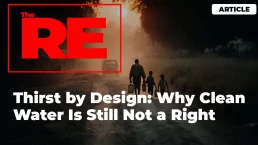
Water should be the one thing that connects us all, something so essential and neutral it exists outside of politics and profit. But in this country, it has quietly become a tool of separation. Not between Black and white, but between those with resources and those just trying to get by. Across America, low-income communities are the ones living with rust-colored tap water, paying inflated bills for service that never improves, and waiting years for basic repairs while wealthier areas get fast-track treatment. It is not just aging infrastructure—it is about who matters when budgets are written. You see it in towns where entire trailer parks go weeks without running water and no one shows up to fix it. You see it when landlords in poor neighborhoods get away with decades of neglect while luxury condos downtown come with filtered water on tap. Somewhere along the line, we stopped treating water like a right and started rationing it like a privilege. Politicians use environmental red tape to delay fixes, utility companies squeeze every last dollar from families that can least afford it, and the result is a quiet but steady erosion of trust. Water is not just about hydration anymore. It is about control. Who gets it, when they get it, and what they have to give up to keep it flowing.
When you begin pulling back the curtain on water access in America, it stops feeling like a failure and starts looking like a blueprint. This is not about a few broken pipes or administrative oversights. It is about a system that has quietly redefined water—from a human right into a product. At the center of this shift is a framework that rewards profit and punishment over care. Local governments and utility companies operate on a model that treats water disconnections the same way cable companies treat late fees. A missed payment means a shutoff. A household behind on their bill is no longer seen as a family in need but as a liability to be managed. In 2022, more than 1.5 million people across the country had their water shut off due to nonpayment. That number reflects a consistent rise in enforcement since the pandemic protections ended.
But the consequences are not evenly distributed. In cities like Detroit, Baltimore, and Jackson, water shutoffs are concentrated in working-class neighborhoods where rent hikes, food inflation, and stagnant wages have already pushed families to the edge. According to the ACLU and Dig Deep, Black and Latino communities are nearly twice as likely to live without indoor plumbing or to face repeated shutoffs. Yet this is not just about race. It is about economic vulnerability. Poor rural areas, including parts of Appalachia and the Deep South, face similar outcomes. These are places where water systems are underfunded, pipes are aging, and regulatory enforcement is weak or nonexistent.
If this work helped you understand something more clearly, support it by:
Buying the books | Visiting the Newsstand | Making a donation
One voice. One message. One Goal. Truth.
No spam. No schedules.
The Truth is Underfunded. That's Why This Exists.
No ads. No sponsors. No filter. Just the truth, unpacked, explained, and raw.
Defining Policy. Power. Consequence.
See how to add us to your home screen
Meanwhile, in wealthy suburbs or newly gentrified districts, overdue bills are often met with leniency. Private utility contracts sometimes include grace periods or silent forgiveness programs for “valued customers” a term that almost always aligns with income. This imbalance is not accidental. It is built into a market-based system that sees water as a leverage point. Shutoffs serve as a form of discipline. They send a message to those who cannot pay: stay in line, or suffer in silence. The rhetoric used to justify it—phrases like “conservation,” “cost recovery,” or “maintenance enforcement” adds a layer of legitimacy that hides the cruelty underneath. It makes the practice sound fair, even when it targets the vulnerable.
In truth, there is no water crisis in America. There is a control crisis. We are not running out of water. We are choosing who gets it. And in that choice, we are reinforcing the same old lines—who gets to live with dignity and who must ask for it.
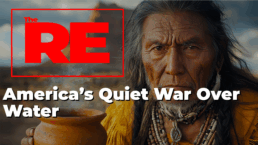
Across the United States, water insecurity is not abstract, it is measurable, and it is growing. According to a 2022 report from the U.S. Water Alliance and DigDeep, over two million Americans live without running water, indoor plumbing, or safe sanitation. These are not isolated outliers. They are rural families in West Virginia still relying on contaminated wells, Indigenous communities in the Southwest whose homes remain unconnected to public water systems, and urban renters facing monthly threats of shutoff notices in cities that boast billion-dollar budgets.
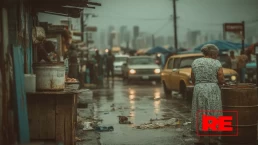
The numbers become even more alarming when broken down by income. The Environmental Policy Innovation Center found that one in three low-income households struggle to pay their water bills on time. In cities like Detroit, where water rates have increased by more than 150% since 2000, more than 40% of residents are at risk of losing access simply because the cost of staying connected has outpaced the minimum wage. Meanwhile, private equity-backed utility companies are buying up small public systems across the country. These corporations, accountable to shareholders rather than communities, have driven rates up by an average of 59% in places where privatization has occurred.
Demographics also paint a sobering picture. Black and Latino households are twice as likely to experience water shutoffs or live in homes with plumbing deficiencies. On Native reservations, roughly 30% of homes do not have access to reliable drinking water. The disparities do not stop at race or ethnicity, they run along lines of wealth, geography, and political will. The poorest counties in Alabama and Mississippi report water service violations at nearly four times the national average, often due to decaying infrastructure that goes unfunded year after year. These violations are not minor. In many cases, they involve dangerous levels of lead, arsenic, or microbial contamination that would prompt immediate action in a wealthier ZIP code.
What complicates the situation further is the lack of federal oversight. The U.S. has more than 50,000 separate water utilities, and many operate independently under fragmented local regulations. There is no national affordability standard, no required shutoff protections, and no consistent method for tracking water access. This means the lived reality of water in America depends largely on where you live and how much money you have. In one state, a grace period might be mandated. In another, your water might be shut off the same day your payment is late. This patchwork system makes it easy to hide the true scope of the problem while communities quietly fall through the cracks.
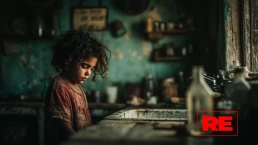
Even FEMA, which is often viewed as the last line of emergency defense, does not classify water shutoffs as a humanitarian crisis. If a hurricane hits, bottled water gets delivered. If a poor community goes dry from policy neglect, it is called an administrative issue. The language changes, and so does the urgency.
In this context, it becomes clear that water access is not just a public health concern. It is a reflection of our national values. When infrastructure crumbles, when assistance dries up, and when pricing structures are designed to squeeze instead of serve, the result is not just discomfort. It is displacement. People are forced to move, to downgrade, or to survive in conditions unfit for any developed nation. All of this happens while water-rich states waste billions of gallons on golf courses, bottling plants, and landscaping for luxury real estate. Access, therefore, is not based on supply. It is determined by your position in the economy.
What this exposes is a system that was never built to serve everyone equally. Water, something so basic and essential, is being treated as a privilege rather than a right. When entire communities are forced to rely on bottled water, boil advisories, or dangerously old pipes, it is not an accident. It is a choice made again and again through policy, neglect, and profit. The real question is not whether we have the resources to provide clean water to all, but rather who we believe deserves it. In cities like Jackson, Mississippi, and across rural Alabama, or the Navajo Nation, people are living without reliable access to safe drinking water. These are not small, off-the-map places. They are American communities that have been deemed less important because they do not hold political sway, financial clout, or media attention.
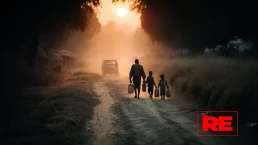
When communities speak out, they are often ignored, delayed, or told to wait while contracts get signed and private deals are made. Where you live, your zip code, income bracket, or proximity to power, determines not just the flavor of your water but whether it flows at all. This is not a distant crisis. It is here, and it is happening in real time. Corporations are buying up water rights. Hedge funds are investing in municipal systems. And governments are handing over control under the guise of efficiency. What happens next matters more than most people realize. Because if we let clean water become a market-driven asset, then we are admitting that human survival is negotiable.
Who this affects are not only the poor and underserved, but also the middle class that believes their utilities are secure until the day they are not. What is unfolding is not just an environmental crisis, it is an ethical one. When the most basic need is withheld to generate revenue, we have moved from governance to exploitation. When these decisions are made, they happen behind closed doors, with little accountability and even less transparency. Where this continues to happen is anywhere the voices are small, the voters are fewer, and the resistance is underfunded.
Why it matters is because clean water is the foundation of everything else, health, education, dignity, and survival. The longer we normalize water scarcity for some, the closer we get to allowing it for all. So the future depends on whether we keep treating water as a utility or begin treating it as a right. It depends on who speaks up, who gets organized, and who decides they will not wait until their faucet runs dry to care. The truth is, thirst has always been used as leverage. The only question is whether we continue letting them design it that way.
Circle of Blue. (2020, August 10). Millions of Americans are in water debt. Circle of Blue. https://www.circleofblue.org/2020/world/millions-of-americans-are-in-water-debt/
U.S. Water Alliance & DigDeep. (2019, November). Closing the Water Access Gap in the United States: A National Action Plan. https://uswateralliance.org/resources/closing-the-water-access-gap-in-the-united-states-a-national-action-plan/
DigDeep. (2023, May 26). 2.2 million people in America live without access to running water and basic plumbing: report. Business Insider via DigDeep. https://www.digdeep.org/press-clippings/business-insider/
The Guardian. (2020, August 14). Millions in US face losing water supply as coronavirus moratoriums end. https://www.theguardian.com/us-news/2020/aug/14/water-shutoffs-moratoriums-end-coronavirus
Great Lakes Now. (2021, April). Water access: As moratoria on shutoffs end, old problems return to utilities. https://www.greatlakesnow.org/2021/04/water-shutoffs-debt-infrastructure/
Circle of Blue (Walton, B.). (2021, December 2). Rising cost of water in Michigan leads to affordability problems. Michigan Public, Bridge Michigan & Great Lakes Now. https://www.michiganpublic.org/environment-climate-change/2021-12-02/rising-cost-of-water-in-michigan-leads-to-affordability-problems
GQ. (2019, November 25). The hidden racial inequities of access to water in America. https://www.gq.com/story/hidden-racial-inequities-water-access
If this work helped you understand something more clearly, support it by:
Buying the books | Visiting the Newsstand | Making a donation
One voice. One message. One Goal. Truth.
No spam. No schedules.
The Truth is Underfunded. That's Why This Exists.
No ads. No sponsors. No filter. Just the truth, unpacked, explained, and raw.
Defining Policy. Power. Consequence.
See how to add us to your home screen